

Motmot

Koningsgier vs Wurgarend

Sarcoramphus papa versus Morphnus guianensis

Speel een quiz met Koningsgier en Wurgarend
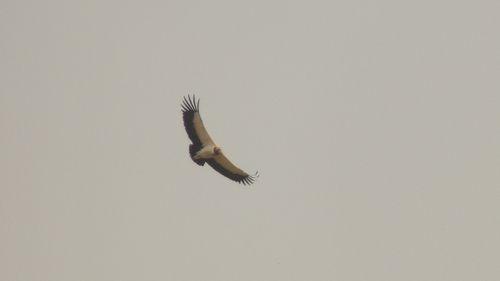
Koningsgier (Sarcoramphus papa) Koningsgier
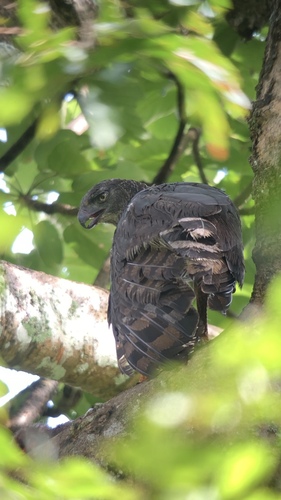
Wurgarend (Morphnus guianensis) Wurgarend

Media

Laden…

Kort gezegd

The most reliable field mark is the striking contrast in adult plumage: King Vulture adults are mostly white with black flight feathers and a vividly colored, bare head, while Crested Eagles are brownish-gray or dark, with a feathered head and a prominent crest. Immature King Vultures are all dark and can be confused with large raptors, but their flight profile and eventual white ventral feathering help separate them. Structurally, King Vultures are bulkier with a heavier bill and a short, square tail, while Crested Eagles are more slender, long-tailed, and have a distinctive feathered crest. In flight, King Vultures soar with flat wings and appear headless from a distance, whereas Crested Eagles have shorter, rounded wings and a long tail, typical of forest eagles.

Herkenningstips

  1. Adult plumage is the best separator: King Vulture adults are mostly white with black flight feathers and tail, and a bare, multicolored head with a prominent orange/yellow caruncle. Crested Eagles are brownish-gray or dark, always with a feathered head and a small, dark crest.
  2. Juvenile/immature confusion: Young King Vultures are slate gray overall, lacking the white and colorful head of adults. As they mature (2–5 years), look for patchy white ventral and wing feathers developing. Juvenile Crested Eagles are white on the head and chest with marbled gray wings and back, or dark brownish-gray in dark morphs. In flight, Crested Eagle juveniles are pale below except for a grayish chest, while King Vulture immatures are more uniformly dark until they start molting in white.
  3. Head and bill: King Vulture has a bare, wrinkled, multicolored head and neck with a large orange/yellow caruncle (from year 4), and a massive, hooked bill. Crested Eagle has a feathered head with a small, dark crest and a much smaller bill relative to head size.
  4. Tail shape: King Vulture has a short, broad, square tail; Crested Eagle has a long, banded tail that is obvious both perched and in flight.
  5. Flight profile: King Vulture soars with broad, flat wings and may appear headless at a distance due to its posture. Crested Eagle has shorter, rounded wings and a long tail, with a more maneuverable, forest-raptor flight style.
  6. Perched jizz: Perched King Vultures are massive, with a hunched posture, bare head, and thick neck ruff. Crested Eagles are more slender, upright, and show a prominent feathered crest.
  7. Legs and feet: King Vulture has gray legs with long, thick claws, but these are rarely visible in the field. Crested Eagle has bare, long tarsi and proportionally large feet, more obvious when perched.
  8. Sexual dimorphism: King Vulture shows minimal sexual dimorphism; males and females look alike. Crested Eagle females are about 14% larger than males, but this is subtle in the field.
  9. Habitat context: King Vultures are often seen soaring above or at the edge of forests; Crested Eagles are almost always deep within mature forest, rarely seen in the open.
  10. Behavior: King Vultures are scavengers, often seen at carcasses or soaring high. Crested Eagles hunt live prey, usually seen perched or flying low through the canopy.
  11. Eye color: Adult King Vultures have white irises with bright red sclera; Crested Eagles do not show this feature.
  12. Caruncle presence: The prominent golden caruncle on the King Vulture's bill is unique and diagnostic in adults (from year 4 onward).
  13. Wing molt sequence in immatures: For King Vulture, look for the first white ventral feathers from age 2, followed by wing feathers, with scattered black in the lesser wing coverts until full maturity at 5–6 years.
  14. Crested Eagle morphs: Be aware of dark morph Crested Eagles, which can appear nearly black, but always have a feathered head and long tail.
  15. Potential pitfalls: Immature King Vultures are the most likely confusion risk, especially in flight, but their structure (short tail, heavy bill, flat-winged soaring) and eventual patchy white plumage help separate them from any eagle.

Grootte

King Vulture is generally larger and heavier: adults measure 67–81 cm in length, wingspan 1.2–2 m, and weigh 2.7–4.5 kg ([wikipedia], [avonet], [wikidata]). Crested Eagle is slightly longer (71–89 cm), but slimmer, with a wingspan of 1.38–1.76 m and weight 1.2–3 kg (females up to 3 kg, males as low as 1.27 kg). King Vulture is bulkier and more imposing, with a proportionally larger skull and bill, while Crested Eagle is more slender, with a longer tail and smaller bill for its body size.

Verenkleed

Juvenile and immature King Vultures are slate gray overall, with dark bills and eyes, and a downy gray neck. As they age (2–5 years), ventral feathers and then wing feathers begin turning white, but scattered black feathers may remain in the lesser wing coverts until full adult plumage at 5–6 years. Immature King Vultures can be confused with large raptors, but their uniform dark color and eventual patchy white ventral/wing feathering are distinctive. Adults are unmistakable: white body, black flight feathers and tail, and a bare, multicolored head with a golden caruncle (from year 4 onward).

Crested Eagle adults are variable: most are light brownish-gray above, with a white throat, dark mask, and a small dark crest; some are sooty gray or nearly black (dark morphs). Juveniles are white on the head and chest, marbled gray on back and wings, turning sandy-gray in the second year; dark morph juveniles are dark brownish-gray from an early age. In flight, all ages are pale below except for grayish chest. The head is always feathered, with a prominent crest, and never shows the bare, colorful skin of King Vulture. The tail is long and banded, contrasting with the King Vulture's short, square tail.

Gedrag

King Vultures are primarily scavengers, soaring for hours with minimal wing flapping, often alone or in small family groups. They hold their wings flat with slightly raised tips and may appear headless in flight due to their hunched posture. When perched, they are inconspicuous despite their size and coloration, often holding their head low and forward. Crested Eagles are solitary or in pairs, typical of forest raptors, and are rarely seen soaring high. They hunt live prey and are more likely to be seen perched quietly in dense forest or flying low through the canopy, using their short, broad wings and long tail for maneuverability.

Habitat

Both species inhabit tropical lowland forests of Central and South America, but King Vultures are more often seen soaring above the canopy or at forest edges, taking advantage of open airspace to locate carrion. Crested Eagles are true forest specialists, rarely leaving dense, mature forest and typically nesting high in large emergent trees. If seen in open country, King Vulture is far more likely; Crested Eagle almost never leaves heavy forest cover.

Stuur een betere beschrijving

Gebruik dezelfde onderdelen als de vergelijking. Je tekst staat meteen live.

The most reliable field mark is the striking contrast in adult plumage: King Vulture adults are mostly white with black flight feathers and a vividly colored, bare head, while Crested Eagles are brownish-gray or dark, with a feathered head and a prominent crest. Immature King Vultures are all dark and can be confused with large raptors, but their flight profile and eventual white ventral feathering help separate them. Structurally, King Vultures are bulkier with a heavier bill and a short, square tail, while Crested Eagles are more slender, long-tailed, and have a distinctive feathered crest. In flight, King Vultures soar with flat wings and appear headless from a distance, whereas Crested Eagles have shorter, rounded wings and a long tail, typical of forest eagles.

  1. Adult plumage is the best separator: King Vulture adults are mostly white with black flight feathers and tail, and a bare, multicolored head with a prominent orange/yellow caruncle. Crested Eagles are brownish-gray or dark, always with a feathered head and a small, dark crest.
  2. Juvenile/immature confusion: Young King Vultures are slate gray overall, lacking the white and colorful head of adults. As they mature (2–5 years), look for patchy white ventral and wing feathers developing. Juvenile Crested Eagles are white on the head and chest with marbled gray wings and back, or dark brownish-gray in dark morphs. In flight, Crested Eagle juveniles are pale below except for a grayish chest, while King Vulture immatures are more uniformly dark until they start molting in white.
  3. Head and bill: King Vulture has a bare, wrinkled, multicolored head and neck with a large orange/yellow caruncle (from year 4), and a massive, hooked bill. Crested Eagle has a feathered head with a small, dark crest and a much smaller bill relative to head size.
  4. Tail shape: King Vulture has a short, broad, square tail; Crested Eagle has a long, banded tail that is obvious both perched and in flight.
  5. Flight profile: King Vulture soars with broad, flat wings and may appear headless at a distance due to its posture. Crested Eagle has shorter, rounded wings and a long tail, with a more maneuverable, forest-raptor flight style.
  6. Perched jizz: Perched King Vultures are massive, with a hunched posture, bare head, and thick neck ruff. Crested Eagles are more slender, upright, and show a prominent feathered crest.
  7. Legs and feet: King Vulture has gray legs with long, thick claws, but these are rarely visible in the field. Crested Eagle has bare, long tarsi and proportionally large feet, more obvious when perched.
  8. Sexual dimorphism: King Vulture shows minimal sexual dimorphism; males and females look alike. Crested Eagle females are about 14% larger than males, but this is subtle in the field.
  9. Habitat context: King Vultures are often seen soaring above or at the edge of forests; Crested Eagles are almost always deep within mature forest, rarely seen in the open.
  10. Behavior: King Vultures are scavengers, often seen at carcasses or soaring high. Crested Eagles hunt live prey, usually seen perched or flying low through the canopy.
  11. Eye color: Adult King Vultures have white irises with bright red sclera; Crested Eagles do not show this feature.
  12. Caruncle presence: The prominent golden caruncle on the King Vulture's bill is unique and diagnostic in adults (from year 4 onward).
  13. Wing molt sequence in immatures: For King Vulture, look for the first white ventral feathers from age 2, followed by wing feathers, with scattered black in the lesser wing coverts until full maturity at 5–6 years.
  14. Crested Eagle morphs: Be aware of dark morph Crested Eagles, which can appear nearly black, but always have a feathered head and long tail.
  15. Potential pitfalls: Immature King Vultures are the most likely confusion risk, especially in flight, but their structure (short tail, heavy bill, flat-winged soaring) and eventual patchy white plumage help separate them from any eagle.

King Vulture is generally larger and heavier: adults measure 67–81 cm in length, wingspan 1.2–2 m, and weigh 2.7–4.5 kg ([wikipedia], [avonet], [wikidata]). Crested Eagle is slightly longer (71–89 cm), but slimmer, with a wingspan of 1.38–1.76 m and weight 1.2–3 kg (females up to 3 kg, males as low as 1.27 kg). King Vulture is bulkier and more imposing, with a proportionally larger skull and bill, while Crested Eagle is more slender, with a longer tail and smaller bill for its body size.

Juvenile and immature King Vultures are slate gray overall, with dark bills and eyes, and a downy gray neck. As they age (2–5 years), ventral feathers and then wing feathers begin turning white, but scattered black feathers may remain in the lesser wing coverts until full adult plumage at 5–6 years. Immature King Vultures can be confused with large raptors, but their uniform dark color and eventual patchy white ventral/wing feathering are distinctive. Adults are unmistakable: white body, black flight feathers and tail, and a bare, multicolored head with a golden caruncle (from year 4 onward).

Crested Eagle adults are variable: most are light brownish-gray above, with a white throat, dark mask, and a small dark crest; some are sooty gray or nearly black (dark morphs). Juveniles are white on the head and chest, marbled gray on back and wings, turning sandy-gray in the second year; dark morph juveniles are dark brownish-gray from an early age. In flight, all ages are pale below except for grayish chest. The head is always feathered, with a prominent crest, and never shows the bare, colorful skin of King Vulture. The tail is long and banded, contrasting with the King Vulture's short, square tail.

King Vultures are primarily scavengers, soaring for hours with minimal wing flapping, often alone or in small family groups. They hold their wings flat with slightly raised tips and may appear headless in flight due to their hunched posture. When perched, they are inconspicuous despite their size and coloration, often holding their head low and forward. Crested Eagles are solitary or in pairs, typical of forest raptors, and are rarely seen soaring high. They hunt live prey and are more likely to be seen perched quietly in dense forest or flying low through the canopy, using their short, broad wings and long tail for maneuverability.

Both species inhabit tropical lowland forests of Central and South America, but King Vultures are more often seen soaring above the canopy or at forest edges, taking advantage of open airspace to locate carrion. Crested Eagles are true forest specialists, rarely leaving dense, mature forest and typically nesting high in large emergent trees. If seen in open country, King Vulture is far more likely; Crested Eagle almost never leaves heavy forest cover.

Wijzigingen weggooien?

Je hebt niet-opgeslagen wijzigingen. Als je nu weggaat, gaan die verloren.

Koningsgier · Wurgarend · Mijn lastige vogels