

Jungledwerguil vs Himalayablauwstaart
Glaucidium radiatum versus Tarsiger rufilatus
Speel een quiz met Jungledwerguil en Himalayablauwstaart
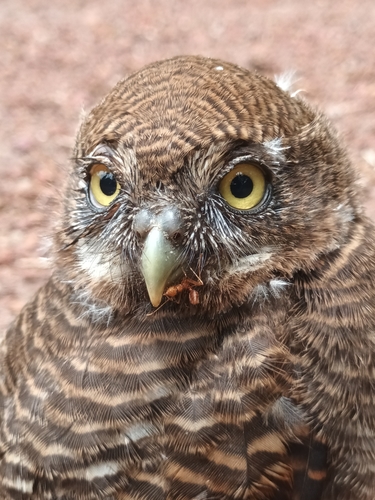 Jungledwerguil
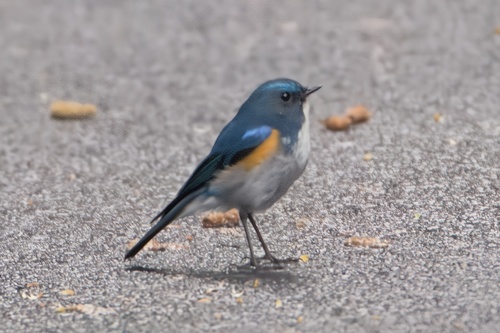 Himalayablauwstaart
Kort gezegd
The most reliable way to separate Jungle Owlet from Himalayan Bluetail is by overall structure and plumage: Jungle Owlet is a chunky, round-headed, heavily barred, small owl with yellow eyes, while Himalayan Bluetail is a slim, upright, small songbird with a blue (male) or greyish (female/immature) plumage and orange flanks. Jungle Owlet shows dense barring across body and wings, lacking any blue or orange tones, and has a short tail and no facial disk. Himalayan Bluetail, especially males, show intense blue upperparts and orange flanks, with females and juveniles being greyer but still lacking the owl’s barring. If you see a small, round, barred bird perched in the open, it’s likely a Jungle Owlet; a slim, upright bird with blue or grey and orange, especially in undergrowth, is a Himalayan Bluetail. Flight style, bill shape, and habitat context also help: owlet is a cavity-roosting predator, bluetail a ground-foraging insectivore.
Herkenningstips
- Overall shape and posture: Jungle Owlet is round-headed, short-tailed, and compact, always looking like a small owl; Himalayan Bluetail is slim, upright, and long-tailed, typical of a small songbird. This is reliable at all ages.
- Barring vs. plain plumage: Jungle Owlet of all ages is densely barred dark brown and white across upperparts, wings, and tail; Himalayan Bluetail is always plain (never barred), with blue (male) or grey (female/immature) upperparts and orange flanks.
- Facial features: Jungle Owlet lacks a facial disk but has a rounded head and yellow eyes; bluetail has a plain, small face, dark eye, and thin bill.
- Bill shape: Jungle Owlet has a short, hooked bill typical of owls; bluetail has a thin, pointed bill for insectivory. Check this if the head is visible.
- Tail pattern: Jungle Owlet’s tail is short and narrowly barred white; bluetail’s tail is longer, blue or brownish, and unbarred.
- Wing pattern in flight: Jungle Owlet shows barred primaries and secondaries with white/rufous patches on coverts; bluetail’s wings are plain and unmarked in all ages.
- Underparts: Jungle Owlet is pale rufous or whitish below, always barred with black; bluetail is white below with orange flanks, never barred.
- Habitat context: Jungle Owlet is found in wooded lowlands or foothills, often perched in the open or at a cavity; bluetail is in high-altitude Himalayan forest or, in winter, dense undergrowth at mid-elevations.
- Behavior: Jungle Owlet perches still and may bask or freeze; bluetail is active, flicking tail, and forages low or on the ground.
- Vocalization: Jungle Owlet’s call is a rapid, accelerating prao-prao series, very different from any songbird call; bluetail’s calls are soft, high, and not owl-like.
- Size impression: Jungle Owlet is much heavier and bulkier; bluetail is tiny and delicate.
- Perching style: Jungle Owlet often perches upright and motionless, sometimes on wires; bluetail is more horizontal, perches briefly, and moves frequently.
- Eye color: Jungle Owlet’s iris is yellow; bluetail’s is dark.
- Roosting/nesting: Jungle Owlet uses tree cavities; bluetail nests in dense bush or low vegetation.
- Seasonal context: If seen in the Himalayas above 3000 m in summer, bluetail is likely; owlet is absent from these altitudes.
Grootte
Jungle Owlet is substantially heavier and bulkier (body mass ~101 g [wikidata]) than Himalayan Bluetail, which is a small, lightweight passerine (no mass given, but all Tarsiger are much lighter than any Glaucidium). The owlet appears round and compact, with a large head and short tail, while the bluetail is slim, upright, and long-tailed for its size. In the field, the owlet gives a much more robust impression, while the bluetail is delicate and active.
Verenkleed
Juvenile and adult Jungle Owlet of all ages are densely and finely barred dark brown and white across the entire body, including the wings and tail. There is no blue or orange anywhere in the plumage. The face lacks a clear facial disk, but the head is rounded and the eyes are yellow. The wing coverts show white and rufous patches, primaries and secondaries are dark brown barred with pale chestnut, and the underparts are pale rufous or whitish, always barred with black. There is a whitish patch on the chin and breast.
Himalayan Bluetail males (adult) show intense blue upperparts, orange flanks, and white belly, with no barring at all. Females and juveniles are greyer above, with less blue, but still have orange flanks and a clean, unbarred look. The face is plain, the bill is thin and pointed, and the tail is blue (male) or brownish (female/immature), always unbarred. No age or sex of bluetail ever shows the dense barring or round-owl structure of the Jungle Owlet. In flight, the bluetail’s wings and tail are plain, not barred or patterned.
Gedrag
Jungle Owlet is often seen perched upright on exposed branches or wires, sometimes basking in the sun, but also roosts in tree cavities and freezes when disturbed. It is mainly crepuscular but can be active in the day, and may be mobbed by smaller birds. Himalayan Bluetail is an active, ground-foraging insectivore, usually seen singly or in loose association, flicking its tail and moving through dense undergrowth or along forest edges. It is rarely as exposed or stationary as the owlet and never perches in the open for long periods.
Habitat
Jungle Owlet is native to the Indian Subcontinent, found in a variety of wooded habitats, often in the plains (nominate) or Western Ghats (malabaricum), and is usually detected by its call at dawn or dusk. It prefers forested areas with available tree cavities for nesting. Himalayan Bluetail breeds in the high-altitude bush layer of Himalayan conifer and mixed forests (3000–4400 m), wintering at lower elevations (1500–2500 m) in dense, dark undergrowth of broadleaf evergreen forests, clearings, and thickets. It is never found in the open woodland or lowland habitats typical for Jungle Owlet.
Geluid
Jungle Owlet gives a distinctive, rapid prao..prao.prao-prao-prao call, increasing and then fading in volume, usually at dawn and dusk. Himalayan Bluetail’s song and calls are not described in the notes, but as a Muscicapid, it would give short, high-pitched calls and a soft song, quite unlike the repetitive, accelerating hoots of the owlet.