

Goudhaan vs Zanglijster
Regulus regulus versus Turdus philomelos
Speel een quiz met Goudhaan en Zanglijster
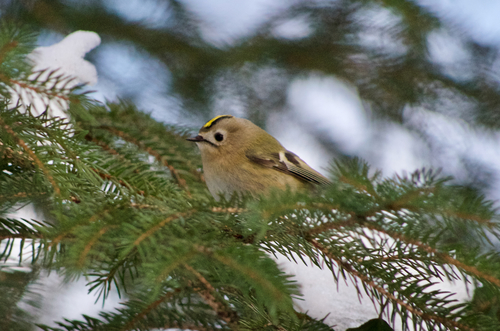 Goudhaan
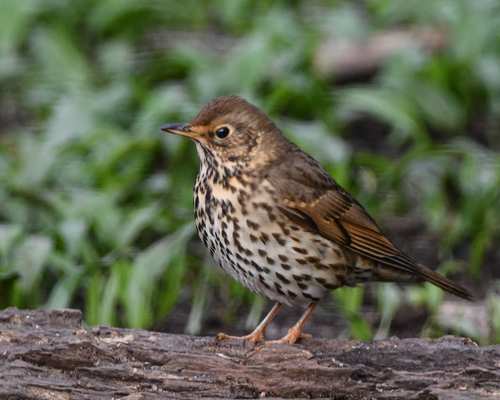 Zanglijster
Kort gezegd
The most reliable way to separate Goldcrest from Song Thrush is by their huge difference in size and overall structure: Goldcrest is the smallest European bird, tiny and warbler-like, while Song Thrush is a medium-sized, chunky thrush. In all plumages, Goldcrest shows olive-green upperparts, two white wingbars, and a plain face with a bright yellow or orange crown stripe (adults), while Song Thrush has brown upperparts and bold black spots on creamy underparts. Juvenile Goldcrests lack the crown color but still appear plain-faced and tiny; juvenile Song Thrushes show streaked backs and spotted underparts. Even in poor light or flight, the size, shape, and wing pattern differences are unmistakable.
Herkenningstips
- Size is the first and most obvious clue: Goldcrest is tiny, less than half the length and a fraction of the weight of Song Thrush. If the bird looks even close to thrush-sized, it is not a Goldcrest.
- Bill and head shape: Goldcrest has a very fine, needle-like bill and a small, rounded head. Song Thrush has a much stouter, yellowish bill and a larger, more angular head.
- Crown and face pattern: Adult Goldcrests show a bright yellow or orange crown stripe bordered by black, with a plain face and black eye. Song Thrush never has a crown stripe or wingbars; its face is plain brown with a pale eye ring sometimes visible but never a supercilium or crown mark.
- Wing pattern: Goldcrest always has two clear white wingbars on olive wings, visible at rest and in flight. Song Thrush has plain brown wings with no wingbars; juveniles may have some streaking on the coverts but never wingbars.
- Underparts: Song Thrush of all ages shows bold black spots on creamy or buff underparts, extending from throat to flanks. Goldcrest is plain below, buff-white to greyish, never spotted.
- Juvenile confusion: Juvenile Goldcrests lack the colored crown but remain plain-faced and tiny with wingbars. Juvenile Song Thrushes have streaked backs and always show spotted underparts.
- Flight style: Goldcrest is fluttery, often hovering or dashing between twigs. Song Thrush has strong, direct flight, often over open ground.
- Leg color: Goldcrest has dark flesh-brown legs; Song Thrush has pink legs and feet.
- Underwing color in flight: Song Thrush shows warm yellow underwings, which can be seen in flight or when preening. Goldcrest does not show this feature.
- Habitat use: Goldcrest is almost always in trees, especially conifers, rarely on the ground. Song Thrush is often seen hopping on lawns, paths, or leaf litter.
- Vocalizations: Goldcrest's song is high-pitched and thin, usually quieter and less varied than Song Thrush's loud, repeated musical phrases. Calls are also very different.
- Behavior: Goldcrest is constantly active, creeping and hovering among foliage. Song Thrush is more deliberate, often pausing upright on the ground or in low vegetation.
- Context: If seen in a garden on the ground, especially feeding on worms or snails, it is almost certainly Song Thrush. If high in a conifer, creeping or hovering, it is likely Goldcrest.
- Seasonal variation: Both species are present year-round in much of their range, but Goldcrest may be more numerous in winter due to migration from the north.
- Common pitfalls: Do not confuse Goldcrest's plain face for a lack of markings in Song Thrush; the latter always shows bold spots below. Wingbars and crown stripe are never present in Song Thrush.
Grootte
Goldcrest is dramatically smaller: only 8.5–9.5 cm long and weighing 4.5–7 g (noted as the smallest European bird), compared to Song Thrush at 20–23.5 cm and 50–107 g (average 72 g) [wikipedia][wikidata]. Through binoculars, Goldcrest appears delicate, with a tiny bill and short tail, while Song Thrush is robust, with a thickset body, longer tail, and much stouter bill. The difference is so great that even at a distance or in flight, confusion is unlikely if both species are familiar.
Verenkleed
- Juvenile/immature birds: Juvenile Goldcrests lack the colored crown but remain plain-faced, olive above, and have two white wingbars; their small size and lack of facial pattern are key. Juvenile Song Thrushes resemble adults but have additional buff or orange streaks on the back and wing coverts, and always show bold black spots on the underparts.
- Adults: Adult Goldcrests have olive-green upperparts, buff-white underparts, two white wingbars, and a plain face with a yellow (female) or orange/yellow (male) crown stripe bordered by black. Song Thrush adults are plain brown above, creamy below with neat black spots, and have a yellowish bill and pink legs. No crown stripe or wingbars are present in Song Thrush. Underwing color is diagnostic in flight: Song Thrush shows warm yellow underwings, while Goldcrest's are not distinctive.
- In flight: Goldcrest's flight is rapid and fluttery with frequent hovering, while Song Thrush has strong, direct flight. Goldcrest is always plain-faced; Song Thrush never shows a crown stripe or wingbars.
Gedrag
Goldcrest is restless, constantly creeping through foliage, often hovering or moving up and down trunks, and usually found high in conifers or mixed woodland. Song Thrush is more terrestrial, often seen hopping on lawns or leaf litter, pausing upright, and foraging for invertebrates. In flight, Goldcrest is fluttery and erratic, while Song Thrush is direct and strong. Goldcrest seldom comes to the ground, unlike Song Thrush, which frequently does.
Habitat
Goldcrest is typically found in coniferous or mixed woodland, especially among spruce, fir, or pine, and often high in the canopy. Song Thrush favors a wider range of habitats, including gardens, parks, deciduous woodland, and hedgerows, and is often seen on the ground. Overlap is possible in mixed woodlands, but Goldcrest is rarely seen foraging on open ground, unlike Song Thrush.
Geluid
Goldcrest gives thin, high-pitched calls and a song of repeated high notes, often hard to hear for some adults. Song Thrush has a loud, musical song made up of repeated phrases, and its calls include a sharp 'tsip' and a 'chook-chook' alarm. The Song Thrush's song is much louder and more varied, while Goldcrest's is quieter and simpler.