

Motmot

Havik vs Amerikaanse havik

Astur gentilis versus Astur atricapillus

Speel een quiz met Havik en Amerikaanse havik
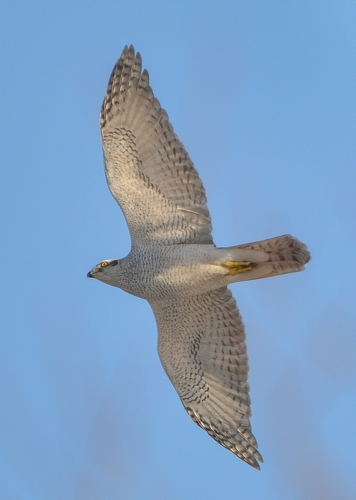
Havik (Astur gentilis) Havik
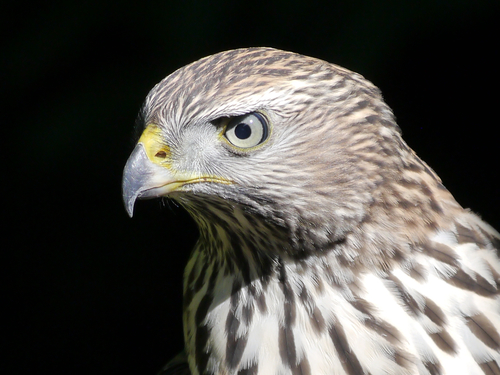
Amerikaanse havik (Astur atricapillus) Amerikaanse havik

Media

Laden…

Kort gezegd

Separating Eurasian and American Goshawks in the field is challenging, especially with juveniles, as both share similar size, structure, and overall plumage themes. The most reliable differences are subtle and require close attention to the pattern of underpart streaking in juveniles and, to a lesser extent, regional context. Adult plumages are extremely similar, lacking rusty barring and sharing the bold supercilium, so structure and jizz become more important. Juvenile American Goshawks show heavier, more even vertical streaking below, while Eurasian juveniles can be more variable. Both species have deep, deliberate wingbeats and a classic 'flap-flap-glide' flight, but Eurasian Goshawks are generally bulkier. Range is usually the deciding factor, but in overlap zones or captivity, careful scrutiny is required.

Herkenningstips

  1. Juvenile underpart streaking: Juvenile American Goshawks show heavier, more even vertical streaking on chest and belly; Eurasian juveniles are more variable, sometimes with broader or less uniform streaks. This is the most consistent age-specific mark but requires good views.
  2. Supercilium (eyebrow): Both species have a bold white supercilium as adults, but Eurasian Goshawks may show a broader stripe, especially in northern populations. This is subtle and not always diagnostic.
  3. Tail barring: Both species have 3–5 dark bars on the tail in all ages; this feature is not useful for separation.
  4. Adult underpart barring: Neither species shows rusty barring below as adults, which helps separate them from other regional hawks but not from each other.
  5. Flight style: Both species use deep, deliberate wingbeats and a 'flap-flap-glide' pattern. Eurasian Goshawks may soar more steadily, especially during migration, but this is not a reliable field mark for separation.
  6. Bulk and structure: Eurasian Goshawks are generally bulkier and more powerful-looking, with slightly longer wings relative to body size, but this is subtle and not always apparent unless both are seen together.
  7. Regional variation: Eurasian Goshawks show more clinal color variation (paler in the north, darker in the south), but this is not a reliable separator without extensive experience and regional knowledge.
  8. Eye color: Both species transition from pale yellow eyes in juveniles to orange or ochre in adults; this is not a separator.
  9. Bill and feet: Eurasian Goshawk has a relatively sizeable bill and particularly thick toes, but these features are not easily judged in the field.
  10. Confusion with other species: In North America, juvenile American Goshawks can be confused with large female Cooper's Hawks, but Cooper's show 'teardrop' streaking (tapered at the top) vs. the more even streaking of the goshawk. In Eurasia, male Goshawks are sometimes confused with female Sparrowhawks, but Goshawks are much larger and bulkier with relatively longer, more pointed wings.
  11. Range: In most cases, range is the most reliable separator: Eurasian Goshawk in Eurasia, American Goshawk in North America. However, this fails in captivity, vagrancy, or overlap zones.
  12. Moult timing: Not useful for field separation between these two species.
  13. Sexual dimorphism: Both species show strong size dimorphism, but this does not help separate them from each other.
  14. Habitat: Both occupy similar forested habitats; not diagnostic for separation.
  15. Vocalizations: No diagnostic differences described in the provided sources.

Grootte

Eurasian Goshawk is slightly heavier on average (adult body mass ~926g [wikidata]), but both species are medium-large raptors with similar proportions: broad wings, long tails, and robust bodies. The difference in mass is subtle and not reliably judged in the field unless both are seen side by side. Both sexes show marked size dimorphism, with females much larger than males, but this does not help separate the two species.

Verenkleed

Juvenile plumage is the main potential pitfall. Both Eurasian and American Goshawks lack rusty barring below as adults, which helps separate them from other regional hawks. Juvenile American Goshawks typically have heavier, more uniform vertical streaking on the chest and belly, while Eurasian juveniles are more variable, ranging from nearly pure white to heavily streaked or broadly cinnamon-striped. In both, the tail is barred (3–5 dark bars), and both develop a bold white supercilium as adults, often broader in Eurasian birds. Eye color transitions from pale yellow in juveniles to orange or ochre in adults for both species, but this is not a reliable separator. Overall, adult plumage is nearly indistinguishable; only subtle regional or individual variation might be noted, with Eurasian Goshawks showing more clinal color variation (from pale northern to darker southern birds).

Gedrag

Both species have similar flight styles: deep, deliberate wingbeats and a 'flap-flap-glide' pattern. Eurasian Goshawks, with slightly greater wing area, may soar more steadily, especially during migration, while American Goshawks are less likely to be seen soaring for extended periods. Both species are highly maneuverable, adapted for hunting in forests, and perch in similar upright postures. In direct comparison, Eurasian Goshawks may appear bulkier and more powerful, but this is subtle and not always apparent.

Habitat

Habitat is not a reliable separator in the strictest sense, as both species occupy similar ecological niches (temperate forests) in their respective ranges. Eurasian Goshawk is widespread across Eurasia, while American Goshawk is found in North America. In areas of potential vagrancy or captivity, habitat alone cannot be used for identification.

Stuur een betere beschrijving

Gebruik dezelfde onderdelen als de vergelijking. Je tekst staat meteen live.

Separating Eurasian and American Goshawks in the field is challenging, especially with juveniles, as both share similar size, structure, and overall plumage themes. The most reliable differences are subtle and require close attention to the pattern of underpart streaking in juveniles and, to a lesser extent, regional context. Adult plumages are extremely similar, lacking rusty barring and sharing the bold supercilium, so structure and jizz become more important. Juvenile American Goshawks show heavier, more even vertical streaking below, while Eurasian juveniles can be more variable. Both species have deep, deliberate wingbeats and a classic 'flap-flap-glide' flight, but Eurasian Goshawks are generally bulkier. Range is usually the deciding factor, but in overlap zones or captivity, careful scrutiny is required.

  1. Juvenile underpart streaking: Juvenile American Goshawks show heavier, more even vertical streaking on chest and belly; Eurasian juveniles are more variable, sometimes with broader or less uniform streaks. This is the most consistent age-specific mark but requires good views.
  2. Supercilium (eyebrow): Both species have a bold white supercilium as adults, but Eurasian Goshawks may show a broader stripe, especially in northern populations. This is subtle and not always diagnostic.
  3. Tail barring: Both species have 3–5 dark bars on the tail in all ages; this feature is not useful for separation.
  4. Adult underpart barring: Neither species shows rusty barring below as adults, which helps separate them from other regional hawks but not from each other.
  5. Flight style: Both species use deep, deliberate wingbeats and a 'flap-flap-glide' pattern. Eurasian Goshawks may soar more steadily, especially during migration, but this is not a reliable field mark for separation.
  6. Bulk and structure: Eurasian Goshawks are generally bulkier and more powerful-looking, with slightly longer wings relative to body size, but this is subtle and not always apparent unless both are seen together.
  7. Regional variation: Eurasian Goshawks show more clinal color variation (paler in the north, darker in the south), but this is not a reliable separator without extensive experience and regional knowledge.
  8. Eye color: Both species transition from pale yellow eyes in juveniles to orange or ochre in adults; this is not a separator.
  9. Bill and feet: Eurasian Goshawk has a relatively sizeable bill and particularly thick toes, but these features are not easily judged in the field.
  10. Confusion with other species: In North America, juvenile American Goshawks can be confused with large female Cooper's Hawks, but Cooper's show 'teardrop' streaking (tapered at the top) vs. the more even streaking of the goshawk. In Eurasia, male Goshawks are sometimes confused with female Sparrowhawks, but Goshawks are much larger and bulkier with relatively longer, more pointed wings.
  11. Range: In most cases, range is the most reliable separator: Eurasian Goshawk in Eurasia, American Goshawk in North America. However, this fails in captivity, vagrancy, or overlap zones.
  12. Moult timing: Not useful for field separation between these two species.
  13. Sexual dimorphism: Both species show strong size dimorphism, but this does not help separate them from each other.
  14. Habitat: Both occupy similar forested habitats; not diagnostic for separation.
  15. Vocalizations: No diagnostic differences described in the provided sources.

Eurasian Goshawk is slightly heavier on average (adult body mass ~926g [wikidata]), but both species are medium-large raptors with similar proportions: broad wings, long tails, and robust bodies. The difference in mass is subtle and not reliably judged in the field unless both are seen side by side. Both sexes show marked size dimorphism, with females much larger than males, but this does not help separate the two species.

Juvenile plumage is the main potential pitfall. Both Eurasian and American Goshawks lack rusty barring below as adults, which helps separate them from other regional hawks. Juvenile American Goshawks typically have heavier, more uniform vertical streaking on the chest and belly, while Eurasian juveniles are more variable, ranging from nearly pure white to heavily streaked or broadly cinnamon-striped. In both, the tail is barred (3–5 dark bars), and both develop a bold white supercilium as adults, often broader in Eurasian birds. Eye color transitions from pale yellow in juveniles to orange or ochre in adults for both species, but this is not a reliable separator. Overall, adult plumage is nearly indistinguishable; only subtle regional or individual variation might be noted, with Eurasian Goshawks showing more clinal color variation (from pale northern to darker southern birds).

Both species have similar flight styles: deep, deliberate wingbeats and a 'flap-flap-glide' pattern. Eurasian Goshawks, with slightly greater wing area, may soar more steadily, especially during migration, while American Goshawks are less likely to be seen soaring for extended periods. Both species are highly maneuverable, adapted for hunting in forests, and perch in similar upright postures. In direct comparison, Eurasian Goshawks may appear bulkier and more powerful, but this is subtle and not always apparent.

Habitat is not a reliable separator in the strictest sense, as both species occupy similar ecological niches (temperate forests) in their respective ranges. Eurasian Goshawk is widespread across Eurasia, while American Goshawk is found in North America. In areas of potential vagrancy or captivity, habitat alone cannot be used for identification.

Wijzigingen weggooien?

Je hebt niet-opgeslagen wijzigingen. Als je nu weggaat, gaan die verloren.

Havik · Amerikaanse havik · Mijn lastige vogels