

Hudsonmees vs Bruinkopmees
Poecile hudsonicus versus Poecile cinctus
Speel een quiz met Hudsonmees en Bruinkopmees
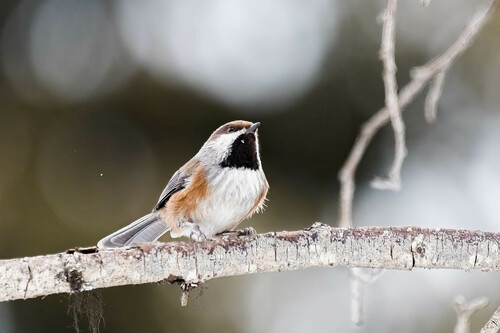 Hudsonmees
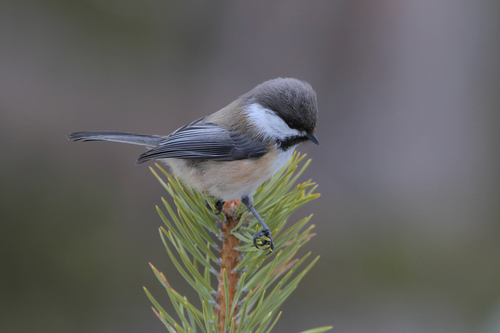 Bruinkopmees
Kort gezegd
The most reliable field mark to separate Boreal Chickadee from Siberian Tit is the color and contrast of the head and flanks: Boreal Chickadee shows a distinctly brown cap and brownish flanks, while Siberian Tit has a darker brown head with a pronounced dark eyestripe and paler, more cinnamon-toned mantle and flanks. Both are small, brownish tits of northern conifer forests, but Siberian Tit is slightly larger and bulkier, with a more contrasting head pattern. In flight or at rest, focus on the head and flank color, as well as the overall size and jizz. Both species can overlap in Alaska and northwest Canada, so careful attention to plumage is essential.
Herkenningstips
- Head Color and Contrast: Boreal Chickadee shows a brown cap that is clearly distinct from the paler greyish face and white cheek sides; Siberian Tit has a darker, more uniformly brown head with a strong dark eyestripe and white cheeks. This is the most reliable field mark in all seasons and ages.
- Flank Color: Boreal Chickadee has brownish flanks, blending into the white underparts; Siberian Tit's flanks are paler and more cinnamon or rusty, often appearing lighter and warmer than the Boreal Chickadee's.
- Mantle and Upperparts: Siberian Tit has a cinnamon-brown mantle that contrasts with the darker head, while Boreal Chickadee's upperparts are more uniformly grey-brown with less contrast.
- Throat Patch: Both species have a dark (blackish or dark brown) throat, but on Siberian Tit this merges more with the dark head and eyestripe, while on Boreal Chickadee the black throat stands out against the paler face and brown cap.
- Eyestripe: Siberian Tit has a strong, dark eyestripe that extends from the bill through the eye; Boreal Chickadee's eyestripe is less pronounced, making the face look plainer.
- Bill and Structure: Both have short, dark bills and long, notched tails. Siberian Tit is slightly bulkier and heavier, but structure is not a strong separator in the field.
- Wing Pattern: No distinctive age-specific wing patterns are described for either species, so do not rely on upperwing marks in flight or perched birds.
- Flight Style: Both species have bouncy, undulating flight, but Boreal Chickadee may show slightly more pronounced gliding between bursts of wingbeats. Not a strong separator.
- Juvenile/Immature Plumage: No unique juvenile or first-winter marks are described for either species; use adult head and flank color for all ages.
- Vocalizations: Boreal Chickadee's calls are higher-pitched and huskier, but vocal differences are subtle and not reliable for most observers.
- Habitat Context: In North America, Siberian Tit is restricted to Alaska and far northwest Canada, while Boreal Chickadee is widespread across the boreal zone. In Eurasia, only Siberian Tit is present.
- Seasonality: Both are resident year-round; do not use season as a separator.
- Sex Differences: No sexual dimorphism is described for either species; all marks apply to both sexes.
- Pitfalls: Beware of lighting conditions that can obscure head contrast, and of worn or fluffed plumage that can make flank and mantle color less obvious. Always try for a clear view of the head and flanks.
- Overlap Zones: In Alaska and northwest Canada, both species can occur together; careful attention to head and flank color is essential in these areas.
Grootte
Siberian Tit is the heavier and slightly larger of the two, with a typical length of 12.5–14 cm and a weight of 11–14.3 g, compared to Boreal Chickadee's 12.5–14.5 cm length but lighter average mass (9.8 g). In the field, Siberian Tit often looks a bit bulkier and more robust, but this difference is subtle and easily masked by posture or fluffing. Both species are similar in length, so size alone is rarely diagnostic unless seen side-by-side.
Verenkleed
No distinctive juvenile or first-winter wing patterns are described for either species, so separation relies on head and body plumage. Adult Boreal Chickadee has a brown cap, greyish face with white sides, a black throat, grey-brown upperparts, and brownish flanks. Siberian Tit (adult) has a darker brown head (especially on the throat and eyestripe), white cheeks, a cinnamon-brown mantle, blackish wings with pale fringes, and pale rusty-brown flanks. The Siberian Tit's head is more uniformly dark with a stronger eyestripe, and its mantle and flanks are paler and more cinnamon-toned than the Boreal Chickadee's more muted brown. Both have white underparts, but Boreal Chickadee's flanks are browner, while Siberian Tit's are paler and more rusty. In all ages, focus on the head color and contrast: Boreal Chickadee's brown cap is less extensive and less dark than the Siberian Tit's dark brown head and eyestripe.
Gedrag
Both species are active, acrobatic foragers in coniferous forests, often seen gleaning insects and seeds from branches. Boreal Chickadee tends to move in short, bouncy flights with brief glides, while Siberian Tit's movements are similar but may appear slightly more deliberate due to its bulkier build. Both cache food for winter and can be seen hanging upside down or hovering briefly while feeding. Socially, both form small flocks outside the breeding season, and both are resident year-round in their respective ranges.
Habitat
Both species are conifer specialists of northern forests. Boreal Chickadee is found in boreal forests across Alaska, Canada, and the northern US, while Siberian Tit occupies subarctic Scandinavia, the northern Palearctic, and extends into Alaska and far northwest Canada. Where their ranges overlap (notably in Alaska and northwest Canada), careful identification is required. Siberian Tit is more strictly associated with subarctic and taiga habitats, while Boreal Chickadee can be found slightly farther south in North America. Both avoid open areas and are rarely found far from dense conifer stands.
Geluid
Boreal Chickadee gives a husky "tsee-day-day" and a high-pitched trill, with complex calls used for communication and territory defense. Siberian Tit's vocalizations are not described in detail in the notes, but both species have typical chickadee-like calls. In practice, Boreal Chickadee's calls are higher-pitched and huskier than those of most other chickadees, but vocal differences between these two species are subtle and not reliably diagnostic in the field without experience.