

Motmot

Japanse meeuw vs Stormmeeuw

Larus crassirostris versus Larus canus

Speel een quiz met Japanse meeuw en Stormmeeuw

Japanse meeuw (Larus crassirostris) Japanse meeuw
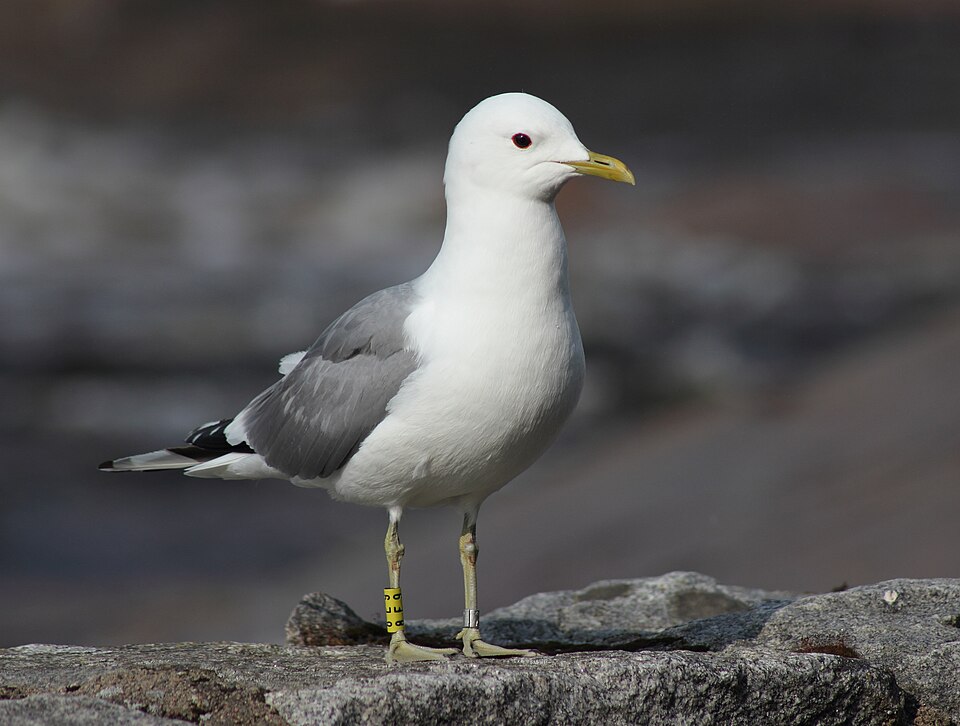
Stormmeeuw (Larus canus) Stormmeeuw

Media

Laden…

Kort gezegd

The most reliable field mark to separate Black-tailed Gull from Common Gull is the tail pattern in flight: adult Black-tailed Gulls show a solid black tail band, while Common Gulls have an all-white tail as adults. Immature birds are trickier, but Black-tailed Gulls retain a dark tail band longer. Black-tailed Gulls are also noticeably larger and bulkier, with a heavier bill that has a distinctive red and black tip, compared to the slimmer, unmarked greenish-yellow bill of Common Gull. Leg color is helpful in breeding adults (yellow in both, but brighter in Black-tailed), but less so in winter or immatures. Both species can occur together in East Asia, especially in winter, so careful attention to these details is essential.

Herkenningstips

  1. Tail pattern in flight (all ages): Adult Black-tailed Gulls show a solid black tail band, visible even at distance; Common Gulls have an all-white tail as adults. Immature Black-tailed Gulls retain a dark tail band longer than Common Gulls, making this a key mark for all but the youngest Common Gulls.
  2. Bill pattern (adults): Black-tailed Gull has a yellow bill with a red and black tip (both colors at the tip); Common Gull's bill is greenish-yellow and unmarked in breeding season, sometimes with a faint dark band in winter. This is reliable at close range in adults.
  3. Size and bulk: Black-tailed Gull is noticeably larger and heavier, with a thicker neck and larger head. In mixed flocks, look for the bigger, more robust bird.
  4. Leg color (breeding adults): Both can have yellow legs, but Black-tailed Gull's are brighter and more saturated. Common Gull's legs are yellow in breeding season but can be dull or greyish in winter; immatures have pink or greyish legs.
  5. Wingtip pattern (adults): Black-tailed Gull has black wingtips with small white spots; Common Gull has black wingtips with large white 'mirrors' on p9 and p10. This is subtle but visible in good flight views.
  6. Head streaking (winter): Common Gull shows fine grey streaking on the head in winter; Black-tailed Gull's head is less distinctly streaked.
  7. Upperpart shade: Both are grey above, but Black-tailed Gull is slightly darker. This is subtle and best used in direct comparison.
  8. Voice: Listen for the cat-like 'mew' of Black-tailed Gull versus the laughing cry of Common Gull. This is often the clincher in colonies or flocks.
  9. Habitat: Black-tailed Gull is almost always coastal or on offshore islands; Common Gull can be found inland, especially in winter.
  10. Behavior: Black-tailed Gull is bolder and more likely to approach people, especially at protected colonies in Japan. Common Gull is more wary and less likely to be seen in tourist areas.
  11. Immature leg color: Young Common Gulls have pink legs, turning greyish before yellow; Black-tailed Gulls' leg color is less variable but can be duller in immatures.
  12. Bill shape: Black-tailed Gull's bill is heavier and more robust; Common Gull's is shorter and more tapered.
  13. Primary 'mirror' size: Common Gull's white primary spots ('mirrors') are larger and more obvious than Black-tailed Gull's, useful in close flight views.
  14. Seasonal context: In East Asia in winter, both species can occur together, but Black-tailed Gull is more numerous along rocky coasts and islands.
  15. Pitfalls: Immature plumages can be confusing, especially in flight. Prioritize tail pattern and bill tip color, and use size and voice as supporting marks.

Grootte

Black-tailed Gull is substantially heavier (average 556.5g vs 386.5g for Common Gull [wikidata]) and longer-winged (wingspan 126–128 cm vs 100–115 cm [wikipedia]). In the field, Black-tailed Gull appears bulkier and longer-bodied, with a larger head and thicker neck, while Common Gull is more petite and compact. When perched together, Black-tailed Gull stands out as the larger, more robust bird.

Verenkleed

Juvenile and immature Black-tailed Gulls are best separated from Common Gulls by the presence of a strong black tail band, which persists into subadult plumages. In contrast, Common Gulls lose their tail band earlier, with adults showing a clean white tail. Both species have grey upperparts and white underparts as adults, but Black-tailed Gull is slightly darker above. The wingtips of adult Black-tailed Gull are black with small white spots, while Common Gull has black wingtips with large white 'mirrors' on the outer primaries (especially p9 and p10). Bill color is a key difference: Black-tailed Gull adults have a yellow bill with a red and black tip, while Common Gull's bill is greenish-yellow and unmarked in breeding season, sometimes with a faint dark band in winter. Leg color is yellow in both during breeding, but Black-tailed's is brighter and more consistently yellow; Common Gull's legs can be dull yellow or even greyish outside the breeding season. Immature Common Gulls have pink legs, turning greyish before becoming yellow as adults. In winter, Common Gull's head is streaked grey, while Black-tailed Gull's is less distinctly streaked.

Gedrag

Both species are colonial nesters and often seen in flocks, but Black-tailed Gulls are notably tame and approachable in some Japanese colonies, even becoming tourist attractions. Black-tailed Gulls often follow ships and fishing fleets, sometimes stealing food from other seabirds. Common Gulls are more likely to be seen inland, especially in winter, and are less closely associated with human activity. Both species scavenge and hunt small prey, but Black-tailed Gull may be more aggressive in mixed flocks.

Habitat

Black-tailed Gull is strongly coastal, breeding and wintering along East Asian shorelines and islands, and is rarely found far inland. Common Gull breeds across the northern Palearctic in a variety of habitats, including coasts, lakes, and marshes, and winters over a broad area from Europe to East Asia, often occurring inland as well as on coasts. In East Asia, both species can occur together in winter, but Black-tailed Gull is more strictly marine.

Geluid

Black-tailed Gull is famous for its cat-like 'mew' call, which is distinctive and frequently heard, especially at colonies. Common Gull has a high-pitched, laughing cry, less nasal and not cat-like. If you hear a repeated 'mew' reminiscent of a cat, suspect Black-tailed Gull; if the call is more of a typical gull laugh, Common Gull is more likely.

Stuur een betere beschrijving

Gebruik dezelfde onderdelen als de vergelijking. Je tekst staat meteen live.

The most reliable field mark to separate Black-tailed Gull from Common Gull is the tail pattern in flight: adult Black-tailed Gulls show a solid black tail band, while Common Gulls have an all-white tail as adults. Immature birds are trickier, but Black-tailed Gulls retain a dark tail band longer. Black-tailed Gulls are also noticeably larger and bulkier, with a heavier bill that has a distinctive red and black tip, compared to the slimmer, unmarked greenish-yellow bill of Common Gull. Leg color is helpful in breeding adults (yellow in both, but brighter in Black-tailed), but less so in winter or immatures. Both species can occur together in East Asia, especially in winter, so careful attention to these details is essential.

  1. Tail pattern in flight (all ages): Adult Black-tailed Gulls show a solid black tail band, visible even at distance; Common Gulls have an all-white tail as adults. Immature Black-tailed Gulls retain a dark tail band longer than Common Gulls, making this a key mark for all but the youngest Common Gulls.
  2. Bill pattern (adults): Black-tailed Gull has a yellow bill with a red and black tip (both colors at the tip); Common Gull's bill is greenish-yellow and unmarked in breeding season, sometimes with a faint dark band in winter. This is reliable at close range in adults.
  3. Size and bulk: Black-tailed Gull is noticeably larger and heavier, with a thicker neck and larger head. In mixed flocks, look for the bigger, more robust bird.
  4. Leg color (breeding adults): Both can have yellow legs, but Black-tailed Gull's are brighter and more saturated. Common Gull's legs are yellow in breeding season but can be dull or greyish in winter; immatures have pink or greyish legs.
  5. Wingtip pattern (adults): Black-tailed Gull has black wingtips with small white spots; Common Gull has black wingtips with large white 'mirrors' on p9 and p10. This is subtle but visible in good flight views.
  6. Head streaking (winter): Common Gull shows fine grey streaking on the head in winter; Black-tailed Gull's head is less distinctly streaked.
  7. Upperpart shade: Both are grey above, but Black-tailed Gull is slightly darker. This is subtle and best used in direct comparison.
  8. Voice: Listen for the cat-like 'mew' of Black-tailed Gull versus the laughing cry of Common Gull. This is often the clincher in colonies or flocks.
  9. Habitat: Black-tailed Gull is almost always coastal or on offshore islands; Common Gull can be found inland, especially in winter.
  10. Behavior: Black-tailed Gull is bolder and more likely to approach people, especially at protected colonies in Japan. Common Gull is more wary and less likely to be seen in tourist areas.
  11. Immature leg color: Young Common Gulls have pink legs, turning greyish before yellow; Black-tailed Gulls' leg color is less variable but can be duller in immatures.
  12. Bill shape: Black-tailed Gull's bill is heavier and more robust; Common Gull's is shorter and more tapered.
  13. Primary 'mirror' size: Common Gull's white primary spots ('mirrors') are larger and more obvious than Black-tailed Gull's, useful in close flight views.
  14. Seasonal context: In East Asia in winter, both species can occur together, but Black-tailed Gull is more numerous along rocky coasts and islands.
  15. Pitfalls: Immature plumages can be confusing, especially in flight. Prioritize tail pattern and bill tip color, and use size and voice as supporting marks.

Black-tailed Gull is substantially heavier (average 556.5g vs 386.5g for Common Gull [wikidata]) and longer-winged (wingspan 126–128 cm vs 100–115 cm [wikipedia]). In the field, Black-tailed Gull appears bulkier and longer-bodied, with a larger head and thicker neck, while Common Gull is more petite and compact. When perched together, Black-tailed Gull stands out as the larger, more robust bird.

Juvenile and immature Black-tailed Gulls are best separated from Common Gulls by the presence of a strong black tail band, which persists into subadult plumages. In contrast, Common Gulls lose their tail band earlier, with adults showing a clean white tail. Both species have grey upperparts and white underparts as adults, but Black-tailed Gull is slightly darker above. The wingtips of adult Black-tailed Gull are black with small white spots, while Common Gull has black wingtips with large white 'mirrors' on the outer primaries (especially p9 and p10). Bill color is a key difference: Black-tailed Gull adults have a yellow bill with a red and black tip, while Common Gull's bill is greenish-yellow and unmarked in breeding season, sometimes with a faint dark band in winter. Leg color is yellow in both during breeding, but Black-tailed's is brighter and more consistently yellow; Common Gull's legs can be dull yellow or even greyish outside the breeding season. Immature Common Gulls have pink legs, turning greyish before becoming yellow as adults. In winter, Common Gull's head is streaked grey, while Black-tailed Gull's is less distinctly streaked.

Both species are colonial nesters and often seen in flocks, but Black-tailed Gulls are notably tame and approachable in some Japanese colonies, even becoming tourist attractions. Black-tailed Gulls often follow ships and fishing fleets, sometimes stealing food from other seabirds. Common Gulls are more likely to be seen inland, especially in winter, and are less closely associated with human activity. Both species scavenge and hunt small prey, but Black-tailed Gull may be more aggressive in mixed flocks.

Black-tailed Gull is strongly coastal, breeding and wintering along East Asian shorelines and islands, and is rarely found far inland. Common Gull breeds across the northern Palearctic in a variety of habitats, including coasts, lakes, and marshes, and winters over a broad area from Europe to East Asia, often occurring inland as well as on coasts. In East Asia, both species can occur together in winter, but Black-tailed Gull is more strictly marine.

Black-tailed Gull is famous for its cat-like 'mew' call, which is distinctive and frequently heard, especially at colonies. Common Gull has a high-pitched, laughing cry, less nasal and not cat-like. If you hear a repeated 'mew' reminiscent of a cat, suspect Black-tailed Gull; if the call is more of a typical gull laugh, Common Gull is more likely.

Wijzigingen weggooien?

Je hebt niet-opgeslagen wijzigingen. Als je nu weggaat, gaan die verloren.

Japanse meeuw · Stormmeeuw · Mijn lastige vogels