

Motmot

オウゴンチョウ 対 ズグロオウゴンチョウ

Euplectes afer 対 Euplectes aureus

オウゴンチョウとズグロオウゴンチョウのクイズ
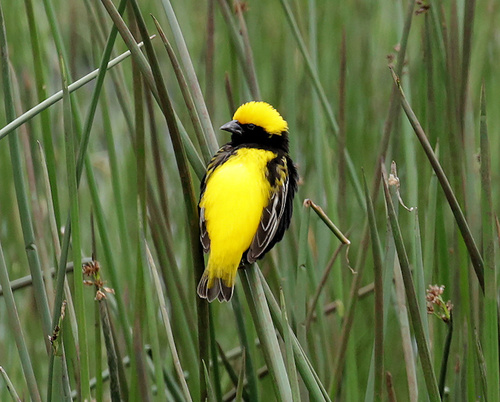
オウゴンチョウ (Euplectes afer) オウゴンチョウ
ズグロオウゴンチョウ (Euplectes aureus) ズグロオウゴンチョウ

メディア

読み込み中…

要点

イエロークラウンビショップとズグロオウゴンチョウを区別する最も信頼できるフィールドマークは、繁殖羽衣のオスの頭の模様です:イエロークラウンビショップのオスは鮮やかな黄色の冠と額を示しますが、ズグロオウゴンチョウのオスはこの黄色の冠が全くありません。両種の雌と非繁殖のオスはずっと地味で、区別するのが難しいですが、イエロークラウンビショップは特に小さく、体が軽いです。もし目にするビショップが目を引く黄色の冠を持っていれば、それはイエロークラウンです;もし黄色が背中に限定されていて冠にはないなら、それはズグロオウゴンチョウです。サイズと構造も役立ちます:ズグロオウゴンチョウはずっと重く、がっしりとしています。未熟な鳥や非繁殖の鳥はサイズと微妙な羽毛の違いで最もよく区別されますが、直接比較なしでは混乱が生じる可能性があります。

識別のコツ

  1. 繁殖オスの頭の模様が最も良いフィールドマークです: イエロークラウンビショップのオスは鮮やかな黄色の冠、額、後頭部を持っています;ズグロオウゴンチョウのオスは冠に黄色を示さず、背中にのみ黄色があります。このマークは繁殖期に診断的です。
  2. 体のサイズと体重: ズグロオウゴンチョウはずっと重く、がっしりとしています(25 g 対 14.5 g)。特に直接比較で明らかにがっしりとした大きなビショップを見たら、ズグロオウゴンチョウを疑ってください。
  3. 繁殖オスのくちばしの色: イエロークラウンビショップのオスは繁殖期に黒いくちばしを持っています;繁殖期以外では、くちばしは角の色になります。ズグロオウゴンチョウのくちばしの色は指定されていませんが、おそらく似ているので注意して使用してください。
  4. 雌と非繁殖羽衣: 両種は茶色で縞模様ですが、イエロークラウンビショップは小さく、より繊細です。イエロークラウンの下部はオフホワイトで細かい縞模様があります;ズグロオウゴンチョウのそれはおそらく似ていますが、より大きく、がっしりとした鳥です。
  5. 黄色の分布: イエロークラウンでは、黄色は冠、尾、背中に存在します(繁殖オス);ズグロオウゴンチョウでは、黄色は背中に限定され、冠にはありません。
  6. 飛行時と止まっている時の印象: 両種に特有の翼や尾の模様は記載されていないので、全体のサイズと色を使用してください。ズグロオウゴンチョウは飛行中や止まっている時によりがっしりと見えます。
  7. 足と足の色: 両種はピンクがかった茶色の足と足を持っています;区別には役立ちません。
  8. 分布と生息地: 西アンゴラやサン・トメの外で見られた場合、ほぼ確実にズグロオウゴンチョウではありません。イエロークラウンは広範囲に分布し、適応力があり、農業や湿地の端によく見られます。
  9. 季節的混乱: 非繁殖期には、オスは雌に似ており、ずっと地味です;サイズ、構造、微妙な羽毛の違いに頼ってください。
  10. 特有の幼鳥/未熟な翼の模様はありません: 両種とも未熟な羽衣に特有の上翼や飛行のマークは示さないので、年齢特有の区別はサイズと全体の色に依存します。
  11. 肩の斑点: イエロークラウンビショップのオスは繁殖羽衣で肩に黄色の斑点を持っています;ズグロオウゴンチョウの肩の色は指定されていませんが、明るい可能性は低いです。
  12. 尾の色: イエロークラウンビショップのオスは繁殖羽衣で黄色の尾を持っています;良い光の下でこれを確認してください。
  13. 他のビショップとの羽毛の混乱: イエロークラウンビショップの繁殖オスはキゴシオウゴンチョウ(Euplectes capensis)に似ることがありますが、その種は大きく、黄色の冠がありません。ズグロオウゴンチョウはその限られた分布と黄色の冠がないため、イエロークラウンと混同される可能性は低いです。
  14. くちばしの形: 両者は織り手に典型的な短く円錐形のくちばしを持っています;区別には役立ちません。
  15. コミュニティのヒント: 疑わしい場合は、冠の黄色の有無と鳥の全体のサイズと体重に焦点を当ててください。

大きさ

ズグロオウゴンチョウはイエロークラウンビショップよりもかなり大きく、重いです。[wikidata]によると、ズグロオウゴンチョウは平均25.0 gで、イエロークラウンはわずか14.5 gです。フィールドでは、これはズグロオウゴンチョウにとって明らかにがっしりとした、より頑丈な鳥に変わりますが、より繊細でスズメのようなイエロークラウンと比較されます。両者は小さなビショップですが、経験があれば見分けられるほどの違いがあります、特に両方が存在する場合は。長さは似ています(イエロークラウン:95–105 mm)ですが、ズグロオウゴンチョウの余分な質量はそれにがっしりとした外観を与えます。

羽色

繁殖オスは最も簡単に区別されます。イエロークラウンビショップのオスは鮮やかな黄色の冠、額、後頭部を持ち、下顔、喉、胸、腹には黒があり、さらに黄色の尾と背中があります。彼らの翼と尾は茶色です。ズグロオウゴンチョウのオスは対照的に、黄色の冠が全くなく、黄色は背中に限定され、頭はそれほど明るくありません。両種の非繁殖のオスと雌はずっと地味です:イエロークラウンビショップの雌と非繁殖のオスは上面が淡い茶色で、暗い縞模様があり、下部はオフホワイトで細かい縞模様がありますが、ズグロオウゴンチョウの同等の羽毛は詳細に記載されていませんが、他のEuplectesビショップに似ている可能性があります—茶色がかった縞模様ですが、より大きく、がっしりとしています。両種に特有の幼鳥や未熟な上翼のパターンは記載されていないので、飛行時の視点は主にサイズと全体の色に依存します。くちばしの色は役立ちます:繁殖オスのイエロークラウンは黒いくちばしを持ち、繁殖期以外では角色に変わります;ズグロオウゴンチョウのくちばしの色は指定されていませんが、おそらく似ています。

行動

両種は織り手であり、草原に目立って止まったり、繁殖期にディスプレイしたりするなど、Euplectesビショップに典型的な行動を示します。情報源には特定の行動の違いは記載されていません。両者は繁殖期以外に群れで見られることがあり、しばしば草や雑草の生息地に関連しています。

生息環境

イエロークラウンビショップはサハラ以南のアフリカ全体に広く分布し、いくつかの地域に導入されています。草原、湿地、農業地(特に小麦やソルガム)を好み、しばしば水の近くに見られます。ズグロオウゴンチョウははるかに制限されており、西アンゴラとサン・トメ島にのみ見られます。この限られた範囲の外にいる場合、ビショップはほぼ確実にズグロオウゴンチョウではありません。両種は草の多い開けた生息地を好みますが、分布は強い手がかりです。

より良い説明を送る

比較と同じ項目を使ってください。文章はすぐに公開されます。

The most reliable field mark to separate Yellow-crowned Bishop from Golden-backed Bishop is the male's head pattern in breeding plumage: Yellow-crowned Bishop males show a brilliant yellow crown and forehead, while Golden-backed Bishop males lack this yellow crown entirely. Females and non-breeding males of both species are much duller and can be tricky to separate, but Yellow-crowned Bishop is notably smaller and lighter-bodied. If you see a bishop with a striking yellow crown, it's Yellow-crowned; if the yellow is restricted to the back and not the crown, it's Golden-backed. Size and structure also help: Golden-backed Bishop is much heavier and bulkier. Immature and non-breeding birds are best separated by size and subtle plumage differences, but confusion is likely without direct comparison.

  1. Breeding male head pattern is the single best field mark: Yellow-crowned Bishop males have a brilliant yellow crown, forehead, and hindcrown; Golden-backed Bishop males never show yellow on the crown, only on the back. This mark is diagnostic in breeding season.
  2. Body size and bulk: Golden-backed Bishop is much heavier and bulkier (25 g vs 14.5 g). If you see a bishop that looks notably chunky and large, especially in direct comparison, suspect Golden-backed.
  3. Bill color in breeding males: Yellow-crowned Bishop males have a black bill in breeding season; outside breeding, the bill is horn-colored. Golden-backed's bill color is not specified but likely similar, so use with caution.
  4. Female and non-breeding plumage: Both species are brown and streaked, but Yellow-crowned Bishop is smaller and more delicate. The underparts of Yellow-crowned are off-white with fine streaks; Golden-backed's are likely similar but on a larger, bulkier bird.
  5. Yellow distribution: On Yellow-crowned, yellow is present on the crown, rump, and back (breeding males); on Golden-backed, yellow is restricted to the back, not the crown.
  6. Flight and perched jizz: No distinctive wing or tail patterns are described for either species, so use overall size and color. Golden-backed will appear more robust in flight and when perched.
  7. Leg and foot color: Both species have pinkish-brown legs and feet; not useful for separation.
  8. Range and habitat: If seen outside western Angola or São Tomé, it is almost certainly not Golden-backed Bishop. Yellow-crowned is widespread and adaptable, often found in agricultural or wetland edges.
  9. Seasonal confusion: In non-breeding season, males resemble females and are much duller; rely on size, structure, and subtle plumage differences.
  10. No distinctive juvenile/immature wing pattern: Neither species shows unique upperwing or flight marks in immature plumages, so age-specific separation relies on size and overall coloration.
  11. Shoulder patch: Yellow-crowned Bishop males have a yellow patch on the shoulder in breeding plumage; Golden-backed's shoulder color is not specified but is less likely to be as bright.
  12. Rump color: Yellow-crowned Bishop males have a yellow rump in breeding plumage; check for this in good light.
  13. Plumage confusion with other bishops: Yellow-crowned Bishop breeding males can resemble Yellow Bishop (Euplectes capensis), but that species is larger and lacks the yellow crown. Golden-backed is less likely to be confused with Yellow-crowned due to its restricted range and lack of yellow crown.
  14. Bill shape: Both have short, conical bills typical of weavers; not useful for separation.
  15. Community tip: When in doubt, focus on the presence or absence of yellow on the crown and the bird's overall size and bulk.

Golden-backed Bishop is significantly larger and heavier than Yellow-crowned Bishop. According to [wikidata], Golden-backed averages 25.0 g, while Yellow-crowned is only 14.5 g. In the field, this translates to a noticeably bulkier, more robust bird for Golden-backed, compared to the more delicate, sparrow-like Yellow-crowned. Both are small bishops, but the difference is substantial enough to be seen with experience, especially if both are present. Length is similar (Yellow-crowned: 95–105 mm), but Golden-backed's extra mass gives it a chunkier appearance.

Breeding males are most easily separated. Yellow-crowned Bishop males have a vivid yellow crown, forehead, and hindcrown, with black on the lower face, throat, breast, and belly, plus a yellow rump and back. Their wings and tail are brown. Golden-backed Bishop males, in contrast, lack the yellow crown entirely; their yellow is confined to the back, and the head is not as brightly marked. Non-breeding males and females of both species are much duller: Yellow-crowned Bishop females and non-breeding males are pale brown above with darker streaks and off-white underparts with fine streaking, while Golden-backed Bishop's equivalent plumages are not described in detail in the sources, but are likely similar to other Euplectes bishops—brownish and streaked, but larger and bulkier. No distinctive juvenile or immature upperwing patterns are described for either species, so flight views rely mainly on size and overall coloration. Bill color can help: breeding male Yellow-crowned has a black bill, turning horn-colored outside breeding; Golden-backed's bill color is not specified, but likely similar.

Both species are weavers and show similar behaviors typical of Euplectes bishops, such as perching conspicuously in grasslands and displaying in breeding season. No specific behavioral differences are described in the sources. Both may be seen in flocks outside the breeding season and are often associated with grassy or weedy habitats.

Yellow-crowned Bishop is widespread across sub-Saharan Africa and has been introduced to several regions outside its native range. It favors grasslands, marshy areas, and agricultural fields (especially wheat and sorghum), often near water. Golden-backed Bishop is much more restricted, found only in western Angola and São Tomé Island. If you are outside this limited range, a bishop is almost certainly not Golden-backed. Both species prefer grassy, open habitats, but range is a strong clue.

変更を破棄しますか?

保存していない編集があります。今離れると失われます。

オウゴンチョウ · ズグロオウゴンチョウ · 苦手な鳥