

キムネヒメクイナ 対 キタノドジロコビトクイナ
Laterallus flaviventer 対 Laterallus albigularis
キムネヒメクイナとキタノドジロコビトクイナのクイズ
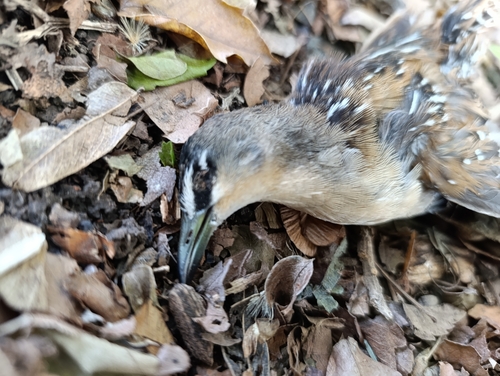 キムネヒメクイナ
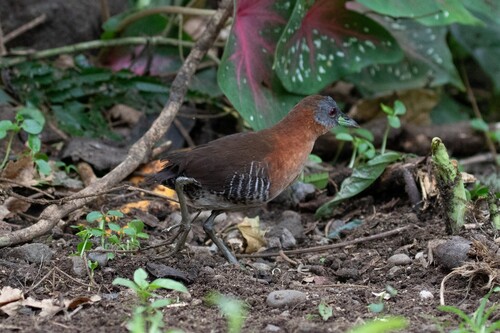 キタノドジロコビトクイナ
要点
The most reliable way to separate Yellow-breasted Crake from White-throated Crake is by face and breast coloration: Yellow-breasted shows a buffy face with a dark eye-line and a distinctive buff-yellow breast, while White-throated has a rufous or gray face (depending on subspecies) with a sharply white throat and upper breast. Both species share black-and-white barred flanks and belly, but the overall tone of the upperparts and face is a strong clue. White-throated Crake is notably larger and heavier, with a more olive-brown back and a rufous or gray face, whereas Yellow-breasted is smaller, browner above, and has a unique pale supercilium. These differences are visible in perched or foraging birds, but can be subtle in poor light or brief views.
識別のコツ
- Face pattern is key: Yellow-breasted Crake shows a buffy face with a dark line through the eye and a pale buff-white supercilium. White-throated Crake has a rufous or gray face (depending on subspecies) and lacks the pale supercilium.
- Throat and breast color: Yellow-breasted has a white throat and a buff-yellow breast, while White-throated has a white throat and upper breast but a rufous (or gray) face and lower breast. The yellow breast is unique to Yellow-breasted.
- Upperparts: Yellow-breasted has brown upperparts; White-throated's are olive-brown, often appearing duller or greener in tone.
- Flank and belly barring: Both species have black-and-white barred flanks and belly, so this is not a useful separator.
- Size: White-throated Crake is noticeably larger and heavier. If seen side by side or with experience, the difference is clear, but beware of perspective and posture.
- Subspecies variation: Some White-throated subspecies (cinereiceps) have a gray face, and cerdaleus has an all-rufous head and throat, but all retain a white throat patch. Yellow-breasted subspecies vary mainly in size and color intensity, not in face pattern.
- Sex and age: Both species have sexes alike and no described age-related plumage differences, so these marks are reliable year-round.
- No distinctive flight pattern: Neither species is described as having unique upperwing or flight marks; identification relies on perched or foraging views.
- Supercilium: The pale supercilium of Yellow-breasted is unique among New World rails and is absent in White-throated.
- Face color: The rufous or gray face of White-throated is a strong contrast to the buffy face of Yellow-breasted.
- Breast color: The buff-yellow breast of Yellow-breasted stands out against the white upper breast of White-throated.
- Context: If seen in the Caribbean islands, Yellow-breasted is much more likely; both can occur in Central America and northern South America.
- Behavior: Both are secretive and behave similarly, so do not rely on jizz or movement.
- Habitat: Both use similar wetland habitats, so habitat is not a strong separator where both occur.
- Voice: No comparative vocalization information is available in the sources; do not rely on calls for separation.
大きさ
White-throated Crake is significantly larger and heavier than Yellow-breasted Crake. White-throated measures 14–16 cm in length and weighs about 45–50 g, while Yellow-breasted is 12.5–14 cm and weighs 20–29 g. This size difference is often noticeable in direct comparison or with experience, but can be hard to judge in isolation. Both species have similar rail-like proportions, but White-throated appears bulkier and more robust.
羽色
No distinctive age-specific wing or flight pattern is described for either species, so separation relies on body and face plumage. Adult Yellow-breasted Crake has a buffy face with a dark eye-stripe and a pale supercilium, brown upperparts, a white throat, buff-yellow breast, and black-and-white banded flanks and belly. In contrast, adult White-throated Crake (nominate) has a white throat and upper breast, a rufous face and lower breast, olive-brown crown, nape, and upperparts, and similarly barred black-and-white belly and vent. Subspecies variation in White-throated can introduce a gray face (cinereiceps) or an entirely rufous head and throat (cerdaleus), but the white throat is always present. The buffy face and yellow breast of Yellow-breasted are unique among New World rails and are the best plumage clues. Both sexes are similar in each species, and no seasonal or age-related differences are described.
行動
Both species are secretive rails, typically skulking in dense marsh or wet grassland vegetation. Their behavior is similar: they are more often heard than seen, and when visible, they move quickly and low to the ground. There is no strong behavioral difference described that aids identification between these two species.
生息環境
Ranges overlap in Central America and northern South America, but Yellow-breasted Crake also occurs on several Caribbean islands and more widely in South America. Both species inhabit marshes, wet grasslands, and similar wetland habitats. Habitat alone is not a reliable separator where both occur, but Yellow-breasted may be found in a broader range of locations, including more islands.
キムネヒメクイナ · キタノドジロコビトクイナ · 苦手な鳥