

Motmot

アマゾンアジサシ 対 ペルーアジサシ

Sternula superciliaris 対 Sternula lorata

アマゾンアジサシとペルーアジサシのクイズ

アマゾンアジサシ (Sternula superciliaris) アマゾンアジサシ
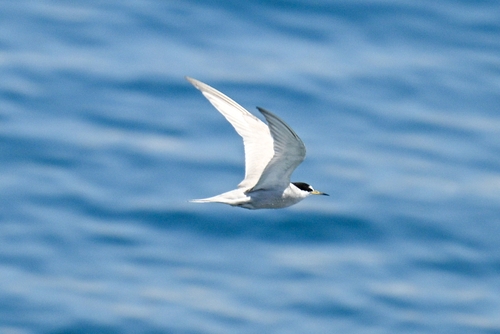
ペルーアジサシ (Sternula lorata) ペルーアジサシ

メディア

読み込み中…

要点

The most reliable field mark to separate Yellow-billed Tern from Peruvian Tern is the underpart color: Yellow-billed Tern has clean white underparts, while Peruvian Tern shows pale grey on the chest, belly, and flanks. Both species are small, yellow-billed terns with black caps, but the Peruvian Tern’s bill has a black tip, and its underparts are distinctly greyer. Juveniles of Yellow-billed Tern lack the black cap, while Peruvian Tern juveniles are not described in detail but likely resemble adults. In flight, both show silvery grey upperwings, but the underpart color and bill pattern are key. Habitat can help: Peruvian Tern is coastal and rare, while Yellow-billed Tern is widespread on inland rivers and lakes.

識別のコツ

  1. Underpart color is the single best field mark: Yellow-billed Tern is white below; Peruvian Tern is pale grey on the chest, belly, and flanks. This is visible in good light and especially in flight or when perched side-on.
  2. Bill color and pattern: Yellow-billed Tern has an entirely yellow bill, while Peruvian Tern’s bill is yellow with a black tip. This is best seen at close range or in good light; beware shadow or mud obscuring the tip.
  3. Crown and forehead: Both species have a black crown and nape with a white forehead in adults. This is not a separator.
  4. Leg color: Both have yellowish legs; not a reliable field mark.
  5. Juvenile plumage: Juvenile Yellow-billed Tern is brown and white without a black cap, so a small tern with a brownish, capless head is likely Yellow-billed Tern. Juvenile Peruvian Tern is not described, but likely similar to adults; thus, a brown-capped, capless juvenile in South America is almost certainly Yellow-billed Tern.
  6. Upperwing and tail: Both have silvery grey upperwings and grey tails; no distinctive flight pattern or upperwing mark is described for either species, so do not rely on this.
  7. Flight style: Peruvian Tern is noted for a very rapid, characteristic wingbeat. If you see a very small tern with unusually fast wingbeats on the Pacific coast, consider Peruvian Tern.
  8. Habitat and range: If you are inland (rivers, lakes, swamps), it is almost certainly Yellow-billed Tern. Peruvian Tern is coastal and rare, found only on the Pacific coast of northern Chile, Peru, and Ecuador.
  9. Colony context: Yellow-billed Tern often nests in dense colonies on sandbanks and beaches, sometimes with other terns and skimmers. Peruvian Tern is less likely to be found in such inland colonies.
  10. Voice: If you hear a shrill "kik" or harsh "gree" or a descending "kee-ee-eer" from a small tern on the Pacific coast, it may be Peruvian Tern. Yellow-billed Tern’s calls are not described, so absence of these calls is not diagnostic.
  11. Season: Both species breed in the austral spring/summer, but Yellow-billed Tern is more likely to be encountered year-round inland.
  12. Pitfalls: Beware that lighting can make the pale grey of Peruvian Tern look whiter, and mud or shadow can obscure the black bill tip. Always try to see both underparts and bill tip together.
  13. Abundance: Peruvian Tern is rare and threatened; Yellow-billed Tern is widespread and common in its range. If you are in a region where both could occur (e.g., coastal Peru), scrutinize underparts and bill tip closely.
  14. Sex and age: No sexual dimorphism is described for either species; all field marks apply to both sexes.
  15. Summary tip: If you see a small tern with a yellow bill and white underparts away from the Pacific coast, it is almost certainly Yellow-billed Tern. Only consider Peruvian Tern if you are on the Pacific coast and see a small tern with a yellow bill with a black tip and greyish underparts.

大きさ

Both species are very small terns, with nearly identical body lengths: Yellow-billed Tern measures about 23–25 cm, and Peruvian Tern about 24 cm. Their weights are similar (Yellow-billed Tern: 40–57 g; Peruvian Tern not specified but expected to be comparable). Size is not a reliable separator in the field.

羽色

For adults, the most diagnostic difference is underpart color: Yellow-billed Tern has white underparts (throat, breast, belly, flanks), while Peruvian Tern shows pale grey on the chest, belly, and flanks, with white only on the throat, chin, breast, and undertail. Both have black crowns and napes, white foreheads, and silvery grey upperwings and backs. The bill of Yellow-billed Tern is entirely yellow, while Peruvian Tern’s bill is yellow with a black tip. Both have yellowish legs, but Peruvian Tern’s are described as yellowish (possibly duller). Juvenile Yellow-billed Terns are brown and white without the black cap; juvenile Peruvian Tern plumage is not detailed, but likely similar to adults. No distinctive upperwing pattern is described for either species in any age, so focus on underpart and bill color.

行動

Both species forage by hovering and picking prey from the water’s surface, typical of terns. Peruvian Tern is noted for a very rapid, characteristic wingbeat. Yellow-billed Tern often nests in dense colonies and is aggressive in nest defense. Peruvian Tern’s behavior is less well described, but it is generally coastal and less likely to be seen in large inland colonies.

生息環境

Yellow-billed Tern is widespread on rivers, swamps, and freshwater lakes across much of South America, including inland regions. It can also be found at river mouths and rice fields outside the breeding season. Peruvian Tern is restricted to coastal northern Chile, Peru, and Ecuador, favoring hot deserts, sandy shores, and saline coastal lagoons. It is rare and threatened by habitat loss. If you are far inland, Peruvian Tern is extremely unlikely; Yellow-billed Tern is the default small tern away from the Pacific coast.

声

Peruvian Tern has a shrill "kik" and a harsh "gree", as well as a descending "kee-ee-eer" series. No vocal description is available for Yellow-billed Tern in the sources. Voice is not a primary separator unless you know Peruvian Tern’s distinctive calls.

より良い説明を送る

比較と同じ項目を使ってください。文章はすぐに公開されます。

The most reliable field mark to separate Yellow-billed Tern from Peruvian Tern is the underpart color: Yellow-billed Tern has clean white underparts, while Peruvian Tern shows pale grey on the chest, belly, and flanks. Both species are small, yellow-billed terns with black caps, but the Peruvian Tern’s bill has a black tip, and its underparts are distinctly greyer. Juveniles of Yellow-billed Tern lack the black cap, while Peruvian Tern juveniles are not described in detail but likely resemble adults. In flight, both show silvery grey upperwings, but the underpart color and bill pattern are key. Habitat can help: Peruvian Tern is coastal and rare, while Yellow-billed Tern is widespread on inland rivers and lakes.

  1. Underpart color is the single best field mark: Yellow-billed Tern is white below; Peruvian Tern is pale grey on the chest, belly, and flanks. This is visible in good light and especially in flight or when perched side-on.
  2. Bill color and pattern: Yellow-billed Tern has an entirely yellow bill, while Peruvian Tern’s bill is yellow with a black tip. This is best seen at close range or in good light; beware shadow or mud obscuring the tip.
  3. Crown and forehead: Both species have a black crown and nape with a white forehead in adults. This is not a separator.
  4. Leg color: Both have yellowish legs; not a reliable field mark.
  5. Juvenile plumage: Juvenile Yellow-billed Tern is brown and white without a black cap, so a small tern with a brownish, capless head is likely Yellow-billed Tern. Juvenile Peruvian Tern is not described, but likely similar to adults; thus, a brown-capped, capless juvenile in South America is almost certainly Yellow-billed Tern.
  6. Upperwing and tail: Both have silvery grey upperwings and grey tails; no distinctive flight pattern or upperwing mark is described for either species, so do not rely on this.
  7. Flight style: Peruvian Tern is noted for a very rapid, characteristic wingbeat. If you see a very small tern with unusually fast wingbeats on the Pacific coast, consider Peruvian Tern.
  8. Habitat and range: If you are inland (rivers, lakes, swamps), it is almost certainly Yellow-billed Tern. Peruvian Tern is coastal and rare, found only on the Pacific coast of northern Chile, Peru, and Ecuador.
  9. Colony context: Yellow-billed Tern often nests in dense colonies on sandbanks and beaches, sometimes with other terns and skimmers. Peruvian Tern is less likely to be found in such inland colonies.
  10. Voice: If you hear a shrill "kik" or harsh "gree" or a descending "kee-ee-eer" from a small tern on the Pacific coast, it may be Peruvian Tern. Yellow-billed Tern’s calls are not described, so absence of these calls is not diagnostic.
  11. Season: Both species breed in the austral spring/summer, but Yellow-billed Tern is more likely to be encountered year-round inland.
  12. Pitfalls: Beware that lighting can make the pale grey of Peruvian Tern look whiter, and mud or shadow can obscure the black bill tip. Always try to see both underparts and bill tip together.
  13. Abundance: Peruvian Tern is rare and threatened; Yellow-billed Tern is widespread and common in its range. If you are in a region where both could occur (e.g., coastal Peru), scrutinize underparts and bill tip closely.
  14. Sex and age: No sexual dimorphism is described for either species; all field marks apply to both sexes.
  15. Summary tip: If you see a small tern with a yellow bill and white underparts away from the Pacific coast, it is almost certainly Yellow-billed Tern. Only consider Peruvian Tern if you are on the Pacific coast and see a small tern with a yellow bill with a black tip and greyish underparts.

Both species are very small terns, with nearly identical body lengths: Yellow-billed Tern measures about 23–25 cm, and Peruvian Tern about 24 cm. Their weights are similar (Yellow-billed Tern: 40–57 g; Peruvian Tern not specified but expected to be comparable). Size is not a reliable separator in the field.

For adults, the most diagnostic difference is underpart color: Yellow-billed Tern has white underparts (throat, breast, belly, flanks), while Peruvian Tern shows pale grey on the chest, belly, and flanks, with white only on the throat, chin, breast, and undertail. Both have black crowns and napes, white foreheads, and silvery grey upperwings and backs. The bill of Yellow-billed Tern is entirely yellow, while Peruvian Tern’s bill is yellow with a black tip. Both have yellowish legs, but Peruvian Tern’s are described as yellowish (possibly duller). Juvenile Yellow-billed Terns are brown and white without the black cap; juvenile Peruvian Tern plumage is not detailed, but likely similar to adults. No distinctive upperwing pattern is described for either species in any age, so focus on underpart and bill color.

Both species forage by hovering and picking prey from the water’s surface, typical of terns. Peruvian Tern is noted for a very rapid, characteristic wingbeat. Yellow-billed Tern often nests in dense colonies and is aggressive in nest defense. Peruvian Tern’s behavior is less well described, but it is generally coastal and less likely to be seen in large inland colonies.

Yellow-billed Tern is widespread on rivers, swamps, and freshwater lakes across much of South America, including inland regions. It can also be found at river mouths and rice fields outside the breeding season. Peruvian Tern is restricted to coastal northern Chile, Peru, and Ecuador, favoring hot deserts, sandy shores, and saline coastal lagoons. It is rare and threatened by habitat loss. If you are far inland, Peruvian Tern is extremely unlikely; Yellow-billed Tern is the default small tern away from the Pacific coast.

Peruvian Tern has a shrill "kik" and a harsh "gree", as well as a descending "kee-ee-eer" series. No vocal description is available for Yellow-billed Tern in the sources. Voice is not a primary separator unless you know Peruvian Tern’s distinctive calls.

変更を破棄しますか?

保存していない編集があります。今離れると失われます。

アマゾンアジサシ · ペルーアジサシ · 苦手な鳥