

Motmot

ズアカモズ 対 カケス

Lanius senator 対 Garrulus glandarius

ズアカモズとカケスのクイズ
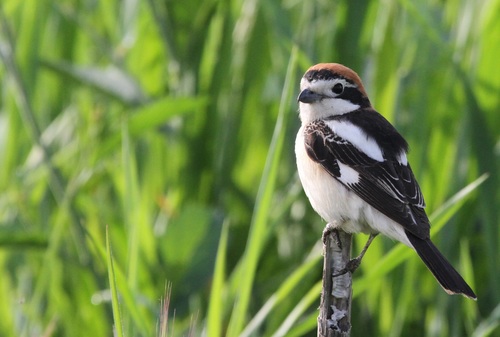
ズアカモズ (Lanius senator) ズアカモズ
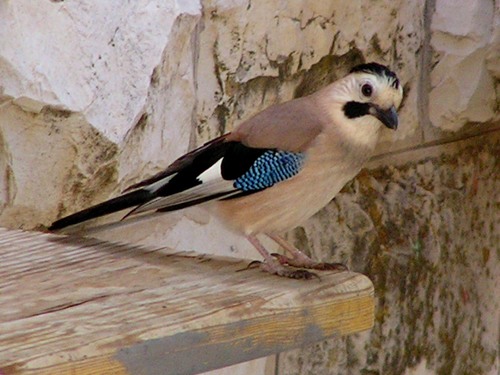
カケス (Garrulus glandarius) カケス

メディア

読み込み中…

要点

The most reliable field mark to separate Woodchat Shrike from Eurasian Jay is the shrike’s compact size and bold, contrasting plumage: look for the Woodchat’s bright chestnut crown and nape, black-and-white upperparts, and clean white underparts, versus the Jay’s larger, bulkier build, pinkish-brown body, black moustache, and distinctive blue-and-black wing panel. Even immature Woodchat Shrikes, though browner and more vermiculated, never show the Jay’s blue wing patch or black tail. In flight or perched, the Jay’s blue wing panel and white rump are unique, while the shrike’s smaller size, shorter tail, and raptor-like posture are distinctive. Both species may be seen perched in open areas, but their size, structure, and wing patterns are unmistakably different with careful observation.

識別のコツ

  1. Size and Structure: The Eurasian Jay is nearly twice the length of a Woodchat Shrike and much bulkier. Even at a distance, the Jay’s large, heavy build and long tail are obvious. Shrikes are compact, with a short tail and a more upright, raptor-like posture.
  2. Wing Pattern (All Ages): Jays show a bright blue-and-black barred panel on the upperwing and a white rump in flight—no shrike ever shows blue in the wing or a white rump. Woodchat Shrikes have black-and-white wings, sometimes with a white patch, but never blue.
  3. Crown and Head Markings: Adult male Woodchat Shrikes have a rich chestnut crown and nape, contrasting sharply with the black mask and white underparts. Jays have a streaked whitish crown and forehead, with a bold black moustache stripe and no chestnut tones.
  4. Underparts: Woodchat Shrikes have clean white (male) or buffy, finely vermiculated (female/immature) underparts. Jays are pinkish-brown below, lacking the shrike’s crisp white or buffy tones.
  5. Tail: Jay’s tail is long and black, contrasting with the white rump. Shrike’s tail is shorter, black with white edges, and never shows a white rump.
  6. Bill: Shrikes have a hooked, raptor-like bill suited for catching insects; Jays have a stout, straight bill typical of corvids.
  7. Perching Behavior: Shrikes perch upright on exposed branches, wires, or posts, scanning for prey. Jays are more often seen moving through trees or hopping on the ground, rarely perching in the open for long.
  8. Habitat: Shrikes prefer open, lightly wooded areas with scattered trees and bare ground. Jays are woodland birds, especially where oaks are present, but may also be found in urban parks.
  9. Flight Style: Shrikes make direct, purposeful flights from perch to ground or between perches. Jays have a slower, undulating flight, often showing the white rump and blue wing panel.
  10. Juvenile/Immature Confusion: Even young Woodchat Shrikes, though browner and more streaked, lack any blue in the wing or black moustache. Jays of all ages show the blue wing panel and black moustache.
  11. Sex Differences: Male Woodchat Shrikes are brighter and more contrasting than females/immatures, but all ages and sexes are much smaller and lack the Jay’s blue wing and pinkish tones.
  12. Contextual Clues: In dense woodland or around oaks, suspect Jay; in open country or orchards, suspect shrike.
  13. Plumage Pitfalls: Some female/immature shrikes may appear brownish above, but never pinkish-brown overall and never with a blue wing patch.
  14. Voice: Not covered in these notes, but Jays are loud and varied in calls, while shrikes are generally quieter and less vocal.
  15. Feeding Behavior: Shrikes hunt from perches and may sally for insects; Jays are often seen foraging on the ground or caching acorns.

大きさ

Woodchat Shrike is much smaller, measuring 17–19 cm in length [wikipedia], compared to the Eurasian Jay’s 34–35 cm [wikipedia]. The Jay is nearly twice as long and much bulkier, with a wingspan of 52–58 cm, dwarfing the shrike. Even at a distance, the Jay’s larger, heavier silhouette and longer tail are obvious, especially in flight or when perched near other birds for scale.

羽色

Immature and female Woodchat Shrikes are brown and white above, with fine vermiculations, and buffy, vermiculated underparts, but always lack any blue in the wing or black moustache. Adult male Woodchat Shrikes are striking: chestnut crown/nape, black-and-white upperparts, and pure white underparts. The Jay, regardless of age or sex, is pinkish-brown overall with a black moustache stripe, white throat, white rump, black tail, and a bright blue-and-black barred wing panel. In flight, the Jay’s white rump and blue wing patch are diagnostic. The shrike’s wings are black and white, with some races lacking the white wing patch, but never show blue. No age or sex of Woodchat Shrike can be confused with the Jay’s blue wing panel or overall coloration.

行動

Woodchat Shrikes hunt from exposed perches, often sallying out to catch insects, and may be seen dropping or gliding down to the ground. Their perching style is upright and alert, often reminiscent of a small raptor. Eurasian Jays are more secretive, moving through woodland canopies, but can be bold in urban parks. Jays are often seen hopping or flying between trees, sometimes burying acorns, and may be observed sunning or 'anting' on the ground. The Jay’s flight is slower and more undulating compared to the shrike’s direct, purposeful sallies.

生息環境

Woodchat Shrike favors open, lightly wooded habitats with scattered trees, orchards, and areas with bare or sandy ground. Eurasian Jay is a woodland specialist, especially where oaks are present, but is increasingly found in urban parks and gardens. If you see a bird in dense woodland, it is far more likely to be a Jay; shrikes prefer more open, edge habitats.

より良い説明を送る

比較と同じ項目を使ってください。文章はすぐに公開されます。

The most reliable field mark to separate Woodchat Shrike from Eurasian Jay is the shrike’s compact size and bold, contrasting plumage: look for the Woodchat’s bright chestnut crown and nape, black-and-white upperparts, and clean white underparts, versus the Jay’s larger, bulkier build, pinkish-brown body, black moustache, and distinctive blue-and-black wing panel. Even immature Woodchat Shrikes, though browner and more vermiculated, never show the Jay’s blue wing patch or black tail. In flight or perched, the Jay’s blue wing panel and white rump are unique, while the shrike’s smaller size, shorter tail, and raptor-like posture are distinctive. Both species may be seen perched in open areas, but their size, structure, and wing patterns are unmistakably different with careful observation.

  1. Size and Structure: The Eurasian Jay is nearly twice the length of a Woodchat Shrike and much bulkier. Even at a distance, the Jay’s large, heavy build and long tail are obvious. Shrikes are compact, with a short tail and a more upright, raptor-like posture.
  2. Wing Pattern (All Ages): Jays show a bright blue-and-black barred panel on the upperwing and a white rump in flight—no shrike ever shows blue in the wing or a white rump. Woodchat Shrikes have black-and-white wings, sometimes with a white patch, but never blue.
  3. Crown and Head Markings: Adult male Woodchat Shrikes have a rich chestnut crown and nape, contrasting sharply with the black mask and white underparts. Jays have a streaked whitish crown and forehead, with a bold black moustache stripe and no chestnut tones.
  4. Underparts: Woodchat Shrikes have clean white (male) or buffy, finely vermiculated (female/immature) underparts. Jays are pinkish-brown below, lacking the shrike’s crisp white or buffy tones.
  5. Tail: Jay’s tail is long and black, contrasting with the white rump. Shrike’s tail is shorter, black with white edges, and never shows a white rump.
  6. Bill: Shrikes have a hooked, raptor-like bill suited for catching insects; Jays have a stout, straight bill typical of corvids.
  7. Perching Behavior: Shrikes perch upright on exposed branches, wires, or posts, scanning for prey. Jays are more often seen moving through trees or hopping on the ground, rarely perching in the open for long.
  8. Habitat: Shrikes prefer open, lightly wooded areas with scattered trees and bare ground. Jays are woodland birds, especially where oaks are present, but may also be found in urban parks.
  9. Flight Style: Shrikes make direct, purposeful flights from perch to ground or between perches. Jays have a slower, undulating flight, often showing the white rump and blue wing panel.
  10. Juvenile/Immature Confusion: Even young Woodchat Shrikes, though browner and more streaked, lack any blue in the wing or black moustache. Jays of all ages show the blue wing panel and black moustache.
  11. Sex Differences: Male Woodchat Shrikes are brighter and more contrasting than females/immatures, but all ages and sexes are much smaller and lack the Jay’s blue wing and pinkish tones.
  12. Contextual Clues: In dense woodland or around oaks, suspect Jay; in open country or orchards, suspect shrike.
  13. Plumage Pitfalls: Some female/immature shrikes may appear brownish above, but never pinkish-brown overall and never with a blue wing patch.
  14. Voice: Not covered in these notes, but Jays are loud and varied in calls, while shrikes are generally quieter and less vocal.
  15. Feeding Behavior: Shrikes hunt from perches and may sally for insects; Jays are often seen foraging on the ground or caching acorns.

Woodchat Shrike is much smaller, measuring 17–19 cm in length [wikipedia], compared to the Eurasian Jay’s 34–35 cm [wikipedia]. The Jay is nearly twice as long and much bulkier, with a wingspan of 52–58 cm, dwarfing the shrike. Even at a distance, the Jay’s larger, heavier silhouette and longer tail are obvious, especially in flight or when perched near other birds for scale.

Immature and female Woodchat Shrikes are brown and white above, with fine vermiculations, and buffy, vermiculated underparts, but always lack any blue in the wing or black moustache. Adult male Woodchat Shrikes are striking: chestnut crown/nape, black-and-white upperparts, and pure white underparts. The Jay, regardless of age or sex, is pinkish-brown overall with a black moustache stripe, white throat, white rump, black tail, and a bright blue-and-black barred wing panel. In flight, the Jay’s white rump and blue wing patch are diagnostic. The shrike’s wings are black and white, with some races lacking the white wing patch, but never show blue. No age or sex of Woodchat Shrike can be confused with the Jay’s blue wing panel or overall coloration.

Woodchat Shrikes hunt from exposed perches, often sallying out to catch insects, and may be seen dropping or gliding down to the ground. Their perching style is upright and alert, often reminiscent of a small raptor. Eurasian Jays are more secretive, moving through woodland canopies, but can be bold in urban parks. Jays are often seen hopping or flying between trees, sometimes burying acorns, and may be observed sunning or 'anting' on the ground. The Jay’s flight is slower and more undulating compared to the shrike’s direct, purposeful sallies.

Woodchat Shrike favors open, lightly wooded habitats with scattered trees, orchards, and areas with bare or sandy ground. Eurasian Jay is a woodland specialist, especially where oaks are present, but is increasingly found in urban parks and gardens. If you see a bird in dense woodland, it is far more likely to be a Jay; shrikes prefer more open, edge habitats.

変更を破棄しますか?

保存していない編集があります。今離れると失われます。

ズアカモズ · カケス · 苦手な鳥