

Motmot

ニシトゲハシムシクイ 対 ウグイストゲハシムシクイ

Acanthiza inornata 対 Acanthiza reguloides

ニシトゲハシムシクイとウグイストゲハシムシクイのクイズ
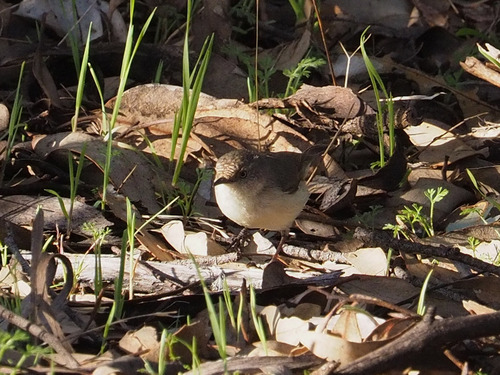
ニシトゲハシムシクイ (Acanthiza inornata) ニシトゲハシムシクイ
ウグイストゲハシムシクイ (Acanthiza reguloides) ウグイストゲハシムシクイ

メディア

読み込み中…

要点

ニシトゲハシムシクイとウグイストゲハシムシクイを区別する最も信頼できる方法は、ウグイストゲハシムシクイに見られる特徴的なバフ色の尾羽と淡い先端を持つ広い黒っぽい尾帯の存在であり、これはニシトゲハシムシクイには見られません。ニシトゲハシムシクイは全体的に茶色がかっており、灰褐色の帽子と背中を持ち、明らかな尾羽のコントラストがありません。両種はサイズと形が似ていますが、腹部と尾羽の色合いがフィールドでの鍵となります。ウグイストゲハシムシクイは成鳥で白い虹彩を示しますが、ニシトゲハシムシクイの目の色は特に目立つものではありません。生息地も手助けになります:ニシトゲハシムシクイはオーストラリア南西部に限定されており、ウグイストゲハシムシクイはオーストラリア東部および南東部に分布しています。

識別のコツ

  1. バフの尾羽(ウグイストゲハシムシクイのみ): 鳥が尾を振ったり飛んだりする際に、明確なバフ色の尾羽の斑点を探してください。ニシトゲハシムシクイはこの特徴を示しません。
  2. 尾の模様(ウグイストゲハシムシクイのみ): ウグイストゲハシムシクイは、尾が広い黒っぽい尾帯と淡い先端を持ち、尾が広げられたときに見えます。ニシトゲハシムシクイの尾は、強い模様がない平坦な茶色です。
  3. 全体のトーン: ニシトゲハシムシクイは上部と下部がより茶色がかっており、灰褐色の帽子と背中を持っています。ウグイストゲハシムシクイは上部がより単調な緑がかった茶色で、下部は淡い黄色です。
  4. 腹部: ニシトゲハシムシクイはクリーミーな淡い腹部を持ち、ウグイストゲハシムシクイは非常に淡い黄色です。これは微妙ですが、良い光の下では役立ちます。
  5. 虹彩の色(成鳥): 成鳥のウグイストゲハシムシクイは白い虹彩を持ち、幼鳥は暗い目を持っています。ニシトゲハシムシクイの虹彩の色は特に目立ちません。このマークは近くで見る必要があります。
  6. 群れのサイズと行動: ウグイストゲハシムシクイはしばしば大きくて騒がしい群れで採餌し、高度なアクロバティックな行動を示し、時には逆さまにぶら下がることもあります。ニシトゲハシムシクイはそのような大きくて声の大きい群れにいることはあまりありません。
  7. 飛行スタイル: ウグイストゲハシムシクイはトゲハシムシクイに典型的な波打つ飛行を示しますが、これはニシトゲハシムシクイと区別するには独特ではありません。
  8. 生息地と範囲: ニシトゲハシムシクイはオーストラリア南西部にのみ見られ、ウグイストゲハシムシクイは東部と南東部にいます。これらの範囲外で見られた場合は、IDを再考してください。
  9. くちばしの形: 両種ともトゲハシムシクイに典型的な細く尖ったくちばしを持っており、くちばしの形は区別要素ではありません。
  10. 季節的または性別に基づく羽毛の違いはない: 両種の両性別およびすべての季節は似たように見えるため、区別のために年の時期や性別に頼らないでください。
  11. 声: ウグイストゲハシムシクイは非常に声が大きく、迅速で繰り返される鳴き声を持っています。ニシトゲハシムシクイの鳴き声は記載されていないため、ウグイストゲハシムシクイの鳴き声をポジティブな手がかりとしてのみ使用してください。
  12. 幼鳥の虹彩の色: バフの尾羽と暗い目を持つ鳥を見た場合、それは幼鳥のウグイストゲハシムシクイです。ニシトゲハシムシクイはこの組み合わせを示しません。
  13. 尾の振り: ウグイストゲハシムシクイの尾羽と尾の模様を露出させるために、尾の振り行動を観察してください。
  14. 翼のパネルや飛行羽のマークはない: 両種とも、どの年齢でも特徴的な翼のパネルや飛行羽のパターンを示さないため、区別のために翼のパターンに頼らないでください。
  15. 他のトゲハシムシクイとの混同を避ける: 両種は他のAcanthizaよりも互いに混同しやすいですが、ウグイストゲハシムシクイを確認するためにバフの尾羽と尾帯を常に確認してください。

大きさ

両種はサイズが非常に似ており、長さは約8〜10 cm、重さは6〜8グラムです。フィールドで区別するための信頼できるサイズの違いはなく、両方とも小さく活発なトゲハシムシクイで、細く尖ったくちばしを持っています。識別にはサイズよりも羽毛と尾羽の色を使用してください。

羽色

行動

ウグイストゲハシムシクイはしばしば20羽以上の賑やかな群れで見られ、頻繁にアクロバティックに採餌し、時には逆さまにぶら下がることもあります。彼らは継続的なツイッター音と迅速で波打つ飛行で知られています。ニシトゲハシムシクイの行動はあまり具体的には記載されていませんが、典型的なトゲハシムシクイとして、活発で社交的である可能性が高いですが、ウグイストゲハシムシクイの大きくて騒がしい群れには特に注目されていません。両種は昆虫食であり、葉の中で採餌します。

生息環境

ニシトゲハシムシクイはオーストラリア南西部に特有で、開けた森林、カリとジャラの森、庭、沿岸の低木を好みます。ウグイストゲハシムシクイはオーストラリア東部および南東部に分布し、乾燥したスクリロフィル森林や下層植生の少ないオープンユーカリ森林に生息しています。オーストラリア南西部の外にいる場合、ウグイストゲハシムシクイがはるかに可能性が高いです。逆に、ウグイストゲハシムシクイは南西部の遠くには生息していません。

声

ウグイストゲハシムシクイは非常に声が大きく、迅速な「ピッタ・ピッタ・ピッタ・ピット」という鳴き声と、採餌中の継続的なツイッター音を持っています。ニシトゲハシムシクイの鳴き声は利用可能なメモには記載されていないため、ウグイストゲハシムシクイの特徴的な鳴き声が聞こえない限り、声は信頼できる区別要素ではありません。

より良い説明を送る

比較と同じ項目を使ってください。文章はすぐに公開されます。

The most reliable way to separate Western Thornbill from Buff-rumped Thornbill is the presence of a distinctive buff-colored rump and a broad blackish tail band with a pale tip on Buff-rumped Thornbill, which is absent in Western Thornbill. Western Thornbill is generally more brownish overall, with a grayish-brown cap and back, and lacks any obvious rump contrast. Both species are similar in size and shape, but their underparts and rump coloration are key in the field. Buff-rumped Thornbill also shows white irises as an adult, while Western Thornbill's eye color is not noted as distinctive. Habitat can help: Western Thornbill is restricted to southwestern Australia, while Buff-rumped Thornbill is found across eastern and southeastern Australia.

  1. Buff rump (Buff-rumped only): Look for a clear buff-colored rump patch, especially when the bird flicks its tail or in flight. Western Thornbill never shows this feature.
  2. Tail pattern (Buff-rumped only): Buff-rumped Thornbill has a broad blackish tail band with a pale tip, visible when the tail is spread. Western Thornbill's tail is plain brownish with no strong pattern.
  3. Overall tone: Western Thornbill is more brownish above and below, with a grayish-brown cap and back. Buff-rumped Thornbill is plainer greenish-brown above and paler yellowish below.
  4. Underparts: Western Thornbill has a creamy pale belly; Buff-rumped Thornbill is very pale yellow below. This can be subtle but is useful in good light.
  5. Iris color (adults): Adult Buff-rumped Thornbills have white irises, while juveniles have dark eyes. Western Thornbill's iris color is not distinctive. This mark requires close views.
  6. Group size and behavior: Buff-rumped Thornbill often forages in large, noisy groups and is highly acrobatic, sometimes hanging head-down. Western Thornbill is less often in such large, vocal groups.
  7. Flight style: Buff-rumped Thornbill shows undulating flight, typical of thornbills, but this is not unique enough to separate from Western Thornbill.
  8. Habitat and range: Western Thornbill is only found in southwestern Australia; Buff-rumped Thornbill is in the east and southeast. If seen outside these ranges, reconsider the ID.
  9. Bill shape: Both have thin, pointed bills typical of thornbills; bill shape is not a separator.
  10. No seasonal or sex-based plumage differences: Both sexes and all seasons look similar in both species, so do not rely on time of year or sex for separation.
  11. Voice: Buff-rumped Thornbill is very vocal with a rapid, repeated call; Western Thornbill's call is not described, so use Buff-rumped's call as a positive clue only.
  12. Juvenile iris color: If you see a bird with a buff rump and dark eyes, it is a juvenile Buff-rumped Thornbill; Western Thornbill does not show this combination.
  13. Tail flicking: Watch for tail flicking behavior to expose the rump and tail pattern in Buff-rumped Thornbill.
  14. No wing panel or flight feather marks: Neither species shows distinctive wing panels or flight feather patterns in any age, so do not rely on wing pattern for separation.
  15. Avoid confusion with other thornbills: Both species are more easily confused with each other than with other Acanthiza, but always check for the buff rump and tail band to confirm Buff-rumped.

Both species are very similar in size, each measuring about 8–10 cm in length and weighing 6–8 grams. There is no reliable size difference to separate them in the field; both are small, active thornbills with thin, pointed bills. Use plumage and rump color rather than size for identification.

  • Juvenile/immature marks: For Buff-rumped Thornbill, juveniles have dark eyes, while adults have white irises. This iris color can be seen at close range but is not always visible in the field. No specific immature wing or upperpart pattern is described for either species, so focus on rump and tail.
  • Rump and tail: Buff-rumped Thornbill always shows a clear buff-colored rump and a tail with a broad blackish band and pale tip, visible both perched and in flight. Western Thornbill lacks any contrasting rump or tail pattern, appearing more uniformly brownish.
  • Upperparts: Western Thornbill has a grayish-brown cap and back, with a generally more brownish overall tone. Buff-rumped Thornbill is plainer greenish-brown above.
  • Underparts: Western Thornbill has a creamy pale underbelly, while Buff-rumped Thornbill's underparts are very pale yellow.
  • No seasonal or sex-based plumage differences are noted for either species.

Buff-rumped Thornbill is often seen in chatty groups of up to 20 or more, frequently foraging acrobatically and sometimes hanging head-down. They are known for their continuous twittering and rapid, undulating flight. Western Thornbill's behavior is less specifically described, but as a typical thornbill, it is likely to be active and social, though not noted for the large, noisy groups of Buff-rumped Thornbill. Both species are insectivorous and forage in foliage.

Western Thornbill is endemic to southwestern Australia, favoring open woodlands, karri and jarrah forests, gardens, and coastal scrub. Buff-rumped Thornbill is found in eastern and southeastern Australia, inhabiting dry sclerophyll forests and open eucalypt woodlands with sparse understorey. If you are outside southwestern Australia, Buff-rumped Thornbill is far more likely; conversely, Buff-rumped Thornbill does not occur in the far southwest.

Buff-rumped Thornbill is highly vocal, with a rapid 'pitta-pitta-pitta-pit' call and continuous twittering as it forages. Western Thornbill's vocalizations are not described in the available notes, so voice is not a reliable separator unless Buff-rumped's distinctive calls are heard.

変更を破棄しますか?

保存していない編集があります。今離れると失われます。

ニシトゲハシムシクイ · ウグイストゲハシムシクイ · 苦手な鳥