

ニシアマサギ 対 ムラサキサギ
Ardea ibis 対 Ardea purpurea
ニシアマサギとムラサキサギのクイズ
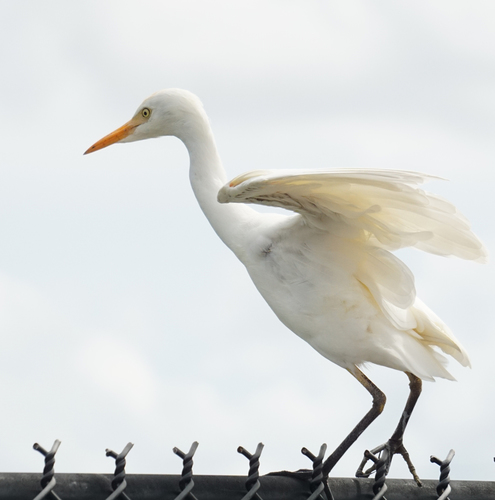 ニシアマサギ
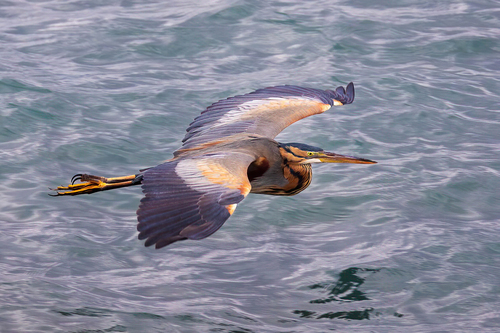 ムラサキサギ
要点
The most reliable field mark between Western Cattle-Egret and Purple Heron is overall color and structure: cattle egrets are compact, short-necked, and nearly all white (except for buff plumes in breeding adults), while purple herons are much larger, slender, and show a complex mix of chestnut, grey, and black, especially on the neck and underparts. In flight, cattle egrets appear stocky and white, whereas purple herons are long-necked, dark, and snake-like. Juvenile and non-breeding cattle egrets are plain white with a dark bill, never showing the streaked neck or dark underparts of any age purple heron. Even at a distance, the heron's long, narrow neck and reddish tones stand out against the egret's white and chunky appearance.
識別のコツ
- Overall color: Cattle egret is always mostly white, even as a juvenile; purple heron is never white, always showing a mix of chestnut, grey, and black.
- Size and shape: Purple heron is much larger, with a long, narrow neck and legs; cattle egret is smaller, with a short, thick neck and compact body.
- Neck pattern: Purple heron has a strongly streaked, chestnut and black neck with a dark central line; cattle egret's neck is plain white or, in breeding adults, may show some buff wash but never streaks.
- Bill color: Adult cattle egret has a yellow bill (briefly red in peak breeding), juvenile has a black bill; purple heron has a brownish-yellow, long, dagger-like bill, brighter in breeding adults.
- Leg color: Cattle egret legs are greyish-yellow (breeding adults briefly red); purple heron legs are brown in front, yellowish behind.
- Crest: Purple heron has a short, dark, dangling crest; cattle egret lacks a crest, though breeding adults have short buff plumes on the crown.
- Flight silhouette: Cattle egret is compact, with a short neck and rounded wings; purple heron is long and slender, with a much longer neck and legs trailing well beyond the tail.
- Underparts: Purple heron has a chestnut breast, blackish belly and undertail; cattle egret is white below, with only faint buff in breeding adults.
- Juvenile confusion: Juvenile cattle egret is plain white with a dark bill, never streaked or dark; juvenile purple heron is dark and streaky, never white.
- Habitat context: Cattle egrets are often in dry fields, pastures, or near livestock; purple herons are almost always in or near dense wetlands or reed beds.
- Behavior: Cattle egrets walk with a hunched, short-necked gait, often in groups; purple herons move slowly, often alone, with a long, extended neck.
- Vocalization: If heard, cattle egret gives a soft 'rick-rack,' purple heron a harsher 'frarnk.'
- Breeding plumage: Only cattle egret develops orange-buff plumes on back, breast, and crown in breeding season; purple heron does not.
- Perching: Purple heron seldom perches in trees, preferring reeds or low bushes; cattle egret often nests in trees or shrubs.
- Bill and head structure: Purple heron's bill is longer and more dagger-like, with a more angular head; cattle egret's bill is shorter and stouter, with a rounded head.
大きさ
Purple Heron is much larger and more elongated: 78–97 cm long, 120–152 cm wingspan, and 0.5–1.35 kg in weight. Western Cattle-Egret is notably smaller and chunkier: 46–56 cm long, 88–96 cm wingspan, and 270–512 g. This size gap is obvious when both are seen together, but even singly, the heron's long body, neck, and legs are distinctive compared to the egret's compact, hunched jizz.
羽色
Juvenile and non-breeding Western Cattle-Egrets are all white with a yellow (adult) or black (juvenile) bill and greyish-yellow legs, never showing any dark or rufous tones. In breeding season, adults gain orange-buff plumes on the back, breast, and crown, but remain mostly white. Purple Heron of all ages is never white: adults have a black crown and forehead, chestnut sides to the head and neck with dark streaks, brownish-grey upperparts, and blackish belly and undertail. Juveniles are also dark and streaky, lacking any white phase. In flight, cattle egrets are plain white above and below, while purple herons show a dark, reddish-brown and grey upperwing and body, with a pale, streaked neck and dark underparts. No age of cattle egret shows the purple heron's combination of rufous, black, and grey.
行動
Cattle egrets are typically seen in open fields, often near livestock, walking with a hunched posture and short neck. They are adapted to terrestrial foraging and are less likely to be found in deep wetlands. Purple herons are secretive, preferring to skulk in reed beds or dense wetland vegetation, moving with a slow, deliberate gait and often adopting an extended, snake-like neck posture. In flight, cattle egrets look compact with a retracted neck, while purple herons appear long and slender, with a much longer neck and legs trailing behind.
生息環境
Western Cattle-Egret is most often found in open grasslands, agricultural fields, and dry habitats, frequently associating with cattle or other large mammals. It is less tied to water than most herons. Purple Heron is a bird of extensive wetlands, reed beds, and lakes, rarely venturing far from water and seldom seen in open, dry fields. If you see a white heron in a pasture, it's almost certainly a cattle egret; a large, dark, and reddish heron in reeds is a purple heron.
声
Cattle egret is largely silent away from colonies, where it gives a quiet, throaty 'rick-rack' call. Purple heron's call is a harsh 'frarnk,' quieter and higher-pitched than Grey Heron, but still more guttural than cattle egret. Both are generally quiet, but the purple heron's voice is more likely to be heard in dense reed beds.