

Motmot

ニシアマサギ 対 ダイサギ

Ardea ibis 対 Ardea alba

ニシアマサギとダイサギのクイズ
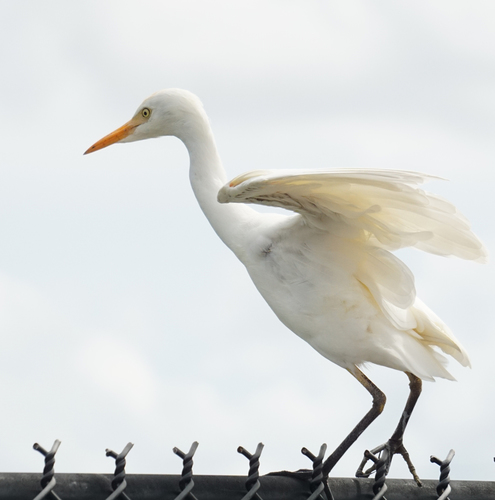
ニシアマサギ (Ardea ibis) ニシアマサギ
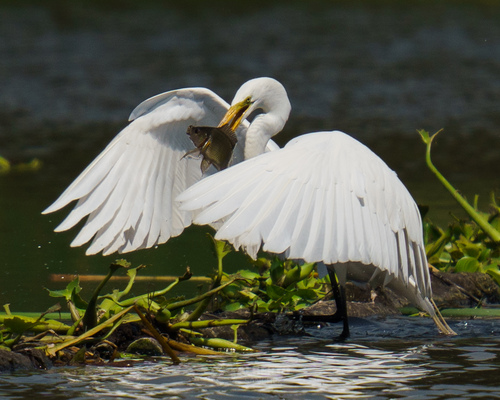
ダイサギ (Ardea alba) ダイサギ

メディア

読み込み中…

要点

ニシアマサギとダイサギを分ける最も信頼できる方法は、サイズと構造によるものです:ニシアマサギはずっと小さく、がっしりしており、短くて太い首と頑丈で比較的短いくちばしを持っています。一方、ダイサギは背が高く優雅で、長い首と細いくちばしを持っています。どちらも繁殖期以外は全身真っ白ですが、ニシアマサギは繁殖期にオレンジバフの羽毛を見せることが多く、脚は黄色がかった灰色や黄色(黒ではありません)です。飛んでいる時や休んでいる時、ダイサギの大きさ、長い首、黒い脚が際立ちます。両種の幼鳥と非繁殖期の鳥は全身真っ白なので、構造と脚の色が重要です。文脈に注意してください:ニシアマサギは特に家畜の近くで陸上で餌を探すことが多いのに対し、ダイサギはより厳密に水生です。

識別のコツ

  1. サイズは最も早いフィールドの手がかりです: ダイサギはニシアマサギのほぼ2倍の長さで、質量も数倍です。白いサギがカラスやハトよりもわずかに大きいだけに見える場合、それはニシアマサギです;もしそれがアオサギと同じくらいの高さなら、それはダイサギです。
  2. 構造と姿勢: ニシアマサギはコンパクトで、短くて太い首と頑丈で比較的短いくちばしを持っています。ダイサギは背が高く、長くて細い首と長く尖ったくちばしを持っています。飛んでいる時、ニシアマサギはずんぐりしていて背を丸めて見えます;ダイサギは細長く優雅です。
  3. 脚の色: ニシアマサギは黄色がかったまたは灰色がかった黄色の脚を持っています(決して黒ではありません)。ダイサギは黒い脚と足を持っていますが、繁殖期には下肢がより明るく見えることがあります。これは鳥が立っている時や水に浸かっている時の重要な特徴です。
  4. くちばしの色(年齢による): 成熟したニシアマサギは黄色いくちばしを持っていますが、幼鳥は黒いくちばしを持っています。ダイサギ(すべての年齢)は黄色いくちばしを持ち、繁殖期には基部が暗くなることがあります。黒いくちばしを持つ小さな白いサギを見たら、それは幼鳥のニシアマサギであり、ダイサギではありません。
  5. 繁殖羽毛: 繁殖期には、ニシアマサギは頭、胸、背中にオレンジバフの羽毛を見せ、短期間赤いくちばしと脚を持つことがあります。ダイサギは背中に繊細な白い装飾羽毛を発達させますが、オレンジやバフの色合いは決して見せません。
  6. 首の長さ: たとえ背を丸めていても、ダイサギの首はニシアマサギのものよりも相対的にずっと長いです。飛んでいる時、ダイサギの首は大きなS字を形成し、ニシアマサギの首は短く、体をほとんど超えません。
  7. 餌を探す行動: ニシアマサギは乾燥した野原でよく見られ、特に家畜の近くで草の中を歩いたり、牛に乗ったりすることがあります。ダイサギはほぼ常に水中または水の近くで見られ、湿地で獲物を狙っています。
  8. 生息地の文脈: 鳥が水から遠く、特に牧草地にいる場合、それはおそらくニシアマサギです。もしそれが湿地、湖、または川にいる場合、特に他の大きなサギと一緒にいる場合は、ダイサギを疑ってください。
  9. 飛行の特徴: ニシアマサギはコンパクトに見え、広い翼と短い首を引っ込めています。ダイサギは長い翼を持ち、黒い脚のラインが後ろに引かれ、長い首が深いSに引っ込められています。
  10. 羽毛の落とし穴: 両種は非繁殖期と幼鳥の羽毛が全身真っ白であるため、繁殖期以外では色だけに頼らないでください。構造、サイズ、脚の色を使用してください。
  11. 声: コロニーから離れているときは通常役に立ちませんが、ニシアマサギの鳴き声は静かで喉に響くようなものであり、ダイサギの鳴き声は大きな鳴き声や叫び声です。
  12. 性別と年齢: 両種は性的二形性がほとんどなく、オスとメスは似ています。両方の幼鳥は全身真っ白ですが、ニシアマサギの幼鳥は黒いくちばしを持ち、ダイサギの幼鳥は黄色いくちばしを持っています。
  13. 関連性: ニシアマサギは群れで見られることが多く、時には家畜や他の鳥と混ざることがありますが、ダイサギはより孤独で、他の大きなサギと緩いグループで見られることが多いです。
  14. 疑わしい場合: サイズを判断できない場合は、脚の色とくちばしの構造に焦点を当ててください。脚が黒い場合、それはダイサギです。もし鳥が小さく、がっしりしていて、黄色がかった脚を持っている場合、それはニシアマサギです。
  15. 一般的な落とし穴: 遠くのダイサギを姿勢だけでニシアマサギと混同しないでください—常にスケールを把握し、脚の色を確認してください。

大きさ

ダイサギは劇的に大きいです:最大1メートルの高さに達し、長さは80〜104 cm、翼幅は131〜170 cmで、平均質量は約1,000 gです。ニシアマサギはずっと小さく、がっしりしており、長さはわずか46〜56 cm、翼幅は88〜96 cm、質量は270〜512 gです。フィールドでは、このサイズの違いは通常明らかで、特に両種が一緒に見られるか、スケールのために馴染みのある鳥の近くにいるときに顕著です。

羽色

幼鳥と非繁殖期のニシアマサギとダイサギはどちらも全身真っ白で、特徴的な上翼や飛行パターンのマークが欠けているため、年齢特有の翼パターンは分離に役立ちません。繁殖期には、成鳥のニシアマサギは背中、胸、頭にオレンジバフの羽毛を発達させ、くちばし、脚、虹彩が一時的に明るい赤になることがあります。繁殖羽毛のダイサギの成鳥は背中に繊細な装飾羽毛を見せますが、全身真っ白で、くちばしが時々暗くなり、下肢がより明るくなることがあります。脚の色は重要な違いです:ニシアマサギは黄色がかったまたは灰色がかった黄色の脚を持っています(決して黒ではありません)、一方、ダイサギは年間を通じて黒い脚と足を持っています(ただし、繁殖期には下肢が少し明るくなることがあります)。両種の幼鳥は全身真っ白ですが、ニシアマサギの幼鳥は黒いくちばしを持ち、ダイサギの幼鳥は非繁殖期の成鳥のように見え、黄色いくちばしを持っています。

行動

ニシアマサギは陸上での餌を探すことに適応しており、特に家畜の近くで野原を歩いているのがよく見られ、背を丸めたコンパクトな姿勢を持っています。ダイサギはより水生で、通常は湿地、湖、川で水に浸かっているのが見られ、優雅で直立した姿勢と遅く、慎重な歩き方をしています。飛んでいる時、両種は首を引っ込めますが、ダイサギは長い翼を持ち、より優雅に見え、ニシアマサギはコンパクトで短い首に見えます。

生息環境

ニシアマサギは最もよく開けた野原、草地、農業地域で見られ、頻繁に牛や他の大型哺乳類と関連しています。ほとんどのサギやアマサギよりも水に依存していません。ダイサギは湿地、湖、川、沼地を好み、水から遠く離れることはほとんどありません。範囲は重なりますが、好まれる生息地と餌を探す戦略は通常異なり、ニシアマサギは陸上で、ダイサギは水生です。

声

両種はコロニーから離れているときはほとんど静かです。ニシアマサギは繁殖地で静かで喉に響く「リック・ラック」と呼ばれる鳴き声を出し、ダイサギはコロニーで低くてかすれた鳴き声や大きな「クック・クック・クック」を出し、驚かされると高い声で叫びます。鳴き声はフィールドで診断的であることはまれで、巣作りのコロニーにいる場合を除きます。

より良い説明を送る

比較と同じ項目を使ってください。文章はすぐに公開されます。

The most reliable way to separate Western Cattle-Egret from Great White Egret is by size and structure: Cattle-Egret is much smaller and stockier, with a short, thick neck and a sturdy, relatively short bill, while Great White Egret is tall and elegant, with a long neck and slender bill. Both are all-white in non-breeding plumage, but Cattle-Egret often shows orange-buff plumes in breeding season, and has yellowish to greyish-yellow legs (not black). In flight or at rest, Great White Egret’s sheer size, long neck, and black legs stand out. Juvenile and non-breeding birds of both species are all-white, so structure and leg color are crucial. Watch for context: Cattle-Egret often forages terrestrially, especially near livestock, while Great White Egret is more strictly aquatic.

  1. Size is the fastest field clue: Great White Egret is nearly twice the length and several times the mass of Cattle-Egret. If a white heron looks only slightly larger than a crow or pigeon, it's a Cattle-Egret; if it's as tall as a Grey Heron, it's a Great White Egret.
  2. Structure and posture: Cattle-Egret is compact, with a short, thick neck and a sturdy, relatively short bill. Great White Egret is tall, with a long, slender neck and a long, pointed bill. In flight, Cattle-Egret looks stubby and hunched; Great White Egret is elongated and graceful.
  3. Leg color: Cattle-Egret has yellowish or greyish-yellow legs (never black). Great White Egret has black legs and feet, though the lower legs may look paler in breeding season. This is a key mark when birds are standing or wading.
  4. Bill color (by age): Adult Cattle-Egret has a yellow bill, but juveniles have a black bill. Great White Egret (all ages) has a yellow bill, sometimes darkening at the base in breeding season. If you see a small white egret with a black bill, it's a juvenile Cattle-Egret, not a Great White Egret.
  5. Breeding plumage: In breeding season, Cattle-Egret shows orange-buff plumes on the head, breast, and back, and may briefly have a red bill and legs. Great White Egret develops delicate white ornamental plumes on the back, but never shows orange or buff tones.
  6. Neck length: Even when hunched, Great White Egret's neck is proportionally much longer than Cattle-Egret's. In flight, Great White Egret's neck forms a large S-curve, while Cattle-Egret's neck is short and barely projects beyond the body.
  7. Foraging behavior: Cattle-Egret is often seen in dry fields, especially near livestock, walking among grass or even riding on cattle. Great White Egret is almost always seen in or near water, stalking prey in wetlands.
  8. Habitat context: If the bird is far from water, especially in a pasture, it's likely a Cattle-Egret. If it's in a marsh, lake, or river, especially alone or with other large herons, suspect Great White Egret.
  9. Flight jizz: Cattle-Egret appears compact, with broad wings and a short neck tucked in. Great White Egret is long-winged, with a trailing black leg line and a long neck retracted into a deep S.
  10. Plumage pitfalls: Both species are all-white in non-breeding and juvenile plumage, so don't rely on color alone outside the breeding season. Use structure, size, and leg color.
  11. Voice: Not usually helpful unless at a colony, but Cattle-Egret's call is quieter and more throaty, while Great White Egret's is a loud croak or squawk.
  12. Sex and age: Both species show little sexual dimorphism; males and females look alike. Juveniles of both are all-white, but Cattle-Egret juveniles have a black bill, while Great White Egret juveniles have a yellow bill.
  13. Associations: Cattle-Egret is often in flocks, sometimes mixed with livestock or other birds, while Great White Egret is more solitary or in loose groups with other large herons.
  14. When in doubt: If you can't judge size, focus on leg color and bill structure. If the legs are black, it's a Great White Egret. If the bird is small, stocky, and has yellowish legs, it's a Cattle-Egret.
  15. Common pitfalls: Don't confuse a distant Great White Egret for a Cattle-Egret based on posture alone—always try to get a sense of scale and check leg color.

Great White Egret is dramatically larger: it stands up to 1 meter tall, measures 80–104 cm in length, and has a wingspan of 131–170 cm, with an average mass around 1,000 g. Western Cattle-Egret is much smaller and stockier, only 46–56 cm long, with a wingspan of 88–96 cm and a mass of 270–512 g. In the field, this size difference is usually obvious, especially when both species are seen together or near familiar birds for scale.

Juvenile and non-breeding Western Cattle-Egrets and Great White Egrets are both all-white, lacking any distinctive upperwing or flight pattern marks—so age-specific wing pattern is not helpful for separation. In breeding season, adult Cattle-Egrets develop orange-buff plumes on the back, breast, and crown, and their bill, legs, and irises may briefly become bright red. Great White Egret adults in breeding plumage show delicate ornamental plumes on the back but remain all-white, with the bill sometimes darkening and the lower legs becoming paler. Leg color is a key difference: Cattle-Egret has yellowish or greyish-yellow legs (never black), while Great White Egret has black legs and feet year-round (though the lower legs may lighten a bit in breeding season). Juveniles of both species are all-white, but Cattle-Egret juveniles have a black bill, while Great White Egret juveniles look like non-breeding adults with a yellow bill.

Western Cattle-Egret is adapted to foraging on land, often seen walking in fields, especially near grazing livestock, and has a hunched, compact posture. Great White Egret is more aquatic, usually found wading in wetlands, lakes, and rivers, with a graceful, upright stance and a slow, deliberate walk. In flight, both species retract their necks, but Great White Egret appears longer-winged and more elegant, while Cattle-Egret looks compact and short-necked.

Cattle-Egret is most often found in open fields, grasslands, and agricultural areas, frequently associating with cattle or other large mammals. It is less tied to water than most herons and egrets. Great White Egret prefers wetlands, lakes, rivers, and marshes, rarely straying far from water. While their ranges overlap, their preferred habitats and foraging strategies are usually distinct, with Cattle-Egret terrestrial and Great White Egret aquatic.

Both species are mostly silent away from colonies. Cattle-Egret gives a quiet, throaty 'rick-rack' call at breeding sites, while Great White Egret produces a low, hoarse croak or a loud 'cuk cuk cuk' at colonies and higher-pitched squawks when disturbed. Vocalizations are rarely diagnostic in the field unless at a nesting colony.

変更を破棄しますか?

保存していない編集があります。今離れると失われます。

ニシアマサギ · ダイサギ · 苦手な鳥