

Motmot

オリーブタイランチョウ 対 ニシタイランチョウ

Tyrannus melancholicus 対 Tyrannus verticalis

オリーブタイランチョウとニシタイランチョウのクイズ
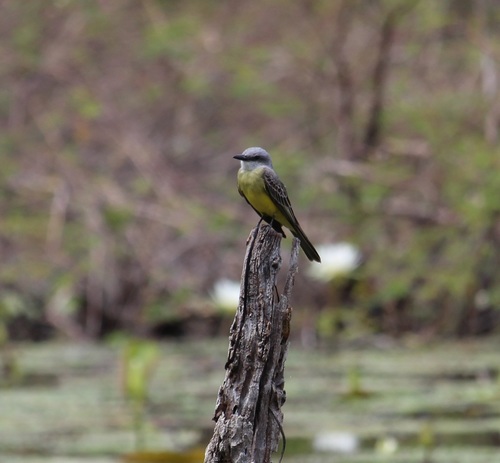
オリーブタイランチョウ (Tyrannus melancholicus) オリーブタイランチョウ
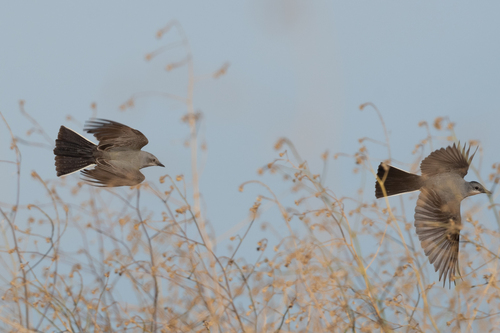
ニシタイランチョウ (Tyrannus verticalis) ニシタイランチョウ

メディア

読み込み中…

要点

トロピカルタイランチョウとニシタイランチョウを区別する最も信頼できるフィールドマークは尾です:ニシタイランチョウは黒く、角ばった尾を持ち、明確な白い外縁がありますが、トロピカルタイランチョウは茶色で、より深く分かれた尾を示し、白い縁はありません。両種は大きなキバラメジロハエトリで、灰色の頭とオリーブ色の背中を持っていますが、尾の形状や縁の色、頭の模様の微妙な違いが重要です。ニシタイランチョウの幼鳥の羽毛は詳細に説明されていませんが、若いトロピカルタイランチョウは翼の覆羽に淡いバフ色の縁を示します。両種はサイズが似ており、目立って止まることが多いですが、尾と頭の詳細に注意を払うことが自信を持った同定には不可欠です。

識別のコツ

  1. Tail shape and color: ニシタイランチョウは黒く、角ばった尾を持ち、目立つ白い外縁があります;トロピカルタイランチョウの尾は茶色で、より深く分かれ、白い縁はありません。これは成鳥と古い幼鳥の最も信頼できるフィールドマークです。
  2. Head pattern: トロピカルタイランチョウは淡い灰色の頭を持ち、暗い目のマスクと時々オレンジの冠のストライプ(見えにくいことが多い)があります;ニシタイランチョウの頭は強いマスクや冠のストライプがない単純な灰色です。
  3. Back color: トロピカルタイランチョウは灰緑色の背中を持ち、ニシタイランチョウは上面がより均一に灰色です。
  4. Throat and breast: トロピカルタイランチョウの喉は淡い灰色で、胸はオリーブ色に溶け込み、明るい黄色の腹部があります;ニシタイランチョウの下部も黄色ですが、明確な淡い灰色の喉とオリーブ色の胸の溶け込みはありません。
  5. Juvenile wing coverts: 若いトロピカルタイランチョウは翼の覆羽に淡いバフ色の縁を持ち、近距離で見えることがあります;この特徴はニシタイランチョウには説明されていません。
  6. Tail in flight: 鳥が飛んでいるときや止まっているときに尾の形状と白い縁に注意してください;ニシタイランチョウの白い尾の縁は、距離があってもよく見えることが多いです。
  7. Bill: 両種は重い灰色のくちばしを持ち、信頼できる区別にはなりません。
  8. Hidden crown color: ニシタイランチョウはディスプレイや興奮時に深紅の冠羽を見せることがありますが、通常は隠れています;トロピカルタイランチョウはオレンジの冠のストライプを見せることがありますが、めったに見えません。
  9. Perching behavior: 両種はオープンに止まり、昆虫を捕まえるために飛び出すので、行動は信頼できる区別にはなりません。
  10. Habitat context: 南部アメリカと北部メキシコでは、ニシタイランチョウは開けた乾燥した地域にいる可能性が高いです;トロピカルタイランチョウはより多くの木や低木のある半開放的な地域を好み、しばしばより湿度の高いまたは亜熱帯の環境にいます。
  11. Vocalizations: トロピカルタイランチョウの高音のツイッター音は、よく聞こえれば役立つかもしれません;ニシタイランチョウの呼び声はここでは説明されていません。
  12. Season and range: 北アメリカでは、ニシタイランチョウは西部で夏の繁殖者です;トロピカルタイランチョウは南部アメリカやさらに南、特に繁殖シーズン外で見られる可能性が高いです。
  13. Sexes: 両種は性別が同じ外見を持ち、羽毛の違いは性別の判別や種の区別には役立ちません。
  14. Nest placement: ニシタイランチョウは人工構造物に巣を作ることがあります;トロピカルタイランチョウは通常、高い木に巣を作りますが、これは個体のフィールドマークではありません。
  15. Pitfalls: 両種は大きなキバラメジロハエトリで、特に光が悪い場合や距離があるときに簡単に混同される可能性があります。可能な限り尾の形状と縁の色を優先してください。

大きさ

トロピカルタイランチョウとニシタイランチョウはサイズがほぼ同じで、平均体重は37gです [wikidata]。長さと翼幅も非常に似ているため、サイズだけではフィールドでの信頼できる区別にはなりません。

羽色

成鳥の場合、最も診断的な違いは尾です:ニシタイランチョウの尾は黒く、先端が角ばっており、目立つ白い外縁がありますが、トロピカルタイランチョウの尾は茶色で、より深く分かれ、白い縁はありません。両種は灰色の頭と黄色の下部を持っていますが、トロピカルタイランチョウは淡い灰色の頭を持ち、暗い目のマスクと時々オレンジの冠のストライプがありますが、ニシタイランチョウの頭はより単純な灰色です。トロピカルタイランチョウの背中は灰緑色で、喉は淡い灰色で胸にオリーブ色に溶け込み、下部は黄色です。ニシタイランチョウは似たような灰色と黄色のパターンを示しますが、ディスプレイ時に隠れた深紅の冠羽を見せることがあります(通常は見えません)。幼鳥のトロピカルタイランチョウは翼の覆羽に淡いバフ色の縁を持ち、この特徴はニシタイランチョウには説明されていません。両種の性別は似ています。

行動

両種は非常に縄張り意識が強く、侵入者に対して攻撃的であり、しばしばはるかに大きな鳥を攻撃します。彼らはオープンに止まり、飛んでいる昆虫を捕まえるために飛び出し、時には植物から食べ物を得るためにホバリングします。両種は昆虫と果物を混ぜて食べます。ニシタイランチョウは人工構造物に巣を作ることが多いですが、トロピカルタイランチョウは通常、高い木に巣を作ります。彼らの採餌行動と縄張り行動は非常に似ており、信頼できる診断にはなりません。

生息環境

トロピカルタイランチョウは南アリゾナ州とテキサス州から中央アメリカおよび南アメリカ南部にかけて見られ、木や低木のある半開放的な地域を好み、庭や道路脇も含まれます。ニシタイランチョウは北アメリカ西部に生息し、メキシコ南部まで広がり、散在する木のある開けた国を好み、しばしば人間の居住地の近くにいます。重複地域(南部アメリカ、北部メキシコ)では、両種が存在する可能性がありますが、ニシタイランチョウはより乾燥した開放的な生息地にいる可能性が高く、トロピカルタイランチョウはより湿度の高いまたは亜熱帯の環境に見られることがあります。

声

トロピカルタイランチョウは高音のツイッター音(tree-e-e-e-e-e)を出し、より複雑な夜明けの歌を持っています。ニシタイランチョウの鳴き声はここでは詳細に説明されていませんが、両種は声を出し、見られる前に聞こえることがあります。声は馴染みがあれば役立つかもしれませんが、信頼できる区別には十分な詳細がありません。

より良い説明を送る

比較と同じ項目を使ってください。文章はすぐに公開されます。

The most reliable field mark to separate Tropical Kingbird from Western Kingbird is the tail: Western Kingbird has a black, squared-off tail with distinct white outer edges, while Tropical Kingbird shows a brown, more deeply forked tail lacking white edges. Both species are large, yellow-bellied flycatchers with gray heads and olive backs, but subtle differences in tail shape and edge color, as well as the head pattern, are key. Juvenile plumages are not described in detail for Western Kingbird, but young Tropical Kingbirds show pale buff edges to the wing coverts. Both species are similar in size and often perch conspicuously, but careful attention to tail and head details is essential for confident identification.

  1. Tail shape and color: Western Kingbird has a black, squared-off tail with prominent white outer edges; Tropical Kingbird's tail is brown, more deeply forked, and lacks white edges. This is the most reliable field mark for adults and older immatures.
  2. Head pattern: Tropical Kingbird shows a pale gray head with a darker eye mask and sometimes an orange crown stripe (often hard to see); Western Kingbird's head is plain gray without a strong mask or crown stripe.
  3. Back color: Tropical Kingbird has a grayish-green back, while Western Kingbird is more uniformly gray above.
  4. Throat and breast: Tropical Kingbird's throat is pale gray, blending to olive on the breast, with bright yellow belly; Western Kingbird's underparts are also yellow but lack the distinct pale gray throat and olive breast blending.
  5. Juvenile wing coverts: Young Tropical Kingbirds have pale buff edges to the wing coverts, which may be visible at close range; this feature is not described for Western Kingbird.
  6. Tail in flight: Watch for the tail shape and white edges when the bird fans its tail in flight or when perched; Western Kingbird's white tail edges are often visible even at a distance.
  7. Bill: Both species have heavy gray bills, not a reliable separator.
  8. Hidden crown color: Western Kingbird can show crimson crown feathers when displaying or agitated, but these are usually concealed; Tropical Kingbird may show an orange crown stripe, but it is rarely visible.
  9. Perching behavior: Both species perch openly and sally for insects, so behavior is not a reliable separator.
  10. Habitat context: In the southern U.S. and northern Mexico, Western Kingbird is more likely in open, dry country; Tropical Kingbird prefers semi-open areas with more trees and shrubs, often in more humid or subtropical settings.
  11. Vocalizations: Tropical Kingbird's high-pitched twittering trill may help if heard well; Western Kingbird's calls are not described here.
  12. Season and range: In North America, Western Kingbird is a summer breeder in the west; Tropical Kingbird is more likely in the southernmost U.S. or further south, especially outside the breeding season.
  13. Sexes: Both species are sexually monomorphic; plumage differences do not help with sexing or separating the species.
  14. Nest placement: Western Kingbird may nest on man-made structures; Tropical Kingbird usually nests high in trees, but this is not a field mark for individuals.
  15. Pitfalls: Both species are large, yellow-bellied kingbirds and can be easily confused, especially in poor light or at a distance. Always prioritize tail shape and edge color when possible.

Both Tropical and Western Kingbirds are nearly identical in size, with an average body mass of 37 g [wikidata]. Length and wingspan are also very similar, so size alone is not a reliable separator in the field.

For adults, the most diagnostic difference is the tail: Western Kingbird's tail is black, squared at the tip, and has prominent white outer edges, while Tropical Kingbird's tail is brown, more deeply forked, and lacks white edging. Both species have gray heads and yellow underparts, but Tropical Kingbird has a pale gray head with a dark eye mask and sometimes an orange crown stripe, whereas Western Kingbird's head is plainer gray. Tropical Kingbird's back is grayish-green, and its throat is pale gray blending to olive on the breast, with the rest of the underparts yellow. Western Kingbird shows a similar gray and yellow pattern but can reveal hidden crimson crown feathers in display (not usually visible). Juvenile Tropical Kingbirds have pale buff edges on the wing coverts, a feature not described for Western Kingbird. Both species' sexes look alike.

Both species are highly territorial and aggressive toward intruders, often attacking much larger birds. They perch openly and sally out to catch insects in flight, sometimes hovering to glean from vegetation. Both eat a mix of insects and fruit. Western Kingbird may nest on man-made structures more often, while Tropical Kingbird typically nests high in trees. Their foraging and territorial behaviors are very similar and not reliably diagnostic.

Tropical Kingbird is found from southern Arizona and Texas south through Central and South America, preferring semi-open areas with trees and shrubs, including gardens and roadsides. Western Kingbird occupies western North America as far south as Mexico, favoring open country with scattered trees, often near human habitation. In areas of overlap (southern U.S., northern Mexico), both may be present, but Western Kingbird is more likely in drier, open habitats, while Tropical Kingbird can be found in more humid or subtropical settings.

Tropical Kingbird gives a high-pitched, twittering trill (tree-e-e-e-e-e), with a more complex dawn song. Western Kingbird's vocalizations are not described in detail here, but both species are vocal and may be heard before seen. Voice can be helpful if familiar, but is not detailed enough in these notes for reliable separation.

変更を破棄しますか?

保存していない編集があります。今離れると失われます。

オリーブタイランチョウ · ニシタイランチョウ · 苦手な鳥