

Motmot

タンバリンバト 対 アフリカアオバト

Turtur tympanistria 対 Treron calvus

タンバリンバトとアフリカアオバトのクイズ
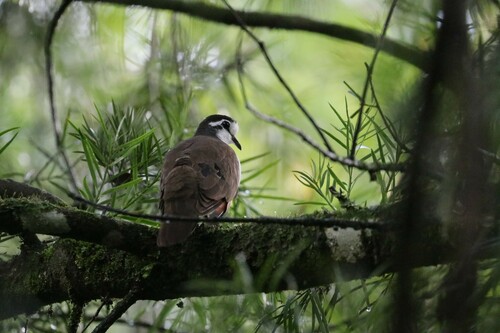
タンバリンバト (Turtur tympanistria) タンバリンバト
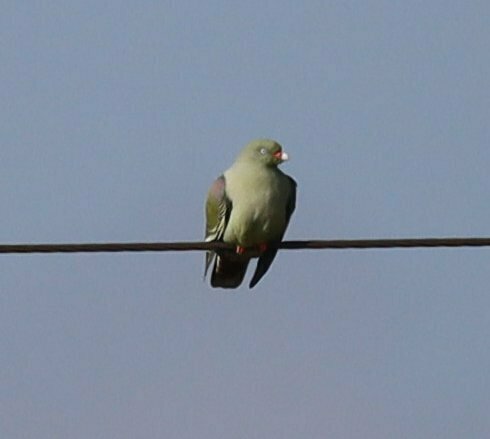
アフリカアオバト (Treron calvus) アフリカアオバト

メディア

読み込み中…

要点

タンバリンバトとアフリカアオバトの最も信頼できるフィールドマークは、全体の色とサイズです:タンバリンバトは小さく、淡い、地上に生息する鳩で、白または淡い腹部と明らかな暗紫色の翼の斑点を持っていますが、アフリカアオバトははるかに大きく、がっしりとしており、全体的に明るい緑色で、マルーンの翼の斑点と黄色い太ももを持っています。飛行中、タンバリンバトは栗色の初列風切と下翼を示し、一方、アフリカアオバトは上面が緑がかっており、上翼にマルーンが見えます。幼鳥のタンバリンバトは下部がより淡く、栗色の縁取りの羽毛を持っていますが、幼鳥のアフリカアオバトはより均一にオリーブ色です。構造と行動も役立ちます:タンバリンバトは地上性で内気であり、低く飛び立ちますが、アフリカアオバトは樹上性で、しばしば木に登ります。声、 habitat、サイズはさらに分離を強化します。

識別のコツ

  1. Size is a major clue: タンバリンバトはアフリカアオバトの質量の半分にも満たないです。鳥が小さくて繊細に見える場合はタンバリンバトを考え、大きくてずんぐりした場合はアフリカアオバトを考えてください。これはすべての年齢と性別に当てはまります。
  2. Ground vs canopy: タンバリンバトはほぼ常に地面の上または近くにいます、特に密な覆いの中で。アフリカアオバトはほぼ常に木の中にいて、しばしば高い位置にあり、めったに地面に降りません。
  3. Adult male タンバリンバト has a white face and underparts: これはアフリカアオバトには決して見られません、アフリカアオバトは下部が緑がかっているか黄色がかっています。
  4. Adult female and juvenile タンバリンバト are paler below than any アフリカアオバト: 鈍い雌や幼鳥でさえ、白または淡い腹部を持っており、アフリカアオバトは下部が緑がかっているか黄色がかっています。
  5. Juvenile タンバリンバト shows chestnut fringes on back, breast, and flanks: これはアフリカアオバトの幼鳥には見られず、より均一にオリーブ色です。
  6. Wing patches differ: タンバリンバトは折りたたまれた翼に大きな暗紫色の斑点を持っています(成鳥)、一方アフリカアオバトは上翼にマルーンの斑点を持っています(成鳥)。飛行中、タンバリンバトは栗色の初列風切と下翼を示し、アフリカアオバトは上面が緑がかっており、下部は栗色ではなくマルーンです。
  7. Bill and feet color: タンバリンバトは紫色のくちばしと紫赤色の足を持っています;アフリカアオバトは白い先端のある赤いくちばしと赤い足を持っています。これらは近距離で最もよく見えます。
  8. Eye ring: タンバリンバトは紫赤色のアイリングを持っています;アフリカアオバトのアイリングは特に目立つとは記述されていません。
  9. Head and crown color: タンバリンバトのオスは灰色の冠を持っています;雌と幼鳥は灰褐色の冠を持っています。アフリカアオバトの頭は緑がかっており、体と混ざっています。
  10. Flight style: タンバリンバトは地面から低く速く飛び立ちます;アフリカアオバトは木から飛び立ち、より重く飛びます。
  11. Vocalizations: タンバリンバトの単純で繰り返される「デューデューデューデューデュー」に対して、アフリカアオバトのメロディックで口笛のような「スウィールー、スウィーオー」を聞いてください。
  12. Habitat context: 鳥が厚く、陰のある下草の中や低いプランテーションにいる場合、タンバリンバトの可能性が高いです。果物をつけた木の中にいる場合、特に高い位置にいる場合は、アフリカアオバトの可能性が高いです。
  13. Social behavior: タンバリンバトは通常孤独または小さな群れで見られます;アフリカアオバトは木の中でより大きな群れで見られることがあります。
  14. Underwing color in flight: 飛行中の栗色の下翼と初列風切は、すべての年齢のタンバリンバトの特徴です;アフリカアオバトにはこれがありません。
  15. Pitfall: 雌と幼鳥のタンバリンバトは鈍く、他の小さな鳩と混同されることがありますが、アフリカアオバトよりも下部が常に淡いです。幼鳥のアフリカアオバトはマルーンの翼の斑点がありませんが、全体的なオリーブ色と大きなサイズがそれらを区別するのに役立ちます。

大きさ

タンバリンバトははるかに小さく、軽量で、平均体重は67gで、アフリカアオバトの202.5gと比較されます。この違いは視覚的に際立っています:タンバリンバトは小さく、ふっくらとした鳩(約22cmの長さ)ですが、アフリカアオバトは頑丈で明らかにがっしりしています。フィールドでは、このサイズのギャップはしばしばすぐに明らかで、特に両種が同様の文脈で見られるときに顕著です。

羽色

行動

タンバリンバトは通常孤独または小さな家族群で、密な森林や庭で静かに餌を探し、しばしばフラッシュされたときにのみ見られます。その飛行は速く、敏捷で、地面に低く飛びます。アフリカアオバトは非常に樹上性で、しばしば木の冠の中を登っているのが見られ、めったに地面で餌を探しません。果物をつけた木の中ではより目立ち、時には群れで見られ、オウムのような登る動きで移動します。彼らの餌を探すスタイルと生息地での好ましい高さは独特です。

生息環境

タンバリンバトは密な森林、茂み、陰のある庭を好み、しばしば厚い下草やプランテーションのある地域にいます。オープンまたは乾燥した生息地ではめったに見られません。アフリカアオバトは、河川林、森林、サバンナ、都市公園を含むより広範な森林生息地に見られますが、特にイチジクの果物をつけた木に強く関連しています。地面よりも樹冠の高い位置で見られる可能性がはるかに高いです。

声

タンバリンバトは持続的に繰り返される単純な「デューデューデューデューデュー」という呼び声を出します。アフリカアオバトは「スウィールー、スウィーオー」と表現されるより複雑で流れるような口笛を持っています。鳩の呼び声ははるかに単調で機械的ですが、アオバトの呼び声はメロディックで上昇/下降します。

より良い説明を送る

比較と同じ項目を使ってください。文章はすぐに公開されます。

The most reliable field mark between Tambourine Dove and African Green-Pigeon is overall color and size: Tambourine Dove is a small, pale, ground-dwelling dove with white or pale underparts and obvious dark purple wing patches, while African Green-Pigeon is much larger, stockier, and bright green overall with maroon wing patches and yellow thighs. In flight, Tambourine Dove shows chestnut primaries and underwings, whereas African Green-Pigeon appears greenish above with maroon on the upperwing. Juvenile Tambourine Doves are paler below with chestnut-fringed feathers, while juvenile African Green-Pigeons are more uniformly olive. Structure and behavior also help: Tambourine Dove is terrestrial and shy, flushing low, while African Green-Pigeon is arboreal, often climbing in trees. Voice, habitat, and size further reinforce the separation.

  1. Size is a major clue: Tambourine Dove is less than half the mass of African Green-Pigeon. If the bird appears small and delicate, think Tambourine Dove; if large and chunky, think African Green-Pigeon. This holds for all ages and sexes.
  2. Ground vs canopy: Tambourine Dove is almost always on or near the ground, especially in dense cover. African Green-Pigeon is almost always in trees, often high up, and rarely descends to the ground.
  3. Adult male Tambourine Dove has a white face and underparts: This is never matched by African Green-Pigeon, which is greenish or yellowish below.
  4. Adult female and juvenile Tambourine Dove are paler below than any African Green-Pigeon: Even dull females and juveniles have white or pale bellies, while African Green-Pigeon is greenish or yellowish underneath.
  5. Juvenile Tambourine Dove shows chestnut fringes on back, breast, and flanks: This is absent in African Green-Pigeon juveniles, which are more uniformly olive.
  6. Wing patches differ: Tambourine Dove has large dark purple patches on the folded wing (adults), while African Green-Pigeon has maroon patches on the upperwing (adults). In flight, Tambourine Dove shows chestnut primaries and underwings, while African Green-Pigeon shows greenish upperparts with maroon but not chestnut below.
  7. Bill and feet color: Tambourine Dove has a purple bill and purple-red feet; African Green-Pigeon has a red bill with a white tip and red feet. These are best seen at close range.
  8. Eye ring: Tambourine Dove has a purple-red eye ring; African Green-Pigeon’s eye ring is not described as distinctive.
  9. Head and crown color: Tambourine Dove males have a grey crown; females and juveniles have a grey-brown crown. African Green-Pigeon’s head is greenish, blending with the body.
  10. Flight style: Tambourine Dove flushes low and fast from the ground; African Green-Pigeon takes off from trees and flies more heavily.
  11. Vocalizations: Listen for the simple, repeated 'du-du-du-du-du' of Tambourine Dove versus the melodic, whistled 'thweeeloo, thweeeoo' of African Green-Pigeon.
  12. Habitat context: If the bird is in thick, shaded undergrowth or low in plantations, Tambourine Dove is likely. If it is in a fruiting tree, especially high up, African Green-Pigeon is more probable.
  13. Social behavior: Tambourine Dove is usually solitary or in small groups; African Green-Pigeon can be seen in larger groups in trees.
  14. Underwing color in flight: Chestnut underwings and primaries are a Tambourine Dove feature at all ages; African Green-Pigeon lacks this.
  15. Pitfall: Female and juvenile Tambourine Doves are duller and can be confused with other small doves, but remain paler below than any green-pigeon. Juvenile African Green-Pigeons lack maroon wing patches, but their overall olive color and larger size help separate them.

Tambourine Dove is much smaller and lighter, with an average body mass of 67 g, compared to the African Green-Pigeon’s 202.5 g. The difference is visually striking: Tambourine Dove is a small, plump pigeon (about 22 cm in length), while African Green-Pigeon is robust and noticeably bulkier. In the field, this size gap is often immediately apparent, especially when both species are seen in similar contexts.

  • Juvenile/immature birds: Juvenile Tambourine Doves resemble duller females but have distinctive chestnut fringes to the feathers of the back, breast, and flanks, and remain paler below than African Green-Pigeon. Juvenile African Green-Pigeons lack maroon wing patches and are more uniformly olive above and below, without the pale underparts or chestnut fringes.
  • Adults: Adult male Tambourine Dove is white-faced with a black spot behind the eye, white underparts, a grey crown, and pale grey-brown upperparts with large dark purple patches on the folded wings. Females are duller, with white restricted to the belly and more grey-brown on the face and breast. In flight, Tambourine Dove shows chestnut primaries and underwings. African Green-Pigeon adults are overall greenish above, with maroon patches on the upperwing, yellow thighs, and red feet and bill (with a white tip). Underparts are yellowish-green, never white or pale. In flight, the green pigeon’s upperwing maroon is visible, but the underwing is not chestnut.

Tambourine Dove is typically solitary or in small family groups, foraging quietly on the ground in dense woodland or gardens, and is often only seen when flushed. Its flight is fast, agile, and low to the ground. African Green-Pigeon is highly arboreal, often seen climbing in tree canopies, rarely foraging on the ground. It is more conspicuous in fruiting trees, sometimes in groups, and moves with a parrot-like climbing gait. Their foraging style and preferred height in the habitat are distinctive.

Tambourine Dove prefers dense woodland, thickets, and shaded gardens, often in areas with thick undergrowth or plantations. It is rarely seen in open or dry habitats. African Green-Pigeon is found in a wider range of wooded habitats, including riparian forests, woodland, savanna, and urban parks, but is strongly associated with fruiting trees, especially figs. It is much more likely to be seen high in the canopy than on the ground.

Tambourine Dove gives a persistently repeated, simple 'du-du-du-du-du' call. African Green-Pigeon has a more complex, flowing whistle, described as 'thweeeloo, thweeeoo'. The dove’s call is much more monotonous and mechanical, while the green-pigeon’s is melodic and rising/falling.

変更を破棄しますか?

保存していない編集があります。今離れると失われます。

タンバリンバト · アフリカアオバト · 苦手な鳥