

Motmot

カンムリサギ 対 ニシアマサギ

Ardeola ralloides 対 Ardea ibis

カンムリサギとニシアマサギのクイズ

カンムリサギ (Ardeola ralloides) カンムリサギ
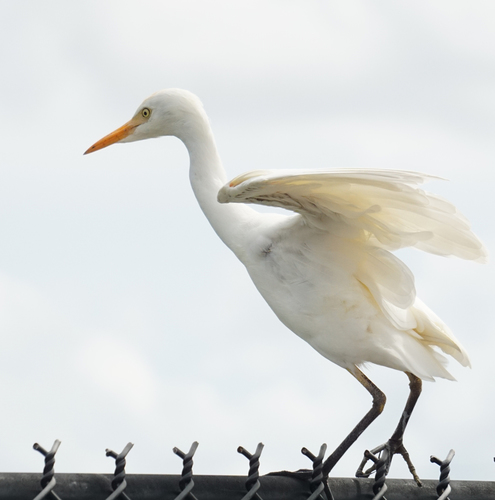
ニシアマサギ (Ardea ibis) ニシアマサギ

メディア

読み込み中…

要点

最も信頼できるフィールドマークは、飛行中のカンムリサギの変化です:その上翼は際立って白く、バフブラウンの体と対照的に見えますが、ニシアマサギは休んでいる時も飛んでいる時も白く、繁殖期にはわずかにオレンジバフの羽毛があります。カンムリサギは止まっている時に黄褐色またはバフ色の外観を示しますが、これは飛行中には消え、混乱を引き起こすことがよくあります。構造的には、カンムリサギは小さくてコンパクトで、首とくちばしが短いのに対し、アマサギはやや大きく、より厚く頑丈な外観を持っています。両種は似たような湿地生息地に見られますが、アマサギは乾燥した野原で餌を探しているのがより一般的で、しばしば家畜の近くにいますが、カンムリサギは湿地に留まります。飛行の視点、くちばしの構造、文脈に注意を払うことで、これら二種を区別するのに役立ちます。

識別のコツ

  1. 飛行中の視点が重要です: カンムリサギは飛行中に白い翼のために上から白く見えますが、止まっている時はバフ色または黄褐色に見えます;ニシアマサギは飛行中も休んでいる時も常に白いです(繁殖期の成鳥の限られたオレンジバフの羽毛を除いて)。
  2. 止まっている時の色合い: カンムリサギは止まっている時にバフブラウンの背中と上部を示し、特に繁殖期以外では明るい筋模様があります;ニシアマサギは繁殖羽毛を除いては単色の白です。
  3. くちばしの構造: カンムリサギは短くて厚く、比較的繊細なくちばしを持っています;ニシアマサギのくちばしはより厚く、頑丈で、繁殖羽毛のピーク時に一時的に明るい赤になります。
  4. 首と姿勢: カンムリサギは短い首とコンパクトでがっしりした体型を持ち、しばしば丸まって見えます;ニシアマサギはより厚い首とより直立したがっしりした姿勢を持っています。
  5. 繁殖羽毛: 繁殖期には、カンムリサギは長い首の羽毛を発達させます;ニシアマサギは頭、胸、背中にオレンジバフの羽毛を発達させますが、これらはカンムリサギの全体的なバフ色の外観よりもはるかに限られています。
  6. 幼鳥の混乱: 幼鳥のニシアマサギは白く、黒いくちばしを持ち、色付きの羽毛がありません;幼鳥のカンムリサギは黄褐色で、明るい筋模様があり、止まっている時に完全に白くなることはありません。
  7. 脚の色: ニシアマサギの脚は繁殖期に一時的に明るい赤に変わります;カンムリサギの脚は色が変わるとは記述されていません。
  8. 生息地の文脈: ニシアマサギは乾燥した野原、牧草地、家畜の近くで見られることが多いですが、カンムリサギはほぼ常に湿地や水辺の生息地にいます。
  9. 群れのサイズ: ニシアマサギは特に牛の近くで群れを成すことが多いですが、カンムリサギはより孤立しているか、小さな群れで見られます。
  10. 行動: ニシアマサギは開けた場所でより直立した歩き方をしますが、カンムリサギはより隠れるように動き、水辺をゆっくりと移動します。
  11. 幼鳥のくちばしの色: 幼鳥のニシアマサギは黒いくちばしを持っています;カンムリサギの幼鳥は小さく、より淡いくちばしを持っています。
  12. 季節的な文脈: ヨーロッパと中東では、カンムリサギは夏の繁殖者で、冬には南に移動します;ニシアマサギは多くの地域で一年中存在することがあります。
  13. 混乱の可能性: 照明が悪い場合や距離がある場合、止まっているカンムリサギは薄く見え、ニシアマサギと間違えられることがあります;常に鳥を飛行中に見るか、生息地と姿勢に注意を払うようにしてください。
  14. コロニーの巣作り: 両種は混合コロニーで巣を作ることがありますが、ニシアマサギのコロニーはしばしばより大きく、騒がしいです。
  15. 鳴き声: ニシアマサギの「リック・ラック」という鳴き声はコロニーから離れるとほとんど聞こえません;カンムリサギは一般的に静かで、声は通常役に立ちません。

大きさ

カンムリサギはやや小さく、体長は44〜47 cm、体重は約288 gです [wikidata]。ニシアマサギはやや大きく、体長は46〜56 cm、翼幅は88〜96 cmです [wikipedia]。ニシアマサギはまた、より重く(270〜512 g)、より頑丈な体型を持っています。フィールドでは、ニシアマサギはしばしばよりがっしりしていて直立して見えますが、カンムリサギはよりコンパクトで短い首に見えます。

羽色

幼鳥と非繁殖のカンムリサギは、黄褐色またはバフブラウンの上部を持ち、明るい筋模様とバフ色の背中がありますが、飛行中には翼が明るい白になります—このコントラストは、悪い光を除いてすべての年齢のための重要なフィールドマークです。ニシアマサギは一年中白く、幼鳥は色付きの羽毛がなく、黒いくちばしを持っています。繁殖期には、成鳥のニシアマサギは頭、胸、背中にオレンジバフの羽毛を発達させますが、これらは限られた範囲で、カンムリサギの全体的なバフ色の体よりも広がりがありません。ニシアマサギのくちばしと脚は、ペアリングの前に一時的に明るい赤に変わりますが、カンムリサギのくちばしは短く、より繊細なままです。休んでいる時、カンムリサギは頭と首だけが見える場合、ニシアマサギに似て見えることがありますが、全体的な黄褐色の外観と短いくちばしが手がかりです。飛行中、ニシアマサギは白のままですが、カンムリサギは白い翼のために上がるとずっと淡くなります。

行動

カンムリサギは通常孤立しているか小さな群れで、湿地や水辺で静かに餌を探します。彼らはより隠れるように動き、開けた野原で見られることは少ないです。ニシアマサギは非常に群れを成し、大きな群れで見られることが多く、特に草を食べる動物の近くで見られ、餌を探す習性はより地上に近いです。ニシアマサギはまた、開けた草地や農地を歩いているのが見られることが多く、水から遠く離れていることもありますが、カンムリサギは湿った生息地に密接に留まります。

生息環境

カンムリサギは湿地の専門家で、湿地、葦原、湖や川の縁で繁殖し、餌を探します。ニシアマサギはより多様で、開けた草原、牧草地、農地で一般的に見られ、しばしば家畜と関連しており、湿地でも見られます。乾燥した野原で牛と一緒に小さな白いサギを見た場合、それはほぼ確実にニシアマサギです;葦の生えた湿地では、両方の種が可能ですが、カンムリサギの方が可能性が高いです。

声

ニシアマサギは繁殖コロニーで静かで喉の奥からの「リック・ラック」という鳴き声を出しますが、それ以外はほとんど静かです。これらの情報源ではカンムリサギのための特有の鳴き声は記載されていないため、声はフィールドでの信頼できる区別の特徴ではありません。

より良い説明を送る

比較と同じ項目を使ってください。文章はすぐに公開されます。

The most reliable field mark is the transformation of the Squacco Heron in flight: its upperwings appear strikingly white, contrasting with its buff-brown body, while the Western Cattle-Egret is white both at rest and in flight, with only subtle orange-buff plumes in breeding season. Squacco Herons show a tawny or buffy appearance when perched, but this vanishes in flight, often leading to confusion. Structurally, Squacco Herons are smaller and more compact, with a shorter neck and bill, while Cattle-Egrets are slightly larger and have a thicker, sturdier appearance. Both species can be found in similar wetland habitats, but Cattle-Egrets are more likely to be seen foraging in drier fields, often near livestock, while Squacco Herons stick to marshy wetlands. Careful attention to flight views, bill structure, and context will help separate these two species.

  1. Flight view is critical: Squacco Heron appears white above in flight due to its white wings, but looks buffy or tawny when perched; Cattle-Egret is always white in flight and at rest (except for limited orange-buff plumes in breeding adults).
  2. Perched coloration: Squacco Heron shows a buff-brown back and upperparts with lighter streaking when perched, especially outside breeding season; Cattle-Egret is plain white except for breeding plumes.
  3. Bill structure: Squacco Heron has a short, thick, and relatively delicate bill; Cattle-Egret's bill is thicker, sturdier, and appears more robust, turning bright red briefly in peak breeding plumage.
  4. Neck and posture: Squacco Heron has a short neck and compact, stocky build, often appearing hunched; Cattle-Egret has a thicker neck and a more upright, chunky posture.
  5. Breeding plumes: In breeding season, Squacco Heron develops long neck feathers; Cattle-Egret develops orange-buff plumes on the crown, breast, and back, but these are much less extensive than the Squacco's overall buffy coloration.
  6. Juvenile confusion: Juvenile Cattle-Egrets are white with a black bill and lack colored plumes; juvenile Squacco Herons are tawny with lighter streaking and never fully white when perched.
  7. Leg color: Cattle-Egret's legs turn bright red briefly in breeding season; Squacco Heron's legs are not described as changing color.
  8. Habitat context: Cattle-Egrets are often found in dry fields, pastures, and with livestock; Squacco Herons are almost always in marshy or wetland habitats.
  9. Group size: Cattle-Egrets are often in flocks, especially near cattle; Squacco Herons are more solitary or in small groups.
  10. Behavior: Cattle-Egrets walk with a more upright gait in open areas; Squacco Herons are more skulking and secretive, moving slowly along water edges.
  11. Bill color in juveniles: Juvenile Cattle-Egrets have a black bill; Squacco Heron juveniles have a smaller, paler bill.
  12. Seasonal context: In Europe and the Middle East, Squacco Heron is a summer breeder and migrates south in winter; Cattle-Egret can be present year-round in many areas.
  13. Potential confusion: In poor light or at distance, a perched Squacco Heron may look pale and be mistaken for a Cattle-Egret; always try to see the bird in flight or note the habitat and posture.
  14. Colony nesting: Both species may nest in mixed colonies, but Cattle-Egret colonies are often larger and noisier.
  15. Vocalization: Cattle-Egret's 'rick-rack' call is rarely heard away from colonies; Squacco Heron is generally silent, so voice is not usually helpful.

Squacco Heron is slightly smaller, with a body length of 44–47 cm and a body mass around 288 g [wikidata]. Western Cattle-Egret is a bit larger, at 46–56 cm in length and a wingspan of 88–96 cm [wikipedia]. The Cattle-Egret is also heavier (270–512 g), with a more robust build. In the field, the Cattle-Egret often looks chunkier and more upright, while the Squacco Heron appears more compact and short-necked.

Juvenile and non-breeding Squacco Herons have tawny or buff-brown upperparts with lighter streaking and a buff back, but in flight, their wings are bright white—this contrast is a key field mark for all ages except in poor light. Western Cattle-Egrets are white throughout the year, with juveniles lacking any colored plumes and having a black bill. In breeding season, adult Cattle-Egrets develop orange-buff plumes on the crown, breast, and back, but these are limited in extent and never as extensive as the Squacco's overall buffy body. The Cattle-Egret's bill and legs turn bright red briefly before pairing, while the Squacco Heron's bill remains shorter and more delicate. At rest, Squacco Herons can look similar to Cattle-Egrets if only the head and neck are visible, but the overall tawny coloration and shorter bill are clues. In flight, Cattle-Egrets remain white, while Squacco Herons become much paler above due to their white wings.

Squacco Herons are typically solitary or in small groups, foraging quietly in marshes and wetlands. They are more skulking and less likely to be seen in open fields. Western Cattle-Egrets are highly gregarious, often found in large flocks, especially near grazing animals, and are more terrestrial in their foraging habits. Cattle-Egrets are also more likely to be seen walking in open grassland or agricultural fields, sometimes far from water, while Squacco Herons stick closely to wet habitats.

Squacco Herons are wetland specialists, breeding and feeding in marshy wetlands, reedbeds, and the edges of lakes and rivers. Western Cattle-Egrets are more versatile, commonly found in open grasslands, pastures, and agricultural fields, often in association with livestock, as well as in wetlands. If you see a small white heron in a dry field with cattle, it is almost certainly a Cattle-Egret; in a reedy marsh, both are possible, but Squacco Heron is more likely.

Cattle-Egrets give a quiet, throaty 'rick-rack' call at breeding colonies but are otherwise largely silent. No distinctive vocalization is noted for Squacco Heron in these sources, so voice is not a reliable separation feature in the field.

変更を破棄しますか?

保存していない編集があります。今離れると失われます。

カンムリサギ · ニシアマサギ · 苦手な鳥