

ハリモミライチョウ 対 セキショクヤケイ
Canachites canadensis 対 Gallus gallus
ハリモミライチョウとセキショクヤケイのクイズ
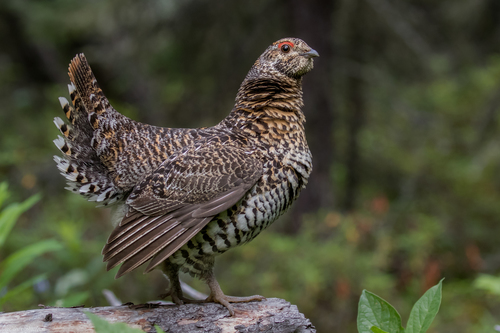 ハリモミライチョウ
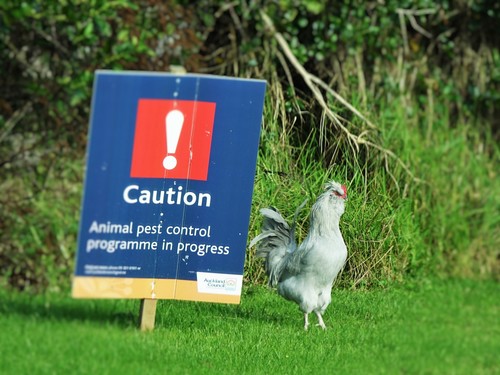 セキショクヤケイ
要点
The most reliable field mark to separate Spruce Grouse from Red Junglefowl is overall structure and plumage: Spruce Grouse (all ages) are compact, short-tailed, and cryptically patterned for coniferous forests, while Red Junglefowl are lankier, with long, iridescent tails (especially males) and, in adult males, extremely bright plumage and large red combs. Juvenile and female Spruce Grouse are mottled brown or grey with a dark tail tipped pale, while female Red Junglefowl are drab but never as heavily barred or spotted, and lack the Spruce Grouse's pale tail band. In flight, Spruce Grouse are direct and silent, with rounded wings, while Red Junglefowl rarely fly except for short bursts to roost. Habitat is a strong clue: Spruce Grouse are boreal forest specialists, Red Junglefowl are birds of tropical Asia. If you see a bird with a long, arching tail and a prominent comb, it's a Red Junglefowl; a compact, cryptic bird in conifers is a Spruce Grouse.
識別のコツ
- Tail shape and length: Adult male Red Junglefowl have extremely long, arching, iridescent tail feathers (up to 28 cm), while Spruce Grouse (all ages and sexes) have a short, squared tail with a pale terminal band (especially visible in flight or when fanned). Female and juvenile Red Junglefowl have shorter tails, but still lack the Spruce Grouse's pale-tipped dark tail.
- Comb and wattles: Male Red Junglefowl have a large, fleshy red comb and wattles on the head, visible at a distance. Spruce Grouse males have only a small red eyebrow comb (above the eye), never a full comb or wattles. Females of both species lack prominent combs, but the Spruce Grouse's eyebrow comb is unique among North American grouse.
- Plumage brightness: Adult male Red Junglefowl are brilliantly colored with golden or red hackles and iridescent green-black tails, while Spruce Grouse males are mostly grey and black with white spots. Female and juvenile Spruce Grouse are heavily barred and mottled; female Red Junglefowl are plainer brown and lack strong barring.
- Underpart pattern: Female Spruce Grouse show dark and white bars on the underparts; female Red Junglefowl are more uniform below.
- Size and build: Red Junglefowl are larger, longer-legged, and lankier, especially males. Spruce Grouse are compact, with a short neck and tail, and appear more 'chunky'.
- Flight behavior: Spruce Grouse may flush with a short, direct flight through trees, showing rounded wings and a short tail with a pale tip. Red Junglefowl rarely fly except to reach roosts or escape, and their flight is labored and brief; male junglefowl's long tail is conspicuous in flight.
- Habitat: Spruce Grouse are only found in North American coniferous forests. Red Junglefowl are restricted to tropical and subtropical forests of Asia. Habitat alone can often rule out one species.
- Vocalizations: If you hear loud crowing ('cock-a-doodle-doo'), it's a Red Junglefowl. Spruce Grouse are nearly silent, with only soft drumming or wing-clap displays (the latter only in some males and subspecies).
- Social structure: Red Junglefowl are usually in small flocks with a dominance hierarchy; Spruce Grouse are often solitary or in small family groups.
- Seasonal changes: Male Red Junglefowl enter eclipse plumage (June–October), becoming less bright but still showing black on the back and some red-orange plumes; Spruce Grouse show little seasonal change.
- Leg spurs: Male Red Junglefowl have sharp, bony spurs on the back of each leg; Spruce Grouse lack leg spurs.
- Behavioral response to humans: Spruce Grouse are often remarkably tame and may allow close approach. Red Junglefowl are shy and quick to flee.
- Crown feathers: Spruce Grouse do not erect their crown feathers when alarmed, unlike Ruffed Grouse (but this is not a Red Junglefowl confusion point).
- Juvenile confusion: Juvenile Spruce Grouse resemble females, with strong barring and a pale tail band; juvenile Red Junglefowl are plainer and browner, lacking the tail band.
- Display behaviors: Male Spruce Grouse may perform a wing-clap display (two sharp claps over the back), while male Red Junglefowl display by crowing and showing off their plumage.
大きさ
Spruce Grouse are medium-sized grouse, typically 38–43 cm (15–17 in) long, with males weighing 550–650 g and females 450–550 g [wikipedia]. Red Junglefowl are larger overall: males can reach up to 70 cm in length and weigh around 1.5 kg, while females are about 1 kg [wikipedia]. Even the smallest Red Junglefowl outweighs a Spruce Grouse, and the difference in length is especially obvious in adult males due to the long, curved tail feathers. Spruce Grouse are more compact and shorter-tailed, while Red Junglefowl appear lankier and longer-legged.
羽色
Juvenile and female Spruce Grouse are heavily mottled brown or grey, with dark and white bars on the underparts and a dark tail with a pale tip; they lack any bright colors or ornamental feathers. Juvenile and female Red Junglefowl are drab brown but less heavily patterned, and never show the Spruce Grouse's distinct tail band. Adult male Spruce Grouse are mostly grey above and black below, with white spots along the sides and a small red eyebrow comb (not to be confused with the much larger comb of male junglefowl). Adult male Red Junglefowl are unmistakable: they have long, golden or red hackles, iridescent green-black tails with long, arching feathers, and a large red comb and wattles. In eclipse plumage (June–October), male Red Junglefowl lose some brightness but still show black on the back and red-orange plumes; Spruce Grouse show little seasonal change. In flight, Spruce Grouse show rounded wings and a short tail with a pale tip, while Red Junglefowl's flight is brief and their long tail is obvious in males.
行動
Spruce Grouse are among the most arboreal grouse, often perching and moving about in trees, and are generally silent and tame, sometimes allowing close approach. They are adapted to coniferous forests and rarely leave this habitat. Red Junglefowl are shy, ground-dwelling birds of tropical forests, usually found in small flocks with a clear dominance hierarchy. Males are more likely to be solitary. Junglefowl rarely fly except to reach roosts or escape danger, while Spruce Grouse may flush with a short, direct flight. Male Spruce Grouse may perform a wing-clap display, while male Red Junglefowl display by crowing and showing off their plumage.
生息環境
Spruce Grouse are strictly associated with coniferous boreal forests (taiga) of North America and are rarely found outside this habitat. Red Junglefowl inhabit tropical and subtropical forests of South and Southeast Asia, often near forest edges or clearings, and are never found in boreal or temperate forests. If you encounter a grouse-like bird in a North American coniferous forest, it is almost certainly a Spruce Grouse; a chicken-like bird in Asian jungles is a Red Junglefowl.
声
Spruce Grouse are among the most silent grouse, rarely vocalizing. They may produce soft drumming, tail whooshes, or, in the franklinii subspecies, a loud wing-clap display, but these are non-vocal sounds. Red Junglefowl, especially males, are very vocal, with the familiar 'cock-a-doodle-doo' crowing that announces their presence and territory. This crowing is loud, frequent, and diagnostic for the species. Females are quieter but may cluck or call to chicks.