

Motmot

ホシガラス/ミナミホシガラス 対 アトリ

Nucifraga caryocatactes 対 Fringilla montifringilla

ホシガラス/ミナミホシガラスとアトリのクイズ
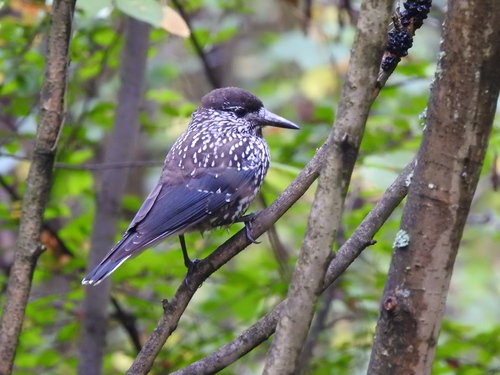
ホシガラス/ミナミホシガラス (Nucifraga caryocatactes) ホシガラス/ミナミホシガラス
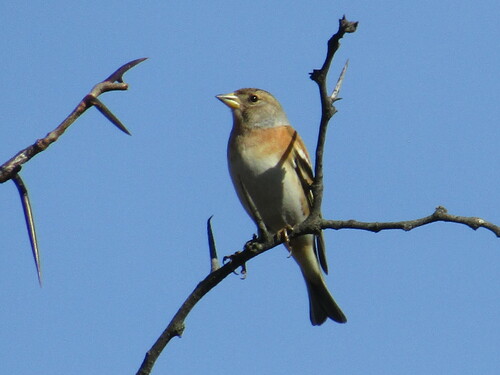
アトリ (Fringilla montifringilla) アトリ

メディア

読み込み中…

要点

The most reliable way to separate Spotted Nutcracker from Brambling is by overall structure and plumage: Nutcracker is a large, chocolate-brown corvid with bold white spotting and a heavy, long bill, while Brambling is a small, compact finch with a short bill and orange, white, and black patterning. In flight, Nutcracker shows broad wings, a short tail with white corners, and a striking white vent, whereas Brambling is much slimmer, with a white rump and lacks the Nutcracker's heavy spotting. Immature and female Bramblings can be confusing at a distance, but the Nutcracker's size, bill, and spotted appearance are distinctive. Always check bill shape and body proportions if plumage is unclear.

識別のコツ

  1. Size and Structure: Nutcracker is much larger and bulkier than Brambling, with a heavy, long, sharply pointed bill. Brambling is small, compact, and has a short, conical finch bill. This difference is obvious even at a distance.
  2. Bill Shape: Nutcracker's bill is long, black, and pointed—adapted for cracking large seeds and nuts. Brambling's bill is short, yellow (except black in breeding males), and conical, suited for small seeds. Bill color and shape are reliable at close range.
  3. Overall Plumage: Nutcracker is chocolate brown with dense white spots all over the body, including face and underparts. No Brambling ever shows this heavy white spotting. If you see a bird with white spots on a brown background, it is a Nutcracker.
  4. Flight Pattern and Wing Markings: In flight, Nutcracker shows broad, rounded wings, a short tail with white corners, and a conspicuous white vent. Brambling has a white rump (visible in flight), but no white vent or tail corners. Juvenile and adult Nutcrackers always show the white vent; Bramblings never do.
  5. Tail Pattern: Nutcracker's tail is short and dark with white corners and a white terminal band underneath. Brambling's tail is longer in proportion to its body, lacks white corners, and does not show a white terminal band.
  6. Head Pattern: Nutcracker has a blackish-brown crown and nape, a large white loral spot, and a white eye-ring. Brambling males in breeding plumage have a black head, but females and immatures have a plain head with no strong white marks or eye-ring.
  7. Underparts: Nutcracker is brown and white-spotted below, with an all-white vent. Brambling has a bright orange breast, white belly, and dark-spotted flanks (never spotted all over like Nutcracker).
  8. Upperparts and Wings: Nutcracker's wings are blackish with a greenish-blue gloss, broad and rounded. Brambling's upperparts are dark but patterned, and wings are more pointed and lack gloss.
  9. Rump and Back: Brambling always shows a white rump in flight, which is absent in Nutcracker. Nutcracker's back is brown and heavily spotted.
  10. Behavior: Nutcracker is usually solitary or in pairs, slow-moving, and often seen in coniferous trees. Brambling is highly social, often in large flocks, and feeds on the ground or in trees.
  11. Habitat: If seen in deep coniferous forest, especially near pines or spruces, Nutcracker is more likely. In open fields, gardens, or mixed flocks, Brambling is much more probable.
  12. Seasonal Context: Nutcracker is resident and only appears outside its range during irruptions. Brambling is migratory and common in large numbers in winter in many areas.
  13. Sex and Age Pitfalls: Female and immature Bramblings are duller but never show the Nutcracker's heavy spotting or structural bulk. If you are unsure, focus on bill shape and body size.
  14. Perched vs. In-flight: Nutcracker perches upright, often high in trees, and looks crow-like. Brambling perches more horizontally, often in groups, and looks finch-like.
  15. Flock Size: Single large, spotted, heavy-billed birds are Nutcrackers; small, orange-breasted birds in flocks are Bramblings.

大きさ

Spotted Nutcracker is substantially larger and heavier than Brambling. Nutcracker measures 32–38 cm in length with a 49–53 cm wingspan, and is a robust, broad-winged corvid. Brambling is a small finch, similar in size to a Chaffinch, with a body mass around 22 g—much lighter and more compact than the Nutcracker. In the field, Nutcracker appears crow-sized, while Brambling is sparrow-sized.

羽色

Juvenile and adult Spotted Nutcrackers of all ages are dark chocolate brown with dense white spotting over the face, neck, mantle, and underparts. Their wings and tail are blackish with a greenish-blue gloss, and in flight, they show a broad white vent and white corners to the tail. Brambling, regardless of age, never shows this heavy white spotting or the Nutcracker's dark coloration. Instead, adult male Bramblings in breeding plumage are striking with a black head, orange breast, and white belly; females and immatures are duller but always show an orange breast, white belly, and a white rump in flight. Bramblings lack the Nutcracker's white spotting and have a much more patterned, less uniform appearance. The white rump of Brambling is a key flight mark, while Nutcracker's white vent and tail corners are unique among these two.

行動

Spotted Nutcracker is often seen alone or in pairs, moving deliberately and using its strong bill to crack nuts or probe for seeds. It may be seen flying with slow, undulating wingbeats and perching high in conifers. Brambling is highly gregarious, especially in winter, and often forms large, restless flocks that feed on the ground or in trees. Their flight is more bounding and agile, typical of finches, and they are rarely solitary.

生息環境

Nutcracker is associated with coniferous and mixed forests, especially where pines or spruces with large seeds are present. It is rarely found in open country or urban areas. Brambling is much more flexible, breeding in northern woodlands but wintering in a wide range of habitats, including open fields, parks, and gardens, often far from conifer forests. In winter, Bramblings are far more likely to be seen in large flocks in open or semi-open habitats.

より良い説明を送る

比較と同じ項目を使ってください。文章はすぐに公開されます。

The most reliable way to separate Spotted Nutcracker from Brambling is by overall structure and plumage: Nutcracker is a large, chocolate-brown corvid with bold white spotting and a heavy, long bill, while Brambling is a small, compact finch with a short bill and orange, white, and black patterning. In flight, Nutcracker shows broad wings, a short tail with white corners, and a striking white vent, whereas Brambling is much slimmer, with a white rump and lacks the Nutcracker's heavy spotting. Immature and female Bramblings can be confusing at a distance, but the Nutcracker's size, bill, and spotted appearance are distinctive. Always check bill shape and body proportions if plumage is unclear.

  1. Size and Structure: Nutcracker is much larger and bulkier than Brambling, with a heavy, long, sharply pointed bill. Brambling is small, compact, and has a short, conical finch bill. This difference is obvious even at a distance.
  2. Bill Shape: Nutcracker's bill is long, black, and pointed—adapted for cracking large seeds and nuts. Brambling's bill is short, yellow (except black in breeding males), and conical, suited for small seeds. Bill color and shape are reliable at close range.
  3. Overall Plumage: Nutcracker is chocolate brown with dense white spots all over the body, including face and underparts. No Brambling ever shows this heavy white spotting. If you see a bird with white spots on a brown background, it is a Nutcracker.
  4. Flight Pattern and Wing Markings: In flight, Nutcracker shows broad, rounded wings, a short tail with white corners, and a conspicuous white vent. Brambling has a white rump (visible in flight), but no white vent or tail corners. Juvenile and adult Nutcrackers always show the white vent; Bramblings never do.
  5. Tail Pattern: Nutcracker's tail is short and dark with white corners and a white terminal band underneath. Brambling's tail is longer in proportion to its body, lacks white corners, and does not show a white terminal band.
  6. Head Pattern: Nutcracker has a blackish-brown crown and nape, a large white loral spot, and a white eye-ring. Brambling males in breeding plumage have a black head, but females and immatures have a plain head with no strong white marks or eye-ring.
  7. Underparts: Nutcracker is brown and white-spotted below, with an all-white vent. Brambling has a bright orange breast, white belly, and dark-spotted flanks (never spotted all over like Nutcracker).
  8. Upperparts and Wings: Nutcracker's wings are blackish with a greenish-blue gloss, broad and rounded. Brambling's upperparts are dark but patterned, and wings are more pointed and lack gloss.
  9. Rump and Back: Brambling always shows a white rump in flight, which is absent in Nutcracker. Nutcracker's back is brown and heavily spotted.
  10. Behavior: Nutcracker is usually solitary or in pairs, slow-moving, and often seen in coniferous trees. Brambling is highly social, often in large flocks, and feeds on the ground or in trees.
  11. Habitat: If seen in deep coniferous forest, especially near pines or spruces, Nutcracker is more likely. In open fields, gardens, or mixed flocks, Brambling is much more probable.
  12. Seasonal Context: Nutcracker is resident and only appears outside its range during irruptions. Brambling is migratory and common in large numbers in winter in many areas.
  13. Sex and Age Pitfalls: Female and immature Bramblings are duller but never show the Nutcracker's heavy spotting or structural bulk. If you are unsure, focus on bill shape and body size.
  14. Perched vs. In-flight: Nutcracker perches upright, often high in trees, and looks crow-like. Brambling perches more horizontally, often in groups, and looks finch-like.
  15. Flock Size: Single large, spotted, heavy-billed birds are Nutcrackers; small, orange-breasted birds in flocks are Bramblings.

Spotted Nutcracker is substantially larger and heavier than Brambling. Nutcracker measures 32–38 cm in length with a 49–53 cm wingspan, and is a robust, broad-winged corvid. Brambling is a small finch, similar in size to a Chaffinch, with a body mass around 22 g—much lighter and more compact than the Nutcracker. In the field, Nutcracker appears crow-sized, while Brambling is sparrow-sized.

Juvenile and adult Spotted Nutcrackers of all ages are dark chocolate brown with dense white spotting over the face, neck, mantle, and underparts. Their wings and tail are blackish with a greenish-blue gloss, and in flight, they show a broad white vent and white corners to the tail. Brambling, regardless of age, never shows this heavy white spotting or the Nutcracker's dark coloration. Instead, adult male Bramblings in breeding plumage are striking with a black head, orange breast, and white belly; females and immatures are duller but always show an orange breast, white belly, and a white rump in flight. Bramblings lack the Nutcracker's white spotting and have a much more patterned, less uniform appearance. The white rump of Brambling is a key flight mark, while Nutcracker's white vent and tail corners are unique among these two.

Spotted Nutcracker is often seen alone or in pairs, moving deliberately and using its strong bill to crack nuts or probe for seeds. It may be seen flying with slow, undulating wingbeats and perching high in conifers. Brambling is highly gregarious, especially in winter, and often forms large, restless flocks that feed on the ground or in trees. Their flight is more bounding and agile, typical of finches, and they are rarely solitary.

Nutcracker is associated with coniferous and mixed forests, especially where pines or spruces with large seeds are present. It is rarely found in open country or urban areas. Brambling is much more flexible, breeding in northern woodlands but wintering in a wide range of habitats, including open fields, parks, and gardens, often far from conifer forests. In winter, Bramblings are far more likely to be seen in large flocks in open or semi-open habitats.

変更を破棄しますか?

保存していない編集があります。今離れると失われます。

ホシガラス/ミナミホシガラス · アトリ · 苦手な鳥