

Motmot

Southern Royal Albatross 対 Antipodean Albatross

Diomedea epomophora 対 Diomedea antipodensis

Southern Royal AlbatrossとAntipodean Albatrossのクイズ
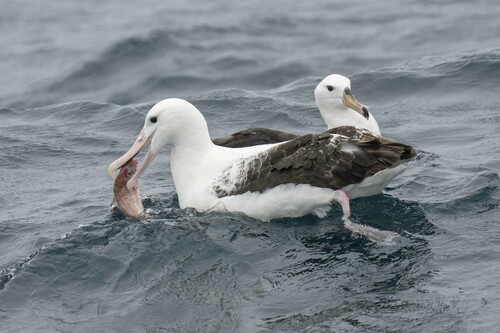
Southern Royal Albatross (Diomedea epomophora) Southern Royal Albatross
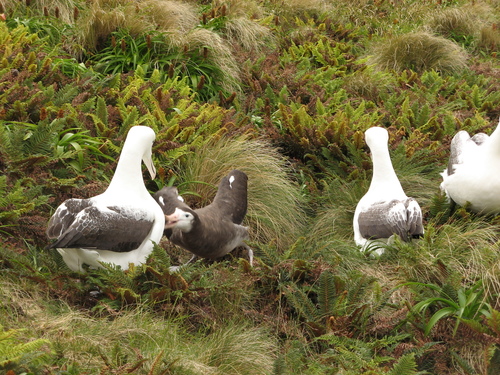
Antipodean Albatross (Diomedea antipodensis) Antipodean Albatross

メディア

読み込み中…

要点

The most reliable field mark between Southern Royal Albatross and Antipodean Albatross is the degree and pattern of white on the upperwing and body, especially in adults and older immatures. Southern Royal Albatrosses become strikingly white above with clean black-and-white contrast, while Antipodean Albatrosses retain more brown, especially on the upperparts and upperwing, even as adults. Juveniles of both can be dark-winged, but Antipodean usually stays browner overall and shows more brown on the back and breast, especially in females. Bill color is similar (pink with some dark), but Southern Royal has a paler bill with a distinctive dark cutting edge, while Antipodean can show a dusky tip, especially in immatures and females. Size is not a reliable separator in the field, as both are huge and overlap extensively.

識別のコツ

  1. Upperwing pattern in adults and older immatures: Southern Royal Albatross develops extensive white on the upperwing, starting as speckles from the leading edge and eventually producing a clean black-and-white contrast. Antipodean Albatross, especially females and immatures, retains more brown on the upperwing and back, with less white overall. This is the most reliable mark in flight for birds older than first-year.
  2. Juvenile confusion: Both species' juveniles can show all-dark upperwings, making separation very difficult at this age. Focus on other features or context if possible.
  3. Body and back color: Adult Southern Royal is much whiter above and below, with a white head, neck, upper mantle, and rump. Antipodean, especially females, shows brown upperparts with white vermiculations and a brown breast band.
  4. Breast and undertail color: Antipodean females have a distinctive brown breast band and brown undertail coverts, while Southern Royal is white below except for the black tail tip in juveniles.
  5. Bill color and pattern: Both have pink bills, but Southern Royal's is paler with a dark cutting edge on the upper mandible. Antipodean, especially immatures and females, may have a dusky tip to the lower mandible and sometimes a dark cutting edge, but this is variable and can overlap.
  6. Head and cap: Southern Royal has a white head and neck at all ages; Antipodean males have a darker cap, and females can have a browner face, but this is subtle and can be hard to judge at sea.
  7. Tail pattern: Juvenile Southern Royal has a white tail with a black tip, which is lost as they age. Antipodean tail pattern is less distinctive and more uniformly brownish in females.
  8. Sexual dimorphism: In Antipodean, males are whiter than females but still not as white as Southern Royal; females are browner overall, especially on the back and breast.
  9. Underwing: Both have mostly white underwings with a dark tip, but Antipodean may show a broader dark tip and trailing edge, especially in females and immatures.
  10. Size: Southern Royal is on average bulkier, but this is subtle and not reliable for field separation unless birds are side by side.
  11. Flight style: Both species have similar gliding flight and are not reliably separated by jizz.
  12. Habitat and context: Both can occur together at sea and breed on different subantarctic islands; habitat is not a reliable separator in the field.
  13. Voice: No diagnostic differences noted for field use.
  14. Beware confusion with wandering/snowy albatrosses: Both species can be confused with wandering/snowy albatrosses, especially when young; always check for the combination of upperwing pattern, body color, and bill details.
  15. Pitfalls: Immature and female Antipodean Albatrosses are the most likely to be confused with Southern Royal, especially when seen in poor light or at distance. Focus on the extent and crispness of white on the upperwing and back, and use multiple features together for best accuracy.

大きさ

Southern Royal Albatross averages heavier (mean body mass 9 kg, with males up to 10.3 kg and females 7.7 kg) [wikidata], while Antipodean Albatross is smaller than Southern Royal and other 'wandering' types, but specific field measurements are not provided. Wingspan and length overlap, and both are among the largest flying birds, so size alone is not a safe field mark. In direct comparison, Southern Royal may appear bulkier, but this is subtle and easily misjudged at sea.

羽色

Juvenile and immature birds of both species can show mostly dark upperwings, making them difficult to separate by this feature alone. However, Southern Royal Albatross juveniles have white heads, necks, upper mantles, rumps, and underparts, with black-speckled mantles and dark wings flecked with white on the coverts. As they age, Southern Royals develop extensive white on the upperwing, starting as speckles from the leading edge and eventually creating a clean black-and-white look. Antipodean Albatrosses, especially females and immatures, remain browner overall: breeding females have brown upperparts with white vermiculations, a white face and underparts, but a brown breast band and brown undertail coverts. Males are whiter but never as white as Southern Royal or snowy albatrosses. The underwing of both is mostly white with a dark tip, but Antipodean may show more extensive dark at the tip and trailing edge. Bill color is pink in both, but Southern Royal has a paler bill with a dark cutting edge on the upper mandible; Antipodean, especially immatures and females, can show a dusky tip to the lower mandible and sometimes a dark cutting edge, but this is variable.

行動

Both species share similar behaviors typical of great albatrosses: long, gliding flight with minimal wingbeats, and elaborate courtship displays involving bill-snapping, sky-calling, and wing-stretching. Southern Royal Albatross is noted for bill-snapping, clapping, and sky-calling with outstretched wings. These behaviors are not reliably different in the field for identification.

生息環境

Both species breed on subantarctic islands and forage widely at sea. Southern Royal prefers nesting on tussock grassland, plateaus, and ridges, while Antipodean breeds on the Antipodes and nearby islands. At sea, both can occur in similar pelagic waters and are not reliably separated by habitat in most field situations.

より良い説明を送る

比較と同じ項目を使ってください。文章はすぐに公開されます。

The most reliable field mark between Southern Royal Albatross and Antipodean Albatross is the degree and pattern of white on the upperwing and body, especially in adults and older immatures. Southern Royal Albatrosses become strikingly white above with clean black-and-white contrast, while Antipodean Albatrosses retain more brown, especially on the upperparts and upperwing, even as adults. Juveniles of both can be dark-winged, but Antipodean usually stays browner overall and shows more brown on the back and breast, especially in females. Bill color is similar (pink with some dark), but Southern Royal has a paler bill with a distinctive dark cutting edge, while Antipodean can show a dusky tip, especially in immatures and females. Size is not a reliable separator in the field, as both are huge and overlap extensively.

  1. Upperwing pattern in adults and older immatures: Southern Royal Albatross develops extensive white on the upperwing, starting as speckles from the leading edge and eventually producing a clean black-and-white contrast. Antipodean Albatross, especially females and immatures, retains more brown on the upperwing and back, with less white overall. This is the most reliable mark in flight for birds older than first-year.
  2. Juvenile confusion: Both species' juveniles can show all-dark upperwings, making separation very difficult at this age. Focus on other features or context if possible.
  3. Body and back color: Adult Southern Royal is much whiter above and below, with a white head, neck, upper mantle, and rump. Antipodean, especially females, shows brown upperparts with white vermiculations and a brown breast band.
  4. Breast and undertail color: Antipodean females have a distinctive brown breast band and brown undertail coverts, while Southern Royal is white below except for the black tail tip in juveniles.
  5. Bill color and pattern: Both have pink bills, but Southern Royal's is paler with a dark cutting edge on the upper mandible. Antipodean, especially immatures and females, may have a dusky tip to the lower mandible and sometimes a dark cutting edge, but this is variable and can overlap.
  6. Head and cap: Southern Royal has a white head and neck at all ages; Antipodean males have a darker cap, and females can have a browner face, but this is subtle and can be hard to judge at sea.
  7. Tail pattern: Juvenile Southern Royal has a white tail with a black tip, which is lost as they age. Antipodean tail pattern is less distinctive and more uniformly brownish in females.
  8. Sexual dimorphism: In Antipodean, males are whiter than females but still not as white as Southern Royal; females are browner overall, especially on the back and breast.
  9. Underwing: Both have mostly white underwings with a dark tip, but Antipodean may show a broader dark tip and trailing edge, especially in females and immatures.
  10. Size: Southern Royal is on average bulkier, but this is subtle and not reliable for field separation unless birds are side by side.
  11. Flight style: Both species have similar gliding flight and are not reliably separated by jizz.
  12. Habitat and context: Both can occur together at sea and breed on different subantarctic islands; habitat is not a reliable separator in the field.
  13. Voice: No diagnostic differences noted for field use.
  14. Beware confusion with wandering/snowy albatrosses: Both species can be confused with wandering/snowy albatrosses, especially when young; always check for the combination of upperwing pattern, body color, and bill details.
  15. Pitfalls: Immature and female Antipodean Albatrosses are the most likely to be confused with Southern Royal, especially when seen in poor light or at distance. Focus on the extent and crispness of white on the upperwing and back, and use multiple features together for best accuracy.

Southern Royal Albatross averages heavier (mean body mass 9 kg, with males up to 10.3 kg and females 7.7 kg) [wikidata], while Antipodean Albatross is smaller than Southern Royal and other 'wandering' types, but specific field measurements are not provided. Wingspan and length overlap, and both are among the largest flying birds, so size alone is not a safe field mark. In direct comparison, Southern Royal may appear bulkier, but this is subtle and easily misjudged at sea.

Juvenile and immature birds of both species can show mostly dark upperwings, making them difficult to separate by this feature alone. However, Southern Royal Albatross juveniles have white heads, necks, upper mantles, rumps, and underparts, with black-speckled mantles and dark wings flecked with white on the coverts. As they age, Southern Royals develop extensive white on the upperwing, starting as speckles from the leading edge and eventually creating a clean black-and-white look. Antipodean Albatrosses, especially females and immatures, remain browner overall: breeding females have brown upperparts with white vermiculations, a white face and underparts, but a brown breast band and brown undertail coverts. Males are whiter but never as white as Southern Royal or snowy albatrosses. The underwing of both is mostly white with a dark tip, but Antipodean may show more extensive dark at the tip and trailing edge. Bill color is pink in both, but Southern Royal has a paler bill with a dark cutting edge on the upper mandible; Antipodean, especially immatures and females, can show a dusky tip to the lower mandible and sometimes a dark cutting edge, but this is variable.

Both species share similar behaviors typical of great albatrosses: long, gliding flight with minimal wingbeats, and elaborate courtship displays involving bill-snapping, sky-calling, and wing-stretching. Southern Royal Albatross is noted for bill-snapping, clapping, and sky-calling with outstretched wings. These behaviors are not reliably different in the field for identification.

Both species breed on subantarctic islands and forage widely at sea. Southern Royal prefers nesting on tussock grassland, plateaus, and ridges, while Antipodean breeds on the Antipodes and nearby islands. At sea, both can occur in similar pelagic waters and are not reliably separated by habitat in most field situations.

変更を破棄しますか?

保存していない編集があります。今離れると失われます。

Southern Royal Albatross · Antipodean Albatross · 苦手な鳥