

Motmot

ハンエリヒタキ 対 マダラヒタキ

Ficedula semitorquata 対 Ficedula hypoleuca

ハンエリヒタキとマダラヒタキのクイズ
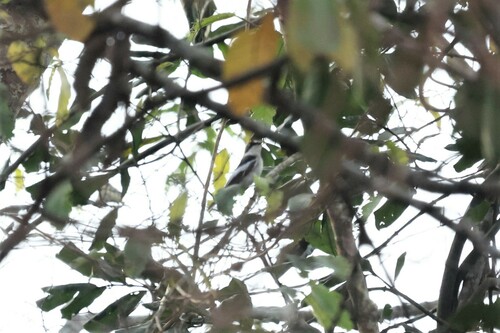
ハンエリヒタキ (Ficedula semitorquata) ハンエリヒタキ
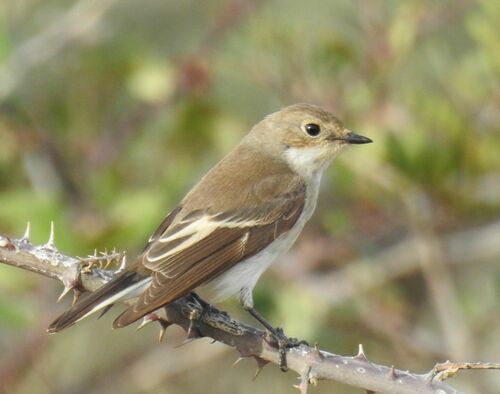
マダラヒタキ (Ficedula hypoleuca) マダラヒタキ

メディア

読み込み中…

要点

セミコラードヒタキとマダラヒタキを区別する最も信頼できるフィールドマークは、中央の覆羽に明確な白いバーが存在することで、これはセミコラードのほとんどの羽色に見られますが、マダラには通常ありません。セミコラードの成鳥の繁殖オスは、マダラよりも広範囲に白いハーフカラーと大きな白い額の斑点を示し、淡い灰色の尾羽も持っています。しかし、繁殖していない、雌、幼鳥の両種は非常に似ており、特にフィールドでは非常に区別が難しい場合があります。中央の覆羽のバーと尾羽および額の白の広がりに注意を払うことが重要ですが、近くで見るか手に持たない限り、識別できない個体もいます。

識別のコツ

  1. 白い中央覆羽のバー: 繁殖していない、雌、幼鳥の鳥に特に注意して、中央の覆羽に狭い白いバーを探してください。これはセミコラードに典型的ですが、マダラには通常ありません(ただし、一部の初冬の個体を除く)。
  2. 白いカラーの広がり: 繁殖オスでは、セミコラードはマダラよりも首の後ろまで広がる白いハーフカラーを示します。マダラのカラーは通常制限されており、あまり目立ちません。
  3. 額の斑点のサイズ: セミコラードのオスは、マダラよりも大きな白い額の斑点を持っていますが、マダラのイベリア亜種は重なることがあります。ヨーロッパのほとんどでは、大きな斑点はセミコラードに有利です。
  4. 淡い灰色の尾羽: 繁殖オスのセミコラードは、淡い灰色の尾羽を示すことが多いですが、マダラの尾羽は通常暗いです。イベリアのマダラも淡い尾羽を持つことがありますので、西南ヨーロッパでは注意が必要です。
  5. 尾の側面の白: 両種は尾の側面に白を示しますが、セミコラードの方が広範囲です。これは飛行中または尾が広がったときに最もよく判断できます。
  6. 翼の斑点: 両種は繁殖オスに大きな白い翼の斑点を持っていますが、セミコラードの方がしばしば大きく、目立ちます。
  7. 三次羽の縁: 繁殖していないおよび雌タイプの鳥では、セミコラードはマダラよりも三次羽の白い縁が狭いですが、これは微妙なマークであり、良い視界が必要です。
  8. くちばしの形: 両種はフライキャッチャーに典型的な広く尖ったくちばしを持っていますが、信頼できる区別にはなりません。
  9. 歌: セミコラードの歌は、シロエリヒタキとマダラの中間で、遅く、緊張した口笛といくつかのリズムがあります。マダラの歌はよりリズミカルで、口笛が少ないです。両種の歌に慣れている場合のみ使用してください。
  10. 生息地: 東南ヨーロッパの山地の落葉樹林にいる場合は、セミコラードを考慮してください。ヨーロッパのほとんど、特に低地や西部では、マダラの方がはるかに可能性が高いです。
  11. 季節と範囲: セミコラードは西ヨーロッパでは珍しい迷鳥ですが、マダラは一般的です。常に場所と季節を考慮してください。
  12. ハイブリッドの混乱: 両種はシロエリヒタキとハイブリダイズすることがありますが、ハイブリッドは珍しく、これら二種を比較する際には通常フィールドの懸念ではありません。
  13. 性別と年齢: 雌と幼鳥は非常に似ており、覆羽のバーと微妙な三次羽/翼の違いだけが役立ちますが、一部の個体はフィールドで安全に識別できない場合があります。
  14. 飛行中の視界: 飛行中は、尾の白の広がりと中央の覆羽のバーの存在を探してください。これらはしばしば非オスの最良の手がかりです。
  15. 落とし穴: 初冬のマダラヒタキには注意してください。白い覆羽のバーを示し、セミコラードと重なることがあります。マークの組み合わせを使用し、単一の特徴に頼らないでください。

大きさ

両種は基本的に同じサイズで、長さは12〜13.5 cmです。マダラヒタキの平均体重は12.0 gと記録されていますが、セミコラードがフィールドで一貫して大きいまたは小さいという証拠はありません。構造的な違いは微妙で、遠くからは信頼できる診断にはなりません。

羽色

行動

両種は典型的な空中昆虫食者で、止まり木から飛び出して昆虫を捕まえます。セミコラードヒタキは、飛行中に昆虫をより独占的に捕まえることで知られていますが、マダラは時折、葉の中で毛虫を狩ります。この行動の違いは微妙で、通常フィールドでの診断にはなりません。

生息環境

セミコラードヒタキは、特にオークとハンノキのある山地の落葉樹林で繁殖し、東南ヨーロッパとイラン北西部に分布し、他の地域では珍しい迷鳥です。マダラヒタキは、ヨーロッパのほとんどと西パレアリックに広く分布し、さまざまな森林生息地で繁殖します。東南ヨーロッパでは重なりが可能ですが、低地や西ヨーロッパの環境ではマダラの方がはるかに可能性が高いです。

声

セミコラードヒタキの歌は、シロエリヒタキとマダラヒタキの中間で、遅く、緊張した口笛といくつかのリズミカルな要素があります。マダラヒタキは独特で、よりリズミカルな歌を持っています。しかし、歌の違いは微妙で、特に経験の浅いリスナーには常に信頼できる分離のためのものではありません。

より良い説明を送る

比較と同じ項目を使ってください。文章はすぐに公開されます。

The most reliable field mark to separate Semicollared Flycatcher from European Pied Flycatcher is the presence of a distinct white bar on the median coverts, visible in most plumages of Semicollared but typically absent in Pied. Adult breeding males of Semicollared also show a more extensive white half-collar and a larger white forehead patch than Pied, as well as a pale grey rump. However, non-breeding, female, and juvenile birds of both species are very similar and can be extremely difficult to distinguish, especially in the field. Careful attention to the median covert bar and the extent of white on the tail and forehead is essential, but some individuals remain unidentifiable without close or in-hand views.

  1. White median covert bar: Look for a narrow white bar on the median coverts, especially in non-breeding, female, and juvenile birds. This is typical of Semicollared but usually absent in Pied, except for some first-winters.
  2. Extent of white collar: In breeding males, Semicollared shows a more extensive white half-collar reaching further back on the neck than Pied. Pied's collar is usually restricted and less obvious.
  3. Forehead patch size: Semicollared males have a larger white forehead patch than Pied, except for the Iberian subspecies of Pied, which can overlap. In most of Europe, a large patch favors Semicollared.
  4. Pale grey rump: Breeding male Semicollared often shows a pale grey rump, while Pied's rump is usually darker. Iberian Pied can also have a pale rump, so use with caution in southwest Europe.
  5. White on tail sides: Both species show white on the tail sides, but it is more extensive in Semicollared. This is best judged in flight or when the tail is spread.
  6. Wing patch: Both species have a large white wing patch in breeding males, but Semicollared's is often larger and more striking.
  7. Tertial edges: In non-breeding and female-type birds, Semicollared has narrower white edges to the tertials than Pied, but this is a subtle mark and requires good views.
  8. Bill shape: Both have a broad, pointed bill typical of flycatchers; not a reliable separator.
  9. Song: Semicollared's song is intermediate between Collared and Pied, with slow, strained whistles and some rhythm. Pied's is more rhythmic and less whistled. Use only if familiar with both species' songs.
  10. Habitat: If in montane deciduous woodland in southeastern Europe, consider Semicollared. In most of Europe, especially lowlands and west, Pied is much more likely.
  11. Season and range: Semicollared is a rare vagrant in western Europe; Pied is common. Always consider location and time of year.
  12. Hybrid confusion: Both can hybridize with Collared Flycatcher, but hybrids are rare and usually not a field concern when comparing these two.
  13. Sex and age: Female and juvenile birds are extremely similar; only the covert bar and subtle tertial/wing differences are helpful, and some individuals may not be safely identified in the field.
  14. Flight views: In flight, look for the extent of white on the tail and the presence of the median covert bar. These are often the best clues for non-males.
  15. Pitfalls: Beware of first-winter Pied Flycatchers, which can show a white covert bar and overlap with Semicollared. Use a combination of marks and do not rely on a single feature.

Both species are essentially the same size, with a length of 12–13.5 cm. The European Pied Flycatcher has a documented average body mass of 12.0 g, but there is no evidence that Semicollared is consistently larger or smaller in the field. Structural differences are subtle and not reliably diagnostic at a distance.

  • Juvenile and non-breeding/female-type plumages: Both species are pale brown above and white below, making them very similar. Semicollared Flycatcher often shows a narrow white bar on the median coverts in these plumages, which is rare in Pied except in some first-winters. The tertial edges are narrower in Semicollared, but this is subtle. Both can show white on the tail sides, but this is more extensive in Semicollared.

  • Adult breeding males: Semicollared is black above and white below, with a white half-collar that extends further back than in Pied, a large white forehead patch (larger than Pied except for the Iberian subspecies), a large white wing patch, and a pale grey rump. Pied breeding males are also black and white, but the white collar is much less extensive, the forehead patch is smaller (except in Iberian birds), and the rump is usually darker. Both have white on the tail sides, but it is more extensive in Semicollared.

Both species are typical aerial insectivores, sallying from perches to catch insects. Semicollared Flycatcher is noted for taking insects more exclusively in flight, while Pied occasionally hunts caterpillars among foliage. This behavioral difference is subtle and not usually diagnostic in the field.

Semicollared Flycatcher breeds in montane deciduous forests, especially with oak and hornbeam, in southeastern Europe and northwest Iran, and is a rare vagrant elsewhere. European Pied Flycatcher is widespread across most of Europe and the Western Palearctic, breeding in a variety of woodland habitats. Overlap is possible in southeastern Europe, but Pied is much more likely in lowland and western European settings.

The song of Semicollared Flycatcher is intermediate between Collared and Pied Flycatchers, with slow, strained whistles and some rhythmic elements. Pied Flycatcher has a distinctive, more rhythmic song. However, song differences are subtle and not always reliable for separation, especially for inexperienced listeners.

変更を破棄しますか?

保存していない編集があります。今離れると失われます。

ハンエリヒタキ · マダラヒタキ · 苦手な鳥