

Motmot

アカツクシガモ 対 ハシビロガモ

Tadorna ferruginea 対 Spatula clypeata

アカツクシガモとハシビロガモのクイズ
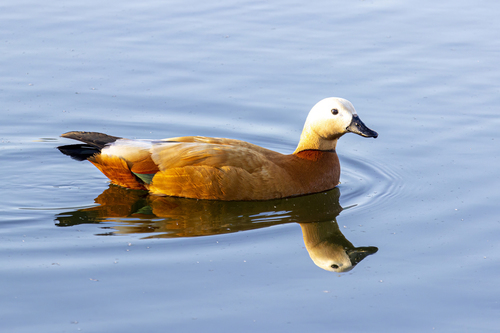
アカツクシガモ (Tadorna ferruginea) アカツクシガモ
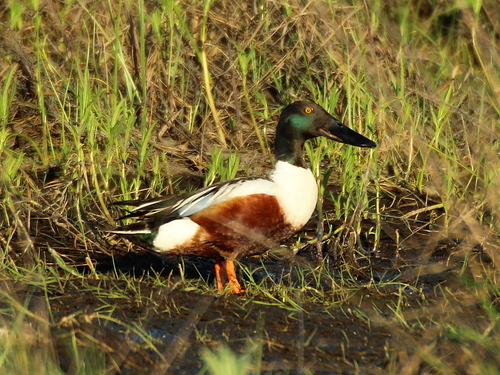
ハシビロガモ (Spatula clypeata) ハシビロガモ

メディア

読み込み中…

要点

アカツクシガモとハシビロガモをどの羽色でも区別するための最も信頼できるフィールドマークは、全体の構造と飛行中の翼のパターンの組み合わせです:アカツクシガモは、黒い飛行羽と対照的な目立つ白い上翼覆羽を示しますが、ハシビロガモは淡い青の前翼(両性において、飛行中に最も明らか)と白い縁で分けられた緑のスペキュラムを持っています。アカツクシガモは大きく、オレンジ褐色で、ガチョウのような形をしており、淡い頭と暗い尾を持っていますが、ハシビロガモはより小さく、長く幅広いスプート形のくちばしとより典型的なカモの形をしています。幼鳥と雌のハシビロガモはまだらの茶色ですが、常に特徴的なくちばしと淡い青の前翼を示します。両種は大きな水域に生息することがありますが、アカツクシガモはよりがっしりとして直立しており、ハシビロガモはくちばしを左右に振って水面で採餌しているのが見られる可能性が高いです。

識別のコツ

  1. In flight, look for the upperwing pattern: アカツクシガモのすべての年齢と性別は、黒い飛行羽と尾と対照的な大きな白いパネル(上翼覆羽)を示します;これは下からでも上からでも目立ち明らかです。ハシビロガモ(すべての年齢/性別)は、淡い青の前翼と白で縁取られた緑のスペキュラムを示し、決して固体の白いパネルはありません。
  2. Bill shape is a failsafe: ハシビロガモは長く幅広いスプート形のくちばし(オスは灰色から黒、雌/幼鳥は灰色にオレンジの色合い)を持ち、カモの中でユニークで、アカツクシガモとは決して一致しません。アカツクシガモは通常の黒いカモのくちばしを持っています。
  3. Overall structure: アカツクシガモは大きく、直立しており、ガチョウのような形をしていて、長い首と脚を持っていますが、ハシビロガモはコンパクトで、低く、より典型的な採餌カモの形をしています。
  4. Body color: アカツクシガモはオレンジ褐色で、淡い(オス:オレンジ褐色、雌:白っぽい)頭と黒い尾を持っています;ハシビロガモのオス(繁殖期)は緑の頭、白い胸、栗色の側面、黒いくちばしを持ち、雌/幼鳥はまだらの茶色です。
  5. Head and neck: アカツクシガモのオスは狭い黒い襟(繁殖期)を示すことがありますが、エクリプス/雌/幼鳥にはありません;ハシビロガモは襟や淡い頭を示しません。
  6. Tail and rump: アカツクシガモは常に黒い尾と尻を持ち、体と対照的です;ハシビロガモの尾は対照的ではありません。
  7. Leg color: ハシビロガモの脚は明るいオレンジ赤色です;アカツクシガモの脚は暗い灰色ですが、これは遠くからはほとんど見えません。
  8. Perched/at rest: アカツクシガモの白い翼のパネルは、止まっているときにはほとんど隠れているので、体の色と構造に頼ります;ハシビロガモの青い前翼もほとんど隠れていますが、くちばしの形と体のパターンは明確に残ります。
  9. Juvenile confusion: 幼鳥/雌のハシビロガモはまだらの茶色ですが、常に飛行中にスプート形のくちばしと淡い青の前翼を示します;幼鳥のアカツクシガモはより暗い茶色ですが、依然として淡い頭と白い翼のパネルを持っています。
  10. Feeding behavior: ハシビロガモは水面でくちばしを左右に振って採餌することがよくあります;アカツクシガモはこの動作なしで草を食べたり泳いだりします。
  11. Vocalizations: 大きく、鼻にかかったホーンはアカツクシガモを示唆します;ハシビロガモは静かで、声が少ないです。
  12. Size in mixed flocks: アカツクシガモはハシビロガモを圧倒します;両方が存在する場合、サイズの差は明らかです。
  13. Habitat context: アカツクシガモは水から離れた場所や開けた、植生の少ない地域に見られることがあります;ハシビロガモは湿地や水辺に留まります。
  14. Seasonal changes: アカツクシガモのオスは繁殖期以外に黒い襟を失います;ハシビロガモのオスはエクリプスで多くの鮮やかな色を失いますが、淡い青の前翼とスプート形のくちばしは保持します。
  15. When in doubt, trust the bill and wing pattern: これらはすべての年齢と季節にわたって最も一貫して信頼できるマークです。

大きさ

アカツクシガモは大きく、重く、長さは58〜70 cm、体重は約1230 g [wikidata]で、ハシビロガモの長さは44〜52 cm、典型的な体重は500〜800 g [wikipedia]です。アカツクシガモは翼幅がはるかに広く(110〜135 cm対70〜84 cm)、よりがっしりとしたガチョウのような体型をしています。フィールドでは、アカツクシガモはより高く立ち、より直立して見えますが、ハシビロガモはコンパクトで水面に低く座っています。

羽色

すべての年齢と性別において、アカツクシガモは飛行中に白い上翼覆羽と黒い飛行羽および尾との間に大胆なコントラストを示します;この白は特に飛行中に上翼に大きなパネルとして見えますが、止まっているときにはほとんど隠れています。幼鳥は雌に似ていますが、より暗い茶色で、飛行中に白い翼覆羽を持っています。繁殖羽のオスは狭い黒い襟を持ち、エクリプスと幼鳥の羽では失われます。雌と幼鳥は淡い白っぽい頭と首を持ち、襟はありません。繁殖羽のハシビロガモのオスは、虹色の緑の頭、白い胸、栗色の側面、黒いくちばしを持ちます;エクリプス(夏の終わり/秋)では、オスは雌に似ますが、淡い青の前翼を保持します。雌と幼鳥は全体的にまだらの茶色で、長く幅広いスプート形のくちばしと灰色の前翼を持ち、白で縁取られた緑のスペキュラムがあります。淡い青の前翼(両性および年齢で見える)はハシビロガモの診断的な特徴であり、アカツクシガモでは決して示されません。地面では、アカツクシガモのオレンジ褐色の体と淡い頭は、ハシビロガモのより隠れた、縞模様の茶色(雌/幼鳥)または大胆なパターン(オス)の羽と対照的です。

行動

アカツクシガモはしばしば陸上で直立しているか、水面で高く泳いでいるのが見られ、時には水辺から遠く離れていることもあり、ペアや小さな群れで見られることがあります。ハシビロガモは水面で採餌しているのが見られる可能性が高く、しばしばくちばしを左右に振って食べ物を濾し取り、通常は水中または水辺に留まります。ハシビロガモは他のカモよりも群れを作ることは少ないですが、小さな群れを形成することがあります。アカツクシガモの行動は小さなガチョウに似ている一方で、ハシビロガモは典型的な採餌カモです。

生息環境

両種は大きな湖、貯水池、河川に見られますが、アカツクシガモは開けた内陸の水域で見られる可能性が高く、繁殖期には高い標高や水から離れた場所にいることがあります。ハシビロガモは無脊椎動物が豊富な泥底の湿地を好み、より水生的で、水から遠く離れることはほとんどありません。重複する越冬地(例:インド亜大陸)では、文脈が役立たないことがありますが、アカツクシガモはしばしばより開けた、植生の少ない生息地にいます。

声

アカツクシガモは大きく、鼻にかかったホーンのような鳴き声を発し、地上でも飛行中でもよく聞かれ、オスと雌の声は微妙に異なります。ハシビロガモは一般的に静かで、提供されたメモには特有の鳴き声についての言及はありません;彼らの鳴き声はフィールドで聞かれることが少なく、診断的である可能性も低いです。

より良い説明を送る

比較と同じ項目を使ってください。文章はすぐに公開されます。

The most reliable field mark to separate Ruddy Shelduck from Northern Shoveler in any plumage is the combination of overall structure and wing pattern in flight: Ruddy Shelduck shows striking white upperwing coverts contrasting with black flight feathers, while Northern Shoveler has a pale blue forewing (on both sexes, most obvious in flight) and a green speculum separated by a white border. Ruddy Shelduck is a large, orange-brown, goose-like duck with a pale head and dark tail, whereas Northern Shoveler is smaller, with a long, broad, spatulate bill and a more typical duck shape. Juvenile and female shovelers are mottled brown but always show the distinctive bill and pale blue forewing. Both species can occur on large water bodies, but the shelduck is bulkier and more upright, while the shoveler is more likely to be seen dabbling with its bill sweeping side to side.

  1. In flight, look for the upperwing pattern: Ruddy Shelduck of all ages and sexes shows a large white panel (upperwing coverts) contrasting with black flight feathers and tail; this is bold and obvious from below or above. Northern Shoveler (all ages/sexes) shows a pale blue forewing and green speculum bordered by white, never a solid white panel.
  2. Bill shape is a failsafe: Shoveler has a long, broad, spatulate bill (grey to black in males, grey with orange tinges in females/juveniles), unique among ducks and never matched by the shelduck. Ruddy Shelduck has a normal, black duck bill.
  3. Overall structure: Ruddy Shelduck is large, upright, and goose-like, with a long neck and legs, while shoveler is compact, low-slung, and more typical of dabbling ducks.
  4. Body color: Ruddy Shelduck is orange-brown with a paler (male: orange-brown, female: whitish) head and black tail; shoveler males (breeding) have a green head, white breast, chestnut flanks, and black bill, while females/juveniles are mottled brown.
  5. Head and neck: Shelduck males may show a narrow black collar (breeding), absent in eclipse/female/juvenile; shovelers never show a collar or pale head.
  6. Tail and rump: Ruddy Shelduck always has a black tail and rump, contrasting with the body; shoveler's tail is not contrasting.
  7. Leg color: Shoveler legs are bright orange-red; shelduck legs are dark grey, but this is rarely visible at distance.
  8. Perched/at rest: Shelduck's white wing panel is mostly hidden when perched, so rely on body color and structure; shoveler's blue forewing is also mostly hidden, but bill shape and body pattern remain clear.
  9. Juvenile confusion: Juvenile/female shovelers are mottled brown but always show the spatulate bill and pale blue forewing in flight; juvenile shelducks are darker brown but still have the pale head and white wing panel.
  10. Feeding behavior: Shovelers often sweep their bill side to side at the water's surface; shelducks graze or swim without this motion.
  11. Vocalizations: Loud, nasal honking suggests shelduck; shovelers are quieter and less vocal.
  12. Size in mixed flocks: Shelduck dwarfs shovelers; if both are present, the size gap is obvious.
  13. Habitat context: Shelduck may be found away from water or in open, less vegetated areas; shoveler sticks to marshes and water edges.
  14. Seasonal changes: Shelduck males lose the black collar outside breeding; shoveler males lose much of their bold color in eclipse but retain the blue forewing and spatulate bill.
  15. When in doubt, trust the bill and wing pattern: These are the most consistently reliable marks across all ages and seasons.

Ruddy Shelduck is substantially larger and heavier, with a length of 58–70 cm and a body mass around 1230 g [wikidata], compared to Northern Shoveler's 44–52 cm length and 500–800 g typical mass [wikipedia]. The shelduck has a much broader wingspan (110–135 cm vs. 70–84 cm) and a bulkier, more goose-like build. In the field, the shelduck stands taller and appears more upright, while the shoveler is compact and sits lower on the water.

In all ages and sexes, Ruddy Shelduck in flight shows a bold contrast between white upperwing coverts and black flight feathers and tail; this white is visible as a large panel on the upperwing, especially in flight, but is mostly hidden when perched. Juveniles are similar to females but darker brown, still with the white wing coverts in flight. Males in breeding plumage have a narrow black collar, lost in eclipse and juvenile plumages. Females and juveniles have a pale, whitish head and neck, lacking the collar. Northern Shoveler males in breeding plumage have an iridescent green head, white breast, and chestnut flanks, with a black bill; in eclipse (late summer/fall), males resemble females but retain the pale blue forewing. Females and juveniles are mottled brown overall, with a long, broad, spatulate bill and a greyish forewing in flight, plus a green speculum bordered by white. The pale blue forewing (visible in both sexes and ages) is diagnostic for shoveler and never shown by shelduck. On the ground, the shelduck's orange-brown body and pale head contrast with the shoveler's more cryptic, streaked brown (female/juvenile) or bold, patterned (male) plumage.

Ruddy Shelduck is often seen standing upright on land or swimming high on the water, sometimes far from the water's edge, and may be found in pairs or small groups. Northern Shoveler is more likely to be seen dabbling at the water's surface, often swinging its bill side to side to filter food, and usually remains in the water or at the water's edge. Shovelers are less gregarious than some ducks but can form small flocks. The shelduck's behavior is more reminiscent of a small goose, while the shoveler is a classic dabbling duck.

Both species can be found on large lakes, reservoirs, and rivers, but Ruddy Shelduck is more likely to be seen on open inland water bodies, sometimes at higher elevations or away from water during breeding. Northern Shoveler prefers mud-bottomed marshes rich in invertebrates and is more strictly aquatic, rarely straying far from water. In overlapping wintering areas (e.g., Indian subcontinent), context may not help, but the shelduck is often in more open, less vegetated habitats.

Ruddy Shelduck gives loud, nasal honking calls, often heard both on the ground and in flight, with male and female calls differing subtly. Northern Shoveler is generally quieter, with no mention of distinctive calls in the provided notes; their vocalizations are less likely to be heard or diagnostic in the field.

変更を破棄しますか?

保存していない編集があります。今離れると失われます。

アカツクシガモ · ハシビロガモ · 苦手な鳥