

Motmot

バラノドカザリドリモドキ 対 クロネコマネドリ

Pachyramphus aglaiae 対 Melanoptila glabrirostris

バラノドカザリドリモドキとクロネコマネドリのクイズ
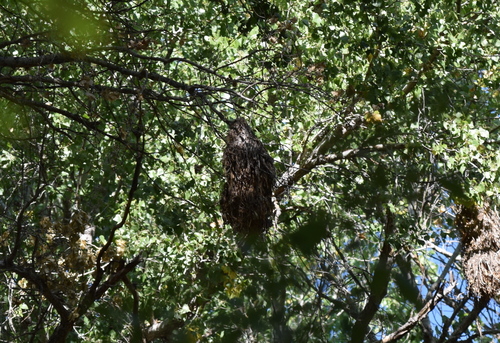
バラノドカザリドリモドキ (Pachyramphus aglaiae) バラノドカザリドリモドキ
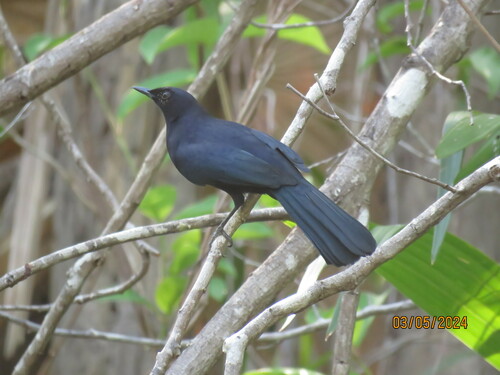
クロネコマネドリ (Melanoptila glabrirostris) クロネコマネドリ

メディア

読み込み中…

要点

The most reliable way to separate Rose-throated Becard from Black Catbird is by overall plumage: becard males (and sometimes young males) show a pale gray body with a dark crown and, in many populations, a rose-pink throat patch, while Black Catbird is entirely glossy black with a purplish or greenish sheen. Female and immature becards are brown and buff, never blackish. In flight or perched, the becard always looks large-headed and pale or brownish, never glossy black. Juvenile Black Catbirds are brownish-gray but still lack the becard's pale or rusty tones. Bill shape and head structure also differ, with the becard having a stouter, hooked bill and the catbird a straight, slender bill. Habitat and range overlap little, but confusion is possible where both occur as vagrants or in edge habitats.

識別のコツ

  1. All-black, glossy plumage (adult Black Catbird) vs. gray or brown, non-glossy (becard): Adult Black Catbirds are entirely glossy black with a purplish or greenish sheen; no part of the becard is ever glossy black at any age.
  2. Rose-pink throat patch (male becard): If visible, a rose-pink throat patch is diagnostic for male Rose-throated Becard; absent in Black Catbird. Note: some rainforest becard males lack this patch.
  3. Brown and buffy (female/immature becard) vs. brownish-gray (juvenile catbird): Female and young becards are brown above, pale buff below, never blackish; juvenile catbirds are brownish-gray but lack buffy or rusty tones and never show pink on the throat.
  4. Bill shape: Becard has a thick, hooked bill with a broad base; catbird's bill is straight, slender, and shorter than the head, with a decurved tip.
  5. Head and neck structure: Becard appears large-headed and thick-necked; catbird is more slender with a proportionally longer tail.
  6. Crown/crest: Becard males have a dark gray or black crown or crest, contrasting with the paler body; catbird's head is the same glossy black as the rest of the body.
  7. Hidden white shoulder patch (male becard): Occasionally visible in display, never present in catbird.
  8. Tail length and shape: Catbird's tail is longer and more prominent; becard's tail is shorter and less noticeable.
  9. Flight appearance: No distinctive upperwing pattern for either, but becard will always look pale or brownish in flight, catbird always dark and glossy.
  10. Vocalizations: Becard's song is short and two-noted, with a piercing cry; catbird's song is complex, scratchy, and never mimetic, with harsh, nasal, or metallic calls.
  11. Habitat: Becard prefers open woodland, forest edge, and riparian areas; catbird is found in dense thickets and low forest, especially in the Yucatán region.
  12. Behavior: Becard often perches upright and is territorial; catbird is more likely to skulk or sing from a low perch.
  13. Geographic range: If in the Yucatán Peninsula or nearby islands, Black Catbird is much more likely; becard is rare or absent there.
  14. Sex differences: Only becard shows strong sexual dimorphism (males gray/pink, females brown/buff); catbird sexes are similar (both glossy black).
  15. Juvenile confusion: Juvenile catbirds are brownish-gray but never show the warm brown and buff tones of young becards, nor any pink on the throat.

大きさ

Both species are similar in overall length (becard medium-sized, catbird 19–20.5 cm), but the Black Catbird is slightly heavier on average (body mass ~35 g) and has a longer tail relative to its body. The becard appears large-headed and thick-necked, while the catbird is more slender with a proportionally longer tail and shorter, rounded wings. In the field, the becard may look chunkier and more compact, especially when perched.

羽色

Juvenile and immature Rose-throated Becards are brown above with pale buffy underparts, lacking any black or glossy tones; young males may show a variable pink throat patch, but never appear all-black. Adult male becards are pale to dark gray (depending on region) with a dark crown and, often, a rose-pink throat patch; rainforest males may lack the pink. Females remain brown and buff. In contrast, adult Black Catbirds of both sexes are entirely glossy black with a purplish or greenish sheen, and their wings and tail may show a duller blackish-brown. Juvenile catbirds are brownish-gray with mottling below but still lack the becard's rusty or buffy hues. The becard never shows a glossy or iridescent appearance, while the catbird never shows pale, brown, or pinkish areas. No distinctive upperwing pattern is noted for either species in flight, but the overall darkness and gloss of the catbird versus the pale/brown and matte look of the becard is always apparent.

行動

Rose-throated Becards are typically solitary or in pairs, often seen perched upright and vigilantly scanning from exposed branches, sometimes chasing intruders. They may be seen near domed, hanging nests. Black Catbirds often sing from exposed perches but are more likely to be found in dense thickets or low trees, sometimes skulking. Their behavior is less aggressive and more secretive than the becard's territorial vigilance.

生息環境

Rose-throated Becard breeds from the southwestern US through Central America, favoring forest edges, riparian woodlands, and open woodland. Black Catbird is endemic to the Yucatán Peninsula and nearby islands, preferring dense thickets, low forest, and scrub. The two species rarely overlap, but confusion could occur in edge habitats or during vagrancy. Becards are more likely in open woodland or along watercourses; catbirds are more tied to dense, brushy cover.

声

Rose-throated Becard gives a short, sliding, two-noted song and a unique piercing cry; its calls are not mimetic. Black Catbird, unlike other mimids, does not imitate but delivers a varied song of repeated harsh, scratchy, warbled, and flute-like notes, often with metallic buzzes. Its calls can sound like a harsh 'rriah,' nasal 'chrrh,' or grating 'tcheeu,' sometimes reminiscent of Gray Catbird. The becard's vocalizations are generally simpler and less varied than the catbird's.

より良い説明を送る

比較と同じ項目を使ってください。文章はすぐに公開されます。

The most reliable way to separate Rose-throated Becard from Black Catbird is by overall plumage: becard males (and sometimes young males) show a pale gray body with a dark crown and, in many populations, a rose-pink throat patch, while Black Catbird is entirely glossy black with a purplish or greenish sheen. Female and immature becards are brown and buff, never blackish. In flight or perched, the becard always looks large-headed and pale or brownish, never glossy black. Juvenile Black Catbirds are brownish-gray but still lack the becard's pale or rusty tones. Bill shape and head structure also differ, with the becard having a stouter, hooked bill and the catbird a straight, slender bill. Habitat and range overlap little, but confusion is possible where both occur as vagrants or in edge habitats.

  1. All-black, glossy plumage (adult Black Catbird) vs. gray or brown, non-glossy (becard): Adult Black Catbirds are entirely glossy black with a purplish or greenish sheen; no part of the becard is ever glossy black at any age.
  2. Rose-pink throat patch (male becard): If visible, a rose-pink throat patch is diagnostic for male Rose-throated Becard; absent in Black Catbird. Note: some rainforest becard males lack this patch.
  3. Brown and buffy (female/immature becard) vs. brownish-gray (juvenile catbird): Female and young becards are brown above, pale buff below, never blackish; juvenile catbirds are brownish-gray but lack buffy or rusty tones and never show pink on the throat.
  4. Bill shape: Becard has a thick, hooked bill with a broad base; catbird's bill is straight, slender, and shorter than the head, with a decurved tip.
  5. Head and neck structure: Becard appears large-headed and thick-necked; catbird is more slender with a proportionally longer tail.
  6. Crown/crest: Becard males have a dark gray or black crown or crest, contrasting with the paler body; catbird's head is the same glossy black as the rest of the body.
  7. Hidden white shoulder patch (male becard): Occasionally visible in display, never present in catbird.
  8. Tail length and shape: Catbird's tail is longer and more prominent; becard's tail is shorter and less noticeable.
  9. Flight appearance: No distinctive upperwing pattern for either, but becard will always look pale or brownish in flight, catbird always dark and glossy.
  10. Vocalizations: Becard's song is short and two-noted, with a piercing cry; catbird's song is complex, scratchy, and never mimetic, with harsh, nasal, or metallic calls.
  11. Habitat: Becard prefers open woodland, forest edge, and riparian areas; catbird is found in dense thickets and low forest, especially in the Yucatán region.
  12. Behavior: Becard often perches upright and is territorial; catbird is more likely to skulk or sing from a low perch.
  13. Geographic range: If in the Yucatán Peninsula or nearby islands, Black Catbird is much more likely; becard is rare or absent there.
  14. Sex differences: Only becard shows strong sexual dimorphism (males gray/pink, females brown/buff); catbird sexes are similar (both glossy black).
  15. Juvenile confusion: Juvenile catbirds are brownish-gray but never show the warm brown and buff tones of young becards, nor any pink on the throat.

Both species are similar in overall length (becard medium-sized, catbird 19–20.5 cm), but the Black Catbird is slightly heavier on average (body mass ~35 g) and has a longer tail relative to its body. The becard appears large-headed and thick-necked, while the catbird is more slender with a proportionally longer tail and shorter, rounded wings. In the field, the becard may look chunkier and more compact, especially when perched.

Juvenile and immature Rose-throated Becards are brown above with pale buffy underparts, lacking any black or glossy tones; young males may show a variable pink throat patch, but never appear all-black. Adult male becards are pale to dark gray (depending on region) with a dark crown and, often, a rose-pink throat patch; rainforest males may lack the pink. Females remain brown and buff. In contrast, adult Black Catbirds of both sexes are entirely glossy black with a purplish or greenish sheen, and their wings and tail may show a duller blackish-brown. Juvenile catbirds are brownish-gray with mottling below but still lack the becard's rusty or buffy hues. The becard never shows a glossy or iridescent appearance, while the catbird never shows pale, brown, or pinkish areas. No distinctive upperwing pattern is noted for either species in flight, but the overall darkness and gloss of the catbird versus the pale/brown and matte look of the becard is always apparent.

Rose-throated Becards are typically solitary or in pairs, often seen perched upright and vigilantly scanning from exposed branches, sometimes chasing intruders. They may be seen near domed, hanging nests. Black Catbirds often sing from exposed perches but are more likely to be found in dense thickets or low trees, sometimes skulking. Their behavior is less aggressive and more secretive than the becard's territorial vigilance.

Rose-throated Becard breeds from the southwestern US through Central America, favoring forest edges, riparian woodlands, and open woodland. Black Catbird is endemic to the Yucatán Peninsula and nearby islands, preferring dense thickets, low forest, and scrub. The two species rarely overlap, but confusion could occur in edge habitats or during vagrancy. Becards are more likely in open woodland or along watercourses; catbirds are more tied to dense, brushy cover.

Rose-throated Becard gives a short, sliding, two-noted song and a unique piercing cry; its calls are not mimetic. Black Catbird, unlike other mimids, does not imitate but delivers a varied song of repeated harsh, scratchy, warbled, and flute-like notes, often with metallic buzzes. Its calls can sound like a harsh 'rriah,' nasal 'chrrh,' or grating 'tcheeu,' sometimes reminiscent of Gray Catbird. The becard's vocalizations are generally simpler and less varied than the catbird's.

変更を破棄しますか?

保存していない編集があります。今離れると失われます。

バラノドカザリドリモドキ · クロネコマネドリ · 苦手な鳥