

Motmot

クロワカモメ 対 ミナミオオセグロカモメ

Larus delawarensis 対 Larus dominicanus

クロワカモメとミナミオオセグロカモメのクイズ
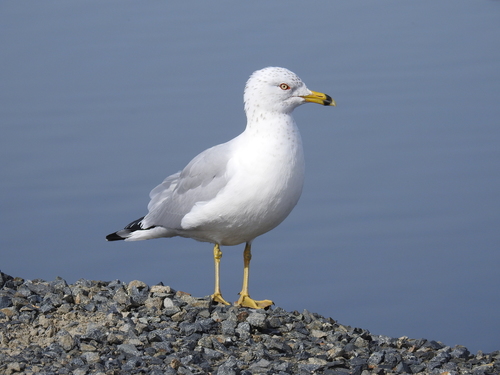
クロワカモメ (Larus delawarensis) クロワカモメ

ミナミオオセグロカモメ (Larus dominicanus) ミナミオオセグロカモメ

メディア

読み込み中…

要点

The most reliable field mark to separate Ring-billed Gull from Kelp Gull is the adult wing and mantle coloration: Ring-billed Gull adults have pale silvery-grey upperparts and black wingtips with white 'mirrors,' while Kelp Gulls are much larger, with strikingly black upperparts and wings contrasting with white head and underparts. Juveniles of both are brownish, but Kelp Gull juveniles are bulkier, with a darker, more densely patterned plumage and a black bill, while Ring-billed juveniles are smaller, paler, and have a more slender bill. Bill color is crucial in adults: Ring-billed shows a yellow bill with a neat black ring, while Kelp Gull has a heavier yellow bill with a red spot. Leg color also helps: Ring-billed has yellow legs, Kelp Gull greenish-yellow (often duller outside breeding). Size and structure differences are pronounced, especially when birds are side by side or in flight.

識別のコツ

  1. Adult upperparts color: Adult Ring-billed Gulls have pale silvery-grey upperparts; Kelp Gulls are much darker, with black upperparts and wings. This is the most obvious difference at a distance.
  2. Bill pattern in adults: Ring-billed Gull has a yellow bill with a distinct black ring near the tip; Kelp Gull has a heavier yellow bill with a red spot on the lower mandible, never a black ring. This is diagnostic at close range.
  3. Leg color: Ring-billed Gull adults have yellow legs; Kelp Gull legs are greenish-yellow, brighter in breeding season, duller and greener when not breeding. In poor light, this can be subtle, but is useful when visible.
  4. Size and structure: Kelp Gull is much larger, bulkier, and heavier-billed than Ring-billed. If you see both together, the difference is striking. Lone birds can be trickier, but note the more powerful, deep-chested look of Kelp Gull.
  5. Juvenile/immature plumage: Juvenile Ring-billed Gulls are paler brown, with a more delicate, dark-tipped bill; Kelp Gull juveniles are darker, more densely patterned, with an all-black bill and a dark tail band. As Kelp Gulls age, they develop a pale bill base and whiter head, but remain bulkier and darker than Ring-billed.
  6. Wing pattern in flight (adults): Ring-billed Gulls show pale grey upperwings with black wingtips and white 'mirrors'; Kelp Gulls have black upperwings with small white mirrors at the tips, matching their mantle color.
  7. Tail: Both species have white tails as adults, but juveniles of Kelp Gull show a dark tail band, which can help in flight.
  8. Eye color: Kelp Gull (nominate) usually has a pale eye; Ring-billed has yellow eyes with red rims. Some Kelp Gull subspecies (e.g., Cape Gull) have dark eyes, but this is not relevant in North America.
  9. Habitat context: Ring-billed Gulls are common inland and in urban areas in North America; Kelp Gulls are coastal and Southern Hemisphere birds. If you are in North America away from the coast, a large dark-backed gull is very unlikely to be Kelp.
  10. Behavior: Both are scavengers, but Ring-billed is more likely to be seen in large flocks in parking lots and parks; Kelp Gulls are more often in smaller numbers along coasts and islands.
  11. Bill shape: Kelp Gull's bill is stouter and deeper; Ring-billed's is shorter and finer. This is best judged with experience or side-by-side comparison.
  12. Vocalizations: Calls differ, but are not usually diagnostic unless you are very familiar with both.
  13. Seasonal changes: Both species take several years to reach adult plumage, but the transition is faster in Kelp Gull (three to four years) than in Ring-billed (three years). Immature Kelp Gulls rapidly get a pale bill base and whiter head, but remain bulkier and darker than Ring-billed at the same age.
  14. Geographic range: Kelp Gull is a Southern Hemisphere species; Ring-billed is North American. Only rare vagrants of either species occur outside their normal range.
  15. Common pitfalls: Do not rely on size alone unless you have direct comparison; beware of lighting affecting mantle color; check bill pattern and leg color for confirmation.

大きさ

Kelp Gull is substantially larger and heavier than Ring-billed Gull. Adult Kelp Gulls average 941 g in body mass, with a length of 54–65 cm and a wingspan of 128–142 cm. Ring-billed Gulls are medium-sized, averaging 518.5 g, with a length of 43–54 cm and a wingspan of 105–117 cm. In the field, Kelp Gulls appear bulkier, with a stouter bill, longer wings, and a more powerful build. Ring-billed Gulls are noticeably more petite and agile, with a shorter, finer bill and a lighter overall impression. When seen together, the size gap is obvious, but beware of lone birds or distant views where size can be deceptive.

羽色

Juvenile and immature plumages are the main confusion point. Juvenile Ring-billed Gulls are mostly brown with a paler, mottled appearance and a relatively slender, dark-tipped bill. Their upperwings lack the dense, dark patterning of Kelp Gull and are overall paler. Juvenile Kelp Gulls are larger, with a heavier, all-black bill, a dark band in the tail, and a much darker, more densely patterned grey-brown plumage edged whitish. As they age, Kelp Gulls quickly develop a pale base to the bill and a whiter head and underparts, but remain bulkier and darker than Ring-billed. Adults are easier: Ring-billed has pale grey upperparts and black wingtips with white mirrors, yellow legs, and a yellow bill with a black ring. Kelp Gull adults have black upperparts and wings, white head and underparts, greenish-yellow legs, and a yellow bill with a red spot (never a black ring). In flight, the contrast between the pale grey upperparts of Ring-billed and the black of Kelp Gull is diagnostic for adults.

行動

Both species are opportunistic feeders, often seen scavenging or foraging in flight, on the ground, or in shallow water. Ring-billed Gulls are highly adapted to human environments, frequently gathering in parking lots, parks, and beaches, and are notorious for stealing food from people. Kelp Gulls are more coastal and island-oriented, often seen along shorelines, docks, and harbors, but can also be bold scavengers. Both can be aggressive toward other birds, but Kelp Gulls, being larger, tend to dominate mixed gull flocks.

生息環境

Ring-billed Gulls are widespread in North America, breeding near lakes, rivers, and coasts, but are especially common inland and in urban settings such as parking lots and landfills. They are the default medium gull in much of eastern North America. Kelp Gulls are Southern Hemisphere specialists, breeding on coasts and islands in South America, southern Africa, Australia, and New Zealand. They are rarely found inland and are strongly associated with marine environments. Vagrant Ring-billeds can occur in Europe, but Kelp Gulls are not expected in North America. If you see a large, dark-backed gull in a North American parking lot, it is almost certainly not a Kelp Gull.

声

Kelp Gull's call is described as a strident 'ki-och,' while Ring-billed Gull gives a more typical medium-gull repertoire of squeals and laughs. However, voice is rarely diagnostic unless you are very familiar with both species, and calls are not emphasized as a key separation feature in the sources.

より良い説明を送る

比較と同じ項目を使ってください。文章はすぐに公開されます。

The most reliable field mark to separate Ring-billed Gull from Kelp Gull is the adult wing and mantle coloration: Ring-billed Gull adults have pale silvery-grey upperparts and black wingtips with white 'mirrors,' while Kelp Gulls are much larger, with strikingly black upperparts and wings contrasting with white head and underparts. Juveniles of both are brownish, but Kelp Gull juveniles are bulkier, with a darker, more densely patterned plumage and a black bill, while Ring-billed juveniles are smaller, paler, and have a more slender bill. Bill color is crucial in adults: Ring-billed shows a yellow bill with a neat black ring, while Kelp Gull has a heavier yellow bill with a red spot. Leg color also helps: Ring-billed has yellow legs, Kelp Gull greenish-yellow (often duller outside breeding). Size and structure differences are pronounced, especially when birds are side by side or in flight.

  1. Adult upperparts color: Adult Ring-billed Gulls have pale silvery-grey upperparts; Kelp Gulls are much darker, with black upperparts and wings. This is the most obvious difference at a distance.
  2. Bill pattern in adults: Ring-billed Gull has a yellow bill with a distinct black ring near the tip; Kelp Gull has a heavier yellow bill with a red spot on the lower mandible, never a black ring. This is diagnostic at close range.
  3. Leg color: Ring-billed Gull adults have yellow legs; Kelp Gull legs are greenish-yellow, brighter in breeding season, duller and greener when not breeding. In poor light, this can be subtle, but is useful when visible.
  4. Size and structure: Kelp Gull is much larger, bulkier, and heavier-billed than Ring-billed. If you see both together, the difference is striking. Lone birds can be trickier, but note the more powerful, deep-chested look of Kelp Gull.
  5. Juvenile/immature plumage: Juvenile Ring-billed Gulls are paler brown, with a more delicate, dark-tipped bill; Kelp Gull juveniles are darker, more densely patterned, with an all-black bill and a dark tail band. As Kelp Gulls age, they develop a pale bill base and whiter head, but remain bulkier and darker than Ring-billed.
  6. Wing pattern in flight (adults): Ring-billed Gulls show pale grey upperwings with black wingtips and white 'mirrors'; Kelp Gulls have black upperwings with small white mirrors at the tips, matching their mantle color.
  7. Tail: Both species have white tails as adults, but juveniles of Kelp Gull show a dark tail band, which can help in flight.
  8. Eye color: Kelp Gull (nominate) usually has a pale eye; Ring-billed has yellow eyes with red rims. Some Kelp Gull subspecies (e.g., Cape Gull) have dark eyes, but this is not relevant in North America.
  9. Habitat context: Ring-billed Gulls are common inland and in urban areas in North America; Kelp Gulls are coastal and Southern Hemisphere birds. If you are in North America away from the coast, a large dark-backed gull is very unlikely to be Kelp.
  10. Behavior: Both are scavengers, but Ring-billed is more likely to be seen in large flocks in parking lots and parks; Kelp Gulls are more often in smaller numbers along coasts and islands.
  11. Bill shape: Kelp Gull's bill is stouter and deeper; Ring-billed's is shorter and finer. This is best judged with experience or side-by-side comparison.
  12. Vocalizations: Calls differ, but are not usually diagnostic unless you are very familiar with both.
  13. Seasonal changes: Both species take several years to reach adult plumage, but the transition is faster in Kelp Gull (three to four years) than in Ring-billed (three years). Immature Kelp Gulls rapidly get a pale bill base and whiter head, but remain bulkier and darker than Ring-billed at the same age.
  14. Geographic range: Kelp Gull is a Southern Hemisphere species; Ring-billed is North American. Only rare vagrants of either species occur outside their normal range.
  15. Common pitfalls: Do not rely on size alone unless you have direct comparison; beware of lighting affecting mantle color; check bill pattern and leg color for confirmation.

Kelp Gull is substantially larger and heavier than Ring-billed Gull. Adult Kelp Gulls average 941 g in body mass, with a length of 54–65 cm and a wingspan of 128–142 cm. Ring-billed Gulls are medium-sized, averaging 518.5 g, with a length of 43–54 cm and a wingspan of 105–117 cm. In the field, Kelp Gulls appear bulkier, with a stouter bill, longer wings, and a more powerful build. Ring-billed Gulls are noticeably more petite and agile, with a shorter, finer bill and a lighter overall impression. When seen together, the size gap is obvious, but beware of lone birds or distant views where size can be deceptive.

Juvenile and immature plumages are the main confusion point. Juvenile Ring-billed Gulls are mostly brown with a paler, mottled appearance and a relatively slender, dark-tipped bill. Their upperwings lack the dense, dark patterning of Kelp Gull and are overall paler. Juvenile Kelp Gulls are larger, with a heavier, all-black bill, a dark band in the tail, and a much darker, more densely patterned grey-brown plumage edged whitish. As they age, Kelp Gulls quickly develop a pale base to the bill and a whiter head and underparts, but remain bulkier and darker than Ring-billed. Adults are easier: Ring-billed has pale grey upperparts and black wingtips with white mirrors, yellow legs, and a yellow bill with a black ring. Kelp Gull adults have black upperparts and wings, white head and underparts, greenish-yellow legs, and a yellow bill with a red spot (never a black ring). In flight, the contrast between the pale grey upperparts of Ring-billed and the black of Kelp Gull is diagnostic for adults.

Both species are opportunistic feeders, often seen scavenging or foraging in flight, on the ground, or in shallow water. Ring-billed Gulls are highly adapted to human environments, frequently gathering in parking lots, parks, and beaches, and are notorious for stealing food from people. Kelp Gulls are more coastal and island-oriented, often seen along shorelines, docks, and harbors, but can also be bold scavengers. Both can be aggressive toward other birds, but Kelp Gulls, being larger, tend to dominate mixed gull flocks.

Ring-billed Gulls are widespread in North America, breeding near lakes, rivers, and coasts, but are especially common inland and in urban settings such as parking lots and landfills. They are the default medium gull in much of eastern North America. Kelp Gulls are Southern Hemisphere specialists, breeding on coasts and islands in South America, southern Africa, Australia, and New Zealand. They are rarely found inland and are strongly associated with marine environments. Vagrant Ring-billeds can occur in Europe, but Kelp Gulls are not expected in North America. If you see a large, dark-backed gull in a North American parking lot, it is almost certainly not a Kelp Gull.

Kelp Gull's call is described as a strident 'ki-och,' while Ring-billed Gull gives a more typical medium-gull repertoire of squeals and laughs. However, voice is rarely diagnostic unless you are very familiar with both species, and calls are not emphasized as a key separation feature in the sources.

変更を破棄しますか?

保存していない編集があります。今離れると失われます。

クロワカモメ · ミナミオオセグロカモメ · 苦手な鳥