

プナフタオビチドリ 対 シロハラオオヒバリチドリ
Anarhynchus alticola 対 Attagis malouinus
プナフタオビチドリとシロハラオオヒバリチドリのクイズ
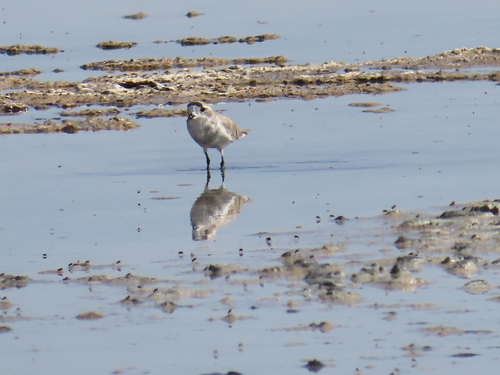 プナフタオビチドリ
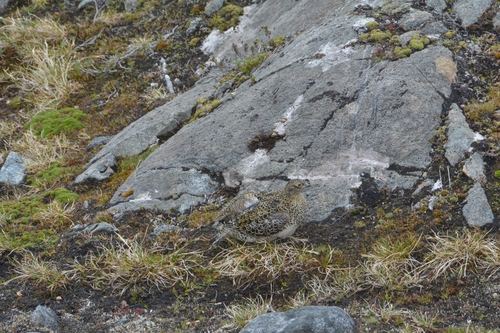 シロハラオオヒバリチドリ
要点
The most reliable field mark for separating Puna Plover from White-bellied Seedsnipe is overall structure and size: the seedsnipe is much larger and heavier-bodied, with a bulkier, pigeon-like shape, while the plover is a small, delicate shorebird. Juvenile Puna Plovers are plain brown above and white below, lacking the intricate scalloping that covers all ages of seedsnipe. In adults, the plover shows a bold, contrasting head pattern with a black bar and chestnut crown (male), while the seedsnipe is intricately scalloped and lacks strong facial markings. If you see a chunky, cryptically patterned bird with a white belly and no strong head pattern, it's a seedsnipe; a small, neat, white-faced bird with a black-and-chestnut head is a Puna Plover.
識別のコツ
- Size is a primary clue: White-bellied Seedsnipe is nearly twice as long and up to eight times heavier than Puna Plover. If the bird looks pigeon-sized or larger than a typical plover, it's a seedsnipe. This works for all ages and sexes.
- Overall shape and jizz: Seedsnipe are bulky, thick-necked, and heavy-bodied, with a pigeon-like silhouette. Puna Plovers are compact, short-necked, and light on their feet. In flight, plovers are agile and quick; seedsnipe are heavier and less nimble.
- Juvenile plumage: Juvenile Puna Plovers are plain brown above and white below, with little or no black or chestnut. Juvenile seedsnipe are always patterned above and on the breast with buff, cinnamon, and black scalloping. If you see a plain brown-and-white juvenile, it's a plover; a patterned one is a seedsnipe.
- Adult male Puna Plover head pattern: Look for a bold white face, black bar on the forecrown, black post-ocular stripe, and pale chestnut crown and breast band. No seedsnipe shows this combination at any age or sex.
- Adult female Puna Plover: Duller than males, but still may show a faint breast band and some brownish facial markings. Still lacks the full scalloped pattern of seedsnipe.
- Seedsnipe plumage: All ages and sexes of White-bellied Seedsnipe have intricate scalloping of buff, cinnamon, and black on upperparts and breast, with a white chin and belly. No strong facial markings or chestnut tones are present.
- Breast-to-belly contrast: Male seedsnipe have a sharp division between the scalloped breast and white belly; females and juveniles have a less distinct boundary, but the pattern is always present. Puna Plovers have a breast band, not a scalloped transition.
- Bill and leg color: Puna Plover has a black bill and legs; seedsnipe's bill and legs are not described in detail here, but structure is more diagnostic.
- Habitat context: On open, saline lake margins or flats, especially at high altitude, expect Puna Plover. In rocky, tundra-like uplands or slopes, especially away from water, seedsnipe is more likely.
- Behavior: Plovers run and pause frequently, often in short bursts; seedsnipe walk steadily and feed on plant matter, rarely showing the active, darting behavior of plovers.
- Head pattern: Any bird with a bold, contrasting head pattern (white face, black bar, chestnut crown) is a Puna Plover. Seedsnipe have a plain face with no strong markings.
- Plumage pitfalls: Female and juvenile Puna Plovers are duller and may lack strong head markings, but are still much plainer above than any seedsnipe. Seedsnipe never appear plain brown above.
- Group association: Puna Plovers may be found with other small shorebirds; seedsnipe are usually in more isolated, upland settings.
- Sex differences: Male Puna Plovers are more strikingly marked than females; in seedsnipe, sexes are similar, with only subtle differences in breast-belly contrast.
- No strong vocal clues: Vocalizations are not described as diagnostic in the available sources.
大きさ
White-bellied Seedsnipe is dramatically larger: 26.5–29 cm in length and 310–400 g in mass, compared to the Puna Plover's 16.5–17.5 cm and 41–49 g [wikipedia][avonet]. The seedsnipe is nearly twice as long and up to eight times heavier, giving it a much bulkier, more robust appearance. Puna Plover is a typical small plover: compact, short-necked, and light-bodied. In the field, this size difference is often immediately apparent, especially if both species are seen near each other or with other shorebirds for scale.
羽色
Juvenile Puna Plovers are plain brown above and white below, with little or no black or chestnut—making them much plainer than any age of seedsnipe, which always shows intricate scalloping above and on the breast. Adult male Puna Plovers have a striking white face, black forecrown bar, black post-ocular stripe, and a pale chestnut crown, hindneck, and breast band, with dull brown upperparts and white underparts except for the breast band. Females are similar but duller, with brownish instead of black and a grayish breast band. In contrast, White-bellied Seedsnipe of all ages and sexes have upperparts and breast covered in complex buff, cinnamon, and black scalloping, with a white chin and belly. Females show a less sharp division between breast and belly, but still have the overall scalloped pattern. Juvenile seedsnipes are paler and more heavily scalloped, but still patterned, never plain. Seedsnipe never show the bold, contrasting head pattern or chestnut tones of the male Puna Plover.
行動
Puna Plovers behave like typical small plovers: they are active, often running and pausing on open ground, and may be seen singly or in small groups. White-bellied Seedsnipe are more pigeon-like in their movements, often walking steadily and foraging for plant matter, with a heavier, less agile gait. Seedsnipe are less likely to be seen making the quick, darting movements typical of plovers. In flight, the seedsnipe appears bulkier and less agile, while the plover is quick and light.
生息環境
Both species occur in the Andes of Argentina and Chile, but Puna Plover also ranges into Bolivia and Peru. Puna Plovers are usually found in open, often saline, high-altitude flats and lakeshores, while White-bellied Seedsnipe prefer rocky, open slopes and tundra-like habitats, often farther from water. If you are in a grassy or rocky upland far from a lake, seedsnipe is more likely; on open lake margins, especially with other shorebirds, look for Puna Plover.