

Motmot

トウゾクカモメ 対 キタオオトウゾクカモメ

Stercorarius pomarinus 対 Stercorarius skua

トウゾクカモメとキタオオトウゾクカモメのクイズ
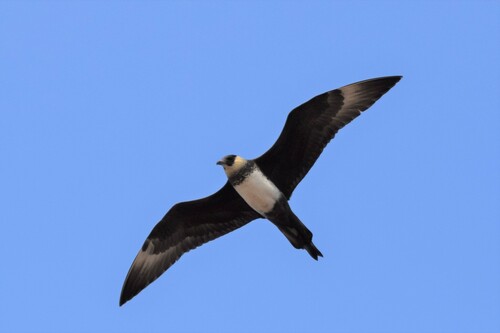
トウゾクカモメ (Stercorarius pomarinus) トウゾクカモメ
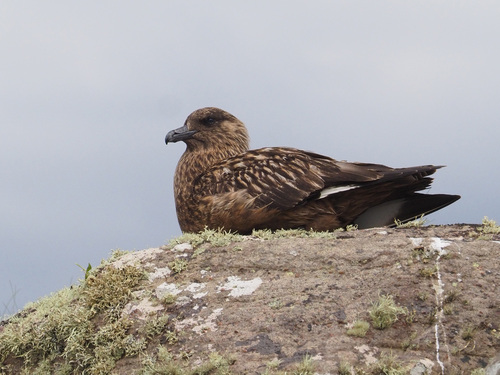
キタオオトウゾクカモメ (Stercorarius skua) キタオオトウゾクカモメ

メディア

読み込み中…

要点

ポマリン・スカの特徴とキタオオトウゾクカモメの特徴を区別する最も信頼できるフィールドマークは、全体のサイズと構造です:キタオオトウゾクカモメはずっと重く、頑丈で、バレル型の胸と短く鈍い尾を持っていますが、ポマリン・スカはスリムで、成鳥ではより長く尖った尾を持ち、印象的な体格ではありません。飛行中、キタオオトウゾクカモメは力強く広い翼を持っているように見えますが、ポマリン・スカは依然として頑丈ですが、より軽やかで、より計画的な飛行をします。両者は白い翼のフラッシュを示しますが、ポマリン・スカのものは下翼における診断的なダブルフラッシュです。両方の幼鳥は難しい場合がありますが、キタオオトウゾクカモメの幼鳥は下側にストライプがなく、より暖かい茶色で、ポマリンの幼鳥は変動があり、他のスカに似ていることがあります。特に距離がある場合は、構造と飛行スタイルを主な手がかりとして使用してください。

識別のコツ

  1. サイズと体格:キタオオトウゾクカモメはポマリン・スカよりもずっと重く頑丈です;スケール感が良いとき(例えば、カモメとの比較)にこれを使用してください。
  2. 成鳥の尾の形:繁殖期の成鳥ポマリン・スカは長くねじれた中央の尾羽(「スプーン」)を持ち、キタオオトウゾクカモメには存在しません。これは繁殖羽衣の成鳥ポマリンのための最も良いマークです。
  3. 下翼のパターン:ポマリン・スカは下翼に診断的なダブルホワイトフラッシュを示します(すべての形態、すべての年齢)、一方キタオオトウゾクカモメはシングルホワイトフラッシュを持っています。これは飛行中に良い光の下で最もよく見えます。
  4. 翼の構造と飛行:キタオオトウゾクカモメは広い翼を持ち、力強く直接的な飛行とバレル型の外観を持っています;ポマリンは依然として頑丈ですが、より軽やかで、より計画的な飛行をします。
  5. 成鳥の羽色:ライトモルフのポマリン成鳥は白い腹部と黄色がかった白い頭と首を持ち、黒い帽子があります;キタオオトウゾクカモメ成鳥は灰褐色のストライプがあり、黒い帽子を持ち、白い腹部や淡い頭を決して示しません。
  6. 幼鳥/未成熟の羽色:幼鳥のキタオオトウゾクカモメは全体的に暖かい茶色で、下側にストライプがありません;ポマリンの幼鳥は変動があり、混乱を招くことがありますが、しばしばより多くのストライプやコントラストを示し、決してキタオオトウゾクカモメのように均一に暖かい茶色ではありません。
  7. くちばしと頭:キタオオトウゾクカモメはより重く、より力強いくちばしとより大きな頭を持っています;ポマリンのくちばしは相対的にスリムです。
  8. 行動:キタオオトウゾクカモメは海賊行為においてより攻撃的で力強く、大きな鳥を物理的に攻撃することもあります;ポマリンは攻撃的ではなく、攻撃がより計画的です。
  9. 生息地の文脈:繁殖期には、キタオオトウゾクカモメは北大西洋の島々や海岸に見られます;ポマリン・スカは高アークティックで繁殖し、冬にはより厳密にペラジックです。
  10. 声:キタオオトウゾクカモメの大きくて厳しい「ハハハハハ」は、ポマリンのチャッターや「ウィッチ・ユー」の呼び声とは異なりますが、鳥をよく聞くことができる場合にのみ使用してください。
  11. 飛行の印象:キタオオトウゾクカモメは時々飛行中にバズardを思い起こさせることがあり、広く力強い翼のビートを持っています;ポマリンはバズardのようではなく、より安定した、より計画的な飛行をします。
  12. 白い翼のフラッシュ:両種は翼に白を示しますが、ポマリンのダブルフラッシュ(特に下翼で)はユニークです。
  13. 性差:どちらの種においてもフィールドでの診断にはならない。
  14. 季節的文脈:繁殖期以外では、両方とも沖合で見られることがありますが、ポマリンは熱帯の海でより可能性が高く、キタオオトウゾクカモメは北大西洋で見られます。
  15. 一般的な落とし穴:幼鳥のポマリンは幼鳥のキタオオトウゾクカモメや他のスカと混同されることがあります;常に構造と下翼のパターンを羽色に加えて使用してください。

大きさ

キタオオトウゾクカモメは劇的に重く(平均成鳥の質量約1835g対ポマリン・スカ約694g)、フィールドでずっと大きく、力強く見えます。キタオオトウゾクカモメはおおよそニシンカモメのサイズで、巨大でバレル型の体と広い翼を持っています。ポマリン・スカは依然として大きなスカですが、明らかにスリムで、より軽やかで、繁殖期の成鳥では相対的に長い尾を持ち、印象的な存在感はありません。この違いは、並んで見たり、スケールのために馴染みのある海鳥と一緒に見たりすると通常は明らかです。

羽色

幼鳥と未成熟の羽色はしばしば混乱の原因となります。幼鳥のキタオオトウゾクカモメは全体的に暖かい茶色で、下側にストライプがありませんが、ポマリン・スカの幼鳥はより変動があり、他のスカ(寄生カイツブリを含む)と区別するのが難しいことがあります。両種は翼に白いフラッシュを示しますが、ポマリン・スカ(すべての年齢と形態)は下翼に診断的なダブルホワイトフラッシュを持っており、キタオオトウゾクカモメはシングルホワイトフラッシュを持っています。成鳥のポマリン・スカは非常に変動があります:ライトモルフは茶色の背中、白い腹部、黄色がかった白い頭と首を持ち、黒い帽子があります;ダークモルフは全体的に暗い茶色です。繁殖羽衣のすべての成鳥ポマリンは、長くねじれた中央の尾羽(「スプーン」)を持ち、これはキタオオトウゾクカモメには決して存在しません。成鳥のキタオオトウゾクカモメは灰褐色のストライプがあり、黒い帽子を持ち、ライトモルフのポマリンの白い腹部や淡い頭を欠いています。彼らの尾は常に短く鈍いです。要約すると、成鳥のダブル下翼フラッシュと尾の形、幼鳥の全体的な色合いと下部のストライプを探してください。

行動

キタオオトウゾクカモメは機敏さに欠けますが、より攻撃的で力強く、他の海鳥を奪ったり攻撃したりするために力を使うことが多く、時にはカツオドリのような大きな鳥と物理的に格闘することもあります。その飛行は力強く直接的で、時にはバズardに例えられます。ポマリン・スカも海賊行為を行いますが、より計画的で、攻撃的な海賊行為は少ないです。両種は巣を攻撃的に守りますが、キタオオトウゾクカモメのサイズと攻撃性は、その攻撃を特に威圧的にします。

生息環境

両種は繁殖期以外はペラジックですが、キタオオトウゾクカモメは北大西洋の沿岸の湿地や岩の島で繁殖します、特に北ヨーロッパで。ポマリン・スカは移動性で、高アークティックで繁殖し、熱帯の海で冬を過ごします。移動中や冬には、両者は沖合で見られることがありますが、キタオオトウゾクカモメは北の繁殖地の近くで見られる可能性が高く、ポマリンは冬にはより厳密に海洋性です。

声

キタオオトウゾクカモメは厳しい「ハハハハハ」とさまざまなクワックやクロークの呼び声を出し、これらは大きくて威圧的です。ポマリン・スカは厳しいチャッターの呼び声と「ウィッチ・ユー」の音を持っています。両者は興奮すると声を出しますが、彼らの呼び声は通常、近距離でよく聞こえない限り、区別のための主なフィールドマークではありません。

より良い説明を送る

比較と同じ項目を使ってください。文章はすぐに公開されます。

The most reliable field mark to separate Pomarine Skua from Great Skua is overall size and structure: Great Skua is much heavier and bulkier, with a barrel chest and a short, blunt tail, while Pomarine Skua is slimmer, with a longer, more pointed tail in adults and a less imposing build. In flight, Great Skua appears powerful and broad-winged, whereas Pomarine Skua is still robust but less massive, with a more measured flight. Both show white wing flashes, but Pomarine Skua's is a diagnostic double flash on the underwing. Juveniles of both can be tricky, but Great Skua juveniles are unstreaked below and warmer brown, while Pomarine juveniles are variable and can be confusingly similar to other skuas. Use structure and flight style as your primary clues, especially at a distance.

  1. Size and bulk: Great Skua is much heavier and bulkier than Pomarine Skua; use this when you have a good sense of scale (e.g., with gulls for comparison).
  2. Tail shape in adults: Breeding adult Pomarine Skuas have long, twisted central tail feathers ('spoons'), absent in Great Skua, whose tail is always short and blunt. This is the single best mark for adult Pomarine in breeding plumage.
  3. Underwing pattern: Pomarine Skua shows a diagnostic double white flash on the underwing (all morphs, all ages), while Great Skua has a single white flash. This is best seen in good light during flight.
  4. Wing structure and flight: Great Skua is broader-winged, with a powerful, direct flight and a barrel-chested look; Pomarine is still robust but less massive, with a more measured flight.
  5. Plumage in adults: Light-morph Pomarine adults have white underparts and a yellowish-white head and neck with a black cap; Great Skua adults are streaked grey-brown with a black cap and never show white underparts or pale head.
  6. Juvenile/immature plumage: Juvenile Great Skua is a warm brown overall, unstreaked below; Pomarine juveniles are variable and can be confusing, but often show more streaking or contrast, and never as uniformly warm brown as Great Skua.
  7. Bill and head: Great Skua has a heavier, more powerful bill and a more massive head; Pomarine's bill is proportionally slimmer.
  8. Behavior: Great Skua is more aggressive and forceful in piracy, sometimes physically attacking large birds; Pomarine is less aggressive and more measured in its attacks.
  9. Habitat context: In the breeding season, Great Skua is found on northern Atlantic islands and coasts; Pomarine Skua breeds in the high Arctic and is more strictly pelagic in winter.
  10. Voice: Great Skua's loud, harsh 'hah-hah-hah-hah' differs from Pomarine's chattering or 'which-yew' calls, but use this only if you hear the bird well.
  11. Flight jizz: Great Skua sometimes recalls a buzzard in flight, with a broad, powerful wingbeat; Pomarine is less buzzard-like, with a steadier, more measured flight.
  12. White wing flash: Both species show white in the wings, but the double flash of Pomarine (especially on the underwing) is unique.
  13. Sex differences: Not diagnostic in the field for either species.
  14. Seasonal context: Outside the breeding season, both may be seen offshore, but Pomarine is more likely in tropical oceans, Great Skua in the North Atlantic.
  15. Common pitfalls: Juvenile Pomarine can be confused with juvenile Great Skua and other skuas; always use structure and underwing pattern in addition to plumage.

Great Skua is dramatically heavier (average adult mass ~1835g vs. Pomarine Skua ~694g) and appears much larger and more powerful in the field. Great Skua is roughly the size of a herring gull, with a massive, barrel-shaped body and broad wings. Pomarine Skua is still a large skua but noticeably slimmer and less bulky, with a proportionally longer tail (especially in breeding adults) and a less imposing presence. The difference is usually obvious when seen side by side or with familiar seabirds for scale.

Juvenile and immature plumages are often the source of confusion. Juvenile Great Skuas are a warm brown overall and lack streaking on the underparts, while Pomarine Skua juveniles are more variable and can be difficult to distinguish from other skuas, including Parasitic Jaeger. Both species show white flashes in the wings, but Pomarine Skua (all ages and morphs) has a diagnostic double white flash on the underwing, while Great Skua has a single white wing flash. Adult Pomarine Skuas are highly variable: light morphs have a brown back, white underparts, yellowish-white head and neck with a black cap; dark morphs are dark brown overall. All adult Pomarines in breeding plumage have elongated, twisted central tail feathers ('spoons'), which are never present in Great Skua. Adult Great Skuas are streaked greyish-brown with a black cap and lack the white underparts or pale head of light-morph Pomarine. Their tail is always short and blunt. In summary, look for the double underwing flash and tail shape in adults, and overall coloration and underpart streaking in juveniles.

Great Skua is less agile but more aggressive and forceful, often using brute strength to rob or attack other seabirds, sometimes even physically grappling with large birds like gannets. Its flight is powerful and direct, sometimes likened to a buzzard. Pomarine Skua is also a kleptoparasite but is less forceful, with a more measured flight and less aggressive piratical behavior. Both species will defend nests aggressively, but Great Skua's size and aggression make its attacks particularly intimidating.

Both species are pelagic outside the breeding season, but Great Skua breeds on coastal moorlands and rocky islands in the North Atlantic, especially in northern Europe. Pomarine Skua is a migrant, breeding in the high Arctic and wintering at sea in tropical oceans. In migration and winter, both can be seen offshore, but Great Skua is more likely to be encountered near northern breeding grounds, while Pomarine is more strictly oceanic in winter.

Great Skua gives a harsh 'hah-hah-hah-hah' and various quacking or croaking calls, which are loud and intimidating. Pomarine Skua has harsh chattering calls and a 'which-yew' sound. Both are vocal when agitated, but their calls are not usually the primary field mark for separation unless heard well at close range.

変更を破棄しますか?

保存していない編集があります。今離れると失われます。

トウゾクカモメ · キタオオトウゾクカモメ · 苦手な鳥