

Motmot

アジアマミハウチワドリ 対 ハシブトオオヨシキリ

Prinia inornata 対 Arundinax aedon

アジアマミハウチワドリとハシブトオオヨシキリのクイズ
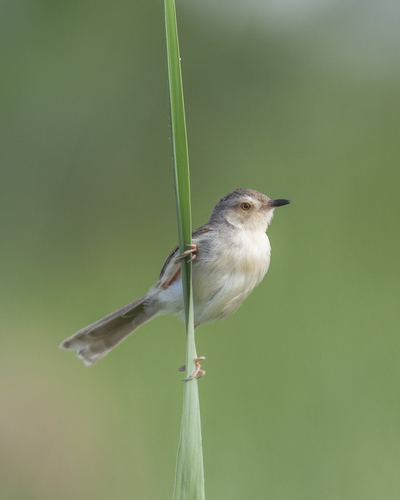
アジアマミハウチワドリ (Prinia inornata) アジアマミハウチワドリ
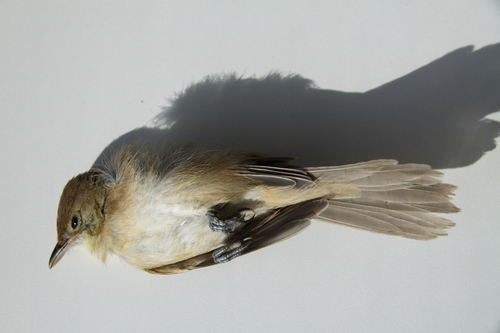
ハシブトオオヨシキリ (Arundinax aedon) ハシブトオオヨシキリ

メディア

読み込み中…

要点

The most reliable field mark to separate Plain Prinia from Thick-billed Warbler is overall size and structure: Thick-billed Warbler is much larger and bulkier, with a noticeably heavier bill and longer body, while Plain Prinia is a small, slim warbler with a longish tail and fine bill. In all plumages, Plain Prinia shows a short white supercilium and rufous fringes on the closed wings, especially in breeding plumage, whereas Thick-billed Warbler is plainer, with unstreaked brown upperparts and a rounded forehead. Juvenile and immature plumages are not strongly distinctive between the two, but young Thick-billed Warblers are richer buff below. Both species can occur in similar habitats in South and Southeast Asia during migration and winter, but their structure and jizz are quite different at all ages.

識別のコツ

  1. Size and bulk are the most immediate clues: Thick-billed Warbler is much larger and heavier than Plain Prinia, with a noticeably longer body and more robust appearance. If the bird looks nearly as big as a Great Reed Warbler, it is not a Plain Prinia (all ages).
  2. Bill shape and size: Thick-billed Warbler has a short but thick, heavy bill; Plain Prinia's bill is short, fine, and black. Bill thickness is especially obvious in profile or when feeding (all ages).
  3. Tail length and shape: Plain Prinia has a longish tail, often held cocked or flicked, and in winter the tail appears even longer. Thick-billed Warbler's tail is proportionally shorter and not as expressive (all ages, but especially in winter for Plain Prinia).
  4. Supercilium and face pattern: Plain Prinia shows a short but clear white supercilium (eyebrow), especially in breeding plumage. Thick-billed Warbler lacks a strong supercilium and has a more uniform face (adults, some immatures).
  5. Wing coloration: In breeding plumage, Plain Prinia has rufous fringes on the closed wings, which can catch the light and contrast with the rest of the upperparts. Thick-billed Warbler's wings are plain brown with no rufous or contrasting edges (breeding adults).
  6. Underpart coloration: Both species are buff below, but juvenile Thick-billed Warbler is richer buff, while Plain Prinia is whitish-buff (juveniles and immatures).
  7. Upperpart tone: Plain Prinia is grey-brown above in summer, warmer brown in winter; Thick-billed Warbler is always unstreaked brown above, with little seasonal change (all ages).
  8. Forehead and head shape: Thick-billed Warbler has a rounded forehead, giving a blunt-headed look; Plain Prinia's head is more angular and compact (all ages).
  9. Behavioral jizz: Plain Prinia is active, often flicking its tail and perching upright in the open. Thick-billed Warbler is more secretive, moving slowly through dense cover and rarely flicking its tail (all ages).
  10. Habitat context: In open grassland or scrub, Plain Prinia is much more likely; in dense reeds or tangled undergrowth, especially near water, Thick-billed Warbler is more probable (all ages, especially in winter).
  11. Plumage variation by region: The Sri Lankan race of Plain Prinia retains breeding plumage and shorter tail year-round, so do not expect a longer tail in winter there (Sri Lanka only).
  12. Sex differences: Both species are sexually monomorphic; do not rely on sex for identification (all ages).
  13. Vocalizations: If you hear a loud, fast, mimicry-rich song with whistles, suspect Thick-billed Warbler. Plain Prinia's voice is not described here, so do not use this mark unless you know the calls from other sources.
  14. Direct comparison: If you see both species together, the size, bill, and jizz differences are unmistakable. If only one is present, use a combination of size, bill, tail, and face pattern.
  15. Pitfalls: In poor light or at distance, Plain Prinia can appear plainer and browner, but will never match the bulk or bill of Thick-billed Warbler. Juvenile Thick-billed Warbler may look paler below, but still shows the large size and heavy bill.

大きさ

Thick-billed Warbler is substantially larger and heavier than Plain Prinia. Thick-billed Warbler measures 16–17.5 cm in length and weighs about 22 g [wikidata], making it nearly as big as a Great Reed Warbler. In contrast, Plain Prinia is much smaller at 13–14 cm, with a much lighter build (no mass given, but typical for small prinias). The difference is immediately obvious in direct comparison or when switching between the two in the field: Thick-billed Warbler looks robust and long-bodied, while Plain Prinia is dainty and slim.

羽色

There are no distinctive age-specific upperwing or flight marks noted for either species, so separation relies on overall coloration and subtle features. Adult Plain Prinia in breeding plumage is grey-brown above with a short white supercilium and rufous fringes on the closed wings; underparts are whitish-buff. In winter, Plain Prinia becomes warmer brown above and more buff below, with a longer tail. Thick-billed Warbler adults are unstreaked brown above and buff below, with a rounded forehead and short, pointed bill; they lack any strong supercilium or wing panel. Juvenile Thick-billed Warblers are richer buff below, but otherwise similar. Both sexes are alike in each species. The Sri Lankan race of Plain Prinia keeps breeding plumage all year, including the shorter tail.

行動

Plain Prinia typically perches upright in open grassy or shrubby areas, often flicking its long tail and moving restlessly. It is agile and quick, often seen low in vegetation. Thick-billed Warbler is more secretive, favoring dense reeds, bushes, or undergrowth, and is less likely to be seen in the open. Its movements are heavier and less sprightly than those of Plain Prinia, and it may skulk or climb through thick vegetation rather than flit about.

生息環境

Both species can overlap in winter in South and Southeast Asia, but their preferred habitats differ. Plain Prinia is a resident breeder in open grasslands, scrub, and cultivated areas, often in drier or more open settings. Thick-billed Warbler breeds in dense vegetation such as reeds, bushes, and thick undergrowth, and even in winter tends to prefer wetter, denser, or more tangled cover than Plain Prinia. If you find a small warbler in open grassland, it is likely a Plain Prinia; in dense reedbeds or tangled thickets, consider Thick-billed Warbler.

声

Thick-billed Warbler has a fast, loud song with much mimicry and acrocephaline whistles, somewhat reminiscent of Marsh Warbler. No vocal details are provided for Plain Prinia in these notes, so voice is not a reliable separator based on this information.

より良い説明を送る

比較と同じ項目を使ってください。文章はすぐに公開されます。

The most reliable field mark to separate Plain Prinia from Thick-billed Warbler is overall size and structure: Thick-billed Warbler is much larger and bulkier, with a noticeably heavier bill and longer body, while Plain Prinia is a small, slim warbler with a longish tail and fine bill. In all plumages, Plain Prinia shows a short white supercilium and rufous fringes on the closed wings, especially in breeding plumage, whereas Thick-billed Warbler is plainer, with unstreaked brown upperparts and a rounded forehead. Juvenile and immature plumages are not strongly distinctive between the two, but young Thick-billed Warblers are richer buff below. Both species can occur in similar habitats in South and Southeast Asia during migration and winter, but their structure and jizz are quite different at all ages.

  1. Size and bulk are the most immediate clues: Thick-billed Warbler is much larger and heavier than Plain Prinia, with a noticeably longer body and more robust appearance. If the bird looks nearly as big as a Great Reed Warbler, it is not a Plain Prinia (all ages).
  2. Bill shape and size: Thick-billed Warbler has a short but thick, heavy bill; Plain Prinia's bill is short, fine, and black. Bill thickness is especially obvious in profile or when feeding (all ages).
  3. Tail length and shape: Plain Prinia has a longish tail, often held cocked or flicked, and in winter the tail appears even longer. Thick-billed Warbler's tail is proportionally shorter and not as expressive (all ages, but especially in winter for Plain Prinia).
  4. Supercilium and face pattern: Plain Prinia shows a short but clear white supercilium (eyebrow), especially in breeding plumage. Thick-billed Warbler lacks a strong supercilium and has a more uniform face (adults, some immatures).
  5. Wing coloration: In breeding plumage, Plain Prinia has rufous fringes on the closed wings, which can catch the light and contrast with the rest of the upperparts. Thick-billed Warbler's wings are plain brown with no rufous or contrasting edges (breeding adults).
  6. Underpart coloration: Both species are buff below, but juvenile Thick-billed Warbler is richer buff, while Plain Prinia is whitish-buff (juveniles and immatures).
  7. Upperpart tone: Plain Prinia is grey-brown above in summer, warmer brown in winter; Thick-billed Warbler is always unstreaked brown above, with little seasonal change (all ages).
  8. Forehead and head shape: Thick-billed Warbler has a rounded forehead, giving a blunt-headed look; Plain Prinia's head is more angular and compact (all ages).
  9. Behavioral jizz: Plain Prinia is active, often flicking its tail and perching upright in the open. Thick-billed Warbler is more secretive, moving slowly through dense cover and rarely flicking its tail (all ages).
  10. Habitat context: In open grassland or scrub, Plain Prinia is much more likely; in dense reeds or tangled undergrowth, especially near water, Thick-billed Warbler is more probable (all ages, especially in winter).
  11. Plumage variation by region: The Sri Lankan race of Plain Prinia retains breeding plumage and shorter tail year-round, so do not expect a longer tail in winter there (Sri Lanka only).
  12. Sex differences: Both species are sexually monomorphic; do not rely on sex for identification (all ages).
  13. Vocalizations: If you hear a loud, fast, mimicry-rich song with whistles, suspect Thick-billed Warbler. Plain Prinia's voice is not described here, so do not use this mark unless you know the calls from other sources.
  14. Direct comparison: If you see both species together, the size, bill, and jizz differences are unmistakable. If only one is present, use a combination of size, bill, tail, and face pattern.
  15. Pitfalls: In poor light or at distance, Plain Prinia can appear plainer and browner, but will never match the bulk or bill of Thick-billed Warbler. Juvenile Thick-billed Warbler may look paler below, but still shows the large size and heavy bill.

Thick-billed Warbler is substantially larger and heavier than Plain Prinia. Thick-billed Warbler measures 16–17.5 cm in length and weighs about 22 g [wikidata], making it nearly as big as a Great Reed Warbler. In contrast, Plain Prinia is much smaller at 13–14 cm, with a much lighter build (no mass given, but typical for small prinias). The difference is immediately obvious in direct comparison or when switching between the two in the field: Thick-billed Warbler looks robust and long-bodied, while Plain Prinia is dainty and slim.

There are no distinctive age-specific upperwing or flight marks noted for either species, so separation relies on overall coloration and subtle features. Adult Plain Prinia in breeding plumage is grey-brown above with a short white supercilium and rufous fringes on the closed wings; underparts are whitish-buff. In winter, Plain Prinia becomes warmer brown above and more buff below, with a longer tail. Thick-billed Warbler adults are unstreaked brown above and buff below, with a rounded forehead and short, pointed bill; they lack any strong supercilium or wing panel. Juvenile Thick-billed Warblers are richer buff below, but otherwise similar. Both sexes are alike in each species. The Sri Lankan race of Plain Prinia keeps breeding plumage all year, including the shorter tail.

Plain Prinia typically perches upright in open grassy or shrubby areas, often flicking its long tail and moving restlessly. It is agile and quick, often seen low in vegetation. Thick-billed Warbler is more secretive, favoring dense reeds, bushes, or undergrowth, and is less likely to be seen in the open. Its movements are heavier and less sprightly than those of Plain Prinia, and it may skulk or climb through thick vegetation rather than flit about.

Both species can overlap in winter in South and Southeast Asia, but their preferred habitats differ. Plain Prinia is a resident breeder in open grasslands, scrub, and cultivated areas, often in drier or more open settings. Thick-billed Warbler breeds in dense vegetation such as reeds, bushes, and thick undergrowth, and even in winter tends to prefer wetter, denser, or more tangled cover than Plain Prinia. If you find a small warbler in open grassland, it is likely a Plain Prinia; in dense reedbeds or tangled thickets, consider Thick-billed Warbler.

Thick-billed Warbler has a fast, loud song with much mimicry and acrocephaline whistles, somewhat reminiscent of Marsh Warbler. No vocal details are provided for Plain Prinia in these notes, so voice is not a reliable separator based on this information.

変更を破棄しますか?

保存していない編集があります。今離れると失われます。

アジアマミハウチワドリ · ハシブトオオヨシキリ · 苦手な鳥