

Motmot

パイプコブサイチョウ 対 チャイロコノハヒヨドリ

Bycanistes fistulator 対 Phyllastrephus scandens

パイプコブサイチョウとチャイロコノハヒヨドリのクイズ
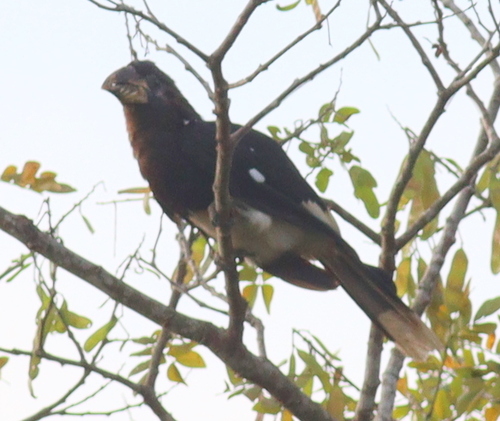
パイプコブサイチョウ (Bycanistes fistulator) パイプコブサイチョウ
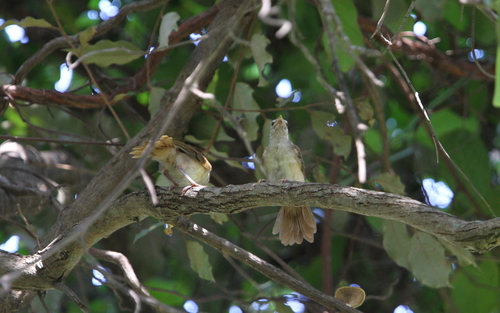
チャイロコノハヒヨドリ (Phyllastrephus scandens) チャイロコノハヒヨドリ

メディア

読み込み中…

要点

パイプコブサイチョウとチャイロコノハヒヨドリを区別する最も信頼できる方法は、全体的なサイズと構造です:パイプコブサイチョウは、大きく目を引く黒と白の鳥で、巨大なクチバシと明らかなカスクを持っています。一方、チャイロコノハヒヨドリは、はるかに小さく、地味な歌鳥で、細長いクチバシとカスクがありません。距離があっても飛んでいても、コブサイチョウのサイズ、重いクチバシ、対照的な羽毛は、チャイロコノハヒヨドリのよりコンパクトで均一な外観に対して際立っています。両者は、西アフリカと中央アフリカの類似の森林に生息する可能性があるため、形状と比率に注意を払うことが重要です。未熟な鳥や止まっている鳥は特に混乱を招くことがありますが、クチバシの構造と体のボリュームに焦点を当てることで、ほとんどの混同を防ぐことができます。

識別のコツ

  1. サイズは最初のチェック:もし鳥がカラスサイズに近いなら、それはパイプコブサイチョウです;もしツグミやヒヨドリサイズなら、それはチャイロコノハヒヨドリです。これはすべての年齢と性別に当てはまります。
  2. クチバシの構造が決定的:パイプコブサイチョウは、目立つカスク(上部の隆起した稜線)を持つ巨大で下向きのクチバシを持ち、距離があってもシルエットでも見えます。チャイロコノハヒヨドリは、カスクがない細くて真っ直ぐなクチバシを持っています。これはすべての視点で診断的です。
  3. 羽毛のコントラスト:パイプコブサイチョウは大胆な黒と白で、暗い上面と白い下面、そして翼と尾に白がはっきりと分かれています。チャイロコノハヒヨドリは地味なオリーブブラウンで赤い尾を持ち、強いコントラストがありません。これはすべての年齢と季節で使用できます。
  4. 尾のパターン:コブサイチョウの尾は長く、しばしば白を示しますが、チャイロコノハヒヨドリの尾は短く赤みがかっています(よく見えた場合)。暗い光の中では、色よりも構造に頼ってください。
  5. 飛行シルエット:コブサイチョウは遅く深い翼の羽ばたきで飛び、重くて細長く見え、長い尾と巨大なクチバシを持っています。チャイロコノハヒヨドリは、飛行中に素早く、敏捷で、コンパクトです。
  6. 止まっている姿勢:コブサイチョウは直立して止まり、しばしばクチバシとカスクを露出させます;チャイロコノハヒヨドリはより水平に座り、はるかに小さく、威圧感が少なく見えます。
  7. 群れの行動:コブサイチョウは小さな群れやペアで見られることがあり、しばしば樹冠の高いところやギャップを越えて移動します;チャイロコノハヒヨドリは通常ペアや小さな群れで、より低く、隠れた場所にいます。
  8. 生息地の文脈:もし密集した成熟した森林にいるなら、コブサイチョウの可能性が高いです;もしエッジ、二次成長、またはサバンナにいるなら、チャイロコノハヒヨドリの可能性が高いですが、重複が発生します。
  9. 年齢特有の飛行マークはなし:どちらの種も、ソースに記載された独自の幼鳥や未熟な上翼パターンはありませんので、すべての年齢で構造と色に頼ってください。
  10. 性差はなし:両種は性別間で外見が似ているため、性別を手がかりとして使用しないでください。
  11. 声は記載されていない:もし大きく遠くまで響く鳴き声が聞こえたら、それはコブサイチョウかもしれませんが、より多くの情報がない限りこれに頼らないでください。
  12. 一般的な落とし穴:未熟なコブサイチョウはコントラストが少なく見えることがありますが、常に巨大なクチバシとカスクを示します。チャイロコノハヒヨドリは決して大きなクチバシや大胆な黒と白のパターンを示しません。
  13. 照明と距離:暗い光の中では、色よりもサイズとクチバシの形に焦点を当ててください。距離がある場合、コブサイチョウのシルエットは診断的です。
  14. チェックリストの文脈:西アフリカと中央アフリカでは、両方が存在する可能性があるため、場所だけで仮定しないでください。
  15. 要約のヒント:もし大きな黒と白の鳥で巨大なクチバシを見たら、それはコブサイチョウです;もし小さく地味な鳥で細いクチバシを見たら、それはチャイロコノハヒヨドリです。

大きさ

パイプコブサイチョウは約50 cm(20インチ)の長さで、最小のBycanistesコブサイチョウですが、チャイロコノハヒヨドリよりもはるかに大きいです。チャイロコノハヒヨドリは典型的なヒヨドリサイズの歌鳥です(正確な長さは記載されていませんが、どのコブサイチョウよりもはるかに小さいです)[wikipedia]。コブサイチョウのボリューム、長い尾、巨大なクチバシとカスクは、よく見えるときに間違いなく識別できます。チャイロコノハヒヨドリはコンパクトで、相対的に小さく細長いクチバシと、はるかに軽い体型を持っています。悪い視界でも、サイズのギャップは劇的です。

羽色

パイプコブサイチョウはすべての年齢で大胆な黒と白で、暗い上面と白い下面、そして翼と尾に白の強いコントラストがあります。このコントラストは、止まっているときも飛んでいるときも見えます。対照的に、チャイロコノハヒヨドリははるかに地味で、均一またはわずかにオリーブブラウンの羽毛と赤い尾(別名「赤尾のチャイロコノハヒヨドリ」に基づく)を持ち、強い黒と白のパターンがありません。ソースには、どちらの種にも特有の年齢別の翼や尾のマークは記載されていないため、全体的なコントラストと色に焦点を当ててください。どちらの種の幼鳥や未熟な鳥は、独自の飛行マークを持っているとは記載されていないため、これらの一般的なパターンはすべての年齢に適用されます。

行動

パイプコブサイチョウは、遅く深い翼の羽ばたきで飛んでいるのがよく見られ、時には小さな群れで、高い樹冠や露出した枝に止まって、そのサイズとシルエットが明らかになります。チャイロコノハヒヨドリは典型的なヒヨドリのように振る舞い、ミッドストーリーや下層の樹冠で活発に餌を探し、しばしばペアや小さな群れで行動し、飛行中や止まっているときにははるかに目立たなくなります。コブサイチョウは一般的にヒヨドリよりも目立ち、隠れにくいです。

生息環境

両種は西アフリカと中央アフリカの湿った森林と二次成長に生息しています[wikipedia]。パイプコブサイチョウは密集した森林と成熟した二次成長に厳密に関連していますが、チャイロコノハヒヨドリは湿ったサバンナや森林のエッジでも見られることがあります。重複が可能なので、生息地だけでは診断的ではありませんが、コブサイチョウは高く成熟した森林にいる可能性が高く、チャイロコノハヒヨドリはエッジや劣化した生息地でより一般的かもしれません。

より良い説明を送る

比較と同じ項目を使ってください。文章はすぐに公開されます。

The most reliable way to separate Piping Hornbill from Leaf-love is by overall size and structure: Piping Hornbill is a large, striking black-and-white bird with a massive bill and obvious casque, while Leaf-love is a much smaller, plain songbird with a slender bill and no casque. Even at a distance or in flight, the hornbill’s size, heavy bill, and contrasting plumage stand out against the Leaf-love’s more compact, uniform appearance. Both may occur in similar West and Central African forests, so careful attention to shape and proportions is essential. Immature or perched birds can be especially confusing, but focusing on bill structure and body bulk will prevent most mix-ups.

  1. Size is the first check: If the bird is anywhere near crow-sized, it is a Piping Hornbill; if it is thrush- or bulbul-sized, it is a Leaf-love. This works for all ages and sexes.
  2. Bill structure is decisive: Piping Hornbill has a massive, downcurved bill with a prominent casque (a raised ridge on top), visible even at a distance or in silhouette. Leaf-love has a slim, straight bill with no casque. This is diagnostic in all views.
  3. Plumage contrast: Piping Hornbill is boldly black-and-white, with clear separation between dark upperparts and white underparts, and white in the wings and tail. Leaf-love is plain olive-brownish with a reddish tail, lacking any strong contrast. Use this in all ages and seasons.
  4. Tail pattern: Hornbill’s tail is long and often shows white, while Leaf-love’s tail is shorter and red-toned (if seen well). In poor light, rely on structure over color.
  5. Flight silhouette: Hornbill flies with slow, deep wingbeats and appears heavy and elongated, with a long tail and huge bill. Leaf-love is quick, agile, and compact in flight.
  6. Perched posture: Hornbill perches upright and often exposes its bill and casque; Leaf-love sits more horizontally and appears much smaller and less imposing.
  7. Group behavior: Hornbills may be seen in small groups or pairs, often high in the canopy or crossing gaps; Leaf-love is usually in pairs or small groups, but stays lower and more hidden.
  8. Habitat context: If in dense, mature forest, hornbill is more likely; if in edge, secondary growth, or savanna, Leaf-love is more likely, but overlap occurs.
  9. No age-specific flight marks: Neither species has a unique juvenile or immature upperwing pattern described in the sources, so rely on structure and color at all ages.
  10. No sexual dimorphism: Both species are similar in appearance between sexes, so do not use sex as a cue.
  11. Vocalizations not described: If you hear a loud, far-carrying call, it may be hornbill, but do not rely on this without more information.
  12. Common pitfalls: Immature hornbills may look less contrasting, but will always show the huge bill and casque. Leaf-love never shows a large bill or bold black-and-white pattern.
  13. Lighting and distance: In poor light, focus on size and bill shape rather than color. At a distance, hornbill’s silhouette is diagnostic.
  14. Checklist context: In West and Central Africa, both may be present, so do not assume based on location alone.
  15. Summary tip: If you see a large, black-and-white bird with a huge bill, it is a hornbill; if you see a small, plain bird with a slim bill, it is a Leaf-love.

Piping Hornbill is about 50 cm (20 in) in length, making it the smallest Bycanistes hornbill but still vastly larger than Leaf-love, which is a typical bulbul-sized songbird (exact length not given, but much smaller than any hornbill) [wikipedia]. The hornbill’s bulk, long tail, and huge bill with a casque are unmistakable when seen well. Leaf-love is compact, with a proportionally small, slender bill and a much lighter build. Even in poor views, the size gap is dramatic.

Piping Hornbill is boldly black-and-white at all ages, with a strong contrast between the dark upperparts and white underparts, and white in the wings and tail. This contrast is visible both perched and in flight. Leaf-love, in contrast, is much plainer, with a uniform or slightly olive-brownish plumage and a red tail (as per alternate name 'red-tailed leaflove'), lacking any bold black-and-white patterning. No distinctive age-specific wing or tail markings are noted for either species in the sources, so focus on overall contrast and color. Juvenile or immature birds of either species are not described as having unique flight marks, so these general patterns apply to all ages.

Piping Hornbill is often seen flying with slow, deep wingbeats, sometimes in small groups, and perches high in the canopy or on exposed branches, where its size and silhouette are obvious. Leaf-love behaves like a typical bulbul, foraging actively in the midstory or lower canopy, often in pairs or small groups, and is much less conspicuous in flight or when perched. Hornbills are generally more obvious and less skulking than bulbuls.

Both species occur in humid forest and secondary growth across West and Central Africa [wikipedia]. Piping Hornbill is more strictly associated with dense forest and mature second growth, while Leaf-love can also be found in moist savanna and forest edge. Overlap is possible, so habitat alone is not diagnostic, but hornbills are more likely in tall, mature forest, and Leaf-love may be more common in edge or degraded habitats.

変更を破棄しますか?

保存していない編集があります。今離れると失われます。

パイプコブサイチョウ · チャイロコノハヒヨドリ · 苦手な鳥