

ハクセキレイ 対 アオカワラヒワ
Motacilla alba 対 Chloris chloris
ハクセキレイとアオカワラヒワのクイズ
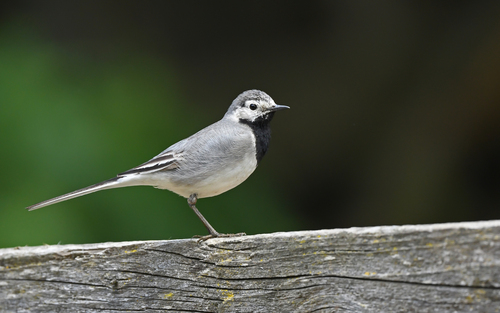 ハクセキレイ
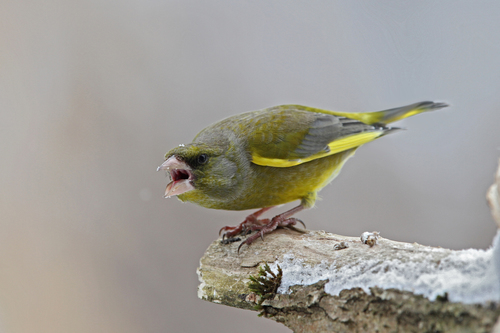 アオカワラヒワ
要点
The most reliable field mark to separate Pied/White Wagtail from European Greenfinch is overall shape and color: wagtails are slender, long-tailed, and mostly black, white, and grey, while greenfinches are chunky, short-tailed, and mainly greenish-yellow. If you see a slim bird with a constantly wagging tail, it's a wagtail; a thickset, seed-eating bird with a heavy conical bill is a greenfinch. Juvenile wagtails can be confusingly dull, but never show the greenfinch's yellow wing and tail flashes or thick bill. In flight, wagtails show white outer tail feathers and a bounding, undulating flight; greenfinches flash yellow in the wings and tail and appear more compact. These two are unlikely to be confused by plumage alone, but distant or immature birds can trip up even experienced birders.
識別のコツ
- Shape and structure: Wagtail is slim, long-tailed, and delicate, with a fine bill. Greenfinch is chunky, thickset, with a short tail and a heavy conical bill. This is the quickest way to separate them at a glance.
- Tail length and movement: Wagtail's tail is much longer than greenfinch's and is constantly wagged up and down. Greenfinch's tail is short and not wagged.
- Bill shape: Wagtail has a thin, pointed bill suited for insects; greenfinch has a thick, conical bill for seeds. Bill shape is diagnostic at close range.
- Plumage color: Wagtail is black, white, and grey (sometimes with black back in Pied Wagtail, grey in White Wagtail). Greenfinch is greenish with yellow flashes in wings and tail; even dull females and juveniles retain some yellow.
- Wing and tail pattern in flight: Wagtail shows white outer tail feathers and narrow wings; greenfinch shows broad yellow wing and tail edges, visible in flight and often when perched.
- Face pattern: Wagtail has a sharply marked face with white and black; greenfinch's face is plain, sometimes with a faint mask, but never with wagtail's contrast.
- Juvenile confusion: Juvenile wagtails are duller but never greenish or yellowish; juvenile greenfinches are brownish-green but always show yellow in wings/tail and a thick bill.
- Behavior: Wagtails are usually on the ground, running and wagging their tails; greenfinches are more often perched in trees or bushes, or feeding at seed feeders.
- Feeding: Wagtails feed on insects on the ground; greenfinches eat seeds, often at feeders or in trees.
- Habitat: Wagtails prefer open, wet, or urban ground; greenfinches prefer gardens, hedges, and woodland edges.
- Voice: Wagtail gives sharp, high 'tsit' calls; greenfinch gives trills, twitters, and nasal 'dzwee' calls.
- Flock behavior: Greenfinches often form flocks, especially in winter; wagtails are usually solitary or in small groups.
- Sex/season: Male wagtails are more strongly marked; females and juveniles can be dull, but still lack green/yellow. Greenfinch females/juveniles are duller than males but retain yellow in wings/tail.
- Context: If seen at a feeder, likely greenfinch; if running on open ground or near water, likely wagtail.
- Pitfalls: Distant or backlit views can make wagtails look darker or greenfinches duller, but structure and behavior usually resolve confusion. Always check bill shape and tail length if in doubt.
大きさ
European Greenfinch is slightly larger and much bulkier than Pied/White Wagtail. Greenfinch averages about 15 cm in length with a wingspan of 24.5–27.5 cm, similar in size to a House Sparrow and noticeably thickset. Pied/White Wagtail is slimmer and more elongated, with a longer tail and a more delicate build. The wagtail's proportions are accentuated by its long, narrow tail and slender bill, making it appear smaller and lighter even if actual length is similar. In the field, greenfinch stands out as a robust, heavy-bodied finch, while wagtail is dainty and agile.
羽色
Juvenile and female wagtails (including Pied and White subspecies) can be confusingly dull, with dark grey or greyish backs and less contrast than adults, but they always lack any green or yellow tones. In all ages, wagtails have a strong black-and-white pattern to the face, wings, and tail, with white outer tail feathers visible in flight and often when perched. Subspecies differences (such as black-backed Pied Wagtail vs. grey-backed White Wagtail) can cause confusion within wagtails, but not with greenfinch. Greenfinch of all ages is predominantly greenish with yellow flashes in the wings and tail; females and juveniles are duller, with more brownish tones, but still show yellow in the wings and tail, and never have the wagtail's crisp black-and-white pattern. The greenfinch's bill is always thick and conical, and the face lacks the wagtail's sharp contrast. In flight, greenfinch shows a broad yellow panel in the primaries and a yellow edge to the tail, while wagtail flashes white outer tail feathers and has a much narrower wing. The wagtail's tail is always long and wagged; greenfinch's is short and not wagged.
行動
Wagtails are highly active, constantly walking or running on the ground with frequent tail wagging, often near water or open ground. Their flight is undulating and they frequently call in flight. Greenfinches are more sedentary, often perching in trees or bushes, feeding on seeds, and moving with short, bounding flights. Greenfinches often feed in flocks, especially outside the breeding season, and may come to garden feeders. Wagtails are usually seen singly or in pairs, sometimes in loose flocks, and rarely visit feeders. The wagtail's constant tail wagging and ground-feeding behavior are distinctive.
生息環境
Wagtails prefer open habitats such as riverbanks, lakeshores, wet meadows, farmland, and urban areas with open ground. They are often seen near water or on lawns and car parks. Greenfinches favor woodland edges, hedgerows, gardens, and parks with thick vegetation, and are less tied to water. Greenfinches are more likely to be seen in trees or bushes, while wagtails are usually on the ground. In gardens, greenfinches come to seed feeders; wagtails rarely do.
声
Greenfinch has a distinctive song with trills, twitters, and wheezing notes, and a nasal 'dzwee' flight call. Wagtail calls are sharp, high-pitched 'tsit' or 'chissick' notes, often given in flight or while feeding. The two species' calls are very different and can be a useful clue if heard well.