

Motmot

ウスハイイロチュウヒ 対 ヒメハイイロチュウヒ

Circus macrourus 対 Circus pygargus

ウスハイイロチュウヒとヒメハイイロチュウヒのクイズ
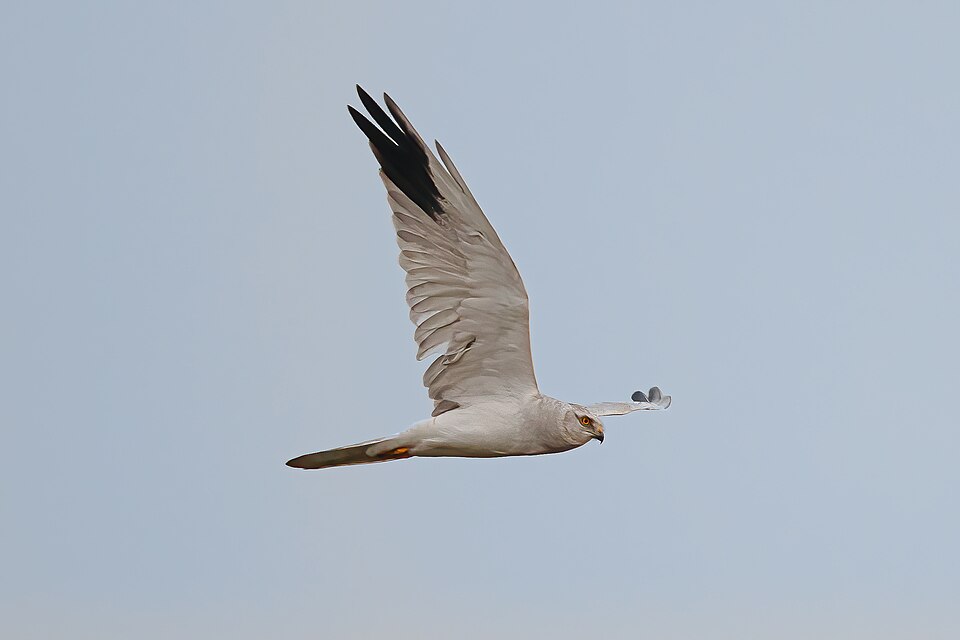
ウスハイイロチュウヒ (Circus macrourus) ウスハイイロチュウヒ
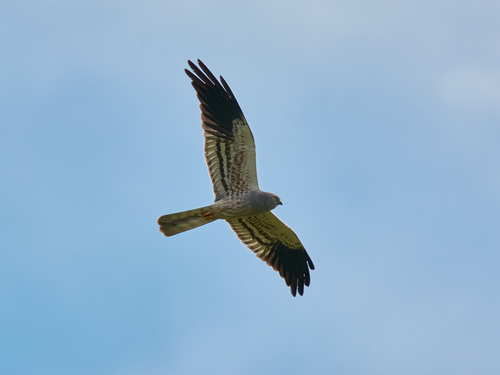
ヒメハイイロチュウヒ (Circus pygargus) ヒメハイイロチュウヒ

メディア

読み込み中…

要点

ウスハイイロチュウヒとヒメハイイロチュウヒを分ける最も信頼できるフィールドマークは、特に雌と幼鳥において、ウスハイイロチュウヒの首周りに明確な淡いカラーが存在することであり、ヒメハイイロチュウヒには常に欠けています。飛行中、両者は非常に似て見えることがありますが、腹部の色、顔の模様、翼の形状に微妙な違いがあるため、それが助けになります。成鳥のオスはより簡単です:ウスハイイロチュウヒは下側がより淡く、きれいな白ですが、ヒメハイイロチュウヒはより暗く、まだらです。両種はスリムで長い翼を持つチュウヒですが、年齢、性別、特に頭部と首の模様に注意を払うことが、確実な同定の鍵です。

識別のコツ

  1. Pale neck collar (female/juvenile): ウスハイイロチュウヒの雌と幼鳥は、首周りに明確な淡いカラーを示し、ヒメハイイロチュウヒには全ての年齢で欠けています。これは直接比較において最も信頼できるフィールドマークです。
  2. Facial pattern (female/juvenile): ウスハイイロチュウヒはよりはっきりとした顔の模様を持ち、ヒメハイイロチュウヒはあまり明確ではありません。目と頬の周りのコントラストを確認してください。
  3. Underpart color (female/juvenile): ウスハイイロチュウヒの腹部はヒメハイイロチュウヒよりも淡く、縞模様が少ないです。ヒメハイイロチュウヒはより黄色がかった茶色で、縦のストライプがあり、成鳥では斑点のある翼の覆い羽があります。
  4. Juvenile underwing/belly: ヒメハイイロチュウヒの幼鳥は、下側と翼の下が均一に赤茶色で、成鳥に見られる斑点が欠けています。ウスハイイロチュウヒの幼鳥は淡い茶色で茶色のストライプがあります。
  5. Adult male color: ウスハイイロチュウヒのオスは非常に淡く、上面は白灰色、白の下面、狭い黒い翼先端があります。ヒメハイイロチュウヒのオスはより暗く、まだらで、黒い二次羽の帯と腹部/側面に錆色のストライプがあります。
  6. Secondary bands (adult male): ヒメハイイロチュウヒのオスは二次羽の上と下に黒い帯を示し、ウスハイイロチュウヒのオスには存在しません。
  7. Wing shape in flight: 両者はスリムで長い翼を持っていますが、ヒメハイイロチュウヒはさらに細く見えることがあり、翼は長く、狭く、尾も長いです。ヒメハイイロチュウヒの「手」(外翼)はより尖っています。
  8. Flight style: ヒメハイイロチュウヒはより弾力のある、トンビのような翼の拍動と特に浮遊感のある滑らかな飛行を持っています。ウスハイイロチュウヒも優雅ですが、印象は少ないかもしれません。
  9. Melanistic morphs: ヒメハイイロチュウヒのみが定期的にメラニスティック(非常に暗い)個体を示します。非常に暗いチュウヒはほぼ確実にヒメハイイロチュウヒです。
  10. White upper tail coverts ('ringtail'): 両種は雌と幼鳥にこの特徴を示すため、両者の間での診断にはなりません。
  11. Size: ウスハイイロチュウヒは平均してやや重いですが、これはほとんどの状況で信頼できるフィールドマークではありません。
  12. Context: 両種は移動や冬に一緒に発生することがあるため、同定のために位置だけに頼らないでください。
  13. Perched views: ウスハイイロチュウヒでは淡いカラーと顔の模様を探してください;ヒメハイイロチュウヒはカラーが欠けており、より地味な顔を持っています。
  14. Sexual dimorphism: 両種はオスと雌の間に強い違いを示すため、フィールドマークを比較する際には常に性別と年齢を考慮してください。
  15. Beware overlap with ハイイロチュウヒ: 一部のマーク(白い上尾覆羽や一般的な形状)はハイイロチュウヒと共有されていますが、淡いカラー(ウスハイイロチュウヒ)と二次羽の帯(ヒメハイイロチュウヒのオス)がこのペアの鍵です。

大きさ

ウスハイイロチュウヒは平均してやや重い(383.5g対315.5gのヒメハイイロチュウヒ [wikidata])で、両種の雌はオスよりも大きいです。フィールドでは、この違いは微妙で、通常は診断にはなりません。両種は同様に長い翼とスリムな体型を持っていますが、ヒメハイイロチュウヒは飛行中にさらにスリムで長い尾を持つと説明されることがあります。全体的に、サイズだけではこの二種を信頼できるように分けることはできません。

羽色

雌と幼鳥(最も難しい年齢)について:
- ウスハイイロチュウヒは首周りに明確な淡いカラーを示し、腹部はより淡く、はっきりした顔の模様を持っています。下部は淡い茶色で茶色のストライプがあり、上部は茶色で白い上尾覆羽(「リングテイル」)があります。
- ヒメハイイロチュウヒは淡いカラーが欠けており、顔の模様もあまり明確ではありません。下部は淡い黄色がかった茶色で縦のストライプがあり、翼の覆い羽は斑点があります。幼鳥は下部がより均一な赤茶色で、成鳥の斑点が欠けています。両者とも白い上尾覆羽を持っています。

成鳥のオスについて:
- ウスハイイロチュウヒのオスは上面が白灰色、下面が白で、狭い黒い翼先端があります。彼らはヒメハイイロチュウヒよりも淡く、きれいに見えます。
- ヒメハイイロチュウヒのオスはより暗く、まだらで、二次羽に沿った黒い帯と腹部と側面に錆色のストライプがあります。全体的な印象はウスハイイロチュウヒよりも暗く、模様が多いです。

メラニスティックな形態はヒメハイイロチュウヒに見られますが、ウスハイイロチュウヒには見られません。

行動

両種は、翼を浅いV字に保ちながら、開けた野原や湿原の上を低く漂いながら狩りをします。ヒメハイイロチュウヒは特に滑らかで浮遊感のある優雅な飛行が特徴で、より弾力のあるトンビのような翼の拍動を持っています。両種は典型的なチュウヒの狩りの行動を示しますが、ヒメハイイロチュウヒは空中でさらに優雅でスリムに見えることがあります。止まっているとき、両者はスリムで長い翼を持ち、頭部の模様に微妙な違いがあり、近距離で最もよく見えます。

生息環境

両種は開けた国で繁殖します—ウスハイイロチュウヒは東ヨーロッパ南部、中央アジア、イランで、ヒメハイイロチュウヒはより広くユーラシアに分布しています。冬には、ウスハイイロチュウヒは主にインドと東南アジアに移動し、ヒメハイイロチュウヒはアフリカ、インド亜大陸、アラビア半島の一部で冬を過ごします。彼らの分布域は一部の地域で重なりますが、文脈だけではこの二種を診断することは稀です。

より良い説明を送る

比較と同じ項目を使ってください。文章はすぐに公開されます。

The most reliable field mark to separate Pallid Harrier from Montagu's Harrier, especially in females and juveniles, is the presence of a well-defined pale collar around the neck in Pallid, which Montagu's always lacks. In flight, both can look very similar, but subtle differences in underpart color, facial pattern, and wing shape can help. Adult males are easier: Pallid is paler and cleaner white below, while Montagu's is darker and more mottled. Both species are slim, long-winged harriers, but careful attention to age, sex, and especially the head and neck pattern is key for a confident ID.

  1. Pale neck collar (female/juvenile): Pallid Harrier females and juveniles show a well-defined pale collar around the neck, absent in Montagu's at all ages. This is the most reliable field mark in direct comparison.
  2. Facial pattern (female/juvenile): Pallid has a more sharply defined facial pattern, while Montagu's is less distinct. Check for contrast around the eyes and cheeks.
  3. Underpart color (female/juvenile): Pallid's belly is paler and less streaked than Montagu's, which shows more yellow-brown with longitudinal stripes and, in adults, spotted wing coverts.
  4. Juvenile underwing/belly: Montagu's juveniles are uniformly red-brown below and under the wing, lacking the spotting seen in adults. Pallid juveniles are buff with brown streaks.
  5. Adult male color: Pallid males are much paler—whitish-grey above, white below, with narrow black wingtips. Montagu's males are darker, more mottled, with black secondary bands and rusty streaks on the belly/flanks.
  6. Secondary bands (adult male): Montagu's males show black bands along the secondaries (above and below), which are not present in Pallid males.
  7. Wing shape in flight: Both are slim and long-winged, but Montagu's can appear even more slender, with longer, narrower wings and a longer tail. The 'hand' (outer wing) is more pointed in Montagu's.
  8. Flight style: Montagu's has more elastic, tern-like wingbeats and a particularly buoyant, smooth flight. Pallid is also graceful but may seem less 'tern-like.'
  9. Melanistic morphs: Only Montagu's Harrier regularly shows melanistic (very dark) individuals. A very dark harrier is almost certainly Montagu's.
  10. White upper tail coverts ('ringtail'): Both species show this feature in females and juveniles, so it is not diagnostic between them.
  11. Size: Pallid averages slightly heavier, but this is not a reliable field mark in most circumstances.
  12. Context: Both species can occur together in migration or winter, so do not rely on location alone for ID.
  13. Perched views: Look for the pale collar and facial pattern in Pallid; Montagu's will lack the collar and have a plainer face.
  14. Sexual dimorphism: Both species show strong differences between males and females, so always consider sex and age when comparing field marks.
  15. Beware overlap with Hen Harrier: Some marks (like white upper tail coverts and general shape) are shared with Hen Harrier, but the pale collar (Pallid) and secondary bands (Montagu's male) are key for this pair.

Pallid Harrier is slightly heavier on average (383.5g vs 315.5g for Montagu's [wikidata]), with females of both species being larger than males. In the field, this difference is subtle and not usually diagnostic. Both species are similarly long-winged and slender, but Montagu's is sometimes described as even more slender and long-tailed in flight. Overall, size alone is not a reliable separator between these two.

For females and juveniles (the most challenging ages):
- Pallid Harrier shows a clear pale collar around the neck and a paler belly, with a well-defined facial pattern. The underparts are buff with brown streaks, and the upperparts are brown with white upper tail coverts ('ringtail').
- Montagu's Harrier lacks the pale collar and has a less distinct facial pattern. The underparts are pale yellow-brown with longitudinal stripes, and the wing coverts are spotted. Juveniles are more uniform red-brown below, lacking the spotting of adults. Both have white upper tail coverts.

For adult males:
- Pallid Harrier males are whitish-grey above and white below, with narrow black wingtips. They appear paler and cleaner than Montagu's.
- Montagu's Harrier males are darker and more mottled, with black bands along the secondaries (above and below) and rusty streaks on the belly and flanks. The overall impression is darker and more patterned than Pallid.

Melanistic forms occur in Montagu's but not in Pallid.

Both species hunt by drifting low over open fields and moors, holding their wings in a shallow V. Montagu's Harrier is noted for particularly smooth, buoyant, and elegant flight, with more elastic, tern-like wingbeats. Both species exhibit typical harrier hunting behavior, but Montagu's may appear even more graceful and slender in the air. Perched, both look slim and long-winged, with subtle differences in head pattern that are best seen at close range.

Both species breed in open country—Pallid Harrier in southern parts of eastern Europe, central Asia, and Iran, and Montagu's Harrier more broadly across the Palearctic. In winter, Pallid Harrier moves mainly to India and southeast Asia, while Montagu's winters in Africa, the Indian subcontinent, and parts of the Arabian Peninsula. Their ranges overlap in some areas, but context alone is rarely diagnostic between these two.

変更を破棄しますか?

保存していない編集があります。今離れると失われます。

ウスハイイロチュウヒ · ヒメハイイロチュウヒ · 苦手な鳥