

Motmot

タイヘイヨウキンバト 対 チャイロキンバト

Chalcophaps longirostris 対 Chalcophaps stephani

タイヘイヨウキンバトとチャイロキンバトのクイズ
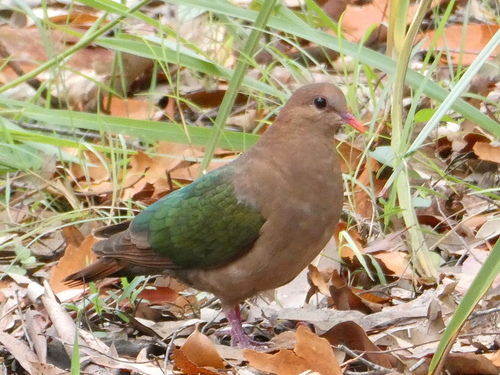
タイヘイヨウキンバト (Chalcophaps longirostris) タイヘイヨウキンバト
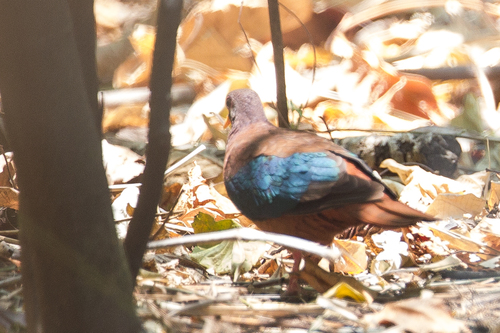
チャイロキンバト (Chalcophaps stephani) チャイロキンバト

メディア

読み込み中…

要点

タイヘイヨウキンバトとチャイロキンバトの間で最も信頼できるフィールドマークは、成鳥のオスの頭頂部の色です:タイヘイヨウキンバトのオスは明確な灰色の冠を示し、チャイロキンバトのオスは茶色がかった冠を持っています。両種はずんぐりとした地上性のハトで、明るい緑の翼を持っていますが、タイヘイヨウキンバトはよりワイン色のピンクの頭部と腹部、そしてオスの肩に白い肩斑を示す可能性が高いです。幼鳥と雌鳥はより難解で、両者ともに茶色がかり、成鳥のオスの鮮明な頭部パターンを欠いていますが、タイヘイヨウキンバトの幼鳥は体と翼に茶色のスカロッピングを示します。飛行中、タイヘイヨウキンバトはバフ色の下翼と栗色の飛行羽を露出し、黒っぽい尾羽と飛行羽、そして下背部に大胆な黒と白の縞模様を持っています。チャイロキンバトは全体的に茶色がかった上面とタイヘイヨウキンバトの白い肩斑と灰色の冠が欠けていることで最も区別されます、特に止まっているオスにおいて。

識別のコツ

  1. Adult male crown color: タイヘイヨウキンバトのオスは明確な灰色の冠を持ち、チャイロキンバトのオスは茶色がかった冠を持っています。これは成鳥のオスにとって最も信頼できるマークです。
  2. White shoulder patch: 成鳥のオスのタイヘイヨウキンバトは肩の端に明確な白い斑点を示し、チャイロキンバトにはありません。雌と幼鳥はこのマークを欠いています。
  3. Vinous-pink underparts: タイヘイヨウキンバト(特にオス)は暗いワイン色のピンクの頭部と腹部を持ち、下腹部は灰色に変わります。チャイロキンバトは一般的に下部が鈍く茶色がかっています。
  4. Brown scalloping on immatures: 幼鳥と幼体のタイヘイヨウキンバトは体と翼の覆羽に茶色のスカロッピングを示し、これはチャイロキンバトには記載されていません。
  5. Upperwing and flight pattern: 飛行中、タイヘイヨウキンバトはバフ色の下翼、栗色の飛行羽、黒っぽい尾羽と飛行羽、そして下背部に大胆な黒と白の縞模様を露出します。チャイロキンバトはこれらの特徴を示すとは記載されていないため、これらの存在はタイヘイヨウキンバトを示します。
  6. Overall upperpart color: チャイロキンバトはより均一に茶色い背中を持ち、タイヘイヨウキンバトはより明るいエメラルドグリーンの翼と雌/幼体の茶色がかった冠を持っています。
  7. Bill and leg color: タイヘイヨウキンバトは明るい赤いくちばしと赤褐色の脚と足を持っています;チャイロキンバトの裸の部分の色は詳細に記載されていないため、よく見えた場合に役立つかもしれません。
  8. Sex differences: 雌のタイヘイヨウキンバトはより茶色がかり、白い肩斑を欠き、肩に灰色のマークを示すことがあります。チャイロキンバトの雌は茶色い背中を持ち、冠や肩に灰色や白を欠いています。
  9. Jizz and behavior: 両者はずんぐりとした地上で採餌することが多く、しばしばおとなしいです。タイヘイヨウキンバトは、驚かされたときに飛ぶのではなく歩いて逃げることがありますが、これは特有ではありません。
  10. Range: オーストラリアでは、タイヘイヨウキンバトのみが生息しています。ニューギニアと近隣の島々では、両者が存在する可能性があります。
  11. Habitat: 両者は密な森林や林地を好みます;生息地は重複ゾーンでは区別要因ではありません。
  12. Vocalizations: タイヘイヨウキンバトの声のみが記載されており、柔らかいうめき声のクーや鼻声の「フーフーフーン」を聞くことでその種を支持します。
  13. Group size: 両者は通常、孤独、ペア、または小さな群れで見られます;区別要因ではありません。
  14. Courtship display: 両者はお辞儀や上下運動のディスプレイを行い、診断的ではありません。
  15. When in doubt: 成鳥のオスの頭部と肩のパターン、そして幼鳥の茶色のスカロッピングに焦点を当ててください。飛行中は、タイヘイヨウキンバトのためにバフ色の下翼と黒と白の下背部の縞模様を探してください。

大きさ

両種は中型のずんぐりとしたハトです。タイヘイヨウキンバトは通常23〜28 cmの長さです。チャイロキンバトの直接的な測定は提供されていませんが、密接に関連し形態的に類似していると記載されているため、非常に似たサイズと比率が期待されます。サイズはフィールドでの信頼できる区別要因ではありません。

羽色

行動

両種は地上性で、落ちた果物を地面で採餌することが多く、止まる以外は木にいる時間はほとんどありません。タイヘイヨウキンバトは非常におとなしく近づきやすいことで知られており、驚かされたときには飛ぶのではなく歩いて逃げることがよくあります。両種は求愛中にお辞儀や上下運動のディスプレイを行い、オスはリズミカルな動きで頭と尾を下げたり上げたりします。フィールドで両者を信頼して区別するための主要な行動の違いは強調されていません。

生息環境

タイヘイヨウキンバトはインドネシア、オーストラリア北部および東部、ティモール・レステ、パプアニューギニアの熱帯および亜熱帯の雨林、密な湿った森林、農場、庭、マングローブ、沿岸のヒースに広く分布しています。チャイロキンバトはインドネシアとメラネシアに分布し、スラウェシとタリアブからニューギニアの低地およびその衛星島々を経てビスマルク諸島とソロモン諸島に至ります。両者は密な森林や林地を好みますが、タイヘイヨウキンバトはオーストラリアに達する唯一の種です。重複する地域(ニューギニア、一部のインドネシアの島々)では、生息地は信頼できる区別要因ではありません。

声

タイヘイヨウキンバトは約6〜7音の低く柔らかいうめき声のクーを発し、静かに始まり上昇します。また、鼻声の「フーフーフーン」も発します。チャイロキンバトの特定の声の記述は提供されていないため、タイヘイヨウキンバトの呼び声が聞かれない限り、声は信頼できる区別要因ではありません。

より良い説明を送る

比較と同じ項目を使ってください。文章はすぐに公開されます。

The most reliable field mark between Pacific Emerald Dove and Stephan's Dove is the color of the cap in adult males: Pacific Emerald Dove males show a clear grey crown, while Stephan's Dove males have a brownish crown. Both species are stocky, ground-dwelling pigeons with bright green wings, but Pacific Emerald Dove is more likely to show a vinous-pink head and underparts, and a white shoulder patch in males. Juvenile and female birds are trickier, as both are browner and lack the adult male's crisp head pattern, but Pacific Emerald Dove immatures show brown scalloping on the body and wings. In flight, Pacific Emerald Dove exposes a buff underwing and chestnut flight feathers, with blackish tail and flight feathers, and bold black-and-white barring on the lower back. Stephan's Dove is best separated by its overall browner upperparts and lack of the Pacific's white shoulder patch and grey crown, especially on perched males.

  1. Adult male crown color: Pacific Emerald Dove males have a clear grey crown; Stephan's Dove males have a brownish crown. This is the most reliable mark for adult males.
  2. White shoulder patch: Adult male Pacific Emerald Dove shows a distinct white patch at the edge of the shoulder, absent in Stephan's Dove. Females and immatures lack this mark.
  3. Vinous-pink underparts: Pacific Emerald Dove (especially males) has a dark vinous-pink head and underparts, fading to grey on the lower belly. Stephan's Dove is generally duller and browner below.
  4. Brown scalloping on immatures: Juvenile and immature Pacific Emerald Doves show brown scalloping on body and wing coverts, a mark not described for Stephan's Dove.
  5. Upperwing and flight pattern: In flight, Pacific Emerald Dove exposes buff underwings, chestnut flight feathers, blackish tail and flight feathers, and bold black-and-white barring on the lower back. Stephan's Dove is not described as showing these features, so their presence points to Pacific Emerald Dove.
  6. Overall upperpart color: Stephan's Dove is more uniformly brown-backed, while Pacific Emerald Dove has brighter emerald green wings and a browner cap in females/immatures.
  7. Bill and leg color: Pacific Emerald Dove has a bright red bill and rufous legs and feet; Stephan's Dove's bare part colors are not detailed, so this may help if seen well.
  8. Sex differences: Female Pacific Emerald Doves are browner, lack the white shoulder patch, and may show a grey mark on the shoulder. Stephan's Dove females are brown-backed and lack any grey or white on the crown or shoulder.
  9. Jizz and behavior: Both are stocky, ground-foraging, and often tame. Pacific Emerald Dove may walk away when disturbed rather than fly, but this is not unique.
  10. Range: In Australia, only Pacific Emerald Dove occurs. In New Guinea and nearby islands, both may be present.
  11. Habitat: Both prefer dense forest and woodland; habitat is not a separator in overlap zones.
  12. Vocalizations: Only Pacific Emerald Dove's voice is described; hearing the soft moaning coo or nasal 'hoo-hoo-hoon' supports that species.
  13. Group size: Both are usually solitary, in pairs, or small groups; not a separator.
  14. Courtship display: Both perform bowing/bobbing displays, not diagnostic.
  15. When in doubt: Focus on adult male head and shoulder pattern, and on brown scalloping in immatures. In flight, look for buff underwing and black-and-white lower back barring for Pacific Emerald Dove.

Both species are medium-sized, stocky pigeons. Pacific Emerald Dove is typically 23–28 cm in length. No direct measurement is provided for Stephan's Dove, but it is described as closely related and morphologically similar, so expect very similar size and proportions. Size is not a reliable separator in the field.

  • Juvenile/Immature: Pacific Emerald Dove immatures resemble females but have distinctive brown scalloping on the body and wing coverts. Stephan's Dove immatures are not described in detail, but no mention of scalloping suggests this mark is useful for Pacific Emerald Dove.
  • Adult Male: Pacific Emerald Dove males have a grey crown and a white patch on the shoulder, with bright emerald green wings and a vinous-pink head and underparts. Stephan's Dove males lack the grey crown and white shoulder patch, instead showing a brownish crown and overall browner upperparts, with green wings but a more subdued head and underpart coloration.
  • Adult Female: Both species' females are browner overall and lack the white shoulder patch. Pacific Emerald Dove females may show a grey mark on the shoulder, but not a full patch. Stephan's Dove females are overall brown-backed and lack any grey or white on the crown or shoulder.
  • In Flight: Pacific Emerald Dove shows buff underwings, chestnut flight feathers, blackish tail and flight feathers, and bold black-and-white bars on the lower back. Stephan's Dove's flight pattern is not described in detail, but the lack of mention of these features suggests they are less prominent or absent.

Both species are terrestrial, often foraging for fallen fruit on the ground and spending little time in trees except for roosting. Pacific Emerald Dove is noted for being quite tame and approachable, often walking away rather than flying when disturbed. Both species perform bobbing or bowing displays during courtship, with males lowering and raising their heads and tails in rhythmic motions. No major behavioral differences are highlighted that would reliably separate the two in the field.

Pacific Emerald Dove is widespread in tropical and subtropical rainforests, dense wet woodlands, farms, gardens, mangroves, and coastal heaths across Indonesia, northern and eastern Australia, Timor-Leste, and Papua New Guinea. Stephan's Dove is found in Indonesia and Melanesia, from Sulawesi and Taliabu east through lowland New Guinea and its satellite islands to the Bismarck Archipelago and Solomon Islands. Both prefer dense forest or woodland, but Pacific Emerald Dove is the only one reaching Australia. In overlapping areas (New Guinea, some Indonesian islands), habitat is not a reliable separator.

Pacific Emerald Dove gives a low, soft moaning coo of about six to seven notes, starting quietly and rising, as well as a nasal 'hoo-hoo-hoon.' No specific vocal description is provided for Stephan's Dove, so voice is not a reliable separator unless Pacific Emerald Dove's calls are heard.

変更を破棄しますか?

保存していない編集があります。今離れると失われます。

タイヘイヨウキンバト · チャイロキンバト · 苦手な鳥