

Motmot

ミサゴ 対 ハヤブサ

Pandion haliaetus 対 Falco peregrinus

ミサゴとハヤブサのクイズ
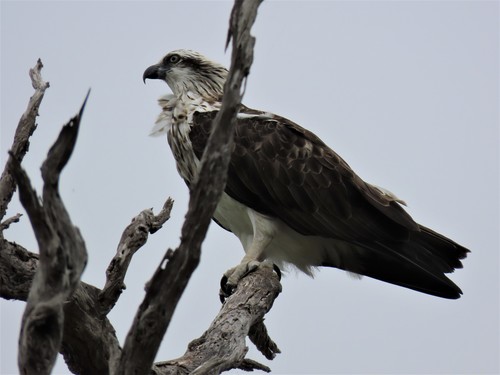
ミサゴ (Pandion haliaetus) ミサゴ
ハヤブサ (Falco peregrinus) ハヤブサ

メディア

読み込み中…

要点

ミサゴとハヤブサを区別するための最も信頼できるフィールドマークは、ミサゴの特徴的な翼の下の模様です:すべての年齢において、ミサゴは目立つ黒い「手首」(手根部の斑点)と、4本の長い指状の一次羽を持つ長く狭い翼を示し、飛行中にユニークなシルエットを作り出します。幼鳥のミサゴは上面に淡い縁取りがあり、下面は淡い色合いですが、ハヤブサはこれを示しません。ハヤブサはよりコンパクトで、尖った翼と短い尾を持ち、成鳥は大胆な暗いフードと重く縞模様のある下面を持っています。両種は大型の猛禽類ですが、ミサゴはより大きく、翼が長く、水上でよく見られるのに対し、ハヤブサはより流線型で、通常は開けた土地や都市部で狩りをします。性差は両者ともフィールドでは微妙ですが、サイズの二形性はハヤブサでより顕著です。

識別のコツ

  1. Underwing pattern in flight (all ages): ミサゴは大胆な黒い手根部の斑点(「手首」)と長い指状の一次羽を示し、ハヤブサは決して示しません。これは遠くから見たときの最も信頼できるマークです。
  2. Wing shape: ミサゴの翼は長く狭く、手根部でわずかに曲がって保持されます;ハヤブサの翼は短く、尖っており、より三角形です。
  3. Tail shape: ミサゴは比較的短く、わずかに丸みを帯びた尾を持っています;ハヤブサの尾は短く、より四角いです。
  4. Flight style: ミサゴは深く弾力のある翼の拍動を持ち、しばしばホバリングします;ハヤブサは速く、直接的で、めったにホバリングせず、高速で急降下するのがよく見られます。
  5. Size and bulk: ミサゴははるかに大きく、より大きな翼幅と重い体格を持っています。大きな雌のハヤブサでさえ、ミサゴよりも小さく、よりコンパクトです。
  6. Head pattern: ミサゴは暗い目のストライプ(マスク)を持つ白い頭を持っています;ハヤブサは大胆な黒いフードと口ひげを持ち、白い冠はありません。
  7. Underparts: ミサゴは主に下面が白く、時々淡い茶色の胸の帯が見られます(雌でより強く);ハヤブサは下面が重く縞模様または筋状で、決して純白ではありません。
  8. Upperparts: ミサゴは上面が深い茶色です;ハヤブサは青灰色(成鳥)または茶色がかった色(幼鳥)です。
  9. Juvenile marks: 幼いミサゴは上面に淡い縁取りがあり、下面は淡い色合いで、頭に筋状の模様があります;ハヤブサの幼鳥は上面がより茶色で、下面は筋状ですが、淡い色合いはなく、黒い手首のある淡い翼はありません。
  10. Habitat context: ミサゴはほぼ常に水の近くにいます;ハヤブサは都市、崖、または開けた土地で見られ、しばしば水から離れています。
  11. Perched posture: ミサゴは長い脚で直立しているように見え、細く伸びた外観を持っています;ハヤブサはよりコンパクトで、水平で丸まった姿勢をしています。
  12. Prey handling: ミサゴは魚を頭を前にして爪で持ち運びます;ハヤブサは獲物を爪で持ち運び、しばしば空中で、通常は鳥の獲物を持ちます。
  13. Sex differences: ミサゴのオスはスリムで胸の帯が少ないですが、これは微妙です;ハヤブサの雌はより大きいですが、羽毛は似ています。
  14. Contextual clues: ホバリングまたは水に飛び込むのが見られた場合はミサゴです;高速で急降下するか、都市の構造物に止まっているのが見られた場合はハヤブサです。
  15. Pitfalls: 遠くから見ると、両者とも上面が暗く、下面が淡いように見えることがあります;常にミサゴの黒い手首の斑点と指状の翼を探し、ハヤブサの尖った翼と縞模様のある下面と比較してください。

大きさ

ミサゴは2つの中でより大きく、重いもので、体重は約1400g、翼幅は最大180cmで、細長い、長い翼の外観を持っています。ハヤブサはカラスサイズで、明らかに小さく、よりコンパクトで、短く尖った翼と短い尾を持っています。直接比較すると、ミサゴは特に飛行中に、はるかに大きく、長い翼を持っているように見えます。雌のハヤブサは雄よりも大きいですが、最大のハヤブサでさえ、ミサゴよりも小さく、よりコンパクトです。

羽色

行動

ミサゴはほぼ常に水の近くで見られ、魚を捕まえるために足から飛び込む前にホバリングまたは旋回します。その飛行は浮遊感があり、弾力性があり、深く柔軟な翼の拍動と頻繁な滑空を持っています。ハヤブサは高速度で急降下して狩りをし、しばしば止まり木や高い空から獲物を捕らえ、空中で握りこぶしの足で獲物を攻撃します。ハヤブサは飛行中に敏捷で速く、直接的で、めったにホバリングしません。ミサゴはしばしば魚を前に足で持ち運び、ハヤブサは獲物を爪で持ち運び、通常は空中または止まり木に運びます。

生息環境

ミサゴは水—湖、川、海岸—に強く結びついており、水生生息地から遠く離れていることはほとんどありません。ハヤブサはより多様で、開けた風景、崖、そしてますます都市部で見られ、水から遠く離れていることが多いです。都市の建物や乾燥した開けた土地の上で見られた場合、ハヤブサの可能性が高く、ミサゴはほぼ常に水の上または近くにいます。

より良い説明を送る

比較と同じ項目を使ってください。文章はすぐに公開されます。

The most reliable field mark to separate Osprey from Peregrine Falcon is the Osprey's distinctive underwing pattern: in all ages, Osprey shows prominent black 'wrists' (carpal patches) and long, narrow wings with four long, fingered primaries, creating a unique silhouette in flight. Juvenile Ospreys have buff fringes on upperparts and a buffy wash below, while Peregrines never show this. Peregrine Falcons are more compact, with pointed wings and a shorter tail, and adults have a bold dark hood and heavily barred underparts. Both species are large raptors, but Osprey is bulkier and longer-winged, often seen over water, while Peregrine is more streamlined and typically hunts over open land or urban areas. Sex differences are subtle in the field for both, but size dimorphism is more pronounced in Peregrine.

  1. Underwing pattern in flight (all ages): Osprey shows bold black carpal patches ('wrists') and long, fingered primaries; Peregrine never does. This is the single most reliable mark at a distance.
  2. Wing shape: Osprey's wings are long, narrow, and held with a slight crook at the carpal; Peregrine's wings are shorter, pointed, and more triangular.
  3. Tail shape: Osprey has a relatively short, slightly rounded tail; Peregrine's tail is shorter and more squared-off.
  4. Flight style: Osprey has deep, elastic wingbeats and often hovers; Peregrine is fast, direct, and rarely hovers, often seen in a high-speed stoop.
  5. Size and bulk: Osprey is much larger and bulkier, with a longer wingspan and heavier build. Even large female Peregrines are smaller and more compact than Ospreys.
  6. Head pattern: Osprey has a white head with a dark eye-stripe (mask); Peregrine has a bold black hood and mustache, with no white crown.
  7. Underparts: Osprey is mostly white below, sometimes with a faint brown breast band (stronger in females); Peregrine is heavily barred or streaked below, never pure white.
  8. Upperparts: Osprey is deep brown above; Peregrine is blue-grey (adults) or brownish (juveniles).
  9. Juvenile marks: Young Osprey shows buff fringes on upperparts and a buffy wash below, with streaked head; Peregrine juveniles are browner above and streaked below, but lack buff tones and have no pale underwing with black wrists.
  10. Habitat context: Osprey is almost always near water; Peregrine can be found in cities, cliffs, or open country, often away from water.
  11. Perched posture: Osprey appears long-legged and upright, with a slim, elongated look; Peregrine is more compact, with a horizontal, hunched posture.
  12. Prey handling: Osprey carries fish head-forward in its talons; Peregrine carries prey in talons, often in mid-air, and usually bird prey.
  13. Sex differences: Osprey males are slimmer and have less breast band, but this is subtle; Peregrine females are larger, but plumage is similar.
  14. Contextual clues: If seen hovering or plunging into water, it's Osprey; if seen stooping at high speed or perching on urban structures, it's Peregrine.
  15. Pitfalls: At long range, both can appear dark above and pale below; always look for the Osprey's black wrist patches and fingered wings versus Peregrine's pointed wings and barred underparts.

Osprey is the larger and heavier of the two, with a body mass around 1400 g and a wingspan up to 180 cm, giving it a lanky, long-winged look. Peregrine Falcon is crow-sized, noticeably smaller and more compact than Osprey, with shorter, more pointed wings and a shorter tail. In direct comparison, Osprey appears much bulkier and longer-winged, especially in flight. Female Peregrines are larger than males, but even the largest Peregrine is still smaller and more compact than an Osprey.

  • Juvenile Osprey: Shows buff fringes on upperparts and a buffy tone to the underparts, with streaked head feathers. In flight, note the strong black carpal patches ('wrists') and overall pale underwing with dark flight feathers. Barring on underwings and flight feathers is more pronounced in young birds, especially in spring.
  • Adult Osprey: Upperparts are glossy brown, underparts pure white (sometimes with a weak brown breast band), head white with a dark eye mask. Underwings always show black carpal patches and long, fingered primaries.
  • Peregrine Falcon (all ages): Never shows the Osprey's black 'wrists' or fingered wing silhouette. Adults have blue-grey upperparts, a bold black hood, and heavily barred white underparts. Juveniles are browner above and streaked below, but still lack the Osprey's pale underparts and distinctive wing pattern. In all ages, Peregrine's wings are pointed, and the underwing is barred, not pale with black patches.
  • Sex differences: Osprey sexes are similar, with males slimmer and less marked on the breast; Peregrine females are larger but plumage is similar.

Osprey is almost always seen near water, hovering or circling before plunging feet-first to catch fish. Its flight is buoyant and elastic, with deep, flexible wingbeats and frequent glides. Peregrine Falcon hunts by high-speed stoop, often from a perch or high in the air, striking prey in mid-air with a clenched foot. Peregrines are agile, fast, and direct in flight, rarely hovering. Osprey often carries fish with feet forward; Peregrine carries prey in talons, usually mid-air or to a perch.

Osprey is strongly tied to water—lakes, rivers, coasts—and is rarely seen far from aquatic habitats. Peregrine Falcon is more versatile, found in open landscapes, cliffs, and increasingly in urban areas, often far from water. If seen over city buildings or dry open country, Peregrine is more likely; Osprey is almost always over or near water.

変更を破棄しますか?

保存していない編集があります。今離れると失われます。

ミサゴ · ハヤブサ · 苦手な鳥