

Motmot

ニセアカハネシャコ 対 マダラシャコ

Scleroptila gutturalis 対 Pternistis hartlaubi

ニセアカハネシャコとマダラシャコのクイズ
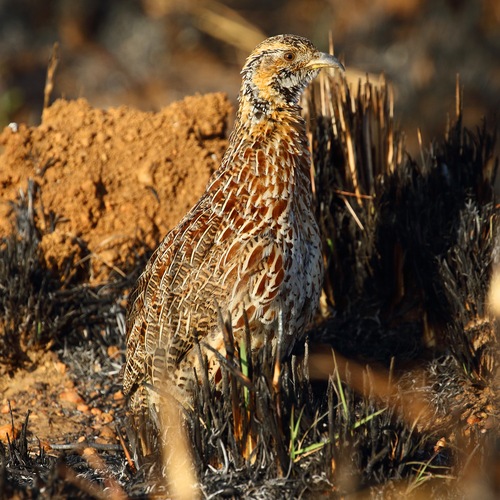
ニセアカハネシャコ (Scleroptila gutturalis) ニセアカハネシャコ
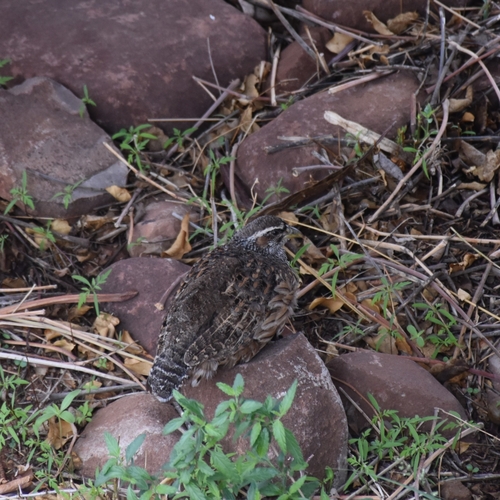
マダラシャコ (Pternistis hartlaubi) マダラシャコ

メディア

読み込み中…

要点

オレンジリバーシャコとマダラシャコを区別する最も信頼できるフィールドマークは、マダラシャコの強い性差と特徴的な頭部/腹部の模様であり、特にオスの大胆な白いアイストライプと暗い縞模様の淡い灰色の腹部に対して、シャコのより均一で対比の少ない羽毛が見られます。マダラシャコははるかに小さく、比率的に大きなくちばしを持ち、オスとメスで腹部の色と縞模様に明確な違いが見られます。飛行中または追い立てられたとき、マダラシャコは逃げることをためらい、岩の出っ張りを好むのに対し、オレンジリバーシャコは草の斜面で見つかる可能性が高いです。生息地も重要な手がかりです:マダラシャコはナミビア/アンゴラの岩の花崗岩/砂岩の出っ張りに限定されているのに対し、オレンジリバーシャコは草原や森林を好み、時には岩の近くの斜面にいますが、岩の上にはいません。

識別のコツ

  1. マダラシャコの性差:オスは大胆な白いアイストライプ、暗い茶色の額、重い暗い縞模様の淡い灰色の腹部を持ち、メスは鈍い赤褐色の腹部でアイストライプがありません。オレンジリバーシャコは性差がほとんどなく、両性ともに似ていて、強い頭部/腹部の対比がありません。
  2. 頭部の模様:マダラシャコ(オス)は目立つ白いアイストライプと赤褐色の耳羽を示し、双眼鏡で簡単に見ることができます。オレンジリバーシャコにはこれらのマークがなく、頭部はより地味です。
  3. 腹部の色と縞模様:オスのマダラシャコは大胆な暗い縞模様のある淡い灰色の腹部を持ち、メスは平坦な赤褐色の腹部です。オレンジリバーシャコの腹部は白っぽい(北部)またはバフ色(南部)で、重い縞模様はありません。
  4. くちばしの大きさと色:マダラシャコは比率的に大きなくちばしを持ち、特にメスでは、上くちばしは茶色がかり、下くちばしは黄色です。オレンジリバーシャコのくちばしは目立たず、この色の対比がありません。
  5. 脚の色:マダラシャコは平らなスパーを持つ黄色の脚を持ち、オレンジリバーシャコでは脚の色はあまり目立ちません。
  6. サイズ:マダラシャコはオレンジリバーシャコよりもはるかに小さく(オス28 cm、メス25 cm)、軽いです。これは、鳥が並んでいるときや既知の種と一緒にいるときに使用します。
  7. 幼鳥の羽毛:幼鳥のオスのマダラシャコは成鳥のオスに似ていますが、より細かい縞模様があります。幼鳥のメスは成鳥のメスに似ています。オレンジリバーシャコには特に幼鳥のマークは記載されていません。
  8. 生息地:マダラシャコはナミビア/アンゴラの岩の出っ張りに限定されています。オレンジリバーシャコは草原/森林に見られ、時には斜面にいますが、岩の上にはいません。生息地は強い手がかりです。
  9. 行動:マダラシャコは内気で、めったに逃げず、岩の間に隠れることを好みます。オレンジリバーシャコは草や開けた地面から逃げる可能性が高いです。
  10. 飛行:逃げるとき、マダラシャコは急速に低く飛び、しばしばおしゃべりな「クラック」と呼ぶ声を発します。オレンジリバーシャコの飛行はあまり記載されていませんが、開けた国のシャコに典型的なものと思われます。
  11. 地理的範囲:マダラシャコは小さな地域(ナミビア北中央部/北西部、アンゴラ南西部)に特有です。オレンジリバーシャコは南部および東部アフリカでより広い範囲を持っています。
  12. 他の種との文脈:両方が生息する場所では、マダラシャコは岩に留まり、オレンジリバーシャコは近くの草の斜面にいます。岩の上に小さくて縞模様のある大きなくちばしの鳥を見たら、それはマダラシャコです。
  13. 群れのサイズ:マダラシャコは通常、ペアまたは小さな家族グループ(最大4羽)で見られます。オレンジリバーシャコはより大きな群れで見られることがあります。
  14. 強い上翼/飛行パターンの違いはない:どちらの種も特に幼鳥や成鳥の上翼パターンは記載されていません。地上のマークと行動に頼ってください。
  15. 羽毛の落とし穴:メスのマダラシャコ(鈍い赤褐色の腹部)は淡いシャコと間違えられる可能性がありますが、混乱を避けるために生息地、サイズ、くちばしの構造に注意してください。

大きさ

マダラシャコはオレンジリバーシャコよりも著しく小さいです。オスのマダラシャコは平均28 cmの長さと245–290 gで、メスはさらに小さく25 cmと210–240 gです[ウィキペディア]。オレンジリバーシャコは大きく、正確な測定値はメモに記載されていませんが、マダラシャコよりも大きくて頑丈であると説明されています。マダラシャコはそのサイズに対して比率的に大きなくちばしを持ち、特にメスでは顕著です。

羽色

どちらの種についても特に年齢に特有の上翼や飛行パターンは記載されていないため、区別は地上からの視点と全体的な羽毛に依存します。成鳥のオスのマダラシャコは暗い茶色の額、大胆な白いアイストライプ、赤褐色の耳羽、暗いバー/縞模様のある茶色がかった灰色の上部、広範囲にわたる暗い縞模様のある淡い灰色の腹部を示します。メスは鈍い赤褐色の腹部で、オスの縞模様や頭部の模様がありません。幼鳥のオスは成鳥のオスに似ていますが、より細かい上部の縞模様があります。幼鳥のメスは成鳥のメスに似ています。対照的に、オレンジリバーシャコは性差が少なく、より均一です:北部の鳥は目に達しない首のラインと白っぽい腹部を持ち、南部の鳥は目に達する首のラインとバフ色の腹部を持っています。シャコは大胆なアイストライプと強い腹部の縞模様がありません。両性のシャコは似ており、強い頭部や腹部の対比はありません。

行動

マダラシャコは非常に目立たず、めったに逃げず、岩の出っ張りの間に隠れることを好みます。逃げるときは急速に飛び、おしゃべりな呼び声を発します。通常、ペアまたは小さな家族グループで見られます。オレンジリバーシャコは開けた草の斜面や森林で見られる可能性が高く、岩に厳密に結びついていません。シャコは草原からより容易に逃げることができ、マダラシャコよりも秘密主義ではありません。

生息環境

生息地は重要な区別要因です。マダラシャコはナミビア北中央部/北西部およびアンゴラ南西部の岩の花崗岩と砂岩の出っ張り(「コッピー」)に特有で、常に岩の地形と周囲の半砂漠の草原に関連しています。オレンジリバーシャコは草原や森林に見られ、時には岩の出っ張りに向かう斜面にいますが、岩の上にはいません。ナミビア/アンゴラの岩の出っ張りで見られた場合、マダラシャコの可能性が高いです。草の斜面や開けた森林、特にこの地域の外では、オレンジリバーシャコが期待されます。

声

マダラシャコは逃げるとき、急速でおしゃべりな「クラック」と呼ぶ声を発します。提供されたメモにはオレンジリバーシャコの声は記載されていないため、これはあまり診断的ではありません。

より良い説明を送る

比較と同じ項目を使ってください。文章はすぐに公開されます。

The most reliable field mark to separate Orange River Francolin from Hartlaub's Spurfowl is the strong sexual dimorphism and distinctive head/underpart patterns of Hartlaub's Spurfowl, especially the male's bold white eyestripe and dark-streaked pale grey underparts versus the francolin's more uniform, less contrasting plumage. Hartlaub's Spurfowl is much smaller and has a disproportionately large bill, with males and females showing clear differences in underpart color and streaking. In flight or when flushed, Hartlaub's Spurfowl is reluctant to flush and prefers rocky outcrops, while Orange River Francolin is more likely to be found on grassy slopes. Habitat is also a strong clue: Hartlaub's Spurfowl is restricted to rocky granite/sandstone outcrops in Namibia/Angola, while Orange River Francolin favors grassland and woodland, sometimes on slopes near but not on the rocks.

  1. Sexual dimorphism in Hartlaub's Spurfowl: Males have a bold white eyestripe, dark brownish forehead, and pale grey underparts with heavy dark streaks; females are dull rufous below and lack the eyestripe. Orange River Francolin shows little sexual dimorphism—both sexes are similar and lack strong head/underpart contrast.
  2. Head pattern: Hartlaub's Spurfowl (male) shows a striking white eyestripe and rufous ear coverts, easily seen with binoculars. Orange River Francolin lacks these marks; its head is plainer.
  3. Underpart color and streaking: Male Hartlaub's Spurfowl has pale grey underparts with bold dark streaks; female is plain rufous below. Orange River Francolin's belly is whitish (north) or buff (south), with no heavy streaking.
  4. Bill size and color: Hartlaub's Spurfowl has a disproportionately large bill, especially in females, with a brownish upper mandible and yellow lower mandible. Orange River Francolin's bill is less prominent and lacks this color contrast.
  5. Leg color: Hartlaub's Spurfowl has yellow legs with flattened spurs; leg color is less distinctive in Orange River Francolin.
  6. Size: Hartlaub's Spurfowl is much smaller (male 28 cm, female 25 cm) and lighter than Orange River Francolin. Use this when birds are side by side or with known species.
  7. Juvenile plumage: Juvenile male Hartlaub's Spurfowl resembles adult male but with finer streaks; juvenile female is like adult female. No distinctive juvenile marks are described for Orange River Francolin.
  8. Habitat: Hartlaub's Spurfowl is restricted to rocky outcrops in Namibia/Angola; Orange River Francolin is found in grassland/woodland, sometimes on slopes but not on rocks. Habitat is a strong clue.
  9. Behavior: Hartlaub's Spurfowl is shy, rarely flushes, and prefers to hide among rocks; Orange River Francolin is more likely to flush from grass or open ground.
  10. Flight: When flushed, Hartlaub's Spurfowl flies rapidly and low, often uttering a chattering 'krak'; Orange River Francolin's flight is less described but is likely more typical of open-country francolins.
  11. Geographic range: Hartlaub's Spurfowl is endemic to a small region (northcentral/northwestern Namibia, southwestern Angola); Orange River Francolin has a much wider range in southern and eastern Africa.
  12. Context with other species: Where both occur, Hartlaub's Spurfowl stays on rocks, Orange River Francolin on grassy slopes nearby. If you see a small, streaky, big-billed bird on rocks, it's Hartlaub's Spurfowl.
  13. Group size: Hartlaub's Spurfowl is usually in pairs or small family groups (up to four); Orange River Francolin may be in larger coveys.
  14. No strong upperwing/flight pattern difference: Neither species has a distinctive juvenile or adult upperwing pattern described; rely on ground marks and behavior.
  15. Plumage pitfalls: Female Hartlaub's Spurfowl (dull rufous below) could be mistaken for a pale francolin, but note the habitat, size, and bill structure to avoid confusion.

Hartlaub's Spurfowl is notably smaller than Orange River Francolin. Male Hartlaub's Spurfowl averages 28 cm in length and 245–290 g, with females even smaller at 25 cm and 210–240 g [wikipedia]. Orange River Francolin is larger, though precise measurements are not provided in the notes, it is described as larger and more robust than Hartlaub's Spurfowl. Hartlaub's Spurfowl also has a disproportionately large bill for its size, especially in females.

No distinctive age-specific upperwing or flight pattern is described for either species, so separation relies on ground views and overall plumage. Adult male Hartlaub's Spurfowl shows a dark brownish forehead, bold white eyestripe, rufous ear coverts, brown-grey upperparts with dark bars/streaks, and pale grey underparts with extensive dark streaks. The female is dull rufous below, lacking the male's streaking and head pattern. Juvenile males resemble adult males but with finer upperpart streaks; juvenile females are similar to adult females. In contrast, Orange River Francolin shows less sexual dimorphism and is more uniform: northern birds have a neck-line that does not reach the eye and a whitish belly, while southern birds have a neck-line reaching the eye and a buff belly. The francolin lacks the spurfowl's bold eyestripe and strong underpart streaking. Both sexes of francolin are similar, with no strong head or underpart contrast.

Hartlaub's Spurfowl is highly inconspicuous, rarely flushing, and prefers to hide between boulders on rocky outcrops. When flushed, it flies rapidly with a chattering call. It is usually seen in pairs or small family groups. Orange River Francolin is more likely to be found on open grassy slopes or woodland, and is less strictly tied to rocks. The francolin may flush more readily from grassland, and is less secretive than the spurfowl.

Habitat is a key separator. Hartlaub's Spurfowl is endemic to rocky granite and sandstone outcrops ('koppies') in northcentral/northwestern Namibia and southwestern Angola, always associated with rocky terrain and surrounding semidesert steppe. Orange River Francolin is found in grassland and woodland, sometimes on slopes leading up to rocky outcrops but not on the rocks themselves. If seen on a rocky outcrop in Namibia/Angola, Hartlaub's Spurfowl is likely; on grassy slopes or open woodland, especially outside this region, Orange River Francolin is expected.

Hartlaub's Spurfowl, when flushed, gives a rapid, chattering 'krak' call. No vocalization is described for Orange River Francolin in the provided notes, so this is only weakly diagnostic.

変更を破棄しますか?

保存していない編集があります。今離れると失われます。

ニセアカハネシャコ · マダラシャコ · 苦手な鳥