

Motmot

ナキヒタキモドキ 対 メキシコヒタキモドキ

Contopus cooperi 対 Contopus pertinax

ナキヒタキモドキとメキシコヒタキモドキのクイズ
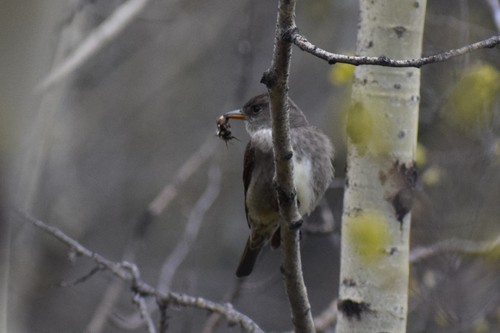
ナキヒタキモドキ (Contopus cooperi) ナキヒタキモドキ
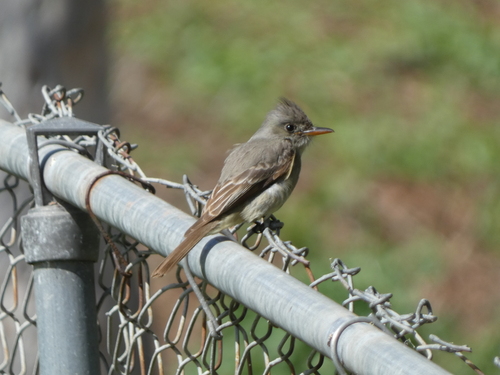
メキシコヒタキモドキ (Contopus pertinax) メキシコヒタキモドキ

メディア

読み込み中…

要点

The most reliable way to separate Olive-sided Flycatcher from Greater Pewee is the breast pattern: Olive-sided Flycatcher shows a strong, dark 'vest' on the sides of the breast with a clean white center, while Greater Pewee has a plain, uniform grayish breast without a vest effect. Both are upright, long-winged flycatchers, but Olive-sided is bulkier and often perches atop snags. Bill color and subtle plumage tones can help, but the breast pattern is the quickest field mark at all ages. Structural and behavioral cues, as well as subtle differences in underpart color, can further support identification.

識別のコツ

  1. Breast pattern is key: Olive-sided Flycatcher always shows a bold, dark 'vest' on the sides of the breast with a clean white central stripe; Greater Pewee's breast is plain grayish-olive without a vest, and the transition to the buffy belly is gradual. This works for all ages and sexes.
  2. Bill color: Greater Pewee has a distinctly two-toned bill—dark upper mandible and yellowish to orange lower mandible—while Olive-sided Flycatcher has a longer, all-dark or less contrasting bill. This is subtle but can help at close range.
  3. Plumage tones: Olive-sided Flycatcher shows olive tones on the back and wings, especially when fresh and in good light; Greater Pewee is plainer, with a more uniform gray-olive that fades with wear.
  4. Wing bars: Greater Pewee has two faint wing bars formed by pale edges to the coverts; Olive-sided Flycatcher lacks strong wing bars, so this is a minor supporting mark.
  5. Belly and undertail color: Greater Pewee has a buffy or yellowish belly and undertail coverts, while Olive-sided Flycatcher's underparts are whiter, especially in the center.
  6. Crest: Both can raise head feathers, but Greater Pewee's spiky crest is often more noticeable; Olive-sided Flycatcher may appear slightly crested but less so.
  7. Perching behavior: Olive-sided Flycatcher habitually perches at the very top of dead trees or snags in open areas, often higher and more exposed than Greater Pewee.
  8. Size and structure: Olive-sided Flycatcher is bulkier and longer-winged, with a relatively longer bill; Greater Pewee is slimmer and slightly smaller overall.
  9. Face pattern: Greater Pewee may show slightly paler lores and a lighter face than the rest of the head, but this is subtle and not always visible.
  10. Habitat context: In the southwestern US, Olive-sided is more likely in open, edge, or burned coniferous forest near water; Greater Pewee prefers mature pine-oak or mixed forests, often away from water.
  11. Seasonality: Olive-sided Flycatcher is a long-distance migrant, present in the US and Canada mainly in summer; Greater Pewee is resident or short-distance migrant in the southwestern US and southward.
  12. Sex and age: Both species are sexually monomorphic and do not show strong age-related differences in field marks relevant to this separation.
  13. Pitfalls: Lighting can obscure the olive tones on Olive-sided Flycatcher, making it look plainer; always rely on the breast pattern first. Faded Greater Pewees may look even plainer, but never show the sharp vest of Olive-sided.
  14. Not diagnostic: No distinctive juvenile or immature wing patterns are described for either species, so do not rely on wing panels or upperwing markings.
  15. When in doubt: If you cannot see the breast pattern clearly, use a combination of bill color, belly tone, and perching behavior, but be cautious—plumage wear and lighting can mislead. Always try for a clear view of the breast and belly.

大きさ

Greater Pewee averages about 27 g in body mass [wikidata], while Olive-sided Flycatcher is not directly measured here but is described as larger and heavier than other Contopus species, and is generally bulkier than Greater Pewee. Both are larger than wood-pewees, but Olive-sided Flycatcher is the more robust of the two, with a longer bill and wings for its size. In the field, Olive-sided may appear noticeably heavier-bodied and longer-winged, especially when perched upright.

羽色

No age-specific wing or flight pattern marks are detailed for either species, so focus is on breast and underpart patterns. Olive-sided Flycatcher of all ages shows a distinctive 'vested' look: the sides of the breast are dark gray, sharply contrasting with a bright white throat and central breast, giving a two-toned effect. Greater Pewee, by contrast, has a plain, uniform grayish-olive breast and sides, lacking any vest or sharp contrast; the belly and undertail are buffy or yellowish, but the transition is gradual. Both species have olive-gray upperparts, but Olive-sided's olive tones are more apparent in fresh plumage and good light, while Greater Pewee's plumage is plainer and fades with wear. Both sexes are similar in each species. Wing bars are faint in Greater Pewee and not a field mark for Olive-sided Flycatcher.

行動

Both species perch upright and sally for insects, but Olive-sided Flycatcher is more likely to be seen high atop dead snags or prominent perches, often in open or edge habitats. Greater Pewee also perches upright but may use slightly lower or more sheltered perches within its range. Olive-sided is described as an agile flyer, and its habit of returning to the same exposed perch can be a behavioral clue.

生息環境

Olive-sided Flycatcher breeds across boreal and montane forests of North America, favoring open areas or edges of coniferous forests near water, often at higher elevations and with tall snags. Greater Pewee is found from the southwestern US (Arizona, New Mexico) south to Nicaragua, typically in montane pine-oak or mixed forests, and is less tied to water. Overlap is limited to the southwestern US, where habitat context can help: Olive-sided prefers more open, edge, or burned forest, while Greater Pewee is more likely in mature pine-oak woodland.

より良い説明を送る

比較と同じ項目を使ってください。文章はすぐに公開されます。

The most reliable way to separate Olive-sided Flycatcher from Greater Pewee is the breast pattern: Olive-sided Flycatcher shows a strong, dark 'vest' on the sides of the breast with a clean white center, while Greater Pewee has a plain, uniform grayish breast without a vest effect. Both are upright, long-winged flycatchers, but Olive-sided is bulkier and often perches atop snags. Bill color and subtle plumage tones can help, but the breast pattern is the quickest field mark at all ages. Structural and behavioral cues, as well as subtle differences in underpart color, can further support identification.

  1. Breast pattern is key: Olive-sided Flycatcher always shows a bold, dark 'vest' on the sides of the breast with a clean white central stripe; Greater Pewee's breast is plain grayish-olive without a vest, and the transition to the buffy belly is gradual. This works for all ages and sexes.
  2. Bill color: Greater Pewee has a distinctly two-toned bill—dark upper mandible and yellowish to orange lower mandible—while Olive-sided Flycatcher has a longer, all-dark or less contrasting bill. This is subtle but can help at close range.
  3. Plumage tones: Olive-sided Flycatcher shows olive tones on the back and wings, especially when fresh and in good light; Greater Pewee is plainer, with a more uniform gray-olive that fades with wear.
  4. Wing bars: Greater Pewee has two faint wing bars formed by pale edges to the coverts; Olive-sided Flycatcher lacks strong wing bars, so this is a minor supporting mark.
  5. Belly and undertail color: Greater Pewee has a buffy or yellowish belly and undertail coverts, while Olive-sided Flycatcher's underparts are whiter, especially in the center.
  6. Crest: Both can raise head feathers, but Greater Pewee's spiky crest is often more noticeable; Olive-sided Flycatcher may appear slightly crested but less so.
  7. Perching behavior: Olive-sided Flycatcher habitually perches at the very top of dead trees or snags in open areas, often higher and more exposed than Greater Pewee.
  8. Size and structure: Olive-sided Flycatcher is bulkier and longer-winged, with a relatively longer bill; Greater Pewee is slimmer and slightly smaller overall.
  9. Face pattern: Greater Pewee may show slightly paler lores and a lighter face than the rest of the head, but this is subtle and not always visible.
  10. Habitat context: In the southwestern US, Olive-sided is more likely in open, edge, or burned coniferous forest near water; Greater Pewee prefers mature pine-oak or mixed forests, often away from water.
  11. Seasonality: Olive-sided Flycatcher is a long-distance migrant, present in the US and Canada mainly in summer; Greater Pewee is resident or short-distance migrant in the southwestern US and southward.
  12. Sex and age: Both species are sexually monomorphic and do not show strong age-related differences in field marks relevant to this separation.
  13. Pitfalls: Lighting can obscure the olive tones on Olive-sided Flycatcher, making it look plainer; always rely on the breast pattern first. Faded Greater Pewees may look even plainer, but never show the sharp vest of Olive-sided.
  14. Not diagnostic: No distinctive juvenile or immature wing patterns are described for either species, so do not rely on wing panels or upperwing markings.
  15. When in doubt: If you cannot see the breast pattern clearly, use a combination of bill color, belly tone, and perching behavior, but be cautious—plumage wear and lighting can mislead. Always try for a clear view of the breast and belly.

Greater Pewee averages about 27 g in body mass [wikidata], while Olive-sided Flycatcher is not directly measured here but is described as larger and heavier than other Contopus species, and is generally bulkier than Greater Pewee. Both are larger than wood-pewees, but Olive-sided Flycatcher is the more robust of the two, with a longer bill and wings for its size. In the field, Olive-sided may appear noticeably heavier-bodied and longer-winged, especially when perched upright.

No age-specific wing or flight pattern marks are detailed for either species, so focus is on breast and underpart patterns. Olive-sided Flycatcher of all ages shows a distinctive 'vested' look: the sides of the breast are dark gray, sharply contrasting with a bright white throat and central breast, giving a two-toned effect. Greater Pewee, by contrast, has a plain, uniform grayish-olive breast and sides, lacking any vest or sharp contrast; the belly and undertail are buffy or yellowish, but the transition is gradual. Both species have olive-gray upperparts, but Olive-sided's olive tones are more apparent in fresh plumage and good light, while Greater Pewee's plumage is plainer and fades with wear. Both sexes are similar in each species. Wing bars are faint in Greater Pewee and not a field mark for Olive-sided Flycatcher.

Both species perch upright and sally for insects, but Olive-sided Flycatcher is more likely to be seen high atop dead snags or prominent perches, often in open or edge habitats. Greater Pewee also perches upright but may use slightly lower or more sheltered perches within its range. Olive-sided is described as an agile flyer, and its habit of returning to the same exposed perch can be a behavioral clue.

Olive-sided Flycatcher breeds across boreal and montane forests of North America, favoring open areas or edges of coniferous forests near water, often at higher elevations and with tall snags. Greater Pewee is found from the southwestern US (Arizona, New Mexico) south to Nicaragua, typically in montane pine-oak or mixed forests, and is less tied to water. Overlap is limited to the southwestern US, where habitat context can help: Olive-sided prefers more open, edge, or burned forest, while Greater Pewee is more likely in mature pine-oak woodland.

変更を破棄しますか?

保存していない編集があります。今離れると失われます。

ナキヒタキモドキ · メキシコヒタキモドキ · 苦手な鳥