

Motmot

ハシビロガモ 対 マガモ

Spatula clypeata 対 Anas platyrhynchos

ハシビロガモとマガモのクイズ
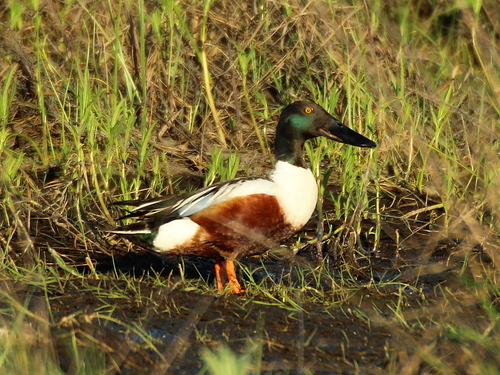
ハシビロガモ (Spatula clypeata) ハシビロガモ
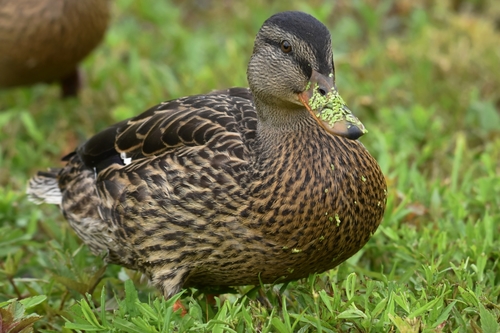
マガモ (Anas platyrhynchos) マガモ

メディア

読み込み中…

要点

フィールドでハシビロガモとマガモを区別する最も信頼できる方法は、構造によるものです。ハシビロガモのくちばしは非常に大きく、幅広でスパチュラ状であり、マガモのより典型的なくちばしとは異なります。飛行中、雌と日陰羽のハシビロガモは無地の灰色の前羽を示し、すべての年齢のマガモは白で縁取られた青いスペクulumを持っています。繁殖羽の成鳥のオスは、ハシビロガモの白い胸と栗色の側面と、マガモの灰色の体と栗色の胸で簡単に区別できます。両種の雌はまだらの茶色ですが、ハシビロガモのくちばしの形と色は独特です。サイズとジズも役立ちますが、構造と翼のパターンが最も良いフィールドマークです。

識別のコツ

  1. くちばしの形(すべての年齢/性別): ハシビロガモは巨大で幅広いスパチュラ状のくちばしを持ち、マガモのくちばしは短く、狭く、典型的なダブリングダックの形状です。これは、どんな距離でも最も信頼できるマークです。
  2. くちばしの色(雌): 雌のハシビロガモのくちばしは、切断エッジと下顎にオレンジ色の縁がある灰色です。雌のマガモのくちばしは、オレンジ色で暗い模様やまだらがあります。
  3. 飛行中の翼のパターン(雌、幼鳥、日陰のオス): ハシビロガモは、緑のスペクulumが白い縁で分けられた無地の灰色(雌)または淡い青(オス)の前羽を示します。マガモは常に白で縁取られた青いスペクulumを示し、静止しているときでもしばしば見えます。
  4. 成鳥のオスの羽色(繁殖): ハシビロガモのオスは、暗い緑の頭(マガモよりも光沢が少ない)、白い胸、栗色の側面、黒いくちばしを持っています。マガモのオスは、より明るい緑の頭、白い首輪、栗色の胸、灰色の体、黄色いくちばしを持っています。
  5. 成鳥の雌の羽色: 両者はまだらの茶色ですが、ハシビロガモのくちばしははるかに大きく、スパチュラ状です。マガモのくちばしは形状と色がより典型的です。
  6. 脚の色: 両者はオレンジからオレンジ赤の脚を持ち、信頼できる診断にはなりません。
  7. 採餌行動: ハシビロガモは、表面で左右にくちばしを振って食物を濾し取ることがよくあります。マガモはより典型的にダブリングし、この行動を示すことはまれです。
  8. 体のサイズと形状: マガモはより大きく、ずんぐりした体型で、ハシビロガモはより小さく、流線型ですが、重なりがあります。
  9. 頭の色(オス): 両者は繁殖羽で緑の頭を持っていますが、ハシビロガモの方が光沢が少なく、遠くから見ると黒っぽく見えることがあります。
  10. 日陰羽: オスのハシビロガモは雌に似ていますが、淡い青/灰色の前羽を保持します。日陰のマガモは雌のマガモに似ていますが、青いスペクulumと白い縁を保持します。
  11. 群れのサイズ: マガモは特に繁殖シーズン外で大きな群れで見られる可能性が高く、ハシビロガモはより小さなグループを形成する傾向があります。
  12. 生息地: 両者は類似の湿地を利用しますが、ハシビロガモは無脊椎動物が豊富な湿地を好み、マガモはより一般的で都市部でよく見られます。
  13. 幼鳥の混乱: 幼鳥のマガモはすぐに青いスペクulumを発達させ、幼鳥のハシビロガモは早い段階で独特のくちばしの形を持ち、区別を助けます。
  14. 静止時: 鳥が餌を食べたり飛んだりしていないときでも、くちばしの形とサイズは見えます。止まっている鳥や休んでいる鳥にこれを使用します。
  15. 落とし穴: 日陰や幼鳥の羽色では、両種は体のパターンが似て見えることがあります。確認のために常にくちばしの形と翼のパターンをチェックしてください。

大きさ

マガモはより大きく、重いダックです:通常、長さは50〜65 cm、翼幅は81〜98 cm、体重は0.7〜1.6 kgです。ハシビロガモはより小さく、軽く、長さは44〜52 cm、翼幅は70〜84 cm、体重は500〜800 g(まれに1 kgまで)です。フィールドでは、マガモはしばしばずんぐりして長い体に見え、ハシビロガモはより流線型で全体的にわずかに小さく見えます。ただし、サイズには重なりがあるため、これはあくまで補助的なマークです。

羽色

行動

ハシビロガモは、表面で左右にくちばしを振って小さな無脊椎動物を濾し取ることがよくあります。この採餌スタイルは独特で、マガモではあまり見られません。マガモはより典型的に植物材料や小動物のためにダブリングします。ハシビロガモは繁殖シーズン外ではあまり群れを作らず、小さな群れを形成しますが、マガモは非常に社交的でしばしば大きなグループに集まります。両種はダブリングダックで一緒に見られることがありますが、ハシビロガモの独特の採餌行動と頭を下げてくちばしを振る動きは強い行動の手がかりです。

生息環境

両種は広範囲に分布し、さまざまな湿地を利用しますが、ハシビロガモは無脊椎動物が豊富な泥底の湿地を好み、その特化したくちばしを活用します。マガモはより一般的で、ほぼすべての湿地、池、または緩やかに流れる川で見られ、都市部や郊外の公園で見られる可能性が高いです。両者は北半球全体で広く繁殖し、さらに南で冬を越し、マガモは人間が変えた生息地にさらに適応し、国際的です。

より良い説明を送る

比較と同じ項目を使ってください。文章はすぐに公開されます。

The most reliable way to separate Northern Shoveler from Mallard in the field is by structure: the shoveler’s bill is extremely large, broad, and spatulate, unlike the more typical duck bill of the Mallard. In flight, female and eclipse-plumaged shovelers show a plain grey forewing, while Mallards of all ages have a blue speculum bordered with white. Adult males in breeding plumage are easily told apart by the shoveler’s white chest and chestnut flanks, versus the Mallard’s grey body and chestnut breast. Females of both species are mottled brown, but the shoveler’s bill shape and color are distinctive. Size and jizz can help, but structure and wing pattern are the best field marks.

  1. Bill shape (all ages/sexes): Northern Shoveler has a huge, broad, spatulate bill; Mallard’s bill is shorter, narrower, and more typical of a dabbling duck. This is the single most reliable mark at any distance.
  2. Bill color (females): Female shoveler’s bill is grey with orange along the cutting edge and lower mandible; female Mallard’s bill is orange with dark markings or mottling.
  3. Wing pattern in flight (females, juveniles, eclipse males): Shoveler shows a plain grey (female) or pale blue (male) forewing with a green speculum separated by a white border; Mallard always shows a blue speculum bordered with white, often visible even at rest.
  4. Adult male plumage (breeding): Shoveler drake has a dark green head (less glossy than Mallard), white chest, chestnut flanks, and black bill; Mallard drake has a brighter green head, white neck ring, chestnut breast, grey body, and yellow bill.
  5. Adult female plumage: Both are mottled brown, but shoveler’s bill is much larger and more spatulate; Mallard’s bill is more typical in shape and color.
  6. Leg color: Both have orange to orange-red legs, not reliably diagnostic.
  7. Feeding behavior: Shovelers often feed by sweeping their bills side-to-side at the surface, filtering food; Mallards dabble more typically and rarely show this behavior.
  8. Body size and shape: Mallard is larger and bulkier; shoveler is smaller and more streamlined, but there is overlap.
  9. Head color (males): Both have green heads in breeding plumage, but the shoveler’s is less iridescent and can appear blackish at a distance or in poor light.
  10. Eclipse plumage: Male shoveler resembles female but keeps the pale blue/grey forewing; male Mallard in eclipse looks like female Mallard but retains the blue speculum and white borders.
  11. Flock size: Mallards are more likely to be seen in large flocks, especially outside breeding season; shovelers tend to form smaller groups.
  12. Habitat: Both use similar wetlands, but shovelers prefer invertebrate-rich marshes, while Mallards are more generalist and common in urban areas.
  13. Juvenile confusion: Juvenile Mallards quickly develop the blue speculum; juvenile shovelers have the distinctive bill shape early on, aiding separation.
  14. At rest: Bill shape and size are visible even when birds are not feeding or flying; use this for perched or loafing birds.
  15. Pitfalls: In eclipse or juvenile plumage, both species can look similar in body pattern; always check bill shape and wing pattern for confirmation.

Mallard is the larger and heavier duck: typically 50–65 cm in length with an 81–98 cm wingspan, and weighing 0.7–1.6 kg. Northern Shoveler is smaller and lighter, at 44–52 cm long, with a 70–84 cm wingspan, and weighing 500–800 g (rarely up to 1 kg). In the field, Mallards often look bulkier and longer-bodied, while shovelers appear more streamlined and slightly smaller overall. However, there is some overlap in size, so this is only a supporting mark.

  • Juvenile/immature/female in flight: Female and eclipse-plumaged Northern Shovelers show a plain grey forewing, lacking the blue speculum and white borders of Mallard. Mallards (all ages/sexes) have a blue speculum bordered with white, which is visible in flight and often at rest.
  • Adult male (breeding): Shoveler drake has a dark green (less iridescent than Mallard) head, white breast, chestnut belly/flanks, and a huge black bill. Mallard drake has a glossy green head, white neck ring, chestnut breast, grey body, and yellow bill.
  • Adult female: Both are mottled brown, but the shoveler’s bill is much longer, broader, and spatulate, with grey and orange tones; Mallard’s bill is orange with dark markings and more typical in shape. Female shoveler’s forewing is grey; female Mallard’s is brownish with blue speculum.
  • Eclipse plumage: Male shoveler resembles female but keeps the pale blue/grey forewing; male Mallard in eclipse resembles female Mallard but usually shows some retained blue speculum and white borders.

Northern Shovelers often feed by swinging their bills side-to-side at the water’s surface, filtering small invertebrates with their specialized lamellae. This feeding style is distinctive and less often seen in Mallards, which dabble more typically for plant material and small animals. Shovelers are less gregarious outside the breeding season, forming smaller flocks, while Mallards are highly social and often gather in large groups. Both species are dabbling ducks and can be seen together, but the shoveler’s unique feeding behavior and head-down, bill-swinging motion is a strong behavioral clue.

Both species are widespread and use a variety of wetlands, but Northern Shoveler prefers mud-bottomed marshes rich in invertebrates, taking advantage of its specialized bill. Mallards are more generalist, found in almost any wetland, pond, or slow-moving river, and are more likely in urban and suburban parks. Both breed widely across the Northern Hemisphere and winter further south, with Mallard being even more cosmopolitan and adaptable to human-altered habitats.

変更を破棄しますか?

保存していない編集があります。今離れると失われます。

ハシビロガモ · マガモ · 苦手な鳥