

Motmot

ハシビロガモ 対 ヒドリガモ

Spatula clypeata 対 Mareca penelope

ハシビロガモとヒドリガモのクイズ
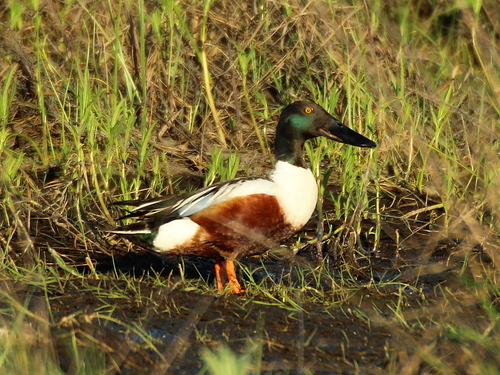
ハシビロガモ (Spatula clypeata) ハシビロガモ
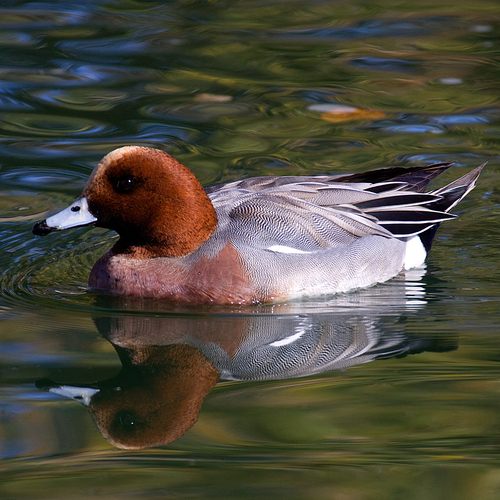
ヒドリガモ (Mareca penelope) ヒドリガモ

メディア

読み込み中…

要点

フィールドでハシビロガモとヒドリガモを区別する最も信頼できる方法は、くちばしの形です:ハシビロガモは巨大でスプーン状のくちばしを持ち、ヒドリガモは通常のアヒルのくちばしを持っています。飛行中、両種は淡い前羽を示しますが、ハシビロガモの前羽は青色で、ヒドリガモの前羽は鮮やかな白色です。雌やエクリプス羽衣のハシビロガモは雌のヒドリガモと混同されることがありますが、ハシビロガモのくちばしはすべての年齢と性別で独特です。繁殖羽衣の雄は頭の色と模様で簡単に区別できます。未成熟やエクリプスの個体はより難しいですが、翼の模様とくちばしの形は信頼できます。両者は水面での採餌行動や群れの傾向が異なります。

識別のコツ

  1. くちばしの形は最も信頼できる特徴です: ハシビロガモはすべての年齢と性別で巨大で広いスプーン状のくちばしを持ち、ヒドリガモは通常の緩やかに傾斜したアヒルのくちばしを持っています。くちばしがよく見える場合、これは診断的です。
  2. 飛行中は前羽の色を確認してください: ハシビロガモ(すべての年齢/性別)は淡い青(雄)または灰色(雌)の前羽を示し、緑のスペクルムと白い境界で分かれています;ヒドリガモ(すべての年齢/性別)は鮮やかな白い上羽の斑点と暗い緑のスペクルムを示します。これは特に雌や未成熟個体に役立ちます。
  3. 繁殖雄の頭の模様: ハシビロガモのオスは暗い緑(遠くから見ると黒く見えることが多い)頭と白い胸を持ち、ヒドリガモのオスは栗色の頭にクリーミーな冠とピンクの胸を持っています。これらは近距離で明らかです。
  4. 雌/エクリプスの混同: 両種の雌はまだらな茶色ですが、ハシビロガモの雌は広いオレンジがかったスプーン状のくちばしと飛行中の灰色の前羽を持ち、ヒドリガモの雌は通常のくちばしと白い上羽の斑点を持っています。
  5. エクリプスの雄: ハシビロガモのエクリプスの雄は雌に似ていますが、青い前羽を保持しています;ヒドリガモのエクリプスの雄は明るい頭の色を失いますが、白い上羽の斑点を保持します。
  6. 脚の色: ハシビロガモの脚は明るいオレンジ赤色です;これは遠くではあまり役立ちませんが、近くでの観察には役立ちます。
  7. 採餌行動: ハシビロガモは水面でくちばしを左右に振って小さな無脊椎動物を濾し取ることが多いです;ヒドリガモはより多くの草を食べ、あまり活発に水面で採餌しません。
  8. 群れ: ヒドリガモは大きく密集した群れで見られることが多いですが、ハシビロガモはあまり群れず、小さなグループで見られることが多いです。
  9. 生息地の文脈: 泥水から無脊椎動物を濾し取っているアヒルを見たら、ハシビロガモを疑ってください;草を食べている場合は、ヒドリガモを疑ってください。
  10. サイズは信頼できません: 両者は中型のダブリングダックであり、見かけのサイズが重なることがあります。
  11. 幼鳥/未成熟の混同: 飛行中は前羽の色(ハシビロガモは灰色、ヒドリガモは白)とくちばしの形に焦点を当ててください。
  12. 迷子の混同: 両種が稀な地域では、エクリプスのハシビロガモが雌のヒドリガモと混同されることがありますが、くちばしの形と前羽の色は信頼できます。
  13. スペクルムの色: 両者は緑のスペクルムを持っていますが、ハシビロガモのものは白と青/灰色の前羽で縁取られ、ヒドリガモのものは白い上羽の斑点で縁取られています。
  14. これらの情報源では信頼できる音声の違いは記載されていません。
  15. 疑わしい場合は、すべての年齢と性別に対して、飛行中のくちばしの形と前羽の色を優先してください。

大きさ

両種は長さと質量が似ています:ハシビロガモは44〜52 cmの長さで、翼幅は70〜84 cm、ヒドリガモは42〜52 cmの長さで、翼幅は71〜80 cmです。体重は広く重なります(ハシビロガモ500〜800 g、ヒドリガモ500〜1,073 g)。フィールドでは、サイズだけでは信頼できる区別にはならず、両者はダブリングダックの中で中型に見えることがあります。

羽色

行動

ハシビロガモは水面でくちばしを左右に振って小さな無脊椎動物を濾し取ることが多いです。繁殖シーズン外ではヒドリガモよりも群れを作らず、小さな群れを形成します。ヒドリガモはより多くの草を食べ、しばしば大きく密集した群れで見られます。ハシビロガモは水面での採餌や濾し取りが多いですが、ヒドリガモは草を食べたり、開けた水で泳いだりするのが見られます。

生息環境

両種は似た湿地生息地を利用しますが、ハシビロガモは無脊椎動物が豊富な泥底の湿地を好み、くちばしの適応が採餌の利点を与えます。ヒドリガモは水の近くや開けた湿地で草を食べているのが見られることが多いです。両者はユーラシア大陸に広く分布していますが、ハシビロガモの分布は北アメリカにさらに広がり、冬はさらに南に移動します。

より良い説明を送る

比較と同じ項目を使ってください。文章はすぐに公開されます。

The most reliable way to separate Northern Shoveler from Eurasian Wigeon in the field is by bill shape: shovelers have a huge, spatulate bill, while wigeons have a normal duck bill. In flight, both species show pale forewings, but the shoveler’s is blue and the wigeon’s is brilliant white. Female and eclipse-plumaged shovelers can be confused with female wigeons, but the shoveler’s bill remains distinctive at all ages and sexes. Males in breeding plumage are easily told apart by head color and pattern. Immature and eclipse birds are trickier, but wing pattern and bill shape remain reliable. Both are dabbling ducks, but their feeding behavior and flocking tendencies differ.

  1. Bill shape is the single most reliable mark: Northern Shoveler has a huge, broad, spatulate bill at all ages and sexes; Eurasian Wigeon has a normal, gently sloping duck bill. If you can see the bill well, this is diagnostic.
  2. In flight, check the forewing color: Shoveler (all ages/sexes) shows a pale blue (male) or grey (female) forewing, separated from a green speculum by a white border; Wigeon (all ages/sexes) shows a brilliant white upperwing patch and a dark green speculum. This is especially useful for females and immatures.
  3. Breeding male head pattern: Shoveler drake has a dark green (often looks black at distance) head and white breast; Wigeon drake has a chestnut head with a creamy crown and pink breast. These are obvious at close range.
  4. Female/eclipse confusion: Both species’ females are mottled brown, but shoveler females have a broad, orange-tinged spatulate bill and a grey forewing in flight; wigeon females have a normal bill and a white upperwing patch.
  5. Eclipse males: Shoveler eclipse males resemble females but retain the blue forewing; wigeon eclipse males lose bright head colors but keep the white upperwing patch.
  6. Leg color: Shoveler legs are bright orange-red; this is less useful at a distance but can help in close views.
  7. Feeding behavior: Shovelers often feed by sweeping their bills side to side at the water’s surface; wigeons graze more on land and dabble less actively.
  8. Flocking: Wigeons are more likely to be seen in large, dense flocks; shovelers are less gregarious and often in small groups.
  9. Habitat context: If you see a duck feeding by filtering invertebrates from muddy water, suspect shoveler; if grazing on grass, suspect wigeon.
  10. Size is not reliable: Both are medium-sized dabbling ducks and can overlap in apparent size.
  11. Juvenile/immature confusion: In flight, focus on the forewing color (grey in shoveler, white in wigeon) and bill shape.
  12. Vagrant confusion: In regions where both species are rare, eclipse shovelers can be confused with female wigeons, but the bill shape and forewing color remain reliable.
  13. Speculum color: Both have a green speculum, but the shoveler’s is bordered by white and blue/grey forewing, while wigeon’s is bordered by white upperwing patch.
  14. No reliable vocal differences noted in these sources.
  15. **When in doubt, prioritize bill shape and forewing color in flight for all ages and sexes."

Both species are similar in length and mass: Northern Shoveler measures 44–52 cm long with a wingspan of 70–84 cm, and Eurasian Wigeon is 42–52 cm long with a wingspan of 71–80 cm. Their weights overlap broadly (shoveler 500–800 g, wigeon 500–1,073 g). In the field, size alone is not a reliable separator, as both can appear medium-sized among dabbling ducks.

  • Juvenile/immature/first-winter: Both species’ females and immatures are mottled brown, but the shoveler’s bill is always broad and spatulate, while the wigeon’s is normal in shape. In flight, female/immature shovelers show a grey (not white) forewing, while wigeons show a bright white upperwing patch and a dark green speculum.
  • Adult breeding male: Shoveler drake has an iridescent dark green head, white breast, chestnut flanks, and a black spatulate bill. Wigeon drake has a chestnut head with a creamy crown, pink breast, grey flanks, and a normal bill. In flight, shoveler shows pale blue forewing and green speculum with a white border; wigeon shows a brilliant white upperwing patch and dark green speculum.
  • Eclipse/nonbreeding male: Both species’ males resemble their females, but the shoveler’s pale blue forewing remains, and the bill stays broad. Wigeon eclipse males lose the bright head colors but retain the white upperwing patch.

Northern Shovelers often feed by swinging their bills side to side at the water’s surface, straining small invertebrates with their specialized lamellae. They are less gregarious than wigeons outside the breeding season and form smaller flocks. Eurasian Wigeons graze more on land and are often seen in larger, tightly packed flocks. Shovelers are more likely to be seen dabbling or filtering in shallow water, while wigeons may be seen grazing on grass or swimming in open water.

Both species use similar wetland habitats, but shovelers prefer mud-bottomed marshes rich in invertebrates, where their bill adaptation gives them a feeding advantage. Wigeons are more likely to be seen grazing on grass near water or in open wetlands. Both are widespread in the Palearctic, but the shoveler’s range extends further into North America, and it winters further south.

変更を破棄しますか?

保存していない編集があります。今離れると失われます。

ハシビロガモ · ヒドリガモ · 苦手な鳥