

Motmot

ハシビロガモ 対 ホンケワタガモ

Spatula clypeata 対 Somateria mollissima

ハシビロガモとホンケワタガモのクイズ

ハシビロガモ (Spatula clypeata) ハシビロガモ
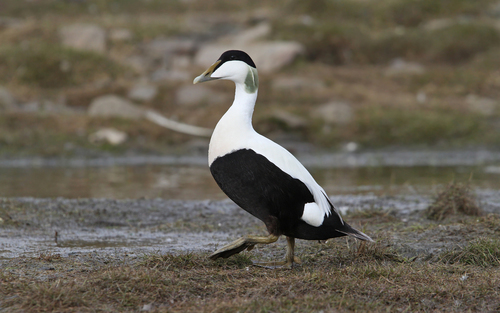
ホンケワタガモ (Somateria mollissima) ホンケワタガモ

メディア

読み込み中…

要点

The most reliable field mark between Northern Shoveler and Common Eider is the bill: shovelers have a long, broad, spatula-shaped bill, while eiders show a large, wedge-shaped bill and a much bulkier head. In flight, female shovelers show a pale blue forewing and green speculum, while female eiders lack this pattern and appear much larger and browner overall. Males are easily separated in breeding plumage, but eclipse or immature birds can cause confusion, especially at a distance or on water. Size, structure, and habitat are also strong clues: eiders are much heavier, bulkier, and strictly coastal, while shovelers are lighter, slimmer, and found on freshwater wetlands.

識別のコツ

  1. Bill shape is key: Northern Shoveler has a long, broad, flat 'spatula' bill, often with orange on the edges (female); Common Eider has a massive, wedge-shaped bill that merges smoothly with the sloping forehead. This is visible at all ages and sexes.
  2. Size and bulk: Eiders are much larger and heavier than shovelers. Even at a distance, eiders look thick-necked, deep-bodied, and heavy-billed, while shovelers are slim and medium-sized.
  3. Female/immature wing pattern in flight: Female and juvenile shovelers show a diagnostic pale blue forewing and green speculum, separated by white, visible in flight. Female and young eiders lack any blue or green in the wing and appear uniformly brown above.
  4. Male breeding plumage: Male shovelers have a dark green head, white breast, and chestnut flanks; male eiders are black and white with a green nape. These are unmistakable when seen well.
  5. Eclipse and immature males: Male shovelers in eclipse resemble females but always show the blue forewing in flight. Male eiders in eclipse are browner but still massive and heavy-billed.
  6. Head and neck shape: Eiders have a blocky head with a sloping forehead and thick neck; shovelers have a more rounded head and thinner neck.
  7. Leg color: Both species have orange or reddish legs, so this is not a useful separator.
  8. Feeding behavior: Shovelers dabble and filter at the surface, often swinging their bills side-to-side. Eiders dive underwater for food and surface with prey.
  9. Habitat context: Shovelers are freshwater marsh ducks; eiders are strictly coastal and marine. Location is a strong clue.
  10. Plumage confusion: Female shovelers can be confused with other brown ducks, but the bill shape and blue forewing are unique. Female eiders can only be confused with other eider species, not shovelers.
  11. Flock size and behavior: Eiders often form large, dense flocks on the sea; shovelers are less gregarious and usually in small groups.
  12. Voice: If heard, eider's 'ah-ooo' is distinctive; shoveler is quieter and less vocal.
  13. Juvenile confusion: Juvenile shovelers always show the blue forewing in flight; juvenile eiders are plain brown and lack this mark.
  14. Bill color: Female shovelers have a grey bill with orange edges; female eiders have a more uniform bill color matching the head.
  15. When in doubt, check the combination: If you see a brown duck with a huge spatula bill and blue forewing on a marsh, it's a shoveler. If it's a massive brown duck with a wedge bill on the sea, it's an eider.

大きさ

Common Eider is dramatically larger and heavier than Northern Shoveler. Eiders measure 50–71 cm in length and average over 2 kg in mass ([wikidata]), while shovelers are 44–52 cm long and weigh 500–800 g ([wikipedia]). Eiders are the largest northern duck, with a broad body, thick neck, and heavy, wedge-shaped bill. Shovelers are medium-sized dabbling ducks, noticeably slimmer and lighter in build. In direct comparison, even a large shoveler looks small and delicate next to a female eider.

羽色

Age and sex matter for both species, but especially for females and eclipse males. Female Northern Shovelers are mottled brown with a distinctive long, broad bill and a grey forewing; in flight, all ages show a pale blue forewing panel and green speculum separated by white, which is diagnostic. Female Common Eiders are also brown but are much larger, bulkier, and lack the blue forewing; their plumage is more uniformly barred or vermiculated, and the head is blockier with a sloping forehead. Male shovelers in breeding plumage have a dark green head, white breast, and chestnut flanks, while male eiders are strikingly black and white with a green nape. In eclipse, male shovelers resemble females but retain the blue forewing, while male eiders become browner but still appear larger and heavier than any shoveler. Juvenile shovelers look like females but always show the blue forewing in flight; young eiders are uniformly brown and lack any blue or green in the wing.

行動

Northern Shovelers are dabbling ducks, often seen swinging their bills side-to-side at the water's surface, filtering food with their specialized lamellae. They feed mostly in shallow, muddy freshwater marshes. Common Eiders are diving sea-ducks, feeding by diving for mollusks and crustaceans, especially mussels. Eiders are usually seen floating in large flocks on coastal waters, diving repeatedly. Shovelers are less gregarious and rarely form large flocks outside the breeding season. The feeding behavior is a strong clue: shovelers dabble and filter, eiders dive and swallow prey whole.

生息環境

Habitat is a major separator. Northern Shovelers are found on freshwater marshes, lakes, and shallow wetlands, rarely venturing to the sea. Common Eiders are strictly coastal, breeding and wintering along northern seashores, rocky coasts, and offshore islands; they are almost never found on inland freshwater except for rare introduced populations. If the bird is on a tidal shore, rocky coast, or in a large raft offshore, it is almost certainly an eider. If it is on a small inland pond or marsh, it is a shoveler.

声

Common Eider males have a distinctive, almost human-like 'ah-ooo' display call, while females give hoarse quacks. Northern Shoveler vocalizations are not described in the notes, but are generally quieter and less distinctive than eiders. Voice is not usually the primary field mark, but eider calls can be a useful supporting clue in coastal flocks.

より良い説明を送る

比較と同じ項目を使ってください。文章はすぐに公開されます。

The most reliable field mark between Northern Shoveler and Common Eider is the bill: shovelers have a long, broad, spatula-shaped bill, while eiders show a large, wedge-shaped bill and a much bulkier head. In flight, female shovelers show a pale blue forewing and green speculum, while female eiders lack this pattern and appear much larger and browner overall. Males are easily separated in breeding plumage, but eclipse or immature birds can cause confusion, especially at a distance or on water. Size, structure, and habitat are also strong clues: eiders are much heavier, bulkier, and strictly coastal, while shovelers are lighter, slimmer, and found on freshwater wetlands.

  1. Bill shape is key: Northern Shoveler has a long, broad, flat 'spatula' bill, often with orange on the edges (female); Common Eider has a massive, wedge-shaped bill that merges smoothly with the sloping forehead. This is visible at all ages and sexes.
  2. Size and bulk: Eiders are much larger and heavier than shovelers. Even at a distance, eiders look thick-necked, deep-bodied, and heavy-billed, while shovelers are slim and medium-sized.
  3. Female/immature wing pattern in flight: Female and juvenile shovelers show a diagnostic pale blue forewing and green speculum, separated by white, visible in flight. Female and young eiders lack any blue or green in the wing and appear uniformly brown above.
  4. Male breeding plumage: Male shovelers have a dark green head, white breast, and chestnut flanks; male eiders are black and white with a green nape. These are unmistakable when seen well.
  5. Eclipse and immature males: Male shovelers in eclipse resemble females but always show the blue forewing in flight. Male eiders in eclipse are browner but still massive and heavy-billed.
  6. Head and neck shape: Eiders have a blocky head with a sloping forehead and thick neck; shovelers have a more rounded head and thinner neck.
  7. Leg color: Both species have orange or reddish legs, so this is not a useful separator.
  8. Feeding behavior: Shovelers dabble and filter at the surface, often swinging their bills side-to-side. Eiders dive underwater for food and surface with prey.
  9. Habitat context: Shovelers are freshwater marsh ducks; eiders are strictly coastal and marine. Location is a strong clue.
  10. Plumage confusion: Female shovelers can be confused with other brown ducks, but the bill shape and blue forewing are unique. Female eiders can only be confused with other eider species, not shovelers.
  11. Flock size and behavior: Eiders often form large, dense flocks on the sea; shovelers are less gregarious and usually in small groups.
  12. Voice: If heard, eider's 'ah-ooo' is distinctive; shoveler is quieter and less vocal.
  13. Juvenile confusion: Juvenile shovelers always show the blue forewing in flight; juvenile eiders are plain brown and lack this mark.
  14. Bill color: Female shovelers have a grey bill with orange edges; female eiders have a more uniform bill color matching the head.
  15. When in doubt, check the combination: If you see a brown duck with a huge spatula bill and blue forewing on a marsh, it's a shoveler. If it's a massive brown duck with a wedge bill on the sea, it's an eider.

Common Eider is dramatically larger and heavier than Northern Shoveler. Eiders measure 50–71 cm in length and average over 2 kg in mass ([wikidata]), while shovelers are 44–52 cm long and weigh 500–800 g ([wikipedia]). Eiders are the largest northern duck, with a broad body, thick neck, and heavy, wedge-shaped bill. Shovelers are medium-sized dabbling ducks, noticeably slimmer and lighter in build. In direct comparison, even a large shoveler looks small and delicate next to a female eider.

Age and sex matter for both species, but especially for females and eclipse males. Female Northern Shovelers are mottled brown with a distinctive long, broad bill and a grey forewing; in flight, all ages show a pale blue forewing panel and green speculum separated by white, which is diagnostic. Female Common Eiders are also brown but are much larger, bulkier, and lack the blue forewing; their plumage is more uniformly barred or vermiculated, and the head is blockier with a sloping forehead. Male shovelers in breeding plumage have a dark green head, white breast, and chestnut flanks, while male eiders are strikingly black and white with a green nape. In eclipse, male shovelers resemble females but retain the blue forewing, while male eiders become browner but still appear larger and heavier than any shoveler. Juvenile shovelers look like females but always show the blue forewing in flight; young eiders are uniformly brown and lack any blue or green in the wing.

Northern Shovelers are dabbling ducks, often seen swinging their bills side-to-side at the water's surface, filtering food with their specialized lamellae. They feed mostly in shallow, muddy freshwater marshes. Common Eiders are diving sea-ducks, feeding by diving for mollusks and crustaceans, especially mussels. Eiders are usually seen floating in large flocks on coastal waters, diving repeatedly. Shovelers are less gregarious and rarely form large flocks outside the breeding season. The feeding behavior is a strong clue: shovelers dabble and filter, eiders dive and swallow prey whole.

Habitat is a major separator. Northern Shovelers are found on freshwater marshes, lakes, and shallow wetlands, rarely venturing to the sea. Common Eiders are strictly coastal, breeding and wintering along northern seashores, rocky coasts, and offshore islands; they are almost never found on inland freshwater except for rare introduced populations. If the bird is on a tidal shore, rocky coast, or in a large raft offshore, it is almost certainly an eider. If it is on a small inland pond or marsh, it is a shoveler.

Common Eider males have a distinctive, almost human-like 'ah-ooo' display call, while females give hoarse quacks. Northern Shoveler vocalizations are not described in the notes, but are generally quieter and less distinctive than eiders. Voice is not usually the primary field mark, but eider calls can be a useful supporting clue in coastal flocks.

変更を破棄しますか?

保存していない編集があります。今離れると失われます。

ハシビロガモ · ホンケワタガモ · 苦手な鳥