

Motmot

マキバタヒバリ 対 ムネアカヒワ

Anthus pratensis 対 Linaria cannabina

マキバタヒバリとムネアカヒワのクイズ
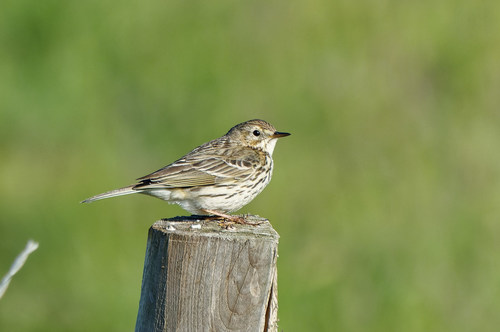
マキバタヒバリ (Anthus pratensis) マキバタヒバリ
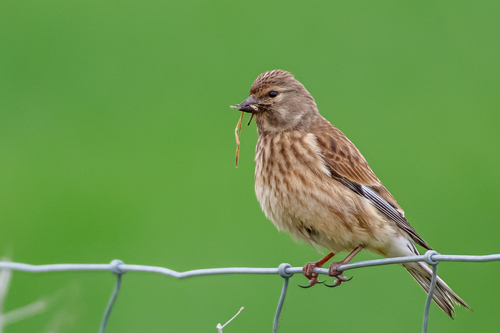
ムネアカヒワ (Linaria cannabina) ムネアカヒワ

メディア

読み込み中…

要点

The most reliable field mark between Meadow Pipit and Common Linnet is overall structure and bill shape: Meadow Pipit is a slim, long-clawed pipit with a thin bill, while Common Linnet is a finch with a thicker, conical bill and a longer tail. In flight or at rest, Meadow Pipit shows fine streaking below and a long hind claw, while Linnet (especially males in summer) may show red on the head and breast, but females and juveniles lack this and can be confusingly streaked. Focus on leg color, bill shape, and streaking pattern for the best separation, especially outside the breeding season when plumage differences are subtle.

識別のコツ

  1. Bill shape: Meadow Pipit has a thin, pointed bill; Common Linnet has a thicker, conical finch bill. This is often the quickest separator, especially at close range or in profile.
  2. Leg color and length: Meadow Pipit shows pale pinkish-yellow legs and a very long hind claw, which is longer than the hind toe. Linnet's legs are less conspicuous and the hind claw is not elongated.
  3. Tail pattern: Meadow Pipit has a brown tail with narrow white outer edges; Linnet's tail is longer and more evenly colored, without the crisp white edges.
  4. Underpart streaking: Meadow Pipit is finely streaked below (breast, flanks, belly), while Linnet (female/juvenile) has streaking mostly on the breast and a cleaner white belly.
  5. Red plumage: Only adult male Linnet in summer shows a red head-patch and breast. Any hint of red rules out Meadow Pipit, but absence of red does not confirm pipit, as female and juvenile Linnets lack it.
  6. Facial pattern: Meadow Pipit has a plain face with weak markings; Linnet may show a slightly greyer nape (in males) but is otherwise plain-faced in females and juveniles.
  7. Flight style: Meadow Pipit has a fluttery, undulating flight and often parachutes down during song; Linnet flies in bounding, finch-like arcs and often in flocks.
  8. Perching behavior: Meadow Pipit often walks or runs on the ground, rarely perching high; Linnet is more likely to perch on wires, bushes, or fence posts.
  9. Habitat context: Meadow Pipit is rarely in dense bushes or hedgerows; Linnet is often found in such habitats, especially outside the breeding season.
  10. Voice: Meadow Pipit's 'tsi-tsi' call is faint and high-pitched; Linnet's calls are not described here, so use with caution.
  11. Size impression: Linnet can appear more robust and longer-tailed, but size alone is unreliable due to overlap.
  12. Seasonal confusion: In winter or with juveniles, both species can appear drab and streaky; focus on bill shape, leg color, and hind claw length in these cases.
  13. Song flight: If you see a bird rising and parachuting down while singing, it's likely a Meadow Pipit; Linnet does not perform this display.
  14. Group behavior: Linnet often forms flocks, especially in autumn and winter; Meadow Pipit may gather in loose groups but is less gregarious.
  15. Pitfall: Female and juvenile Linnets are the most likely to be confused with Meadow Pipit; always check for bill shape and leg color before relying on streaking pattern alone.

大きさ

Both species are similar in overall size, but Meadow Pipit is slightly lighter (15–22 g) compared to Common Linnet (about 19 g) [wikipedia][wikidata]. Linnet may appear more robust and longer-tailed, while Meadow Pipit is more slender and delicate, especially in the legs and bill.

羽色

Juvenile and female Common Linnets lack the red head and breast of adult males, making them more similar to Meadow Pipit. Meadow Pipit of all ages is brown above and buff below with fine, dark streaking on the underparts and upperparts, and a narrow white edge to the tail. Linnet (female/juvenile) is brown above, white below with buff streaks on the breast, but the streaking is generally less fine and more limited to the breast, with a cleaner white belly. Meadow Pipit always shows a long, pale pinkish-yellow leg and a very long hind claw, which Linnet lacks. Adult male Linnet in summer is distinctive with a red head-patch and breast, but this is absent in other ages and seasons. Both species can look similar in dull plumage, but Meadow Pipit is always more finely streaked and lacks any red tones.

行動

Meadow Pipit often walks or runs on the ground, frequently pumping its tail and showing a fluttery, undulating flight with occasional parachuting song flights. Linnet is more likely to perch upright on bushes or wires and feeds both on the ground and in low vegetation, but with a more bounding, finch-like flight. Meadow Pipit is more likely to be seen in open fields and grasslands, while Linnet often forms flocks and may be seen in hedgerows or weedy areas.

生息環境

Meadow Pipit prefers open country, grasslands, moorlands, and coastal marshes, often far from trees or dense cover. Common Linnet is more associated with farmland, hedgerows, scrub, and weedy areas, and is less likely to be found in open, treeless grassland. Overlap can occur in agricultural landscapes, but Meadow Pipit is rarely in dense bushes, while Linnet often is.

声

Meadow Pipit gives a faint 'tsi-tsi' call and a simple, repetitive song that accelerates towards the end, often delivered in a short song flight. Linnet's song and calls are not described in the provided notes, so vocalization is not a reliable separator here.

より良い説明を送る

比較と同じ項目を使ってください。文章はすぐに公開されます。

The most reliable field mark between Meadow Pipit and Common Linnet is overall structure and bill shape: Meadow Pipit is a slim, long-clawed pipit with a thin bill, while Common Linnet is a finch with a thicker, conical bill and a longer tail. In flight or at rest, Meadow Pipit shows fine streaking below and a long hind claw, while Linnet (especially males in summer) may show red on the head and breast, but females and juveniles lack this and can be confusingly streaked. Focus on leg color, bill shape, and streaking pattern for the best separation, especially outside the breeding season when plumage differences are subtle.

  1. Bill shape: Meadow Pipit has a thin, pointed bill; Common Linnet has a thicker, conical finch bill. This is often the quickest separator, especially at close range or in profile.
  2. Leg color and length: Meadow Pipit shows pale pinkish-yellow legs and a very long hind claw, which is longer than the hind toe. Linnet's legs are less conspicuous and the hind claw is not elongated.
  3. Tail pattern: Meadow Pipit has a brown tail with narrow white outer edges; Linnet's tail is longer and more evenly colored, without the crisp white edges.
  4. Underpart streaking: Meadow Pipit is finely streaked below (breast, flanks, belly), while Linnet (female/juvenile) has streaking mostly on the breast and a cleaner white belly.
  5. Red plumage: Only adult male Linnet in summer shows a red head-patch and breast. Any hint of red rules out Meadow Pipit, but absence of red does not confirm pipit, as female and juvenile Linnets lack it.
  6. Facial pattern: Meadow Pipit has a plain face with weak markings; Linnet may show a slightly greyer nape (in males) but is otherwise plain-faced in females and juveniles.
  7. Flight style: Meadow Pipit has a fluttery, undulating flight and often parachutes down during song; Linnet flies in bounding, finch-like arcs and often in flocks.
  8. Perching behavior: Meadow Pipit often walks or runs on the ground, rarely perching high; Linnet is more likely to perch on wires, bushes, or fence posts.
  9. Habitat context: Meadow Pipit is rarely in dense bushes or hedgerows; Linnet is often found in such habitats, especially outside the breeding season.
  10. Voice: Meadow Pipit's 'tsi-tsi' call is faint and high-pitched; Linnet's calls are not described here, so use with caution.
  11. Size impression: Linnet can appear more robust and longer-tailed, but size alone is unreliable due to overlap.
  12. Seasonal confusion: In winter or with juveniles, both species can appear drab and streaky; focus on bill shape, leg color, and hind claw length in these cases.
  13. Song flight: If you see a bird rising and parachuting down while singing, it's likely a Meadow Pipit; Linnet does not perform this display.
  14. Group behavior: Linnet often forms flocks, especially in autumn and winter; Meadow Pipit may gather in loose groups but is less gregarious.
  15. Pitfall: Female and juvenile Linnets are the most likely to be confused with Meadow Pipit; always check for bill shape and leg color before relying on streaking pattern alone.

Both species are similar in overall size, but Meadow Pipit is slightly lighter (15–22 g) compared to Common Linnet (about 19 g) [wikipedia][wikidata]. Linnet may appear more robust and longer-tailed, while Meadow Pipit is more slender and delicate, especially in the legs and bill.

Juvenile and female Common Linnets lack the red head and breast of adult males, making them more similar to Meadow Pipit. Meadow Pipit of all ages is brown above and buff below with fine, dark streaking on the underparts and upperparts, and a narrow white edge to the tail. Linnet (female/juvenile) is brown above, white below with buff streaks on the breast, but the streaking is generally less fine and more limited to the breast, with a cleaner white belly. Meadow Pipit always shows a long, pale pinkish-yellow leg and a very long hind claw, which Linnet lacks. Adult male Linnet in summer is distinctive with a red head-patch and breast, but this is absent in other ages and seasons. Both species can look similar in dull plumage, but Meadow Pipit is always more finely streaked and lacks any red tones.

Meadow Pipit often walks or runs on the ground, frequently pumping its tail and showing a fluttery, undulating flight with occasional parachuting song flights. Linnet is more likely to perch upright on bushes or wires and feeds both on the ground and in low vegetation, but with a more bounding, finch-like flight. Meadow Pipit is more likely to be seen in open fields and grasslands, while Linnet often forms flocks and may be seen in hedgerows or weedy areas.

Meadow Pipit prefers open country, grasslands, moorlands, and coastal marshes, often far from trees or dense cover. Common Linnet is more associated with farmland, hedgerows, scrub, and weedy areas, and is less likely to be found in open, treeless grassland. Overlap can occur in agricultural landscapes, but Meadow Pipit is rarely in dense bushes, while Linnet often is.

Meadow Pipit gives a faint 'tsi-tsi' call and a simple, repetitive song that accelerates towards the end, often delivered in a short song flight. Linnet's song and calls are not described in the provided notes, so vocalization is not a reliable separator here.

変更を破棄しますか?

保存していない編集があります。今離れると失われます。

マキバタヒバリ · ムネアカヒワ · 苦手な鳥