

Motmot

シロハラチャビタキ 対 ウスチャヒタキ

Bradornis mariquensis 対 Agricola pallidus

シロハラチャビタキとウスチャヒタキのクイズ
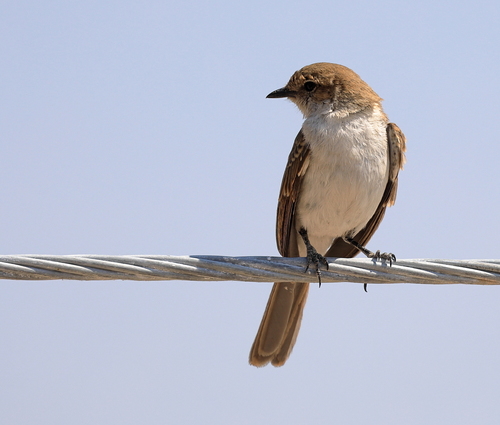
シロハラチャビタキ (Bradornis mariquensis) シロハラチャビタキ
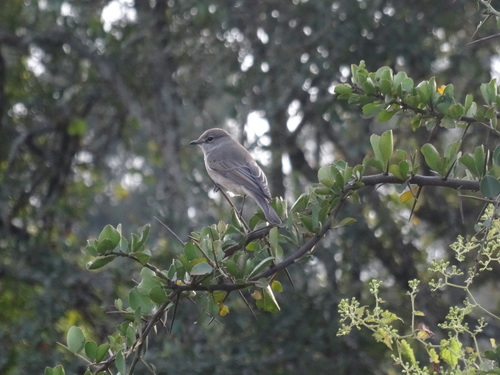
ウスチャヒタキ (Agricola pallidus) ウスチャヒタキ

メディア

読み込み中…

要点

The Marico Flycatcher and Pale Flycatcher are both plain, medium-small Muscicapids of southern Africa, easily confused due to their overall drab appearance. No distinctive age-specific wing patterns are documented for either species, so separation relies on subtle differences in structure and general coloration. Marico Flycatcher is slightly heavier and tends to appear darker and more contrasting, while Pale Flycatcher is lighter, paler, and more washed-out overall. Both species overlap in much of their range and habitat, so careful attention to structure and subtle plumage tones is essential.

識別のコツ

  1. Overall color tone: Marico Flycatcher is generally darker and more contrasting, especially on the upperparts, while Pale Flycatcher is paler and more washed-out. This is the most consistently reported difference, but can be subtle in poor light or worn plumage.
  2. Underparts: Pale Flycatcher typically shows paler, more uniform underparts, lacking the slight contrast sometimes seen in Marico Flycatcher.
  3. Upperparts: Marico Flycatcher may appear slightly browner or greyer above, with a more defined contrast to the paler underparts, while Pale Flycatcher is more uniform and less contrasting overall.
  4. Size: Marico Flycatcher is marginally heavier, but this is not a field mark unless birds are seen together.
  5. Bill and structure: No clear differences are documented in the sources, so do not rely on bill shape or length for separation.
  6. Wing pattern: Neither species shows distinctive age-specific wing or flight marks, so do not expect to separate them in flight by upperwing pattern.
  7. Tail: No diagnostic tail shape or length differences are described.
  8. Behavior: Both species behave similarly, so flight style and feeding behavior are not helpful for separation.
  9. Habitat: Both species overlap in habitat; do not use habitat alone for identification.
  10. Voice: No vocal differences are described in the sources provided; do not rely on calls or song for separation.
  11. Juvenile/immature plumage: No distinctive marks are reported for young birds of either species; age is not a separator.
  12. Lighting and wear: Be aware that lighting conditions and feather wear can obscure the subtle color differences between these species.
  13. Geographic context: Both species occur widely in southern Africa; range is not a reliable separator within their overlap zone.
  14. Sexual dimorphism: No sex-based plumage differences are described for either species.
  15. Summary tip: Focus on overall impression of darkness and contrast (Marico) versus paleness and uniformity (Pale), but expect some individuals to be ambiguous.

大きさ

Marico Flycatcher averages a bit heavier (25.0g) than Pale Flycatcher (23.0g) [wikidata], but this difference is slight and unlikely to be obvious in the field. Both are medium-small flycatchers, and size alone is not a reliable field mark unless seen side-by-side.

羽色

No sources describe distinctive juvenile, immature, or age-specific upperwing or flight marks for either species. Both are generally plain, but Marico Flycatcher tends to be darker and more contrasting, especially on the upperparts, while Pale Flycatcher is paler and more uniform, with a washed-out appearance. Underparts of Pale Flycatcher are lighter and less marked, while Marico may show slightly more contrast between upperparts and underparts. These differences are subtle and can be affected by light and wear.

行動

Both species behave as typical flycatchers, sallying from exposed perches to catch insects. No distinctive behavioral differences are noted in the sources provided.

生息環境

Both species occur in open woodland and savanna habitats in southern and sub-Saharan Africa [wikipedia]. Habitat alone is not a reliable separator, as their ranges and preferred environments overlap considerably.

より良い説明を送る

比較と同じ項目を使ってください。文章はすぐに公開されます。

The Marico Flycatcher and Pale Flycatcher are both plain, medium-small Muscicapids of southern Africa, easily confused due to their overall drab appearance. No distinctive age-specific wing patterns are documented for either species, so separation relies on subtle differences in structure and general coloration. Marico Flycatcher is slightly heavier and tends to appear darker and more contrasting, while Pale Flycatcher is lighter, paler, and more washed-out overall. Both species overlap in much of their range and habitat, so careful attention to structure and subtle plumage tones is essential.

  1. Overall color tone: Marico Flycatcher is generally darker and more contrasting, especially on the upperparts, while Pale Flycatcher is paler and more washed-out. This is the most consistently reported difference, but can be subtle in poor light or worn plumage.
  2. Underparts: Pale Flycatcher typically shows paler, more uniform underparts, lacking the slight contrast sometimes seen in Marico Flycatcher.
  3. Upperparts: Marico Flycatcher may appear slightly browner or greyer above, with a more defined contrast to the paler underparts, while Pale Flycatcher is more uniform and less contrasting overall.
  4. Size: Marico Flycatcher is marginally heavier, but this is not a field mark unless birds are seen together.
  5. Bill and structure: No clear differences are documented in the sources, so do not rely on bill shape or length for separation.
  6. Wing pattern: Neither species shows distinctive age-specific wing or flight marks, so do not expect to separate them in flight by upperwing pattern.
  7. Tail: No diagnostic tail shape or length differences are described.
  8. Behavior: Both species behave similarly, so flight style and feeding behavior are not helpful for separation.
  9. Habitat: Both species overlap in habitat; do not use habitat alone for identification.
  10. Voice: No vocal differences are described in the sources provided; do not rely on calls or song for separation.
  11. Juvenile/immature plumage: No distinctive marks are reported for young birds of either species; age is not a separator.
  12. Lighting and wear: Be aware that lighting conditions and feather wear can obscure the subtle color differences between these species.
  13. Geographic context: Both species occur widely in southern Africa; range is not a reliable separator within their overlap zone.
  14. Sexual dimorphism: No sex-based plumage differences are described for either species.
  15. Summary tip: Focus on overall impression of darkness and contrast (Marico) versus paleness and uniformity (Pale), but expect some individuals to be ambiguous.

Marico Flycatcher averages a bit heavier (25.0g) than Pale Flycatcher (23.0g) [wikidata], but this difference is slight and unlikely to be obvious in the field. Both are medium-small flycatchers, and size alone is not a reliable field mark unless seen side-by-side.

No sources describe distinctive juvenile, immature, or age-specific upperwing or flight marks for either species. Both are generally plain, but Marico Flycatcher tends to be darker and more contrasting, especially on the upperparts, while Pale Flycatcher is paler and more uniform, with a washed-out appearance. Underparts of Pale Flycatcher are lighter and less marked, while Marico may show slightly more contrast between upperparts and underparts. These differences are subtle and can be affected by light and wear.

Both species behave as typical flycatchers, sallying from exposed perches to catch insects. No distinctive behavioral differences are noted in the sources provided.

Both species occur in open woodland and savanna habitats in southern and sub-Saharan Africa [wikipedia]. Habitat alone is not a reliable separator, as their ranges and preferred environments overlap considerably.

変更を破棄しますか?

保存していない編集があります。今離れると失われます。

シロハラチャビタキ · ウスチャヒタキ · 苦手な鳥