

Motmot

アメリカグンカンドリ 対 カツオドリ

Fregata magnificens 対 Sula leucogaster

アメリカグンカンドリとカツオドリのクイズ
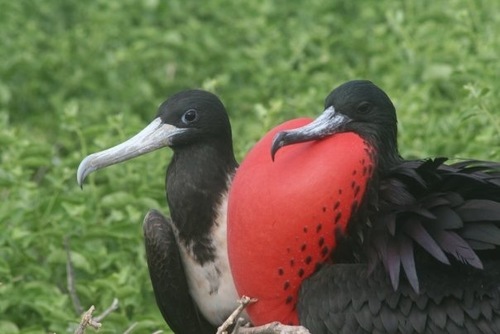
アメリカグンカンドリ (Fregata magnificens) アメリカグンカンドリ
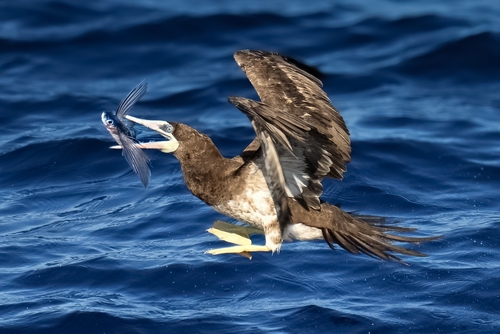
カツオドリ (Sula leucogaster) カツオドリ

メディア

読み込み中…

要点

アメリカグンカンドリとカツオドリを区別する最も信頼できるフィールドマークは、全体の構造と飛行シルエットです:アメリカグンカンドリは巨大で細長く、非常に長い角ばった翼と深く分かれた尾を持ち、一方カツオドリはずんぐりしていて、短く幅広い翼とまっすぐで尖った尾を持っています。幼鳥のアメリカグンカンドリは、特徴的な白い頭と腹部、ダイヤモンド形の白い腹部パッチを示しますが、幼鳥のカツオドリはすでに成鳥に似ており、上面は茶色で腹部は白ですが、はっきりとした腹部パッチはありません。両種の成鳥のオスは主に上面が暗いですが、アメリカグンカンドリの長い鎌のような翼と赤い喉袋(繁殖期のオス)は独特です。両種のメスは白い腹部を示しますが、アメリカグンカンドリのメスは診断的な青いアイリングとより広範な白い胸部を持っています。飛行中、アメリカグンカンドリのシルエットは、カツオドリのより典型的な海鳥の形と比べて明確です。

識別のコツ

  1. Flight silhouette is the fastest check: アメリカグンカンドリは非常に長く、狭く、角ばった翼と深く分かれた尾を持ち、'鎌'または'M'形のアウトラインを形成します;カツオドリは短く、幅広い翼とまっすぐで尖った尾を持っています。
  2. Juvenile/immature plumage: 幼鳥のアメリカグンカンドリは白い頭と腹部を持ち、はっきりとしたダイヤモンド形の白い腹部パッチがあります;幼鳥のカツオドリは上面が茶色で腹部が白ですが、はっきりとした腹部パッチはなく、腹部に茶色の斑点があります。
  3. Adult male plumage: オスのアメリカグンカンドリは全体が黒で紫の光沢があり、繁殖期には赤い喉袋があります;オスのカツオドリは上面が濃い茶色で腹部が白、青い眼窩リングがありますが、赤い袋はありません。
  4. Adult female plumage: メスのアメリカグンカンドリは黒で白い胸部と首の下側を持ち、翼には茶色の帯があり、青いアイリングがあります;メスのカツオドリは上面が茶色で腹部が白、黄色の眼窩リングがあり、青いアイリングと白い胸部パッチはありません。
  5. Tail shape: アメリカグンカンドリの尾は長く深く分かれており、飛行中は閉じられて尖って見えることがよくあります;カツオドリの尾はまっすぐで尖っていますが、決して分かれていません。
  6. Bill and head shape: アメリカグンカンドリは長く細いフック状のくちばしと体に対して小さな頭を持っています;カツオドリはより厚く、ダガーのようなくちばしとより頑丈な頭を持っています。
  7. Behavior in flight: アメリカグンカンドリは最小限の羽ばたきで高く滑空し、ほとんど羽ばたかず、ほとんど水面に座っているのは見られません。他の海鳥を食べ物のためにいじめることが多く(盗食行動)、数日間空中にいることができます。対照的に、カツオドリは急速な羽ばたきで飛び、水面近くを飛んで魚を捕まえたり、岩やブイに止まったりすることがよくあります。カツオドリは水面で泳いだり休んだりしているのが見られることが多いです。
  8. Perched posture: アメリカグンカンドリは繁殖コロニー以外ではほとんど止まらず、水面にいるのはほとんど見られません;カツオドリはしばしば岩、ブイ、または船に止まっているのが見られ、泳いでいるのが見られることもあります。
  9. Underwing pattern: 現在のメモでは診断的ではありませんが、アメリカグンカンドリの下翼は成鳥では均一に暗いですが、カツオドリは対照的な暗い上面と白い腹部を示します。
  10. Bare part color: メスのアメリカグンカンドリは青いアイリングがあります;オスのカツオドリは青い眼窩リングを持ち、メスのカツオドリは黄色の眼窩リングを持っています。これらは遠くから見るのが難しいことがあるため、注意して使用してください。
  11. Size impression: アメリカグンカンドリは飛行中にずっと大きく、より細長く見え、翼幅は最大2.4 mです;カツオドリはずんぐりしていて、翼が短いです。
  12. Habitat context: アメリカグンカンドリは開放的な海や沿岸上空を高く滑空しているのが見られることが多く、コロニー以外ではほとんど陸に近づきません;カツオドリはしばしば岸近くで見られ、内陸の水域で餌を探し、船、ブイ、または岩に止まっているのが見られることが多いです。
  13. Kleptoparasitic behavior: アメリカグンカンドリだけが他の鳥を追いかけて空中で食べ物を盗むのが見られます。
  14. Vocalization: フィールドでの区別には役立ちません;両種とも飛行中は静かです。
  15. Pitfalls: メスと幼鳥のアメリカグンカンドリは遠くから見ると茶色と白のカツオドリと混同されることがありますが、アメリカグンカンドリでは分かれた尾、長い翼、白い頭/ダイヤモンド腹部パッチを探してください。カツオドリは決して分かれた尾や'鎌'の翼の形を示しません。

大きさ

アメリカグンカンドリはカツオドリよりもはるかに大きく、より軽量です。アメリカグンカンドリは89〜114 cmの長さで、翼幅は2.17〜2.44 mに達しますが、カツオドリは75〜80 cmの長さで、翼幅は最大1.5 mです。カツオドリは体重が重い(体重約1266 g)ですが、アメリカグンカンドリの翼ははるかに長く、狭く、尾ははるかに深く分かれています。フィールドでは、アメリカグンカンドリは特に飛行中に大きく、より細長く見えます。

羽色

幼鳥のアメリカグンカンドリ(および幼鳥)は、特徴的なダイヤモンド形の白い腹部パッチを持つ非常に淡い頭と白い腹部を持ち、これはすでに上面が茶色で腹部が白の幼鳥のカツオドリと鮮やかに対比しますが、茶色の斑点があり、はっきりとした腹部パッチはありません。成鳥のオスのアメリカグンカンドリは全体が黒で紫の光沢があり、繁殖期には明るい赤い喉袋がありますが、成鳥のオスのカツオドリは上面が濃い茶色で腹部が白、青い眼窩リングがあります。成鳥のメスのアメリカグンカンドリは黒で白い胸部と首の下側を持ち、茶色の翼の帯と診断的な青いアイリングがあります;メスのカツオドリはパターンが似ており(上面が茶色、腹部が白)ですが、黄色の眼窩リングがあり、白い胸部パッチと青いアイリングはありません。アメリカグンカンドリはカツオドリのはっきりと区別された茶色と白の'ベスト'の外観を示すことはありません。すべての年齢において、アメリカグンカンドリはカツオドリの鋭く尖った尾を欠き、代わりに長く深く分かれた尾を持っています。

行動

アメリカグンカンドリはほとんど常に高く滑空したり、楽に滑空したりしているのが見られ、ほとんど羽ばたかず、水面に座っているのはほとんど見られません。他の海鳥を食べ物のためにいじめることが多く(盗食行動)、数日間空中にいることができます。対照的に、カツオドリは急速な羽ばたきで飛び、水面近くを飛んで魚を捕まえたり、岩やブイに止まったりすることがよくあります。カツオドリは水面で泳いだり休んだりしているのが見られることが多いです。

生息環境

両種は熱帯および亜熱帯の水域に生息し、しばしば範囲が重なります。アメリカグンカンドリは通常、沖合で遠くに見られたり、沿岸の水域を滑空したりし、繁殖コロニー以外ではほとんど着陸しません。カツオドリは岸近くで見られることが多く、内陸の水域で餌を探し、船、ブイ、または岩に止まっているのが見られることが多いです。

声

どちらの種も飛行中は声を出しません。アメリカグンカンドリは飛行中は静かですが、巣ではガラガラ音を出します。カツオドリも通常は静かですが、巣ではうなり声やクワック音を出すことがあります。音声は遠くからのフィールドでの区別には役立ちません。

より良い説明を送る

比較と同じ項目を使ってください。文章はすぐに公開されます。

The most reliable field mark to separate Magnificent Frigatebird from Brown Booby is overall structure and flight silhouette: frigatebirds are huge, slender, with extremely long, angular wings and a deeply forked tail, while boobies are stockier with shorter, broader wings and a straight, pointed tail. Juvenile Magnificent Frigatebirds show a distinctive white head and underparts with a diamond-shaped white belly patch, while juvenile Brown Boobies already resemble adults, with brown upperparts and white bellies but no sharply defined belly patch. Adult males of both are mostly dark above, but the frigatebird's long, scythe-like wings and red throat pouch (in breeding males) are unique. Females of both species show white underparts, but the frigatebird female has a diagnostic blue eye-ring and a more extensive white breast. In flight, the frigatebird's silhouette is unmistakable compared to the booby's more typical seabird shape.

  1. Flight silhouette is the fastest check: Magnificent Frigatebird shows extremely long, narrow, angular wings and a deeply forked tail, giving a 'scythe' or 'M'-shaped outline; Brown Booby has shorter, broader wings and a straight, pointed tail.
  2. Juvenile/immature plumage: Juvenile Magnificent Frigatebirds have a white head and underparts with a sharply defined, diamond-shaped white belly patch; juvenile Brown Boobies are brown above and white below, but lack a sharply defined belly patch and show brown flecking on the underparts.
  3. Adult male plumage: Male Magnificent Frigatebird is all black with a purple sheen and, in breeding season, a red gular pouch; male Brown Booby is dark brown above and white below, with a blue orbital ring but never a red pouch.
  4. Adult female plumage: Female Magnificent Frigatebird is black with a white breast and lower neck sides, a brown band on the wings, and a blue eye-ring; female Brown Booby is brown above, white below, with a yellow orbital ring and lacks the blue eye-ring and white breast patch.
  5. Tail shape: Frigatebird's tail is long and deeply forked, often held closed in flight to appear pointed; Brown Booby's tail is straight and pointed but never forked.
  6. Bill and head shape: Frigatebird has a long, slender, hooked bill and a small head relative to body; booby has a thicker, dagger-like bill and a more robust head.
  7. Behavior in flight: Frigatebird soars and glides with minimal flapping, often at great height; booby flies with rapid, deep wingbeats and is usually seen flying low over water.
  8. Perched posture: Frigatebirds rarely perch except at breeding colonies, and are almost never seen on the water; boobies often perch on rocks, buoys, or ships and may be seen swimming.
  9. Underwing pattern: Not diagnostic with current notes, but frigatebird's underwing is uniformly dark in adults, while booby shows contrasting dark upperparts and white underparts.
  10. Bare part color: Female frigatebird has a blue eye-ring; male booby has a blue orbital ring, female booby has a yellow orbital ring. Use with caution as these can be hard to see at a distance.
  11. Size impression: Frigatebird appears much larger and more elongated in flight, with a wingspan up to 2.4 m; booby is stockier and shorter-winged.
  12. Habitat context: Frigatebirds are more likely to be seen soaring high over open ocean or coast, rarely near land except at colonies; boobies are often seen near shore, perched, or diving.
  13. Kleptoparasitic behavior: Only frigatebirds are seen chasing other birds to steal food in flight.
  14. Vocalization: Not useful for field separation; both are silent in flight.
  15. Pitfalls: Female and immature frigatebirds can be confused with brown-and-white boobies at a distance, but look for the forked tail, long wings, and white head/diamond belly patch in frigatebirds. Boobies never show a forked tail or the 'scythe' wing shape.

Magnificent Frigatebird is much larger and more lightly built than Brown Booby. Frigatebirds reach 89–114 cm in length with a wingspan of 2.17–2.44 m, while Brown Boobies are 75–80 cm long with a wingspan up to 1.5 m. The booby is heavier-bodied (body mass around 1266 g), but the frigatebird's wings are much longer and narrower, and its tail is much more deeply forked. In the field, the frigatebird appears both larger and more elongated, especially in flight.

Juvenile Magnificent Frigatebirds (and immatures) are strikingly pale-headed and white below, with a distinctive diamond-shaped white belly patch—this sharply contrasts with juvenile Brown Boobies, which are already brown above and white below, but with brown flecking and no sharply defined belly patch. Adult male Magnificent Frigatebirds are all black with a purple sheen and a bright red gular pouch in breeding season, while adult male Brown Boobies are dark brown above and white below, with a blue orbital ring. Adult female frigatebirds are black with a white breast and lower neck sides, a brown wing band, and a diagnostic blue eye-ring; female Brown Boobies are similar in pattern (brown above, white below) but have a yellow orbital ring and lack the white breast patch and blue eye-ring. The frigatebird never shows the sharply demarcated brown-and-white 'vest' look of the booby. In all ages, the frigatebird lacks the booby's sharply pointed tail and instead has a long, deeply forked tail.

Magnificent Frigatebirds are almost always seen soaring high or gliding effortlessly, rarely flapping, and almost never seen sitting on the water. They often harass other seabirds for food (kleptoparasitism) and can spend days aloft. Brown Boobies, in contrast, fly with rapid wingbeats and are often seen flying low over the water, diving for fish, or perched on rocks and buoys. Boobies are much more likely to be seen swimming or resting on the water's surface.

Both species occur over tropical and subtropical waters, often overlapping in range. Magnificent Frigatebirds are usually seen far offshore or soaring over coastal waters, rarely landing except at breeding colonies. Brown Boobies are more often seen closer to shore, foraging over inshore waters, and are more likely to be seen perched on ships, buoys, or rocks.

Neither species is vocal in flight. Magnificent Frigatebirds are silent when flying but make rattling sounds at the nest. Brown Boobies are also usually silent but may grunt or quack at the nest. Vocalizations are not useful for field separation at a distance.

変更を破棄しますか?

保存していない編集があります。今離れると失われます。

アメリカグンカンドリ · カツオドリ · 苦手な鳥