

Motmot

マカロニペンギン 対 ロイヤルペンギン

Eudyptes chrysolophus 対 Eudyptes schlegeli

マカロニペンギンとロイヤルペンギンのクイズ
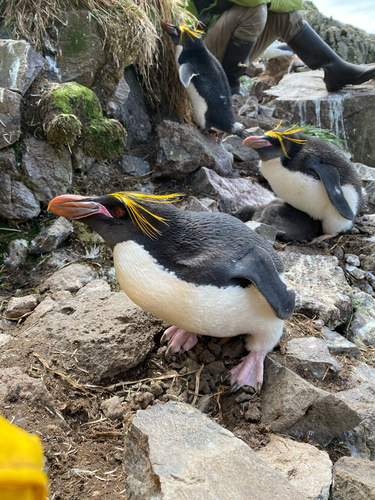
マカロニペンギン (Eudyptes chrysolophus) マカロニペンギン
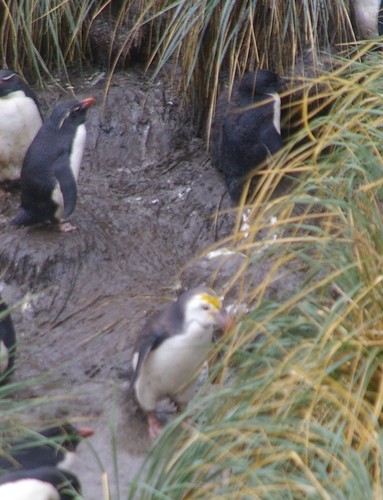
ロイヤルペンギン (Eudyptes schlegeli) ロイヤルペンギン

メディア

読み込み中…

要点

The single most reliable field mark between Macaroni and Royal Penguins is the color of the face and chin: Macaroni Penguins have a black face and chin, while Royal Penguins show a white or pale grey face and chin. Both species have similar yellow-orange crests and overall body shape, making them easy to confuse, especially at a distance or in poor light. Juveniles of both species are duller and have shorter crests, but the face color difference still applies. Bill color and size can help, but are less reliable than the facial contrast. Both species are closely related and can hybridize, so rare intermediates may occur, but the vast majority can be separated by face color.

識別のコツ

  1. Face and Chin Color (All Ages): Macaroni Penguins have a black face, chin, and throat, while Royal Penguins have a white or pale grey face and chin. This is the most reliable field mark at all ages and seasons.
  2. Crest Feathers: Both species have long yellow-orange crests starting at the forehead, but this feature is not useful for separation since both are similar.
  3. Bill Structure: Macaroni Penguins tend to have a more bulbous, slightly larger bill, especially in males, but there is overlap. Bill color is orange-brown in both, with a dark tip in Royal. Use only as a supporting mark.
  4. Bare Skin at Bill Base: Macaroni Penguins show a patch of pinkish bare skin from the bill base to the eye; this is less emphasized in Royal, but not always visible in the field.
  5. Iris Color: Both have red or reddish-brown irises, not useful for separation.
  6. Juvenile Plumage: Juvenile Macaroni Penguins have a dark grey chin and throat and lack a full crest, but the face is never as pale as in Royal juveniles. Juvenile Royals have duller plumage, shorter crests, and a paler face.
  7. Upperwing Pattern: Both species have similar upperwing patterns (blue-black above with a white trailing edge) and cannot be separated by wing pattern in flight or on the ground.
  8. Sexual Dimorphism: Males are slightly larger and have bigger bills in both species, but this is not a reliable field mark.
  9. Location: On Macquarie Island, a white-faced crested penguin is a Royal. Elsewhere, a black-faced crested penguin is almost certainly a Macaroni. Always confirm with plumage, as rare vagrants and hybrids can occur.
  10. Behavior: Both species show similar social and courtship behaviors, including bill-fencing, trumpeting, and mutual displays. These are not useful for identification.
  11. Hybridization: Rare hybrids may show intermediate facial coloration or odd crest patterns; in such cases, identification may not be possible to species.
  12. Seasonal Variation: Both species undergo molt and may look scruffier or duller at certain times, but the face color difference remains.
  13. Chick Appearance: Chicks of both species are brown and downy, not separable until they molt into juvenile plumage.
  14. Colony Context: Dense colonies with high social interaction are typical for both; do not use colony structure for separation.
  15. Pitfalls: Do not rely on crest color, bill color alone, or behavior for separation. Always check the face and chin color first, then confirm with location if possible.

大きさ

Both species are large crested penguins with overlapping size ranges. Macaroni Penguins average about 4985 g in body mass [wikidata], while Royal Penguins are reported to weigh between 11 and 17 lb (approx. 5000–7700 g) [wikipedia], though this varies seasonally and by sex. Males of both species are slightly larger and have bigger bills, but these differences are subtle and not reliable for field separation. Overall, size is not a useful distinguishing feature between these two species.

羽色

The key difference in plumage is the face and chin: Macaroni Penguins of all ages have a black face, chin, and throat, sharply set off from the white underparts, while Royal Penguins have a white or pale grey face and chin. Both adults have long yellow-orange crests starting from the forehead and extending over the eyes. Juveniles of both species are duller, with shorter crests and darker facial coloration, but even then, Royal juveniles tend to have a paler face than Macaroni juveniles. Immature Macaroni Penguins may show a dark grey chin and throat and lack a full crest, but their face is never as pale as in Royal. Both species have similar upperwing patterns: blue-black above with a white trailing edge, and mainly white below with a black tip and leading edge. Bill color is orange-brown in both, but Macaroni bills are often more bulbous and slightly larger, especially in males. Bare skin at the base of the bill is pinkish in Macaroni, and both have red or reddish-brown irises.

行動

Both species are highly social, nesting in dense colonies and displaying a range of visual and vocal behaviors, including mutual bowing, trumpeting, and bill-fencing. Macaroni Penguins are noted for 'bill-jousting' and a distinctive 'ecstatic display' where they bow, extend the neck, and bray loudly. Royal Penguins show similar courtship and territorial displays, such as trumpeting, head swinging, and bill-fencing. Behavioral differences are subtle and not reliable for field identification.

生息環境

Macaroni Penguins have a broad range, breeding from the Subantarctic to the Antarctic Peninsula. In contrast, Royal Penguins are restricted to Macquarie Island and nearby islands. Thus, location is a strong clue: any crested penguin with a white face on Macquarie Island is almost certainly a Royal Penguin, while elsewhere, a black-faced crested penguin is likely a Macaroni. However, vagrants and hybrids can complicate this, so always check plumage.

声

Both species use a variety of braying, trumpeting, and throbbing calls, especially during courtship and territorial disputes. Their vocalizations are broadly similar and not considered diagnostic in the field.

より良い説明を送る

比較と同じ項目を使ってください。文章はすぐに公開されます。

The single most reliable field mark between Macaroni and Royal Penguins is the color of the face and chin: Macaroni Penguins have a black face and chin, while Royal Penguins show a white or pale grey face and chin. Both species have similar yellow-orange crests and overall body shape, making them easy to confuse, especially at a distance or in poor light. Juveniles of both species are duller and have shorter crests, but the face color difference still applies. Bill color and size can help, but are less reliable than the facial contrast. Both species are closely related and can hybridize, so rare intermediates may occur, but the vast majority can be separated by face color.

  1. Face and Chin Color (All Ages): Macaroni Penguins have a black face, chin, and throat, while Royal Penguins have a white or pale grey face and chin. This is the most reliable field mark at all ages and seasons.
  2. Crest Feathers: Both species have long yellow-orange crests starting at the forehead, but this feature is not useful for separation since both are similar.
  3. Bill Structure: Macaroni Penguins tend to have a more bulbous, slightly larger bill, especially in males, but there is overlap. Bill color is orange-brown in both, with a dark tip in Royal. Use only as a supporting mark.
  4. Bare Skin at Bill Base: Macaroni Penguins show a patch of pinkish bare skin from the bill base to the eye; this is less emphasized in Royal, but not always visible in the field.
  5. Iris Color: Both have red or reddish-brown irises, not useful for separation.
  6. Juvenile Plumage: Juvenile Macaroni Penguins have a dark grey chin and throat and lack a full crest, but the face is never as pale as in Royal juveniles. Juvenile Royals have duller plumage, shorter crests, and a paler face.
  7. Upperwing Pattern: Both species have similar upperwing patterns (blue-black above with a white trailing edge) and cannot be separated by wing pattern in flight or on the ground.
  8. Sexual Dimorphism: Males are slightly larger and have bigger bills in both species, but this is not a reliable field mark.
  9. Location: On Macquarie Island, a white-faced crested penguin is a Royal. Elsewhere, a black-faced crested penguin is almost certainly a Macaroni. Always confirm with plumage, as rare vagrants and hybrids can occur.
  10. Behavior: Both species show similar social and courtship behaviors, including bill-fencing, trumpeting, and mutual displays. These are not useful for identification.
  11. Hybridization: Rare hybrids may show intermediate facial coloration or odd crest patterns; in such cases, identification may not be possible to species.
  12. Seasonal Variation: Both species undergo molt and may look scruffier or duller at certain times, but the face color difference remains.
  13. Chick Appearance: Chicks of both species are brown and downy, not separable until they molt into juvenile plumage.
  14. Colony Context: Dense colonies with high social interaction are typical for both; do not use colony structure for separation.
  15. Pitfalls: Do not rely on crest color, bill color alone, or behavior for separation. Always check the face and chin color first, then confirm with location if possible.

Both species are large crested penguins with overlapping size ranges. Macaroni Penguins average about 4985 g in body mass [wikidata], while Royal Penguins are reported to weigh between 11 and 17 lb (approx. 5000–7700 g) [wikipedia], though this varies seasonally and by sex. Males of both species are slightly larger and have bigger bills, but these differences are subtle and not reliable for field separation. Overall, size is not a useful distinguishing feature between these two species.

The key difference in plumage is the face and chin: Macaroni Penguins of all ages have a black face, chin, and throat, sharply set off from the white underparts, while Royal Penguins have a white or pale grey face and chin. Both adults have long yellow-orange crests starting from the forehead and extending over the eyes. Juveniles of both species are duller, with shorter crests and darker facial coloration, but even then, Royal juveniles tend to have a paler face than Macaroni juveniles. Immature Macaroni Penguins may show a dark grey chin and throat and lack a full crest, but their face is never as pale as in Royal. Both species have similar upperwing patterns: blue-black above with a white trailing edge, and mainly white below with a black tip and leading edge. Bill color is orange-brown in both, but Macaroni bills are often more bulbous and slightly larger, especially in males. Bare skin at the base of the bill is pinkish in Macaroni, and both have red or reddish-brown irises.

Both species are highly social, nesting in dense colonies and displaying a range of visual and vocal behaviors, including mutual bowing, trumpeting, and bill-fencing. Macaroni Penguins are noted for 'bill-jousting' and a distinctive 'ecstatic display' where they bow, extend the neck, and bray loudly. Royal Penguins show similar courtship and territorial displays, such as trumpeting, head swinging, and bill-fencing. Behavioral differences are subtle and not reliable for field identification.

Macaroni Penguins have a broad range, breeding from the Subantarctic to the Antarctic Peninsula. In contrast, Royal Penguins are restricted to Macquarie Island and nearby islands. Thus, location is a strong clue: any crested penguin with a white face on Macquarie Island is almost certainly a Royal Penguin, while elsewhere, a black-faced crested penguin is likely a Macaroni. However, vagrants and hybrids can complicate this, so always check plumage.

Both species use a variety of braying, trumpeting, and throbbing calls, especially during courtship and territorial disputes. Their vocalizations are broadly similar and not considered diagnostic in the field.

変更を破棄しますか?

保存していない編集があります。今離れると失われます。

マカロニペンギン · ロイヤルペンギン · 苦手な鳥