

コフラミンゴ 対 パイプコブサイチョウ
Phoeniconaias minor 対 Bycanistes fistulator
コフラミンゴとパイプコブサイチョウのクイズ
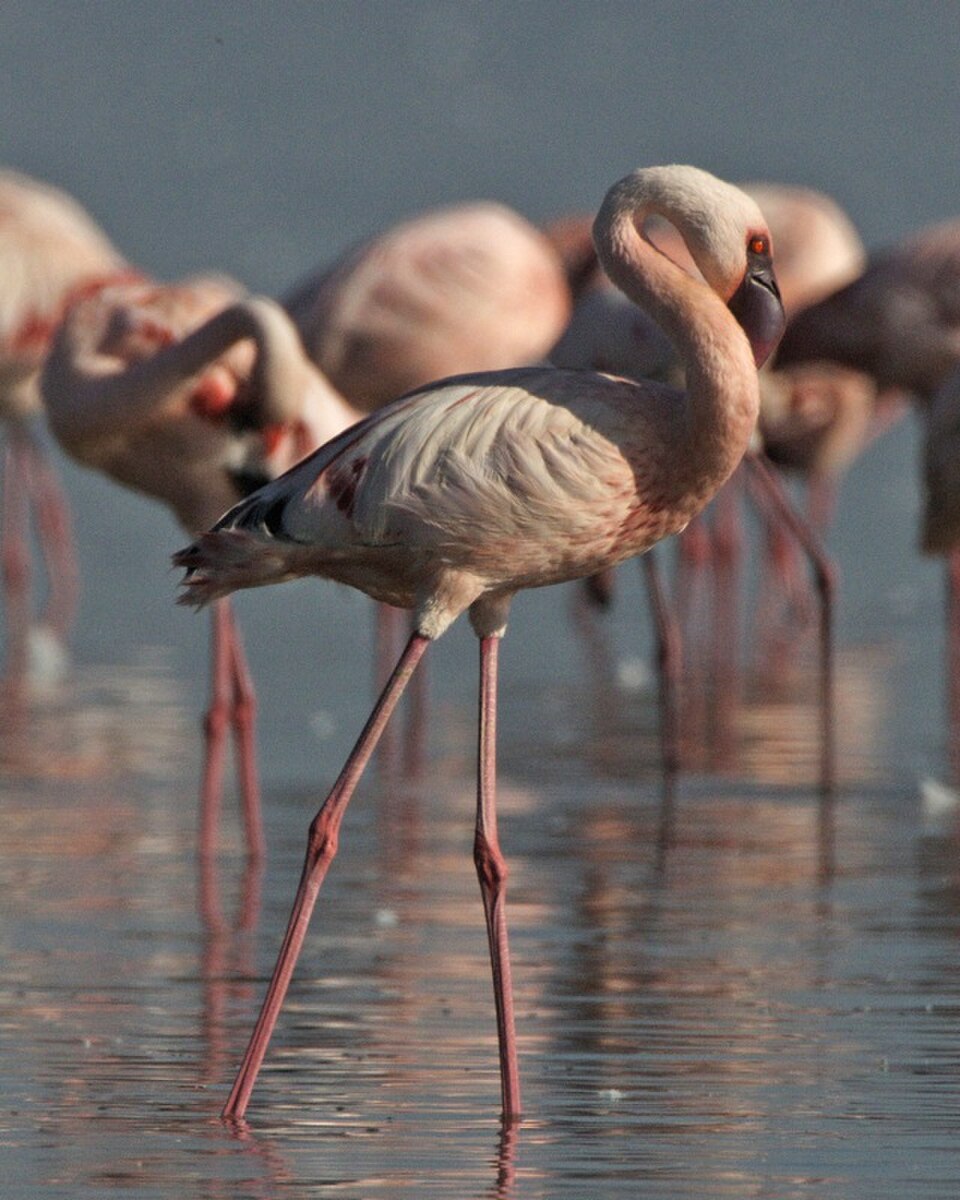 コフラミンゴ
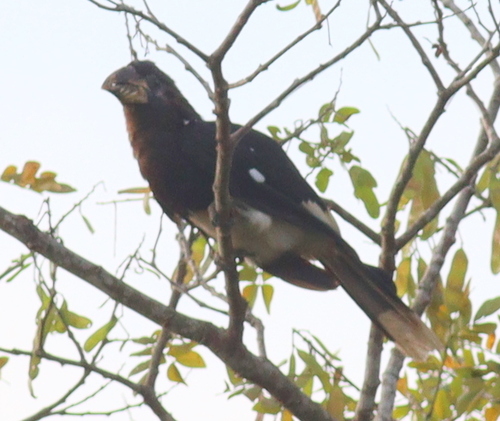 パイプコブサイチョウ
要点
The most reliable way to separate Lesser Flamingo from Piping Hornbill is by overall structure and coloration: Lesser Flamingo is a tall, long-legged wader with mostly pinkish-white plumage and a strikingly deep, black-tipped bill, while Piping Hornbill is a much shorter, black-and-white forest bird with a long tail and a prominent, curved bill bearing a casque. In flight or at rest, Lesser Flamingo’s long neck, legs, and uniform pinkish tones are unmistakable compared to the hornbill’s contrasting black-and-white body and shorter, stubbier silhouette. Even at a distance, habitat is a strong clue: flamingos are seen in open alkaline lakes, hornbills in humid forests. Size overlaps with some other flamingos, but not with hornbills. Immature or juvenile-specific wing patterns are not described for either species in the available sources.
識別のコツ
- Leg and neck length: Lesser Flamingo has extremely long legs and a long, slender neck, visible both at rest and in flight. Piping Hornbill has short legs and a proportionally large head and bill, with a much shorter neck.
- Bill shape and color: The flamingo’s bill is deep, sharply downcurved, and mostly black at the tip, especially extensive compared to other flamingos. The hornbill’s bill is long, curved, pale, and topped with a casque (a hollow structure on the upper mandible), never black-tipped.
- Plumage color: Lesser Flamingo is pinkish-white overall, sometimes with brighter pink on the wings and body. Piping Hornbill is sharply black-and-white, with no pink or pale wash anywhere.
- Body shape and posture: Flamingos stand upright on long legs, often in shallow water, and appear elegant and elongated. Hornbills perch upright in trees, with a more compact, chunky silhouette and a long tail.
- Flight silhouette: In flight, flamingos extend their necks and legs straight out, creating a long, straight profile. Hornbills fly with neck retracted, wings broad and rounded, and tail long but not trailing as far as flamingo legs.
- Habitat: Flamingos are found in open, alkaline lakes and lagoons, never in forests. Hornbills are strictly forest birds, never on open lakeshores.
- Group size: Flamingos are often in large, dense flocks (sometimes thousands), while hornbills are usually solitary, in pairs, or small groups.
- Feeding behavior: Flamingos feed by sweeping their bills side-to-side underwater, filtering food. Hornbills forage in trees, picking fruit or insects.
- Tail length and shape: Hornbills have a long, straight tail, but it is proportionally shorter than a flamingo’s legs. Flamingos’ tails are short and barely visible beyond the body.
- Bill casque: Only hornbills have a casque on the bill; flamingos never do.
- Vocalizations: If heard, hornbills give loud, piping or cackling calls. Flamingos are quieter, with nasal honks or grunts.
- Juvenile/immature confusion: No distinctive immature wing patterns are described for either species, so age is not a major pitfall.
- Sexual dimorphism: No strong sex-based differences are described for either species in plumage or structure.
- Size in context: Even the smallest flamingo is much taller and heavier than a Piping Hornbill; confusion is unlikely unless seen at great distance or in poor conditions.
- Bill use: Watch how the bird uses its bill: flamingos sweep and filter in water, hornbills manipulate food in the canopy.
大きさ
Lesser Flamingo is significantly larger and taller: standing 80–90 cm (31–35 in) high, with a total length and wingspan of 90–105 cm (35–41 in), and weighing 1.2–2.7 kg [wikipedia]. In contrast, Piping Hornbill is about 50 cm (20 in) long and is the smallest Bycanistes hornbill [wikipedia]. The flamingo’s long legs and neck make it appear much larger and more elongated, while the hornbill is more compact, with a relatively large head and bill for its body size. There is no overlap in standing height: even a sitting flamingo appears lankier than a hornbill perched upright.
羽色
No age-specific wing or flight pattern differences are described for either species in the available notes. Adult Lesser Flamingo is mostly pinkish-white, with the most extensive black on the bill among Old World flamingos [wikipedia]. The Piping Hornbill, by contrast, is black-and-white overall, lacking any pink tones. The hornbill’s wings and tail are black, with white underparts and facial markings. In all plumages, the flamingo’s pinkish wash and black-tipped bill are unique, while the hornbill’s sharp black-and-white contrast is distinctive. No seasonal or sex-based plumage variation is noted for either species.
行動
Lesser Flamingos are highly gregarious, often seen in dense flocks wading or swimming in shallow alkaline lakes, feeding with their heads down and bills submerged. Their feeding involves filter-feeding on algae and small invertebrates. Piping Hornbills are typically found singly, in pairs, or small groups, moving actively through the forest canopy or flying between trees. Their flight is undulating and direct, with rapid wingbeats, and they often perch upright on branches. The two species’ behaviors are not easily confused in the field.
生息環境
Lesser Flamingo is restricted to open, often highly alkaline lakes and lagoons in sub-Saharan Africa and parts of western India [wikipedia]. They are never found in forested areas. Piping Hornbill is a forest species, found in humid forests and second growth across Central and West Africa [wikipedia]. It is not found near open alkaline lakes. Thus, habitat is a strong separator: any flamingo seen in a forest is a misidentification, and any hornbill seen in a large open lake is equally unlikely.
声
No vocalization details are provided for Lesser Flamingo in the available notes. Piping Hornbill is noted to have sound recordings available (xeno-canto), but no description is given. In practice, flamingos are generally quiet or make nasal honking/grunting sounds, while hornbills often have loud, piping or cackling calls. However, without more detail, voice is not a primary separator here.
コフラミンゴ · パイプコブサイチョウ · 苦手な鳥