

Motmot

コシジロウミツバメ 対 クロコシジロウミツバメ

Hydrobates leucorhous 対 Hydrobates castro

コシジロウミツバメとクロコシジロウミツバメのクイズ
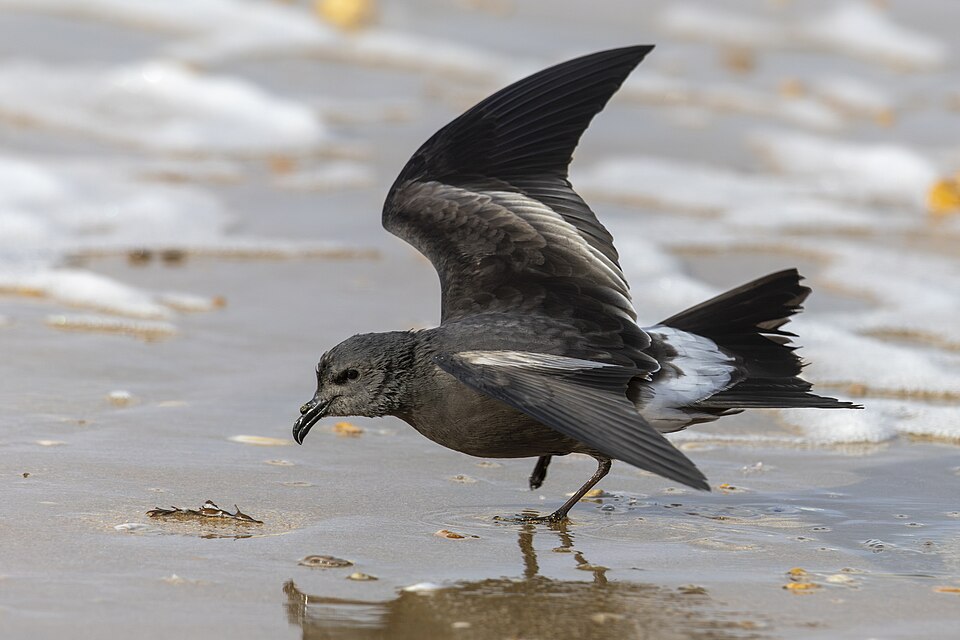
コシジロウミツバメ (Hydrobates leucorhous) コシジロウミツバメ
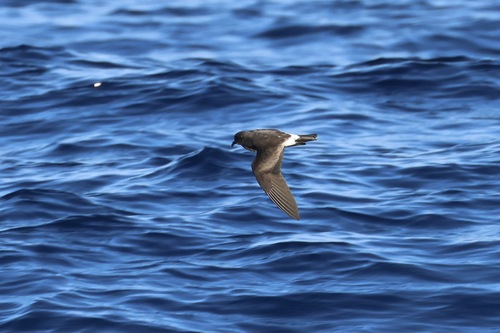
クロコシジロウミツバメ (Hydrobates castro) クロコシジロウミツバメ

メディア

読み込み中…

要点

The most reliable field mark between Leach's Storm-Petrel and Band-rumped Storm-Petrel is the shape and pattern of the white rump in flight: Leach's typically shows a white rump with a dark central line or notch, while Band-rumped has a more solid, extensive white rump without a clear dark divide. Tail shape is also key—Leach's has a more deeply forked tail, whereas Band-rumped's is only shallowly forked. Flight style differs: Leach's is more fluttery and tern-like, while Band-rumped's is steadier and more shearwater-like. Both are similar in size and overall dark plumage, so focus on rump pattern, tail shape, and flight behavior for separation, especially at sea.

識別のコツ

  1. Rump pattern: Leach's usually shows a white rump with a dark central line or notch (V-shaped or triangular), best seen from above or behind in flight. Band-rumped has a more solid, extensive white rump with no obvious dark center. This is the most reliable mark for all ages.
  2. Tail shape: Leach's has a noticeably deeper fork to the tail, especially visible when the tail is spread. Band-rumped's tail is only shallowly forked. This can be subtle in poor views but is diagnostic when seen well.
  3. Flight style: Leach's flies with a fluttery, erratic, 'tern-like' action, often with frequent changes in direction and pattering on the water. Band-rumped's flight is steadier, more direct, and 'shearwater-like', with less fluttering and fewer abrupt maneuvers.
  4. Upperwing pattern: Leach's may show a pale grey-brown bar on the secondary coverts (sometimes subtle), while Band-rumped's upperwing is more uniformly dark. This mark is subtle and not always visible.
  5. Face color: Leach's sometimes has a slightly paler face, but this is not a strong field mark and is easily missed at sea.
  6. Dark-rumped Leach's: On the Pacific coast south of California, some Leach's lack the white rump and appear all-dark, closely resembling Band-rumped. In these cases, rely more on tail shape and flight style.
  7. Size: Both species are nearly identical in size and structure; do not use size as a primary separator.
  8. Perched views: Both species are rarely seen perched except at breeding sites, where they shuffle awkwardly. Tail fork and rump pattern may still be visible if the bird is preening or stretching.
  9. Habitat/context: If seen near breeding colonies, consider geography—Band-rumped breeds on subtropical/tropical islands, Leach's on cooler northern islands, but at sea this is not helpful.
  10. Season/sex: No reliable seasonal or sex-based plumage differences are described for either species relevant to field ID.
  11. Voice: No field-diagnostic vocalizations are described in the sources for separation at sea.
  12. Pitfalls: Beware of rare dark-rumped Leach's in the Pacific, which can be almost indistinguishable from Band-rumped except by tail fork and flight style. Also, distant or poor views can make tail fork and rump pattern hard to judge—try to get multiple angles.
  13. Immature birds: No age-specific upperwing or body pattern differences are described; use the same rump and tail marks for juveniles and adults.
  14. Community tip: When in doubt at sea, prioritize flight style and rump pattern over subtle color differences.

大きさ

Both species are very close in size: Leach's Storm-Petrel measures 18–21 cm in length with a 43–48 cm wingspan, while Band-rumped Storm-Petrel is 19–21 cm long with a 43–46 cm wingspan. Band-rumped averages slightly heavier (44–49 g), but this difference is not visible in the field. Structure is similar, with long wings and a forked tail in both, so size alone is not a reliable separator.

羽色

For all ages, focus on the rump: Leach's Storm-Petrel usually shows a white rump with a dark central line or notch (sometimes appearing as a split or V-shape), while Band-rumped Storm-Petrel has a more extensive, solid white rump lacking a clear dark center. However, note that dark-rumped Leach's exist (mainly on the Pacific coast south of California), which can cause confusion. Both species are otherwise dark brownish-black overall, with Leach's sometimes showing a paler grey-brown bar on the secondary coverts and a slightly paler face. Band-rumped lacks this covert bar and has a more uniform dark upperwing. Both have long wings and a forked tail, but Leach's fork is deeper. No age-specific upperwing pattern is described for either species, so rump and tail remain the best plumage clues for all ages.

行動

Leach's Storm-Petrel has a fluttering, erratic, 'tern-like' flight, often pattering or hovering over the water as it feeds. Band-rumped Storm-Petrel flies with steadier, more direct, 'shearwater-like' wingbeats, appearing less fluttery and more purposeful. Both species pick food from the water surface, but the difference in flight style is a strong behavioral clue at sea. On land, both shuffle awkwardly to their burrows and are rarely seen walking.

生息環境

Both species are pelagic, spending most of their lives at sea and only coming to land to breed. Their breeding distributions overlap in the Atlantic, but Band-rumped also breeds in the Pacific. Habitat is not a reliable separator at sea, but if seen near breeding colonies, Band-rumped is more likely on subtropical and tropical islands, while Leach's is more widespread in cooler northern oceans.

より良い説明を送る

比較と同じ項目を使ってください。文章はすぐに公開されます。

The most reliable field mark between Leach's Storm-Petrel and Band-rumped Storm-Petrel is the shape and pattern of the white rump in flight: Leach's typically shows a white rump with a dark central line or notch, while Band-rumped has a more solid, extensive white rump without a clear dark divide. Tail shape is also key—Leach's has a more deeply forked tail, whereas Band-rumped's is only shallowly forked. Flight style differs: Leach's is more fluttery and tern-like, while Band-rumped's is steadier and more shearwater-like. Both are similar in size and overall dark plumage, so focus on rump pattern, tail shape, and flight behavior for separation, especially at sea.

  1. Rump pattern: Leach's usually shows a white rump with a dark central line or notch (V-shaped or triangular), best seen from above or behind in flight. Band-rumped has a more solid, extensive white rump with no obvious dark center. This is the most reliable mark for all ages.
  2. Tail shape: Leach's has a noticeably deeper fork to the tail, especially visible when the tail is spread. Band-rumped's tail is only shallowly forked. This can be subtle in poor views but is diagnostic when seen well.
  3. Flight style: Leach's flies with a fluttery, erratic, 'tern-like' action, often with frequent changes in direction and pattering on the water. Band-rumped's flight is steadier, more direct, and 'shearwater-like', with less fluttering and fewer abrupt maneuvers.
  4. Upperwing pattern: Leach's may show a pale grey-brown bar on the secondary coverts (sometimes subtle), while Band-rumped's upperwing is more uniformly dark. This mark is subtle and not always visible.
  5. Face color: Leach's sometimes has a slightly paler face, but this is not a strong field mark and is easily missed at sea.
  6. Dark-rumped Leach's: On the Pacific coast south of California, some Leach's lack the white rump and appear all-dark, closely resembling Band-rumped. In these cases, rely more on tail shape and flight style.
  7. Size: Both species are nearly identical in size and structure; do not use size as a primary separator.
  8. Perched views: Both species are rarely seen perched except at breeding sites, where they shuffle awkwardly. Tail fork and rump pattern may still be visible if the bird is preening or stretching.
  9. Habitat/context: If seen near breeding colonies, consider geography—Band-rumped breeds on subtropical/tropical islands, Leach's on cooler northern islands, but at sea this is not helpful.
  10. Season/sex: No reliable seasonal or sex-based plumage differences are described for either species relevant to field ID.
  11. Voice: No field-diagnostic vocalizations are described in the sources for separation at sea.
  12. Pitfalls: Beware of rare dark-rumped Leach's in the Pacific, which can be almost indistinguishable from Band-rumped except by tail fork and flight style. Also, distant or poor views can make tail fork and rump pattern hard to judge—try to get multiple angles.
  13. Immature birds: No age-specific upperwing or body pattern differences are described; use the same rump and tail marks for juveniles and adults.
  14. Community tip: When in doubt at sea, prioritize flight style and rump pattern over subtle color differences.

Both species are very close in size: Leach's Storm-Petrel measures 18–21 cm in length with a 43–48 cm wingspan, while Band-rumped Storm-Petrel is 19–21 cm long with a 43–46 cm wingspan. Band-rumped averages slightly heavier (44–49 g), but this difference is not visible in the field. Structure is similar, with long wings and a forked tail in both, so size alone is not a reliable separator.

For all ages, focus on the rump: Leach's Storm-Petrel usually shows a white rump with a dark central line or notch (sometimes appearing as a split or V-shape), while Band-rumped Storm-Petrel has a more extensive, solid white rump lacking a clear dark center. However, note that dark-rumped Leach's exist (mainly on the Pacific coast south of California), which can cause confusion. Both species are otherwise dark brownish-black overall, with Leach's sometimes showing a paler grey-brown bar on the secondary coverts and a slightly paler face. Band-rumped lacks this covert bar and has a more uniform dark upperwing. Both have long wings and a forked tail, but Leach's fork is deeper. No age-specific upperwing pattern is described for either species, so rump and tail remain the best plumage clues for all ages.

Leach's Storm-Petrel has a fluttering, erratic, 'tern-like' flight, often pattering or hovering over the water as it feeds. Band-rumped Storm-Petrel flies with steadier, more direct, 'shearwater-like' wingbeats, appearing less fluttery and more purposeful. Both species pick food from the water surface, but the difference in flight style is a strong behavioral clue at sea. On land, both shuffle awkwardly to their burrows and are rarely seen walking.

Both species are pelagic, spending most of their lives at sea and only coming to land to breed. Their breeding distributions overlap in the Atlantic, but Band-rumped also breeds in the Pacific. Habitat is not a reliable separator at sea, but if seen near breeding colonies, Band-rumped is more likely on subtropical and tropical islands, while Leach's is more widespread in cooler northern oceans.

変更を破棄しますか?

保存していない編集があります。今離れると失われます。

コシジロウミツバメ · クロコシジロウミツバメ · 苦手な鳥