

Motmot

ワライカモメ 対 アメリカズグロカモメ

Leucophaeus atricilla 対 Leucophaeus pipixcan

ワライカモメとアメリカズグロカモメのクイズ
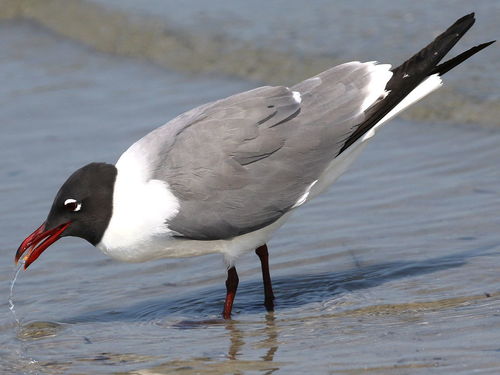
ワライカモメ (Leucophaeus atricilla) ワライカモメ
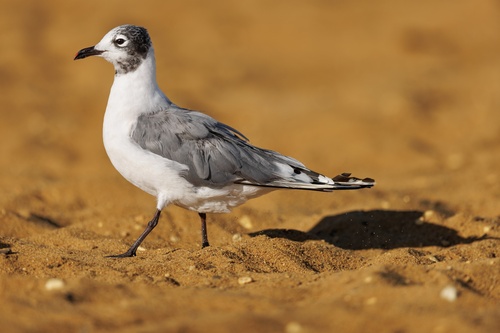
アメリカズグロカモメ (Leucophaeus pipixcan) アメリカズグロカモメ

メディア

読み込み中…

要点

The most reliable field mark between Laughing Gull and Franklin's Gull is the wingtip pattern in adults: Franklin's Gull shows a distinct white crescent at the tips of the primaries, while Laughing Gull's wingtip is solidly black with no white band. Immature birds are trickier, but Laughing Gull immatures are generally darker overall and have an all-black tail in their first year, unlike Franklin's. Structurally, Laughing Gull is larger and longer-billed, while Franklin's is more compact. Both species have a black hood in breeding plumage and red bills and legs, but subtle differences in wing and tail pattern, especially in flight, are key for separation.

識別のコツ

  1. Adult wingtip pattern: In flight, look for the white crescent at the wingtip—present in Franklin's Gull, absent in Laughing Gull (which has solid black tips). This is the single most reliable mark for adults in all seasons.
  2. Immature tail pattern: First-year Laughing Gulls have an all-black tail, unlike Franklin's, which lacks this feature. This is a crucial mark for juveniles and first-winter birds.
  3. Upperwing darkness: Immature Laughing Gulls are generally darker overall, especially below, than Franklin's of the same age.
  4. Primary coverts in 2nd-year birds: Laughing Gull second-years show more extensive black on the primary coverts and may retain some black in the tail, while Franklin's of similar age lack these features.
  5. Bill structure: Laughing Gull has a noticeably longer bill than Franklin's, especially apparent in adults and older immatures.
  6. Size and shape: Laughing Gull is larger and bulkier, with a longer body and wings, while Franklin's is more compact and shorter-winged. This is best judged with direct comparison or experience.
  7. Hood in breeding plumage: Both species have a black hood in summer, but Laughing Gull's is more extensive and darker. In winter, both lose the hood, making other marks more important.
  8. Leg and bill color: Both have red bills and legs in breeding season, but Laughing Gull's bill is longer and sometimes deeper red.
  9. Wing color: Laughing Gull's upperwings are darker grey than Franklin's, but this can be subtle and affected by light.
  10. Vocalization: The 'laughing' call is unique to Laughing Gull. If heard, it clinches the ID.
  11. Habitat context: On the Atlantic coast or in large coastal colonies, Laughing Gull is more likely. Inland marshes and prairies favor Franklin's, especially in breeding season.
  12. Flock structure: Laughing Gulls often form very large, dense colonies; Franklin's are more often in smaller, scattered groups inland.
  13. Flight style: Laughing Gull can seem more elongated and languid in flight, while Franklin's is more buoyant and agile.
  14. Non-breeding confusion: In winter, when both lose their hoods, rely on wingtip pattern, tail color (for immatures), and structure for separation.
  15. Pitfall—white wing band: Only Franklin's Gull (adult) shows the white wingtip crescent. If you see this, do not confuse with Laughing Gull, which never shows it at any age.

大きさ

Laughing Gull is the larger of the two, with a body mass around 300g versus 280g for Franklin's Gull [wikidata]. In length, Laughing Gull measures 36–41 cm (14–16 in) and has a wingspan of 98–110 cm (39–43 in), compared to Franklin's Gull at 32–36 cm (12.6–14.2 in) and a wingspan of 85–95 cm (33.5–37.4 in) [wikipedia]. In the field, this size difference is noticeable when the birds are side by side, with Laughing Gull appearing longer and bulkier, especially in the bill and body.

羽色

For immature birds, Laughing Gull's first-year plumage is distinctive: they are darker below and have paler heads than Franklin's, with an all-black tail—a key mark for this age. Second-year Laughing Gulls retain more black on the primary coverts and sometimes on the tail, while Franklin's Gull immatures lack the white wing band of adults and have less developed hoods. In adults, both species have dark grey upperwings and black hoods in breeding plumage, but Franklin's Gull shows a prominent white crescent at the wingtip (on the primaries), which Laughing Gull lacks. Laughing Gull's wings are darker grey than Franklin's, and its black hood is more extensive in summer but mostly lost in winter, as is Franklin's. Both species have red bills and legs in breeding season, but Laughing Gull's bill is longer. In non-breeding plumage, both lose the full hood, making separation more challenging and increasing reliance on wing pattern and structure.

行動

Both species are opportunistic omnivores and scavengers, often seen in flocks and around human activity. Laughing Gull tends to breed in larger colonies, sometimes up to 25,000 pairs, and is more likely to be seen in large groups along the Atlantic coast. Franklin's Gull is also gregarious but is generally more inland during breeding, often in marshes. In flight, Laughing Gull can appear longer-winged and more languid, while Franklin's Gull is more buoyant and compact.

生息環境

Laughing Gull is found mostly along the Atlantic coast of North America, the Caribbean, and northern South America, breeding on low-lying coastal islands. Franklin's Gull breeds further inland, especially in North American prairies and marshes, and is less coastal than Laughing Gull. Overlap can occur during migration or in winter, but context can help: coastal colonies favor Laughing Gull, while inland marshes suggest Franklin's.

声

Laughing Gull is named for its distinctive, raucous 'laughing' call, a high-pitched 'ha... ha... ha...' that is quite different from Franklin's Gull. Franklin's Gull is less vocal and does not have the same laugh-like call. If you hear the classic laughing sound, it's a strong indicator of Laughing Gull.

より良い説明を送る

比較と同じ項目を使ってください。文章はすぐに公開されます。

The most reliable field mark between Laughing Gull and Franklin's Gull is the wingtip pattern in adults: Franklin's Gull shows a distinct white crescent at the tips of the primaries, while Laughing Gull's wingtip is solidly black with no white band. Immature birds are trickier, but Laughing Gull immatures are generally darker overall and have an all-black tail in their first year, unlike Franklin's. Structurally, Laughing Gull is larger and longer-billed, while Franklin's is more compact. Both species have a black hood in breeding plumage and red bills and legs, but subtle differences in wing and tail pattern, especially in flight, are key for separation.

  1. Adult wingtip pattern: In flight, look for the white crescent at the wingtip—present in Franklin's Gull, absent in Laughing Gull (which has solid black tips). This is the single most reliable mark for adults in all seasons.
  2. Immature tail pattern: First-year Laughing Gulls have an all-black tail, unlike Franklin's, which lacks this feature. This is a crucial mark for juveniles and first-winter birds.
  3. Upperwing darkness: Immature Laughing Gulls are generally darker overall, especially below, than Franklin's of the same age.
  4. Primary coverts in 2nd-year birds: Laughing Gull second-years show more extensive black on the primary coverts and may retain some black in the tail, while Franklin's of similar age lack these features.
  5. Bill structure: Laughing Gull has a noticeably longer bill than Franklin's, especially apparent in adults and older immatures.
  6. Size and shape: Laughing Gull is larger and bulkier, with a longer body and wings, while Franklin's is more compact and shorter-winged. This is best judged with direct comparison or experience.
  7. Hood in breeding plumage: Both species have a black hood in summer, but Laughing Gull's is more extensive and darker. In winter, both lose the hood, making other marks more important.
  8. Leg and bill color: Both have red bills and legs in breeding season, but Laughing Gull's bill is longer and sometimes deeper red.
  9. Wing color: Laughing Gull's upperwings are darker grey than Franklin's, but this can be subtle and affected by light.
  10. Vocalization: The 'laughing' call is unique to Laughing Gull. If heard, it clinches the ID.
  11. Habitat context: On the Atlantic coast or in large coastal colonies, Laughing Gull is more likely. Inland marshes and prairies favor Franklin's, especially in breeding season.
  12. Flock structure: Laughing Gulls often form very large, dense colonies; Franklin's are more often in smaller, scattered groups inland.
  13. Flight style: Laughing Gull can seem more elongated and languid in flight, while Franklin's is more buoyant and agile.
  14. Non-breeding confusion: In winter, when both lose their hoods, rely on wingtip pattern, tail color (for immatures), and structure for separation.
  15. Pitfall—white wing band: Only Franklin's Gull (adult) shows the white wingtip crescent. If you see this, do not confuse with Laughing Gull, which never shows it at any age.

Laughing Gull is the larger of the two, with a body mass around 300g versus 280g for Franklin's Gull [wikidata]. In length, Laughing Gull measures 36–41 cm (14–16 in) and has a wingspan of 98–110 cm (39–43 in), compared to Franklin's Gull at 32–36 cm (12.6–14.2 in) and a wingspan of 85–95 cm (33.5–37.4 in) [wikipedia]. In the field, this size difference is noticeable when the birds are side by side, with Laughing Gull appearing longer and bulkier, especially in the bill and body.

For immature birds, Laughing Gull's first-year plumage is distinctive: they are darker below and have paler heads than Franklin's, with an all-black tail—a key mark for this age. Second-year Laughing Gulls retain more black on the primary coverts and sometimes on the tail, while Franklin's Gull immatures lack the white wing band of adults and have less developed hoods. In adults, both species have dark grey upperwings and black hoods in breeding plumage, but Franklin's Gull shows a prominent white crescent at the wingtip (on the primaries), which Laughing Gull lacks. Laughing Gull's wings are darker grey than Franklin's, and its black hood is more extensive in summer but mostly lost in winter, as is Franklin's. Both species have red bills and legs in breeding season, but Laughing Gull's bill is longer. In non-breeding plumage, both lose the full hood, making separation more challenging and increasing reliance on wing pattern and structure.

Both species are opportunistic omnivores and scavengers, often seen in flocks and around human activity. Laughing Gull tends to breed in larger colonies, sometimes up to 25,000 pairs, and is more likely to be seen in large groups along the Atlantic coast. Franklin's Gull is also gregarious but is generally more inland during breeding, often in marshes. In flight, Laughing Gull can appear longer-winged and more languid, while Franklin's Gull is more buoyant and compact.

Laughing Gull is found mostly along the Atlantic coast of North America, the Caribbean, and northern South America, breeding on low-lying coastal islands. Franklin's Gull breeds further inland, especially in North American prairies and marshes, and is less coastal than Laughing Gull. Overlap can occur during migration or in winter, but context can help: coastal colonies favor Laughing Gull, while inland marshes suggest Franklin's.

Laughing Gull is named for its distinctive, raucous 'laughing' call, a high-pitched 'ha... ha... ha...' that is quite different from Franklin's Gull. Franklin's Gull is less vocal and does not have the same laugh-like call. If you hear the classic laughing sound, it's a strong indicator of Laughing Gull.

変更を破棄しますか?

保存していない編集があります。今離れると失われます。

ワライカモメ · アメリカズグロカモメ · 苦手な鳥