

ツメナガホオジロ 対 オオクロムクドリモドキ
Calcarius lapponicus 対 Quiscalus quiscula
ツメナガホオジロとオオクロムクドリモドキのクイズ
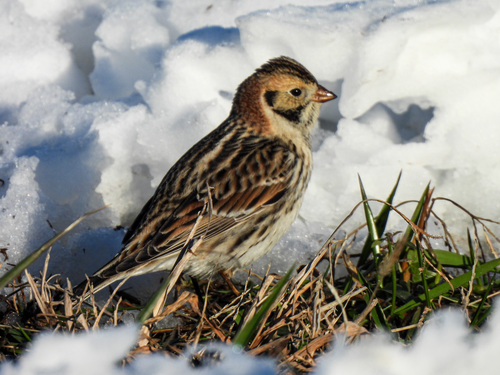 ツメナガホオジロ
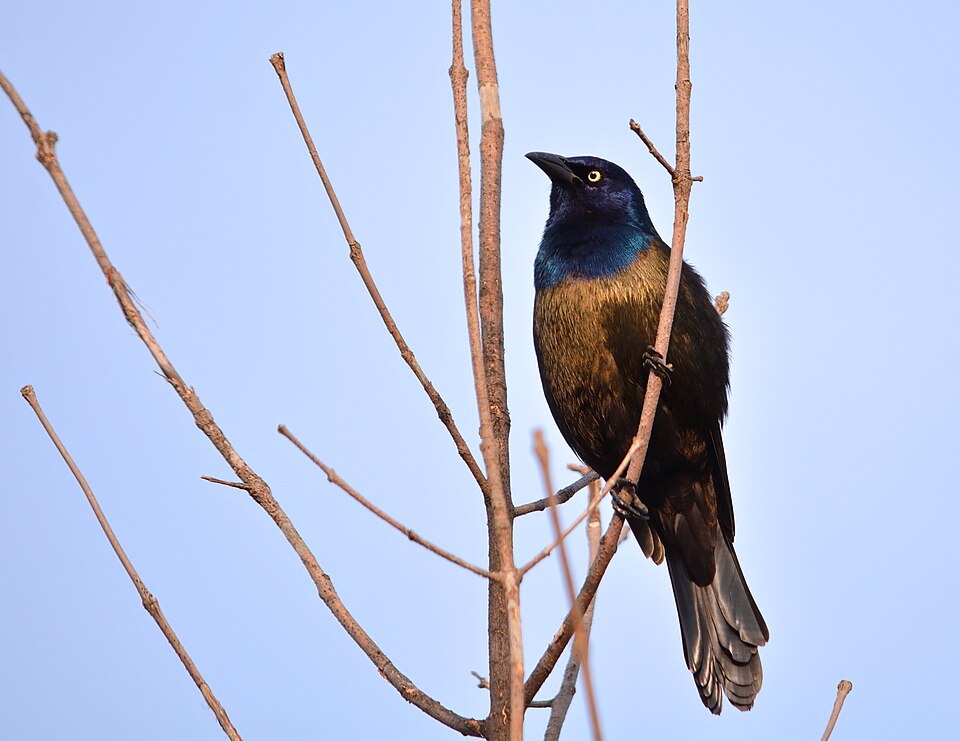 オオクロムクドリモドキ
要点
The most reliable field mark to separate Lapland Bunting from Common Grackle is overall size and structure: Lapland Bunting is a small, robust, sparrow-like bird with a thick, short bill, while Common Grackle is much larger, with a long, wedge-shaped tail and a long, straight bill. In flight or at a distance, Lapland Bunting never shows the glossy iridescence or long tail of a grackle. Juvenile and non-breeding Lapland Buntings are streaky and earth-toned, easily confused with other sparrows but never with the glossy, dark, and long-tailed grackle. Grackles are unmistakably larger, with a strong, upright posture and a distinctive pale eye. If you see a small, streaky bird in open country, it's a Lapland Bunting; a large, glossy, long-tailed bird in a flock is a grackle.
識別のコツ
- Size is the quickest check: Common Grackle is nearly three times the length and several times the weight of Lapland Bunting. If the bird looks crow-sized, it's a grackle; if sparrow-sized, it's a bunting.
- Bill shape: Lapland Bunting has a short, thick, seed-eater's bill, yellowish in color; Common Grackle has a long, straight, dark bill, more suited for a varied omnivorous diet.
- Tail shape and length: Grackle's tail is long and wedge-shaped, often with a keel in males; Lapland Bunting's tail is short and notched, never long or wedge-shaped.
- Iridescence and gloss: Only grackles (especially males) show purple, blue, or green iridescence on the head and bronze on the body. Lapland Bunting is always matte and earth-toned, never glossy.
- Eye color: Adult grackles have striking pale yellowish eyes; Lapland Bunting has dark eyes in all plumages.
- Juvenile confusion: Juvenile grackles are plain brown with dark eyes, but still larger and structurally different from any Lapland Bunting. Juvenile and non-breeding Lapland Buntings are streaky and sparrow-like, never plain brown and large.
- Head pattern: In breeding season, male Lapland Bunting has a black head and throat with a white eyestripe and chestnut nape—never seen in grackles. In non-breeding and immature plumages, the bunting's head is orange-brown with a chestnut nape and lacks strong contrast.
- Flight jizz: Grackles fly with slow, deep wingbeats and a long tail trailing behind; Lapland Buntings fly with quick, bounding flight and a short tail.
- Foraging behavior: Grackles are bold, often seen in large, noisy flocks, foraging on lawns, in shallow water, or at feeders. Lapland Buntings are more secretive, feeding in small flocks on the ground in open fields or tundra.
- Habitat context: Grackles are common in urban, suburban, and agricultural areas; Lapland Buntings are found in wild, open country, especially in the north or in migration through open fields.
- Sexual dimorphism: Grackle males are larger, glossier, and have longer tails than females; Lapland Buntings show less sexual dimorphism, with males only distinctive in summer plumage.
- Group size and behavior: Grackles often form large, conspicuous flocks (sometimes called a 'plague'), while Lapland Buntings are usually in smaller, quieter groups.
- Feeding posture: Grackles often stand upright and walk with a strutting gait; Lapland Buntings hop or run low to the ground, more like sparrows.
- Seasonal appearance: Only breeding male Lapland Bunting shows the bold black-and-chestnut head pattern; in winter, both sexes are much plainer and can be confused with other buntings or sparrows, but never with grackles.
- No overlap in iridescence or tail structure: At any age or season, Lapland Bunting never shows the grackle's glossy plumage or long, keel-shaped tail.
大きさ
Lapland Bunting is much smaller, about 15–16 cm (5.9–6.3 in) in length, and weighs 22–33 g (0.8–1.2 oz). Common Grackle is nearly double to triple the length at 28–34 cm (11–13 in) and weighs 74–142 g (2.6–5.0 oz) [wikidata]. The grackle is also bulkier and longer-winged, with a wingspan of 36–46 cm (14–18 in) compared to the bunting's 22–29 cm (8.7–11.4 in). In the field, grackles appear crow-like compared to the much smaller, sparrow-sized bunting.
羽色
Juvenile and non-breeding Lapland Buntings are streaky brown above with a chestnut nape and pale underparts, lacking any iridescence or solid dark coloration. In contrast, juvenile Common Grackles are plain brown with dark eyes, but quickly molt into glossy black adult plumage with purple, green, or blue iridescence on the head and bronze on the body. Adult male grackles are strikingly glossy and have a long, keel-shaped tail, while females are duller but still dark overall. Lapland Bunting males in summer are distinctive with a black head and throat, white eyestripe, and chestnut nape, but in winter and immature plumages, they are much plainer and can be confused with other sparrows, not grackles. No age or season of Lapland Bunting shows the solid dark, glossy, or iridescent look of a grackle. In flight, Lapland Bunting shows no long tail or iridescence, and the wing pattern is not distinctive for either species in the notes.
行動
Lapland Bunting forages on the ground in open, often arctic or tundra habitats, picking seeds and insects from the ground and rarely feeding directly from plants. They move in small flocks, often flying low and quickly between feeding areas. Common Grackle is highly opportunistic, foraging on the ground, in shallow water, or in shrubs, and is often seen in large, noisy flocks. Grackles are bold around humans, often scavenging at picnic areas or feeders, and may steal food from other birds. Their feeding is more aggressive and varied, including seeds, insects, small vertebrates, and even eggs.
生息環境
Lapland Bunting breeds in circumpolar arctic and subarctic regions and winters in open country, often in fields or tundra-like habitats. It is rarely found in urban or suburban areas. Common Grackle is widespread in North America, especially in open and semiopen areas, including farmlands, parks, suburbs, and city edges. Grackles are much more likely to be seen around human habitation, while Lapland Buntings are birds of wild, open spaces.
ツメナガホオジロ · オオクロムクドリモドキ · 苦手な鳥