

アメリカオグロシギ 対 ニュージーランドムシクイ
Limosa haemastica 対 Mohoua novaeseelandiae
アメリカオグロシギとニュージーランドムシクイのクイズ
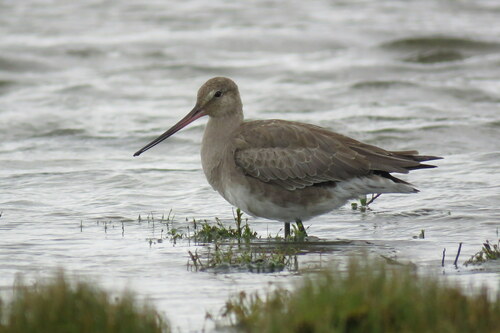 アメリカオグロシギ
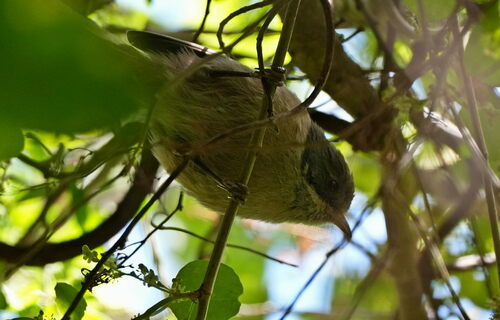 ニュージーランドムシクイ
要点
The most reliable field mark is sheer size: Hudsonian Godwit is a large, long-legged shorebird, while Pipipi is a tiny, active forest songbird. In flight, Hudsonian Godwit shows a striking white rump and black tail, with black underwings, while Pipipi lacks any such pattern and is never seen in open mudflats or flying with shorebirds. Juvenile Pipipi can be confused with other small passerines but never with a godwit. Bill shape, leg color, and habitat are all instantly different. If you see a long-billed, upright bird in open wetland or mudflat, it's the godwit; if it's a small, brownish bird flitting through forest canopy, it's the Pipipi.
識別のコツ
- Size is the first check: If the bird is large, pigeon-sized or bigger, it's Hudsonian Godwit; if it's tiny and sparrow-sized or less, it's Pipipi. This holds for all ages and sexes.
- Habitat is decisive: Godwit is in open mudflats, wetlands, or shorelines; Pipipi is in forest canopy, never near open water or mudflats.
- Bill shape: Godwit has a long, pinkish, slightly upcurved bill with a dark tip, used for probing; Pipipi has a short, straight, dark bill for gleaning insects. This is visible even at a distance.
- Leg color and length: Godwit has long, bluish-grey legs, visible when wading or standing; Pipipi has short, dark brown legs (juveniles especially dark), and never wades.
- Flight pattern: Godwit in flight shows a bold white rump and black tail, with black underwings—diagnostic at any age. Pipipi is plain below, with no such contrasts, and is rarely seen flying long distances in the open.
- Juvenile Pipipi: Before May, look for yellow bill flanges and a greyer head, but these marks only help separate Pipipi from other small songbirds, not from godwits.
- Plumage: Godwit adults have chestnut underparts and mottled brown upperparts in breeding season, but the key is the white rump/tail and black underwing in flight. Pipipi is plain brownish above, paler below, with no strong pattern at any season.
- Posture: Godwit stands upright, often in open, with a long neck and legs; Pipipi is perky, often in motion, clinging to branches or hanging upside down in the canopy.
- Flocking: Pipipi often forages in small, active flocks in forest, sometimes with other species; Godwit flocks are tight, often seen migrating or feeding on mudflats.
- Context: In New Zealand, godwits are rare vagrants and always with shorebirds; Pipipi is common in native forest, never seen with shorebirds.
- Sex and age: Both sexes of Pipipi look alike; only subtle head color differences in juveniles. Godwit sexes differ mainly in size, not plumage, except in breeding adults.
- No confusion in voice: No vocalization details provided, but the two are from different families and have unrelated calls.
- Seasonality: Godwit is a migrant, present in New Zealand only as a rare vagrant among Bar-tailed Godwits; Pipipi is resident year-round in forest.
- Feeding behavior: Godwit probes mud; Pipipi gleans insects from leaves and branches, sometimes under bark, rarely on the ground.
- Leg visibility: Godwit's long legs are obvious when walking or standing; Pipipi's short legs are often hidden by feathers or foliage.
大きさ
Hudsonian Godwit is vastly larger, averaging 255.5g, compared to Pipipi's 12.2g. The godwit stands tall on long legs, with a body size comparable to a large pigeon or small duck, while Pipipi is a small, delicate songbird, smaller than a sparrow. Even at a distance, the difference in bulk and proportions is unmistakable.
羽色
- Juveniles and Immatures: Pipipi juveniles (before May) have yellow bill flanges and dark brown legs, with a greyer head and no white post-ocular stripe. Hudsonian Godwit juveniles are not described in detail here, but all ages show a white rump and black tail in flight, with black underwings—features Pipipi never shows.
- Adults: Adult Hudsonian Godwit has mottled brown upperparts, chestnut underparts, long pinkish upcurved bill with dark tip, bluish-grey long legs, and in flight, a white rump and black tail, plus black wing linings. Pipipi adults are plain brownish above, paler below, with no strong pattern, short dark bill, and dark legs. Both sexes and ages of Pipipi look similar, except for subtle head color differences in juveniles.
- Flight: Hudsonian Godwit in flight is strikingly patterned below, with black underwings and a bold white rump/tail contrast; Pipipi is uniform and never shows such patterns.
行動
Hudsonian Godwit stands upright, often in open mudflats or shallow water, probing with its long bill. Its flight is direct and strong, often in flocks during migration. Pipipi is highly active in forest canopy, gleaning insects from leaves and branches, sometimes hanging upside down. It forages in flocks, rarely on the ground, and is never seen in open wetland habitats. Pipipi's behavior is typical of small insectivorous passerines, while godwit behavior is typical of large waders.
生息環境
Hudsonian Godwit is found in open wetlands, mudflats, and shallow water, especially during migration and winter. It is never found in forest interior. Pipipi is strictly a forest bird, endemic to New Zealand's South Island and nearby islands, foraging in native forest canopy, often in mixed-species flocks. You will never find Pipipi in open shorebird habitat or godwit in forest canopy.