

イエスズメ 対 イタリアスズメ
Passer domesticus 対 Passer italiae
イエスズメとイタリアスズメのクイズ
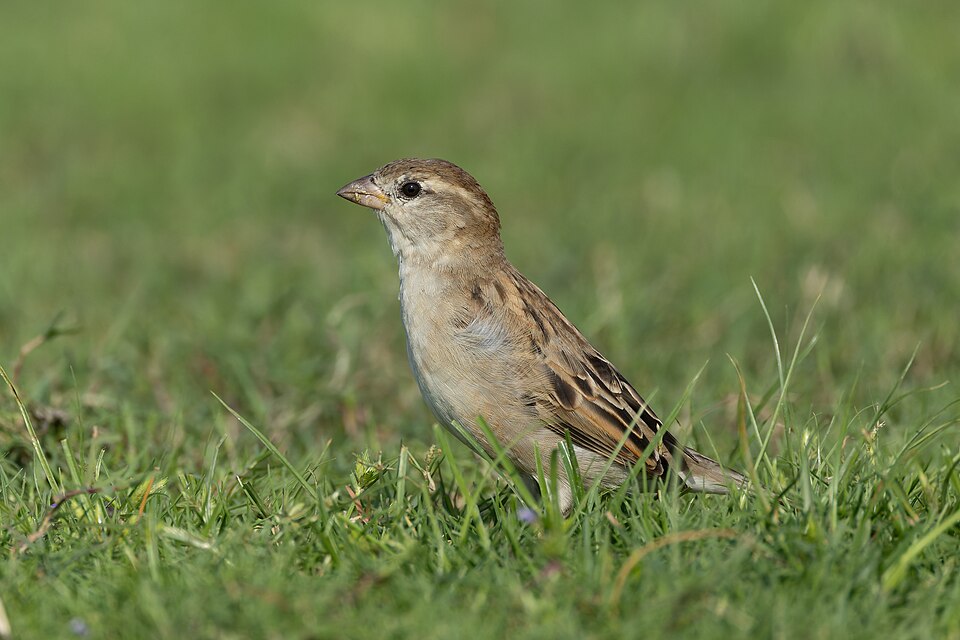 イエスズメ
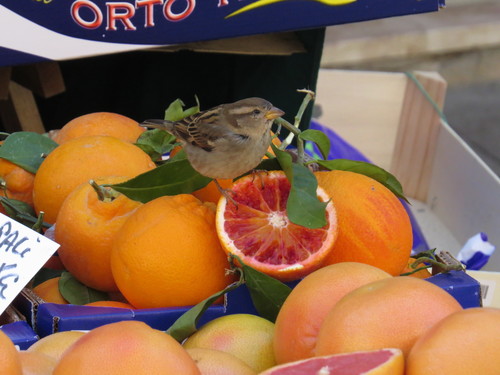 イタリアスズメ
要点
The most reliable field mark for separating House Sparrow and Italian Sparrow is the male's head pattern: male Italian Sparrows show a rich chestnut crown and nape with white cheeks, while male House Sparrows have a gray crown, black bib, and gray or white cheeks depending on subspecies. Females and immatures are extremely similar, making separation in the field very difficult except in areas with known hybrid zones or when males are present. Juvenile and female plumages are nearly indistinguishable, so focus on adult males for confident identification. Structural differences are minimal, and both species are similar in size and shape. Habitat and range can help, as Italian Sparrow is restricted to Italy and nearby Mediterranean regions, while House Sparrow is cosmopolitan.
識別のコツ
- Adult male head pattern is the best field mark: Italian Sparrow males have a rich chestnut crown, nape, and sides of the head with white cheeks; House Sparrow males have a gray crown and (in most subspecies) gray cheeks, with a black bib and white postocular spots. This is the most reliable mark in breeding plumage.
- Cheek color in males: Italian Sparrow males always have white cheeks; House Sparrow males have gray cheeks in most of their range (P. d. domesticus), but some subspecies (P. d. indicus) have white cheeks, so check range.
- Crown color in males: Chestnut crown on Italian Sparrow males vs. gray crown on House Sparrow males. This is visible in good light and close views.
- Upperparts in males: Italian Sparrow males show brighter, more extensive chestnut on the upperparts; House Sparrow males have a reddish back with broad black streaks but less chestnut overall.
- Female and juvenile plumage: Females and immatures of both species are extremely similar—pale brown and gray, with buffy underparts and indistinct supercilia. Do not rely on plumage to separate them unless adult males are present.
- Juvenile House Sparrow: Slightly scruffier, deeper brown below, and paler above than adults, with paler, less defined supercilia. These differences are too subtle to separate from Italian Sparrow juveniles in the field.
- Bill color in juveniles: Young House Sparrows have light yellow to straw bills, paler than adult females, but this is not a reliable separation from Italian Sparrow.
- No diagnostic wing or flight pattern: Neither species has a distinctive juvenile or immature upperwing or flight pattern mark that can be used for separation.
- Size and structure: Both species are nearly identical in size and shape; do not use size or jizz for separation.
- Habitat and range: Italian Sparrow is restricted to Italy, Corsica, and nearby Mediterranean regions. House Sparrow is cosmopolitan. Outside Italy and adjacent areas, any sparrow is almost certainly House Sparrow.
- Hybrid zones: In northern Italy and the southern Alps, hybridization occurs, and intermediate birds may show mixed features. Identification here can be extremely difficult, even for experts.
- Vocalizations: Calls and songs are too similar to be useful for field separation, especially in the overlap zone.
- Seasonal variation: Male Italian Sparrow's plumage is duller in non-breeding season and brightens with wear and preening, but the head pattern remains a reliable mark.
- Context: If you see a male with a chestnut crown and white cheeks in Italy or Corsica, it's likely Italian Sparrow; elsewhere, expect House Sparrow.
- When in doubt: If only females or juveniles are present, identification may be impossible without range context or accompanying males.
大きさ
Both species are very similar in size and structure. House Sparrow averages about 16 cm in length and 30.5 g in mass, while Italian Sparrow is 14–16 cm long with a weight that varies seasonally from 26–30 g. There is no meaningful difference in field jizz or proportions; both are compact, full-chested birds with short tails and stout conical bills. Any size difference is subtle and unreliable for field identification.
羽色
For adult males, plumage is the key: Italian Sparrow males have a chestnut crown, nape, and sides of the head, with white cheeks and a black bib, while House Sparrow males have a gray crown, black bib, and gray or white cheeks (subspecies-dependent). The upperparts of Italian Sparrow males are a brighter chestnut, while House Sparrow males show a reddish back with broad black streaks but less overall chestnut. Underparts in both are pale gray, but House Sparrow males may look a bit paler. Females and juveniles of both species are nearly identical: pale brown and gray overall, with buffy underparts and indistinct supercilia. Juvenile House Sparrows can be slightly scruffier and deeper brown below, but these differences are subtle and unreliable for separation. No distinctive age-specific upperwing or flight pattern marks are described for either species, so flight views of non-adult males are not diagnostic.
行動
Both species are gregarious, often seen in flocks, and show similar feeding and social behaviors. There is no noted behavioral difference useful for separation in the field.
生息環境
House Sparrow is found in a wide range of habitats worldwide, especially near human habitation. Italian Sparrow is restricted to Italy, Corsica, and a few neighboring regions in the Mediterranean, and is absent from most of the House Sparrow's global range. In areas of overlap (northern Italy, southern Alps), hybrids and intermediates can occur, making identification even more challenging. Outside Italy and adjacent regions, any sparrow is almost certainly House Sparrow.
声
Vocalizations are very similar and not reliably separable in the field. Italian Sparrow's calls are described as intermediate between House and Spanish Sparrows, with a 'chreep' call for nest ownership and a faster version in courtship. In the overlap zone, songs are nearly indistinguishable. House Sparrow's calls are familiar 'chirps.' Voice is not a safe field mark for separation.