

ダイゼン 対 シロチドリ
Pluvialis squatarola 対 Anarhynchus alexandrinus
ダイゼンとシロチドリのクイズ
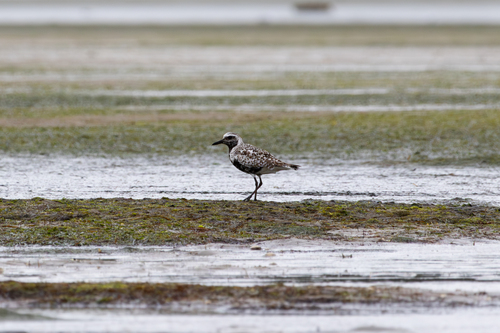 ダイゼン
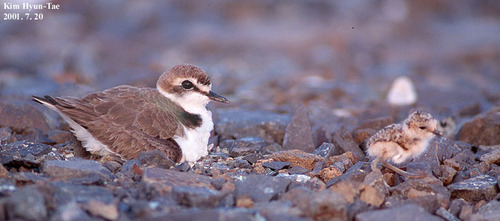 シロチドリ
要点
The most reliable separation between Grey Plover and Kentish Plover, especially in flight or among immatures, is the Grey Plover’s bold black axillaries and underwing bases—these are always visible as dark patches in flight, regardless of age or season, and are never shown by Kentish Plover. On the ground, Grey Plover is much larger and heavier-billed, with a chunkier build and longer legs, while Kentish Plover is small, delicate, and short-billed. Breeding Grey Plovers show striking black-and-white plumage with a black belly, while Kentish Plovers (especially males) have only partial dark breast patches and a rufous crown. In nonbreeding plumage, both are plainer, but size, bill, and the underwing pattern remain diagnostic. If you see a plover in flight with black underwing bases, it is a Grey Plover; if the underwing is pale and the bird is dainty, it is a Kentish Plover.
識別のコツ
- Black axillaries in flight (all ages/seasons): Grey Plover always shows black underwing bases (axillaries and inner flanks) in flight, a unique and diagnostic mark. Kentish Plover’s underwing is always pale.
- Size: Grey Plover is much larger and bulkier than Kentish Plover. If you see both together, the difference is striking.
- Bill shape: Grey Plover has a thick, heavy, and relatively long bill (24–34 mm), while Kentish Plover’s bill is short, fine, and delicate.
- Breeding plumage (adult male): Grey Plover has a full black face, throat, breast, and belly with a white border; Kentish Plover males have only partial dark breast patches, a black head bar, and a rufous crown/nape.
- Breeding plumage (female): Female Kentish Plovers are paler and lack strong dark markings; female Grey Plovers are similar to males but may have less extensive black.
- Nonbreeding plumage: Both are plainer, but Grey Plover remains larger, with a plain grey back and speckled breast; Kentish Plover is sandy-brown above and white below, with only faint head markings.
- Juvenile/first-winter: Grey Plover juveniles have dark backs with creamy feather edges and retain black axillaries; Kentish Plover juveniles are pale and never show black underwings.
- Legs: Both have dark legs, but Grey Plover’s are longer and stouter.
- Jizz (general impression): Grey Plover stands tall and upright, often still; Kentish Plover is small, quick, and often crouched or running.
- Habitat context: On open tidal mudflats and estuaries, expect Grey Plover; on sandy beaches, lagoons, or inland saline lakes, expect Kentish Plover.
- Group size: Grey Plovers may be solitary or in small groups; Kentish Plovers often occur in loose flocks, especially outside breeding season.
- Sexual dimorphism: Kentish Plover males are more strongly marked than females, especially early in the breeding season; Grey Plover shows less sexual dimorphism, though females may have less extensive black in breeding plumage.
- Seasonal change: Kentish Plover male head and breast markings are most pronounced early in the breeding season and fade later; Grey Plover’s black-and-white breeding plumage is present from late April to August.
- Pitfall: In dull winter plumage, both species are plainer, but the size, bill, and underwing pattern (in flight) remain reliable.
- When in doubt: If you see a plover in flight with black underwing bases, it is a Grey Plover—this mark is absolute for these two species.
大きさ
Grey Plover is dramatically larger and heavier than Kentish Plover. Grey Plover measures 27–30 cm in length with a 71–83 cm wingspan and weighs 190–280 g (sometimes up to 345 g before migration) [wikipedia]. Kentish Plover is much smaller, weighing only about 40–47 g [wikidata], and has a much more delicate, compact appearance. The bill of Grey Plover is notably thick and heavy (24–34 mm), while Kentish Plover’s bill is fine and short. Even at a distance or in mixed flocks, the size difference is obvious—Grey Plover is nearly thrush-sized, Kentish Plover is sparrow-sized.
羽色
- Juvenile/First-winter/Immature (all ages): Grey Plover always shows black axillaries and inner underwing bases in flight, a unique mark among plovers and present in all plumages. Juvenile/first-winter Grey Plovers are similar to nonbreeding adults above but have darker backs with creamy feather edges. Kentish Plover never shows black underwing bases; its underwing is pale in all ages and plumages.
- Adult breeding: Grey Plover has a striking black face, throat, breast, and belly, all bordered by white, with a white rump and black-barred tail. Kentish Plover males show only partial dark breast patches (never a full black belly), a black horizontal head bar, black ear coverts, and a rufous crown/nape; females are paler and lack strong dark markings.
- Adult nonbreeding: Both species become plainer. Grey Plover is grey above with a speckled breast and white belly, but still shows black axillaries in flight. Kentish Plover is pale brown above and white below, with only faint head markings and no black on the underparts or underwing.
- Bill and legs: Both have black bills and dark legs, but Grey Plover’s bill is much heavier and longer.
行動
Kentish Plover is a highly territorial, active shorebird, often seen running quickly, crouching, or performing distraction displays when threatened. Males are aggressive in territory defense, and both sexes may feign injury to lure predators away from nests. Grey Plover, being larger, is less likely to perform such distraction displays and is more often seen standing upright and still, especially when foraging or on migration. In flight, Grey Plover is powerful and direct, while Kentish Plover is quick and fluttery.
生息環境
Grey Plover is typically found on open coastal mudflats, sandy shores, and estuaries, especially outside the breeding season. It favors wide, open spaces near the sea. Kentish Plover prefers sandy beaches, saline lakes, lagoons, sand dunes, and sometimes inland marshes or semi-arid habitats. While both can occur on coasts, Kentish Plover is more likely on drier, sandier ground and sometimes far from tidal mudflats.