

Motmot

イワバホオジロ 対 ズアオホオジロ

Emberiza buchanani 対 Emberiza hortulana

イワバホオジロとズアオホオジロのクイズ
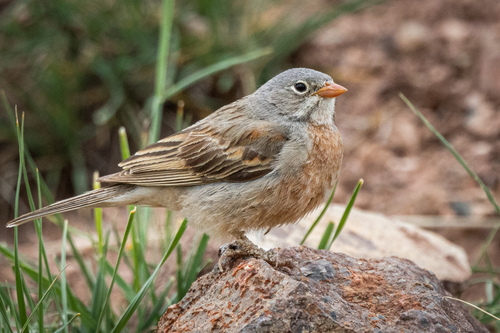
イワバホオジロ (Emberiza buchanani) イワバホオジロ
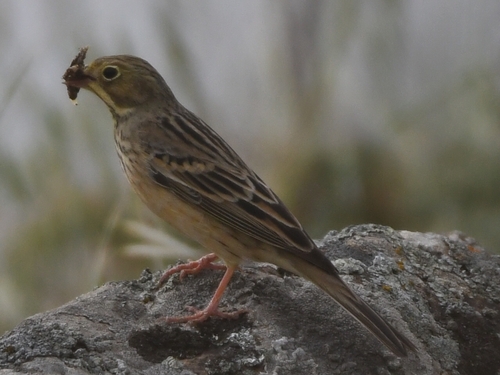
ズアオホオジロ (Emberiza hortulana) ズアオホオジロ

メディア

読み込み中…

要点

The most reliable separation between Grey-necked Bunting and Ortolan Bunting is the head pattern: Grey-necked Bunting males show a distinct white eye-ring and a grey hood, while Ortolan Bunting has a greenish-grey head without a strong eye-ring. Both species are similar in size and structure, and confusion is most likely with females or non-breeding birds, which are duller and less distinct. In flight or at a distance, look for the pinkish bill and underparts of Grey-necked, versus the more muted tones of Ortolan. Habitat and context can help: Grey-necked prefers drier, rockier terrain, while Ortolan is more often in cultivated or grassy fields.

識別のコツ

  1. Head pattern is key for males: Grey-necked Bunting males have a pale grey hood and a distinct white eye-ring, which Ortolan Bunting lacks. This is the most reliable mark in breeding plumage.
  2. Bill color and shape: Grey-necked Bunting has a long, pink bill, often appearing paler than Ortolan's bill, which is less distinctly pink.
  3. Underpart color: Grey-necked shows pinkish-brown underparts, especially on the flanks and belly, while Ortolan is more buff or brownish below, with less pink.
  4. Throat and malar stripes: Grey-necked has a whitish-pink chin and throat bordered by grey malar stripes; Ortolan's throat is less sharply bordered and lacks the same contrast.
  5. Eye-ring: The white eye-ring of Grey-necked is a standout feature in males and some females; Ortolan's eye-ring is weak or absent.
  6. Female and immature confusion: Both species' females and immatures are duller, with less contrast. Grey-necked females may show a more obvious moustachial stripe, but this is variable. In non-breeding plumage, both can look very similar, so use structure and subtle color differences with caution.
  7. Tail pattern: Both have whitish outer tail feathers, not a strong separator.
  8. Habitat context: If the bird is in dry, rocky, or scrubby terrain, especially below 7000 ft, Grey-necked is more likely. In cultivated or grassy fields, especially in Europe, Ortolan is expected.
  9. Geographic range: Grey-necked breeds from the Caspian Sea to the Altai and winters in South Asia; Ortolan is widespread in Europe and West Asia, rarely reaching South Asia as a vagrant.
  10. Song and calls: Grey-necked's song is a metallic jingle, Ortolan's is a simpler phrase like Yellowhammer. Calls are not strongly diagnostic.
  11. Flock association: Both species may join mixed bunting flocks, but context with other species may help (e.g., Ortolan with Yellowhammer, Grey-necked with other Asian buntings).
  12. Seasonal timing: Grey-necked migrates through India in September and March; Ortolan is a rare vagrant there, so timing and location can help.
  13. Perched vs. in flight: No distinctive flight marks are noted for either species, so perched views are essential for reliable ID.
  14. Structural jizz: Both are medium-sized buntings with similar proportions; structure alone is rarely diagnostic.
  15. When in doubt: If viewing a dull, non-breeding bird in overlapping range, focus on subtle head and underpart tones, but accept that some individuals may not be safely identified without close views or song.

大きさ

Both species are very similar in size, with Ortolan Bunting measuring 16–17 cm in length and a wingspan of 23–29 cm [wikipedia]. No specific measurements are given for Grey-necked Bunting, but it is described as similar to Ortolan in structure and jizz. Expect both to appear as medium-sized buntings with no obvious size difference in the field.

羽色

For adult males, Grey-necked Bunting stands out with a pale grey hood, a sharp white eye-ring, and pinkish underparts. The chin and throat are whitish pink, bordered by grey malar stripes, and the bill is long and pink. Females are duller but may show a more noticeable moustachial stripe. The outer tail feathers are whitish in both sexes. Ortolan Bunting, by contrast, has a greenish-grey head with no strong eye-ring, and the underparts are less pink, more buff or brownish. The Ortolan's head pattern is less sharply defined, especially in females and immatures. No age-specific upperwing or flight pattern differences are described for either species, so separation relies on head and underpart color, especially for perched birds. Both species can look very similar in non-breeding or immature plumage, and confusion is most likely then.

行動

Both species are typically seen in small flocks, especially outside the breeding season. Grey-necked Bunting is often found on the ground or low perches in open, stony, or scrubby areas, while Ortolan Bunting is more likely to be seen in or near cultivated fields and grassy areas. Flight and feeding behavior are not described as distinctive between the two.

生息環境

Grey-necked Bunting prefers dry, open habitats such as stony hillsides with low thorn scrub, mainly below 7000 ft, and winters in weedy or stubbly fields [wikipedia]. Ortolan Bunting, on the other hand, frequents cornfields and grassy areas, often in more temperate or cultivated landscapes. While ranges overlap in parts of Central and West Asia, habitat preference can help: Grey-necked is more likely in arid, rocky terrain, Ortolan in agricultural or grassy settings.

声

Grey-necked Bunting gives a short, subdued click note in winter and a metallic, jingling song of 'swee-swee' notes ending with a 'dzwe-ee-dul.' Ortolan Bunting's song is similar to Yellowhammer but less bright, described as a simple, repeated phrase. Vocal differences are subtle and not emphasized as a strong field mark in these notes.

より良い説明を送る

比較と同じ項目を使ってください。文章はすぐに公開されます。

The most reliable separation between Grey-necked Bunting and Ortolan Bunting is the head pattern: Grey-necked Bunting males show a distinct white eye-ring and a grey hood, while Ortolan Bunting has a greenish-grey head without a strong eye-ring. Both species are similar in size and structure, and confusion is most likely with females or non-breeding birds, which are duller and less distinct. In flight or at a distance, look for the pinkish bill and underparts of Grey-necked, versus the more muted tones of Ortolan. Habitat and context can help: Grey-necked prefers drier, rockier terrain, while Ortolan is more often in cultivated or grassy fields.

  1. Head pattern is key for males: Grey-necked Bunting males have a pale grey hood and a distinct white eye-ring, which Ortolan Bunting lacks. This is the most reliable mark in breeding plumage.
  2. Bill color and shape: Grey-necked Bunting has a long, pink bill, often appearing paler than Ortolan's bill, which is less distinctly pink.
  3. Underpart color: Grey-necked shows pinkish-brown underparts, especially on the flanks and belly, while Ortolan is more buff or brownish below, with less pink.
  4. Throat and malar stripes: Grey-necked has a whitish-pink chin and throat bordered by grey malar stripes; Ortolan's throat is less sharply bordered and lacks the same contrast.
  5. Eye-ring: The white eye-ring of Grey-necked is a standout feature in males and some females; Ortolan's eye-ring is weak or absent.
  6. Female and immature confusion: Both species' females and immatures are duller, with less contrast. Grey-necked females may show a more obvious moustachial stripe, but this is variable. In non-breeding plumage, both can look very similar, so use structure and subtle color differences with caution.
  7. Tail pattern: Both have whitish outer tail feathers, not a strong separator.
  8. Habitat context: If the bird is in dry, rocky, or scrubby terrain, especially below 7000 ft, Grey-necked is more likely. In cultivated or grassy fields, especially in Europe, Ortolan is expected.
  9. Geographic range: Grey-necked breeds from the Caspian Sea to the Altai and winters in South Asia; Ortolan is widespread in Europe and West Asia, rarely reaching South Asia as a vagrant.
  10. Song and calls: Grey-necked's song is a metallic jingle, Ortolan's is a simpler phrase like Yellowhammer. Calls are not strongly diagnostic.
  11. Flock association: Both species may join mixed bunting flocks, but context with other species may help (e.g., Ortolan with Yellowhammer, Grey-necked with other Asian buntings).
  12. Seasonal timing: Grey-necked migrates through India in September and March; Ortolan is a rare vagrant there, so timing and location can help.
  13. Perched vs. in flight: No distinctive flight marks are noted for either species, so perched views are essential for reliable ID.
  14. Structural jizz: Both are medium-sized buntings with similar proportions; structure alone is rarely diagnostic.
  15. When in doubt: If viewing a dull, non-breeding bird in overlapping range, focus on subtle head and underpart tones, but accept that some individuals may not be safely identified without close views or song.

Both species are very similar in size, with Ortolan Bunting measuring 16–17 cm in length and a wingspan of 23–29 cm [wikipedia]. No specific measurements are given for Grey-necked Bunting, but it is described as similar to Ortolan in structure and jizz. Expect both to appear as medium-sized buntings with no obvious size difference in the field.

For adult males, Grey-necked Bunting stands out with a pale grey hood, a sharp white eye-ring, and pinkish underparts. The chin and throat are whitish pink, bordered by grey malar stripes, and the bill is long and pink. Females are duller but may show a more noticeable moustachial stripe. The outer tail feathers are whitish in both sexes. Ortolan Bunting, by contrast, has a greenish-grey head with no strong eye-ring, and the underparts are less pink, more buff or brownish. The Ortolan's head pattern is less sharply defined, especially in females and immatures. No age-specific upperwing or flight pattern differences are described for either species, so separation relies on head and underpart color, especially for perched birds. Both species can look very similar in non-breeding or immature plumage, and confusion is most likely then.

Both species are typically seen in small flocks, especially outside the breeding season. Grey-necked Bunting is often found on the ground or low perches in open, stony, or scrubby areas, while Ortolan Bunting is more likely to be seen in or near cultivated fields and grassy areas. Flight and feeding behavior are not described as distinctive between the two.

Grey-necked Bunting prefers dry, open habitats such as stony hillsides with low thorn scrub, mainly below 7000 ft, and winters in weedy or stubbly fields [wikipedia]. Ortolan Bunting, on the other hand, frequents cornfields and grassy areas, often in more temperate or cultivated landscapes. While ranges overlap in parts of Central and West Asia, habitat preference can help: Grey-necked is more likely in arid, rocky terrain, Ortolan in agricultural or grassy settings.

Grey-necked Bunting gives a short, subdued click note in winter and a metallic, jingling song of 'swee-swee' notes ending with a 'dzwe-ee-dul.' Ortolan Bunting's song is similar to Yellowhammer but less bright, described as a simple, repeated phrase. Vocal differences are subtle and not emphasized as a strong field mark in these notes.

変更を破棄しますか?

保存していない編集があります。今離れると失われます。

イワバホオジロ · ズアオホオジロ · 苦手な鳥