

Motmot

ウチワハチドリ 対 テリバネコウウチョウ

Eulampis holosericeus 対 Molothrus bonariensis

ウチワハチドリとテリバネコウウチョウのクイズ
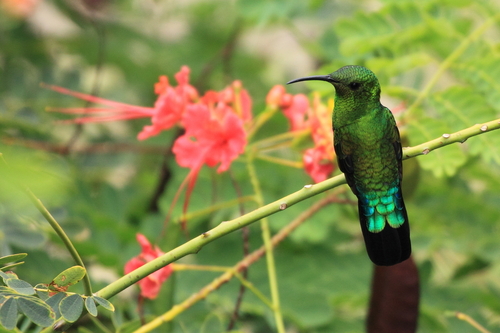
ウチワハチドリ (Eulampis holosericeus) ウチワハチドリ
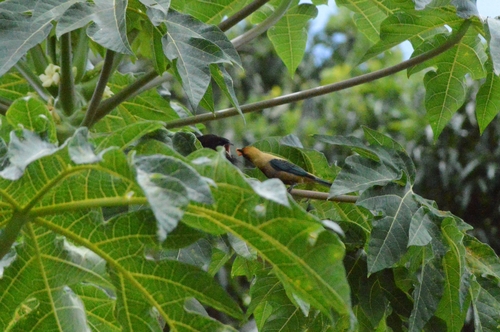
テリバネコウウチョウ (Molothrus bonariensis) テリバネコウウチョウ

メディア

読み込み中…

要点

ウチワハチドリとテリバネコウウチョウを区別する最も信頼できるフィールドマークは、全体的な構造と羽毛です:caribは、きらめく緑の喉と背中を持つ大きくて頑丈なハチドリであり、cowbirdは、まっすぐなくちばしと性的二形性の羽毛(オスは光沢のある黒、メスは鈍い茶色)を持つ、はるかに大きくてずんぐりした歌鳥です。飛んでいるときや止まっているとき、caribの下向きのくちばしと虹色の緑のゴルゲットは診断的であり、cowbirdのまっすぐなくちばしと虹色の緑の欠如は混乱を排除します。サイズの違いは極端で、cowbirdはcaribの約6倍の重さで、はるかに長いです。花で餌を食べている鳥やホバリングしている鳥を見たら、それはcaribです。地面を歩いているか、開けた場所で餌を探している場合、それはcowbirdです。

識別のコツ

  1. Bill shape: ウチワハチドリは中程度の長さでわずかに下向きのくちばしを持っています(メスはさらに長く、より曲がっています);テリバネコウウチョウはまっすぐで円錐形のくちばしを持っています。くちばしの形は、距離があってもすぐに区別できます。
  2. Size: Cowbirdははるかに大きく、重いです(caribの約6倍の質量)。鳥がスズメサイズまたはそれ以上に見える場合、それはcaribではありません。
  3. Plumage (male carib): 明るい緑の背中とゴルゲット、黒い腹、青黒い尾。cowbirdはこの組み合わせを示しません。
  4. Plumage (female carib): 鈍い緑の背中とゴルゲットですが、まだ金属的です;より長く、より曲がったくちばし。cowbirdのメスは決して緑色や虹色ではありません。
  5. Plumage (male cowbird): 完全に光沢のある黒で、紫青の虹色を持ち、決して緑ではありません。caribは決して全体が黒または紫には見えません。
  6. Plumage (female cowbird): 全体的に鈍い茶色で、時には下側がより淡いですが、虹色はありません。他のcowbirdと混同されることがありますが、caribとは混同されません。
  7. Flight style: Caribは頻繁にホバリングし、急速で素早い飛行で移動します;cowbirdは直接飛び、ホバリングしません。
  8. Feeding behavior: Caribは花で餌を食べ、しばしばホバリングします;cowbirdは地面や低い植生で餌を探し、決して花では餌を食べません。
  9. Tail: Caribの尾は暗い青(しばしば黒に見える)、短くて四角いです;cowbirdの尾はより長く、虹色ではなく、歌鳥に典型的です。
  10. Habitat context: Caribは通常、花のある低木や木の近くで見られます;cowbirdは開けた草地や農業地域で見られる可能性が高いです。
  11. Voice: Caribは鋭い「チュプ!」または「チュウプ!」の鳴き声を出します;cowbirdの鳴き声はより歌鳥のようで、ディスプレイソングを含みます。
  12. Sexual dimorphism: Cowbirdは強い二形性があります(オスは黒、メスは茶色);caribの性別は似ています(両方とも緑で、メスは鈍いです)。
  13. Perching posture: Caribは直立して止まり、しばしば花の近くの露出した小枝に止まります;cowbirdはより水平に止まり、しばしば群れで見られます。
  14. Brood parasitism: cowbirdだけが抱卵寄生者です;caribは他の鳥の巣とは関連していません。
  15. Pitfalls: メスのcowbirdは鈍い非虹色の鳥に見えることがありますが、くちばしの形と緑や青の欠如がすぐにcaribを排除します。若い鳥や換羽中の鳥は詳細には説明されていませんが、同じ構造的および行動的な違いに従うべきです。

大きさ

ウチワハチドリは小さなハチドリ(6.2 g)であり、テリバネコウウチョウは中型の passerine(37 g)です。cowbirdはcaribの10.5〜12 cmに対して、はるかにずんぐりしていて長い(いくつかの亜種では最大22 cm)です。距離があっても、cowbirdのサイズと比率(特に飛行中や地面にいるとき)は、繊細でコンパクトなcaribよりもはるかに実質的です。

羽色

いずれの種についても年齢特有の翼や飛行パターンのマークは説明されていないため、成鳥とメス/未成熟の羽毛に焦点を当てます。すべての年齢と性別のウチワハチドリは、明るい緑の背中とゴルゲット、黒い腹、緑のベント、暗い青の尾を示し、悪い光の中では黒に見えることがあります。メスは鈍いですが、まだ上側は緑で、より長く、より下向きのくちばしを持っています。テリバネコウウチョウのオスは光沢のある黒で紫青の虹色を持ち、メスは鈍い茶色で、時には下側がより淡いですが、虹色や緑はありません。cowbirdの羽毛は決して金属的な緑や青緑ではなく、メスは他のcowbirdと混同されることがありますが、caribとは混同されません。いずれの種についても未熟または幼鳥の翼パターンは言及されていません。

行動

ウチワハチドリは花でホバリングし、蜜を食べ、しばしば餌の領域を防御します。また、昆虫を捕まえることもあります。テリバネコウウチョウは主に地面や低い植生で餌を探し、種子や昆虫を探し、ホバリングするのではなく、歩いたり跳ねたりしているのがよく見られます。caribの飛行は急速で敏捷で、ハチドリに典型的です。一方、cowbirdの飛行はより直接的で、アクロバティックではありません。cowbirdは抱卵寄生者であり、他の鳥の巣の近くで見られることがありますが、これは直接観察されることはほとんどありません。

生息環境

ウチワハチドリはプエルトリコと小アンティル諸島に見られ、主に庭、二次成長、家の周りの植生に生息しています。テリバネコウウチョウは南アメリカとカリブ海に広く分布し、開けた生息地、農地、乱された地域を好みます。両方とも人間が改変した環境で見られますが、caribは花のある植生により密接に結びついているのに対し、cowbirdは開けた草地や農業環境を好みます。

声

ウチワハチドリは鋭い「チュプ!」または「チュウプ!」の鳴き声を出し、争いの際に rattles や翼の音を出すことがあります。テリバネコウウチョウのオスは求愛中に歌い、ディスプレイソングとお辞儀を行いますが、フィールドでの区別のための特定の鳴き声は説明されていません。caribの鳴き声は鋭く、ハチドリに典型的ですが、cowbirdの鳴き声はより歌鳥のようです。

より良い説明を送る

比較と同じ項目を使ってください。文章はすぐに公開されます。

The most reliable field mark to separate Green-throated Carib from Shiny Cowbird is overall structure and plumage: the carib is a large, robust hummingbird with a glittering green throat and back, while the cowbird is a much larger, stocky songbird with a straight bill and sexually dimorphic plumage (males glossy black, females dull brown). In flight or perched, the carib’s decurved bill and iridescent green gorget are diagnostic, whereas the cowbird’s straight bill and lack of iridescent green rule out confusion. Size difference is extreme: the cowbird is about six times heavier and much longer. If you see a bird feeding at flowers or hovering, it is the carib; if it is walking on the ground or foraging in open areas, it is the cowbird.

  1. Bill shape: Green-throated Carib has a medium-length, slightly decurved bill (female even longer and more curved); Shiny Cowbird has a straight, conical bill. Bill shape is a quick separator even at distance.
  2. Size: Cowbird is much larger and heavier (about 6x the mass of the carib). If the bird looks sparrow-sized or larger, it is not a carib.
  3. Plumage (male carib): Bright green back and gorget, black belly, and blue-black tail. No cowbird shows this combination.
  4. Plumage (female carib): Duller green back and gorget, but still metallic; longer, more curved bill. Cowbird females are never green or iridescent.
  5. Plumage (male cowbird): Entirely glossy black with purple-blue iridescence, never green. Carib never appears all-black or purple.
  6. Plumage (female cowbird): Dull brown overall, sometimes paler below, with no iridescence. Can be confused with other cowbirds, but not with any carib.
  7. Flight style: Carib hovers frequently and moves with rapid, darting flight; cowbird flies directly and does not hover.
  8. Feeding behavior: Carib feeds at flowers, often hovering; cowbird forages on the ground or in low vegetation, never at flowers.
  9. Tail: Carib’s tail is dark blue (often looks black), short and squared; cowbird’s tail is longer, not iridescent, and more typical of a songbird.
  10. Habitat context: Carib is usually seen where there are flowering shrubs or trees; cowbird is more likely in open, grassy, or agricultural areas.
  11. Voice: Carib gives sharp 'chup!' or 'chuwp!' calls; cowbird’s vocalizations are more songbird-like and include display songs.
  12. Sexual dimorphism: Cowbird is strongly dimorphic (males black, females brown); carib sexes are similar (both green, female duller).
  13. Perching posture: Carib perches upright, often on exposed twigs near flowers; cowbird perches more horizontally, often in flocks.
  14. Brood parasitism: Only cowbird is a brood parasite; carib is not associated with other birds’ nests.
  15. Pitfalls: Female cowbird might superficially resemble a dull, non-iridescent bird, but bill shape and lack of green or blue quickly rule out carib. Young or molting birds are not described in detail but should follow the same structural and behavioral differences.

Green-throated Carib is a small hummingbird (6.2 g), while Shiny Cowbird is a medium-sized passerine (37 g). The cowbird is much bulkier and longer (up to 22 cm in some subspecies) compared to the carib’s 10.5–12 cm. Even at a distance, the cowbird’s size and proportions (especially in flight or on the ground) are far more substantial than the delicate, compact carib.

No age-specific wing or flight pattern marks are described for either species, so focus is on adult and female/immature plumage. Green-throated Carib of all ages and sexes shows a bright green back and gorget, black belly, green vent, and a dark blue tail that may look black in poor light. Females are duller but still green above, with a longer, more decurved bill. Shiny Cowbird males are glossy black with purple-blue iridescence; females are dull brown, sometimes paler below, with no iridescence or green. The cowbird’s plumage is never metallic green or blue-green, and females can be confused with other cowbirds but not with a carib. No immature or juvenile wing pattern is mentioned for either species.

Green-throated Carib hovers at flowers and feeds on nectar, often defending feeding territories. It may also sally for insects. Shiny Cowbird forages mostly on the ground or in low vegetation, searching for seeds and insects, and is often seen walking or hopping rather than hovering. The carib’s flight is rapid and agile, typical of hummingbirds, while the cowbird’s flight is more direct and less acrobatic. Cowbirds are brood parasites and may be seen near other birds’ nests, but this is rarely observed directly.

Green-throated Carib is found in Puerto Rico and the Lesser Antilles, mainly in gardens, second growth, and vegetation around homes. Shiny Cowbird is widespread in South America and the Caribbean, favoring open habitats, agricultural land, and disturbed areas. Both can be found in human-modified environments, but the carib is more closely tied to flowering vegetation, while the cowbird prefers open, grassy, or agricultural settings.

Green-throated Carib gives a sharp 'chup!' or 'chuwp!' call, and may produce rattles and wing whirs during disputes. Shiny Cowbird males sing during courtship, with a display song and bowing, but no specific call is described for field separation. The carib’s calls are sharper and more typical of hummingbirds, while the cowbird’s vocalizations are more songbird-like.

変更を破棄しますか?

保存していない編集があります。今離れると失われます。

ウチワハチドリ · テリバネコウウチョウ · 苦手な鳥