

Motmot

ミドリトゲオハチドリ 対 Butterfly Coquette

Discosura conversii 対 Lophornis verreauxii

ミドリトゲオハチドリとButterfly Coquetteのクイズ
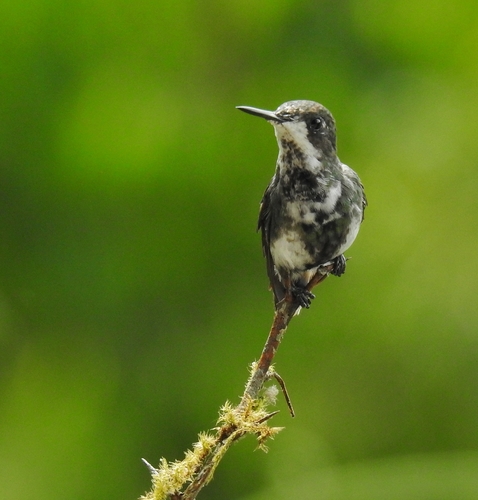
ミドリトゲオハチドリ (Discosura conversii) ミドリトゲオハチドリ
Butterfly Coquette (Lophornis verreauxii) Butterfly Coquette

メディア

読み込み中…

要点

ミドリトゲオハチドリとButterfly Coquetteの最も信頼できるフィールドマークは尾です:成鳥のオスのミドリトゲオハチドリは非常に長く、深く分岐した狭い尾を示しますが、Butterfly Coquetteのオスはそのような深い分岐のない短いマルーン色の尾を持っています。両種のメスは派手な尾のストリーマーを欠いていますが、ミドリトゲオハチドリのメスは外羽に特徴的な白がある切れ込みのある尾を持ち、Butterfly Coquetteのメスはマルーンまたは青銅色の緑の尾を持っています。Butterfly Coquetteのオスは、長い赤い先端の緑の冠羽と白い先端の緑の「ひげ」を示す点でもユニークで、ミドリトゲオハチドリには全くありません。両種は白い尾羽帯を持っていますが、頭部と顔の模様、上尾羽の色が分離の鍵となります。未熟な鳥とメスの鳥は、顔と尾の模様によって慎重に観察することで分けることができます。

識別のコツ

  1. 尾の形と長さ(成鳥のオス): ミドリトゲオハチドリのオスは非常に長く、深く分岐した狭い青黒い尾を持ち、しばしば外に伸ばしたり、角度をつけて持ち上げたりします。Butterfly Coquetteのオスは短いマルーン色の尾を持ち、深く分岐していません。
  2. 冠羽とひげ(成鳥のオス): Butterfly Coquetteのオスだけが長い赤い先端の緑の冠羽と白い先端の長い緑の「ひげ」を示します。ミドリトゲオハチドリは冠羽やひげを示しません。
  3. 上尾羽の覆い羽: ミドリトゲオハチドリのオスは青黒い銅色の尾羽を持ち、Butterfly Coquetteのオスは深い赤みがかった上尾羽の覆い羽を持っています(亜種klagesiでは青銅色のオリーブ)。これは止まっているときや良い光の下で見ることができます。
  4. 白い尾羽帯: 両種は尾羽に白い帯を持っているため、このマークだけでは診断できませんが、他の特徴と組み合わせて使用できます。
  5. 顔の模様(メス): ミドリトゲオハチドリのメスは広い白い頬の斑点と白い斑点のある鈍い黒い顎を持っています。Butterfly Coquetteのメスは白っぽいマラーパッチを持っていますが、広い頬の斑点と斑点のある顎は欠いています。
  6. 尾の模様(メス): ミドリトゲオハチドリのメスは青黒い中央羽と白い基部、白い先端の外羽を持つ切れ込みのある尾を持っています。Butterfly Coquetteのメスは特徴的な白い模様のないマルーンまたは青銅色の緑の尾を持っています。
  7. 腹部の色: ミドリトゲオハチドリのオスは明るい金属的な緑の喉と緑がかった青の胸の中心を持ち、Butterfly Coquetteのオスは白い太ももと胸に金色のハイライトを持つ緑の腹部を持っています(メス)。
  8. 幼鳥の顎: ミドリトゲオハチドリの幼鳥は灰白色の顎を持ち、Butterfly Coquetteと見分けるのに役立ちます。
  9. サイズの印象: ミドリトゲオハチドリのオスは尾のために長くて細く見えますが、実際の体のサイズは両種で似ています。
  10. 止まり方とディスプレイ: ミドリトゲオハチドリのオスはしばしば高い裸の小枝に止まり、ダイブディスプレイを行うことがあります。Butterfly Coquetteのディスプレイ行動はここでは説明されていません。
  11. 生息地の文脈: コスタリカ、パナマ、コロンビア、エクアドルの湿った山地または低地の森林のキャノピーで見られた場合、ミドリトゲオハチドリの可能性が高いです。Butterfly Coquetteは南アメリカ北部でより広範囲に分布しています。
  12. 翼の模様の違いはなし: どちらの種も、年齢に関係なく飛行中に特徴的な上翼の模様を持っていないため、尾と頭/顔に焦点を当ててください。
  13. 性差: Butterfly Coquetteのオスだけが冠羽とひげを示します。両種のメスはより微妙に模様があり、顔と尾の模様に注意が必要です。
  14. 落とし穴: 白い尾羽帯だけに頼らないでください。尾の形、冠羽、顔の模様を確認してください。未熟な鳥とメスの鳥は、全体の色ではなく、尾と顔で分けるのが最適です。
  15. 亜種の変異: Butterfly Coquetteの亜種klagesiは、青銅色のオリーブの上尾羽の覆い羽と青銅色の緑の尾を持ちますが、ミドリトゲオハチドリの深く分岐した尾は依然として欠いています。

大きさ

ミドリトゲオハチドリのオスはButterfly Coquette(7.5–9.1 cm)よりもわずかに長い(9.5–10.2 cm)ですが、メスは小さい(6.6–7.5 cm)です。ミドリトゲオハチドリは軽い(平均3.0 g、性別は常に記録されていない)、Butterfly Coquetteの体重は指定されていません。両者は最も小さなハチドリの中に含まれるため、サイズだけでは強いフィールドマークとはなりませんが、ミドリトゲオハチドリのオスの非常に長い尾は、フィールドでより長くて細く見えるようにします。

羽色

行動

ミドリトゲオハチドリのオスはしばしば高い裸の小枝に止まり、繁殖期にダイブディスプレイを行います。彼らは主に花が咲いている木の頂上で餌を探し、尾を体に対して直角に持ち上げてホバリングします。Butterfly Coquetteの行動は詳細には説明されていませんが、コケットとして、花で餌を探し、活発で敏捷な飛行を示す可能性があります。ミドリトゲオハチドリのオスの誇張された尾はしばしば外に伸ばされ、特にホバリングやディスプレイ中に細長い外観を強調します。

生息環境

ミドリトゲオハチドリは湿った山地および低地の常緑樹林に生息し、通常はキャノピーまたはその端にあり、国によって300〜1,400 mの範囲で見られます(コスタリカ、パナマ、コロンビア、エクアドル)。Butterfly Coquetteはボリビア、ブラジル、コロンビア、エクアドル、ペルー、ベネズエラにわたる広範囲に分布していますが、具体的な生息地の詳細はここでは提供されていません。両者はキャノピーの専門家ですが、ミドリトゲオハチドリは湿った山地および低地の森林の端や開けた場所により結びついています。

より良い説明を送る

比較と同じ項目を使ってください。文章はすぐに公開されます。

The most reliable field mark between Green Thorntail and Butterfly Coquette is the tail: adult male Green Thorntail shows an extremely long, deeply forked, narrow tail, while Butterfly Coquette males have a shorter, maroon tail without such deep forking. Females of both species lack extravagant tail streamers, but Green Thorntail females have a notched tail with distinctive white in the outer feathers, while Butterfly Coquette females have a maroon or bronzy-green tail. Males of Butterfly Coquette are also unique in showing a long, red-tipped green crest and green 'whiskers' with white tips, which Green Thorntail entirely lacks. Both species have a white rump band, but their head and facial patterns, and the color of their uppertail coverts, are key for separation. Immature and female birds can be separated by face and tail pattern with careful observation.

  1. Tail shape and length (adult males): Green Thorntail males have an extremely long, deeply forked, narrow bluish-black tail, often held out or cocked at an angle. Butterfly Coquette males have a shorter, maroon tail that is not deeply forked.
  2. Crest and whiskers (adult males): Only Butterfly Coquette males show a long, red-tipped green crest and long green 'whiskers' with white tips. Green Thorntail never shows a crest or whiskers.
  3. Uppertail coverts: Green Thorntail males have a coppery bronze rump with bluish-black, while Butterfly Coquette males have deep reddish uppertail coverts (bronzy olive in subspecies klagesi). This is visible when perched or in good light.
  4. White rump band: Both species have a white band across the rump, so this mark alone is not diagnostic, but it can be used in combination with other features.
  5. Facial pattern (females): Green Thorntail females have a broad white cheek patch and a dull black chin with white spots. Butterfly Coquette females have a whitish malar patch but lack the broad cheek patch and spotted chin.
  6. Tail pattern (females): Green Thorntail females have a notched tail with bluish-black central feathers and white-based, white-tipped outer feathers. Butterfly Coquette females have a maroon or bronzy-green tail without the distinctive white pattern.
  7. Underpart color: Green Thorntail males have a bright metallic green throat and greenish-blue breast center, while Butterfly Coquette males have green underparts with white thighs and golden highlights on the breast (females).
  8. Juvenile chin: Green Thorntail juveniles have a grayish-white chin, which can help separate them from Butterfly Coquette if seen well.
  9. Size impression: Green Thorntail males appear longer and more slender due to their tail, but actual body size is similar between species.
  10. Perching and display: Green Thorntail males often perch on high, bare twigs and may be seen performing dive displays. Butterfly Coquette display behavior is not described here.
  11. Habitat context: If seen in humid montane or lowland forest canopy in Costa Rica, Panama, Colombia, or Ecuador, Green Thorntail is more likely. Butterfly Coquette is more widespread in northern South America.
  12. No wing pattern differences: Neither species has a distinctive upperwing pattern in flight at any age, so focus on tail and head/face.
  13. Sex differences: Only male Butterfly Coquette shows crest and whiskers; females of both species are more subtly marked and require attention to face and tail pattern.
  14. Pitfalls: Do not rely on the white rump band alone; check for tail shape, crest, and facial pattern. Immature and female birds are best separated by tail and face, not overall color.
  15. Subspecies variation: Butterfly Coquette subspecies klagesi is darker with bronzy olive uppertail coverts and bronzy-green tail, but still lacks the deeply forked tail of Green Thorntail.

Green Thorntail males are slightly longer (9.5–10.2 cm) than Butterfly Coquette (7.5–9.1 cm), but females are smaller (6.6–7.5 cm). Green Thorntail is lighter (mean 3.0 g, sex not always recorded), while Butterfly Coquette's weight is not specified. Both are among the smallest hummingbirds, so size alone is not a strong field mark, but the extremely long tail of male Green Thorntail makes it appear longer and more slender in the field.

  • Juvenile/Immature/Non-breeding: No distinctive upperwing or flight pattern is described for either species at any age; separation relies on tail and face pattern, not wing.
  • Adult Male: Green Thorntail males have a metallic green crown, lighter metallic green back, coppery bronze rump with bluish-black, a broad white rump band, and a deeply forked, narrow bluish-black tail. The throat and breast are bright metallic green to greenish-blue. Butterfly Coquette males have a deep green head with a long, red-tipped green crest and long green 'whiskers' with white tips, a green back with golden highlights, deep reddish uppertail coverts, a white rump band, green underparts, white thighs, and a maroon tail. They lack the deeply forked tail of Green Thorntail.
  • Adult Female: Green Thorntail females have a dark green back, darker rump, notched but not elongated tail with bluish-black central feathers and white-based, white-tipped outer feathers, a broad white cheek patch, and a dull black chin with white spots. Butterfly Coquette females lack crest and whiskers, have a whitish malar patch, less intense red uppertail coverts, golden highlights on the breast, and a maroon or bronzy-green tail.
  • Juvenile: Green Thorntail juveniles resemble adults but have a grayish-white chin. No juvenile-specific marks are described for Butterfly Coquette.

Green Thorntail males often perch on high, bare twigs and perform dive displays during the breeding season. They forage mostly at the tops of flowering trees, hovering with the tail cocked at a right angle to the body. Butterfly Coquette behavior is not described in detail, but as a coquette, it likely also forages at flowers and may show active, agile flight. The exaggerated tail of Green Thorntail males is often held out and accentuates their slender appearance, especially when hovering or displaying.

Green Thorntail is found in humid montane and lowland evergreen forests, typically in the canopy or at the edges, from 300–1,400 m depending on country (Costa Rica, Panama, Colombia, Ecuador). Butterfly Coquette occurs in a broader range across Bolivia, Brazil, Colombia, Ecuador, Peru, and Venezuela, but specific habitat details are not provided here. Both are canopy specialists, but Green Thorntail is more tied to humid montane and lowland forest edges and clearings.

変更を破棄しますか?

保存していない編集があります。今離れると失われます。

ミドリトゲオハチドリ · Butterfly Coquette · 苦手な鳥